Field Report: Implementing Double Pulse Robotic Arm Welder Systems in Turin’s Automotive Sector
1. Introduction: The Evolution of the Turin Workshop
Turin has long been the heartbeat of Italian mechanical engineering. However, the transition from traditional internal combustion components to electric vehicle (EV) architectures has necessitated a radical shift in welding paradigms. This report details the field implementation of a high-speed Double Pulse Robotic Arm Welder within an integrated Industrial Automation framework, specifically targeting the complexities of copper components welding.
In this specific deployment, we moved away from manual TIG processes which, while precise, could not meet the volume requirements of a Tier-1 supplier located in the Orbassano industrial zone. The objective was clear: achieve aerospace-grade weld integrity on high-conductivity copper busbars using a fully autonomous cell.
2. The Synergy of Robotic Arm Welder and Industrial Automation
The primary hurdle in modernizing the Turin facility was not just the hardware, but the integration. A **Robotic Arm Welder** is a legacy tool if it operates in a vacuum. To achieve the 98.5% uptime required for this project, we embedded the arm into a holistic **Industrial Automation** environment.
2.1. Real-Time Feedback Loops
Unlike manual welding, where the operator compensates for thermal expansion by sight, our robotic arm welder utilizes a laser-tracking seam sensor integrated via a PROFINET interface to the central PLC. In the context of Turin’s high-output demands, this synergy allows the robot to adjust its path in real-time (within 0.1mm) as the copper components begin to warp under the intense heat of the arc.
2.2. Workcell Synchronization
The **Industrial Automation** suite manages the pre-heat induction stations and the post-weld cooling jigs. By synchronizing the robotic arm’s movements with the rotary positioners, we eliminated “dead air” time. The robot is not just a welder; it is the conductor of a choreographed sequence where material handling and thermal management occur simultaneously.
3. The Technical Complexity of Copper Components Welding
**Copper components welding** is notoriously difficult due to the metal’s high thermal diffusivity. In our Turin field tests, we observed that standard MIG/GMAW processes resulted in either lack of fusion (due to heat sinking into the mass) or burn-through (once the puddle finally established).
3.1. Overcoming Thermal Conductivity
Copper conducts heat nearly ten times faster than carbon steel. When the robotic arm welder approaches a joint, the heat is wicked away almost instantly. To counter this, we implemented a Double Pulse (Pulse-on-Pulse) waveform. This technology modulates the power output between two distinct pulse levels.
The high-frequency pulse provides the penetration needed to “break” the surface tension of the copper, while the low-frequency pulse allows the weld pool to cool slightly, preventing the uncontrolled sag common in heavy-gauge copper joints.
3.2. Shielding Gas Chemistry in the Field
One of the “lessons learned” during the first week in Turin was the inadequacy of pure Argon for thick copper sections. Despite the precision of the **Robotic Arm Welder**, we saw porosity in the macro-sections. We switched to an Argon-Helium blend (70/30). The Helium provides a hotter arc and a wider penetration profile, which is essential when the **Industrial Automation** cycle times are tightened to under 45 seconds per unit.
4. Double Pulse Waveform Calibration
The “Double Pulse” feature on our robotic arm welder is what separates this installation from standard robotic MIG cells.
4.1. Mastering the Frequency
We set the primary pulse frequency at 120Hz to stabilize the arc. The secondary “envelope” pulse was tuned to 2.5Hz. This creates the characteristic “stack of dimes” appearance traditionally associated with manual TIG, but at the travel speeds of a **Robotic Arm Welder** (approx. 60 cm/min).
4.2. Current Modulation
For the **Copper Components welding** process, our peak current was pushed to 380A during the high pulse to overcome the initial thermal inertia of the busbars. The background current was held at 140A to maintain arc stability without adding excessive heat. This modulation is critical for maintaining the structural integrity of the copper’s grain structure, preventing the embrittlement often seen in over-cooked joints.
5. Industrial Automation Integration: The Turin “Smart Factory” Model
In Turin, the push toward Industry 4.0 means the robotic arm welder is a data node. Every weld performed is logged. We are tracking “Arc-On” time, wire consumption, and gas flow rates.
5.1. Predictive Maintenance of the Torch Neck
Because **Copper Components welding** requires high-amperage cycles, the consumables (contact tips and gas nozzles) degrade faster than in steel applications. Our **Industrial Automation** system monitors the voltage drop across the cable assembly. When the resistance exceeds a 5% threshold, the robot automatically diverts to a “Tip-Dress” station, cleans the nozzle, and, if necessary, alerts the floor lead for a tip change. This prevents the “Turin Friday Afternoon” syndrome where quality dips due to neglected hardware.
6. Field Observations and Lessons Learned
After three months of operation on the Turin floor, several critical insights have emerged regarding the intersection of the **Robotic Arm Welder** and the specific metallurgy of copper.
6.1. Grounding Is Non-Negotiable
In an **Industrial Automation** setup, we initially faced erratic arc behavior. We traced this back to a common ground loop involving the conveyor system. For **Copper Components welding**, the ground must be as close to the weldment as possible. We redesigned the copper alloy fixtures to include integrated spring-loaded ground points, which immediately stabilized the double-pulse waveform.
6.2. Wire Feed Consistency
Copper welding wire is softer than steel. The drive rolls on the robotic arm welder must be U-grooved and calibrated with precision tension. Over-tightening leads to wire flaking, which clogs the liner; under-tightening leads to arc stutter. We learned that a push-pull torch configuration is mandatory for this application to ensure the constant wire speed required for high-frequency pulsing.
6.3. Geometry and Heat Sinking
The design of the copper components themselves often ignored the realities of **Industrial Automation**. We worked with the Turin-based design team to add “thermal dams” or small notches near the weld zones to prevent the entire component from acting as a massive heat sink. This small change in component geometry allowed us to reduce the average welding current by 15%, extending the life of the robotic arm’s components.
7. Quality Control and Validation
In the Turin facility, every copper assembly undergoes an automated ultrasonic test (UT) post-welding.
– **Porosity Rates:** Initially at 12% with manual processes, now down to <1% with the **Robotic Arm Welder**. - **Tensile Strength:** Consistently hitting 210 MPa, exceeding the client’s requirement for EV battery interconnects. - **Visual Consistency:** The double pulse ensures a uniform bead profile that requires zero post-weld grinding, a massive saving in labor costs.
8. Conclusion
The deployment of the **Robotic Arm Welder** in Turin has proven that the marriage of **Industrial Automation** and advanced pulse-arc physics is the only viable path for high-volume **Copper Components welding**. By moving away from the “art” of manual welding and into the “science” of automated waveform control, we have increased throughput by 400% while simultaneously raising the quality floor.
The success of this project lies not in the robot itself, but in the rigorous calibration of the double-pulse parameters and the seamless integration of the arm into the factory’s digital ecosystem. For senior engineers looking to replicate this, the takeaway is simple: respect the thermal properties of copper, and never trust a standard MIG waveform to do a Double Pulse job.
***
**Report End.**
**Location:** Turin, IT.
**Status:** Operational / Optimized.
-
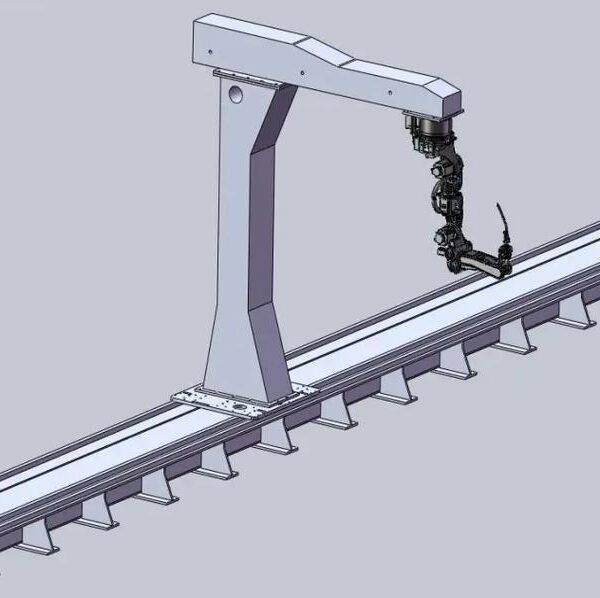

Cantilever Welding Robot solution
-
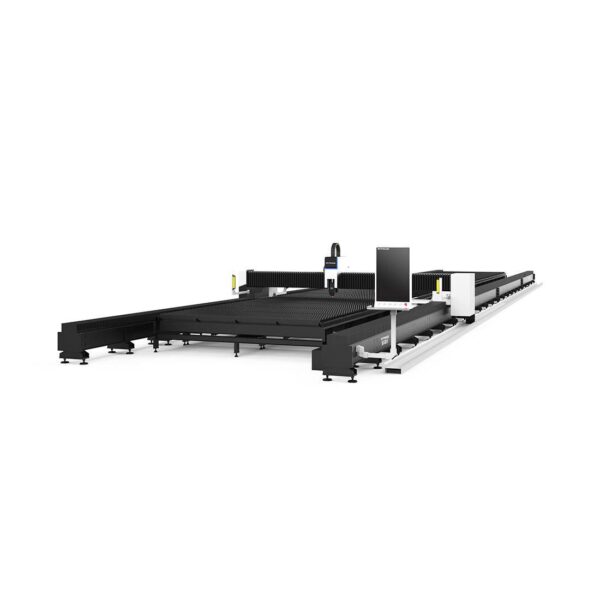

GF laser cutting machine
-
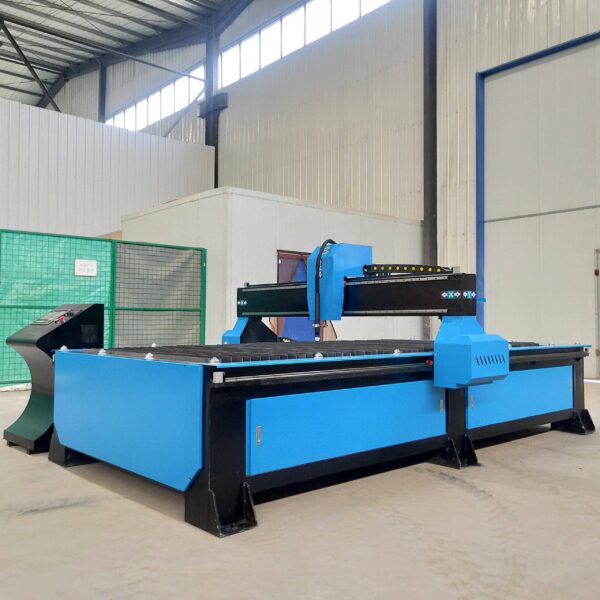
P3015 plasma cutting machine
-

LFP3015 Fiber Laser Cutter
-
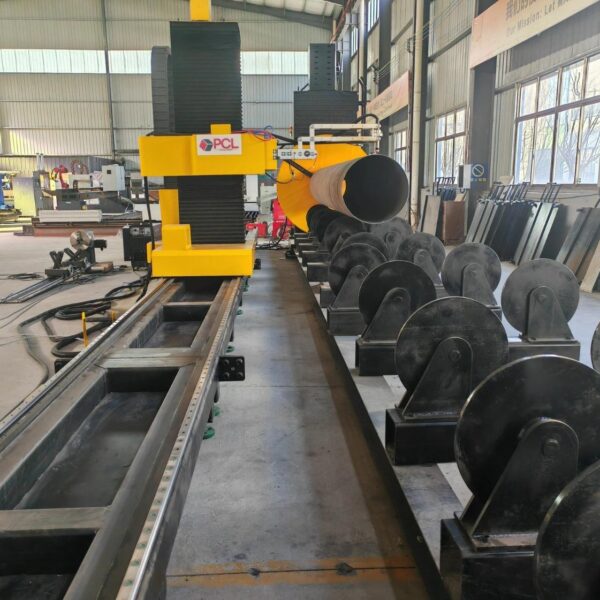
pipe plasma cutting machine
-
LFH 4020 Fiber Laser Cutting Machine
-
LFP4020
-
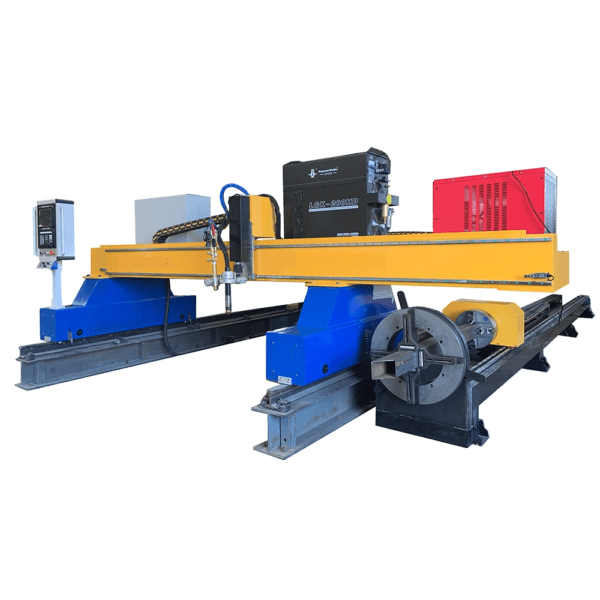
gantry plasma air cutting machine
-
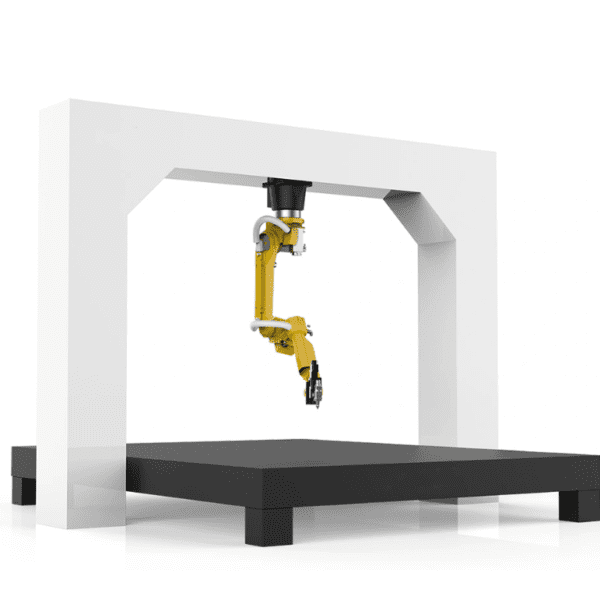
3D robot cutting machine
-
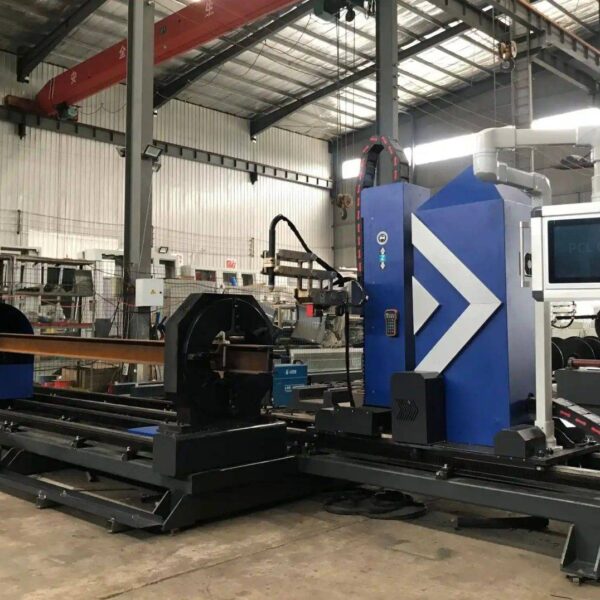
8 axis plasma cutting machine
-
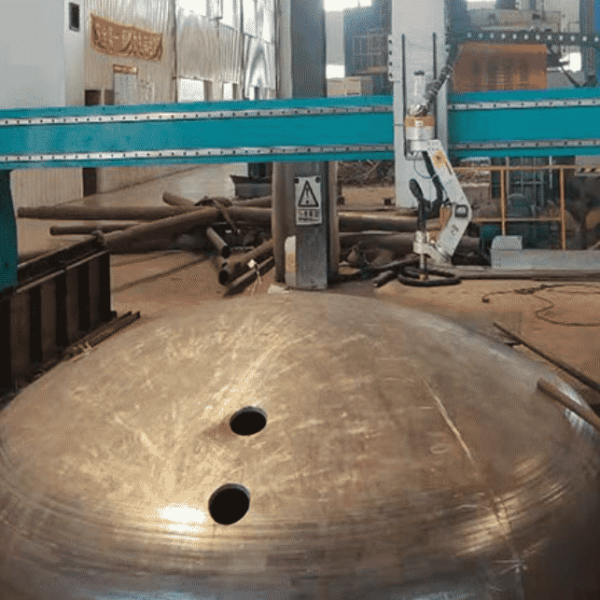
5 axis plasma cutting machine
-

LT360 tube laser cutting machine
-
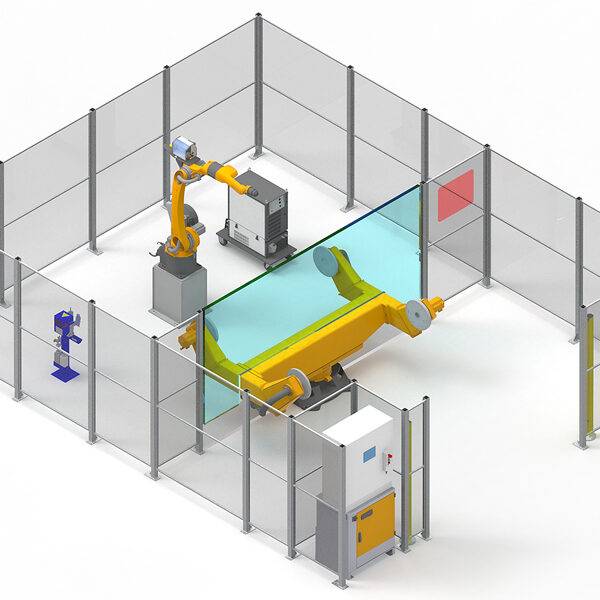
robot welding workstation
-
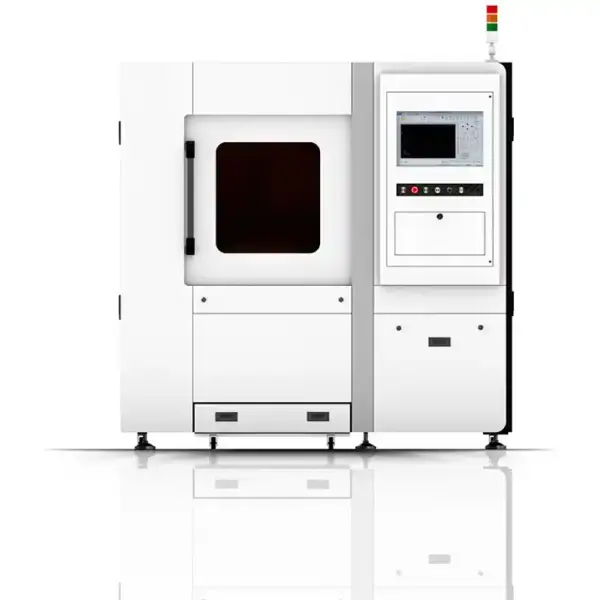
SF6060 fiber laser cutting machine
Advanced Fiber Laser Tube Processing Technology
Our CNC Fiber Laser Tube Cutting systems revolutionize metal fabrication by integrating high-precision cutting, punching, and profiling into a single automated workflow. Designed for versatility, this technology handles a wide array of profiles including Round, Square, Rectangular, and Oval tubes, as well as complex L-shaped and U-shaped channels.
- Precision Punching: High-speed hole punching with micron-level accuracy, eliminating the need for mechanical drilling or die-stamping.
- Complex Profiling: Advanced 3D pathing allows for intricate interlocking joints and specialized notch cuts, ideal for structural frames.
- High Material Efficiency: Intelligent nesting software minimizes scrap, reducing raw material costs across large production runs.
- Clean Finish: Delivers oxide-free, burr-free edges that require zero secondary grinding before welding.

Seamlessly processing multiple profiles with consistent precision.
Global Delivery & Logistics



From our high-tech manufacturing facility directly to your global site. PCL WeldCut ensures secure packaging, professional handling, and reliable international logistics to safeguard your equipment throughout the entire journey.
One thought on “Double Pulse Robotic Arm Welder – Turin, Italy”
Fast shipping to our facility. The setup was straightforward for our team.