Field Engineering Report: Implementation of Double Pulse Cobot Systems in Heavy Fabrication (Queretaro Site)
Executive Summary of On-Site Commissioning
The deployment of the All-in-one Cobot Station at the Queretaro facility was initiated to address a specific bottleneck in the production of structural chassis components. Traditionally, thick plate steel welding in this region has relied on manual flux-cored arc welding (FCAW) or high-investment industrial robots requiring expansive safety guarding. The introduction of Collaborative Robotics into this workflow represents a shift toward modularity. This report details the technical performance of the double pulse MIG/MAG process, the integration of the all-in-one hardware footprint, and the metallurgical outcomes observed over a 14-day production trial.
The All-in-one Cobot Station: Hardware Integration and Spatial Logic
The primary advantage observed at the Queretaro site was the “All-in-one” nature of the station. In a facility where floor space is at a premium due to rapid expansion, the integration of the power source, wire feeder, and robot controller into a single, movable pedestal changed the deployment timeline from weeks to days.
The All-in-one Cobot Station eliminates the traditional “spaghetti” of external cabling that usually plagues robotic cells. By housing the high-speed microprocessor and the inverter power source within a single chassis, we observed a significant reduction in electromagnetic interference (EMI). This is critical when utilizing collaborative robotics, as the sensitive force-torque sensors in the robot joints can sometimes trigger false-positive collisions if not shielded from the high-frequency noise of the welding arc.
In Queretaro, the ambient temperature in the shop floor often fluctuates between 15°C and 35°C. The internal cooling system of the all-in-one unit maintained a stable 100% duty cycle at 350A, which is the baseline requirement for the multi-pass thick plate steel welding we performed on the heavy-duty bracketry.
Collaborative Robotics in a High-Output Environment
The term collaborative robotics is often misunderstood as merely “working next to a human.” In the context of this field report, the collaboration was defined by the interface between the senior welding technician and the cobot’s lead-through programming.
We found that for complex geometries on 15mm thick plates, the ability for the welder to manually move the robot arm to define the Tool Center Point (TCP) and approach angles reduced programming time by 70% compared to traditional pendant-based jogging. This synergy is what makes the All-in-one Cobot Station effective: the robot handles the thermal consistency (travel speed and oscillation), while the human operator provides the cognitive logic for part fit-up and jigging adjustments.
Safety and Fenceless Operation
One of the “lessons learned” during the first week was the psychological adjustment of the workforce. Because the collaborative robotics system operates without light curtains or physical fences, we had to establish clear “arc flash zones.” However, the cobot’s internal safety sensors—specifically the power and force limiting (PFL) settings—were tuned to allow for the weight of the water-cooled torch and the heavy-duty cabling required for thick plate steel welding. We found that setting the sensitivity too high led to nuisance trips during rapid air-moves, necessitating a recalibration of the payload offsets.
Technical Deep Dive: Thick Plate Steel Welding and Double Pulse
The core challenge of the Queretaro project was achieving full penetration on S355 structural steel ranging from 10mm to 20mm in thickness. Conventional single-pulse MIG often results in a high heat-affected zone (HAZ) and significant spatter when pushed to the amperages required for these thicknesses.
The Double Pulse Advantage
We utilized a “Pulse-on-Pulse” or Double Pulse waveform. This involves a primary high-frequency pulse that handles metal transfer and a secondary low-frequency pulse that oscillates the weld pool.
1. **Heat Management:** The double pulse allowed us to maintain a “stack of dimes” aesthetic, similar to TIG, but at MIG speeds. For thick plate steel welding, this oscillation helps in breaking the surface tension of the molten pool, ensuring better sidewall fusion.
2. **Gap Bridging:** In the real-world conditions of the Queretaro plant, fit-up isn’t always perfect. The All-in-one Cobot Station‘s ability to modulate the energy input via double pulse allowed the robot to bridge gaps up to 3mm without burn-through, a task that typically requires a highly skilled manual welder to “weave” the torch.
Weld Parameters for 12mm V-Groove
* **Wire:** 1.2mm ER70S-6
* **Gas:** 82% Ar / 18% CO2
* **Peak Current:** 380A
* **Base Current:** 160A
* **Pulse Frequency:** 1.8 Hz to 2.5 Hz (optimized for cooling rate)
* **Travel Speed:** 35 cm/min
The resulting welds showed zero porosity under ultrasonic testing (UT). The collaborative robotics system maintained a consistent contact-tip-to-work distance (CTWD), which is the most common failure point in manual thick plate steel welding due to operator fatigue.
Synergy: Why the ‘All-in-one’ Approach Wins
The synergy between the All-in-one Cobot Station and collaborative robotics is most evident during the transition between different part numbers. In Queretaro, the production mix is high-mix, low-volume (HMLV).
When a station is “All-in-one,” it carries its own logic. We don’t have to re-sync a separate welder and a separate robot controller every time we move the unit to a different bay. The software integration means the double pulse parameters are saved as “jobs” that the cobot calls up via a simple digital I/O. This tight coupling ensures that when the cobot slows down for a corner, the power source compensates the wire feed speed and pulse frequency in real-time. This level of synchronization is difficult to achieve with “bolt-on” cobot kits.
Lessons Learned and Field Observations
1. Gas Shielding Turbulence
In the Queretaro facility, large overhead fans are used for ventilation. We discovered that the fenceless nature of collaborative robotics makes the weld pool susceptible to cross-drafts. Unlike enclosed robotic cells, the All-in-one Cobot Station is open to the environment. We had to implement localized shielding or “gas lenses” on the torches to ensure that the double pulse arc remained stable.
2. Grounding and High Current
When performing thick plate steel welding at 300A+, the grounding of the all-in-one station is paramount. We initially experienced some encoder “jitter” in the cobot’s joints. The fix was ensuring a dedicated common ground between the workpiece, the cobot pedestal, and the power source. Because it is an all-in-one unit, the internal grounding is factory-set, but the external connection to the heavy fabrication table must be robust.
3. The “Cobot Sag” Factor
A senior engineer’s note for those welding thick plates: The torches for 350A+ welding are heavy. Even the best collaborative robotics arms have a slight deflection at full reach. We learned to program our TCP with the torch under full water-coolant weight. If you program it “dry,” your root pass on a 20mm plate will be off by 0.5mm once the coolant starts flowing and the torch gains mass.
Conclusion
The deployment in Queretaro confirms that the All-in-one Cobot Station is no longer just for thin-gauge sheet metal. By leveraging the advanced waveform control of double pulse welding and the precision of collaborative robotics, we successfully automated thick plate steel welding applications that were previously thought to be the sole domain of manual welders. The ROI at this site is projected at 14 months, primarily driven by the reduction in post-weld grinding and the ability for one operator to oversee two stations simultaneously. The success of this implementation lies in the hardware’s ability to simplify the complex physics of high-heat welding into a user-friendly, mobile, and collaborative package.
-
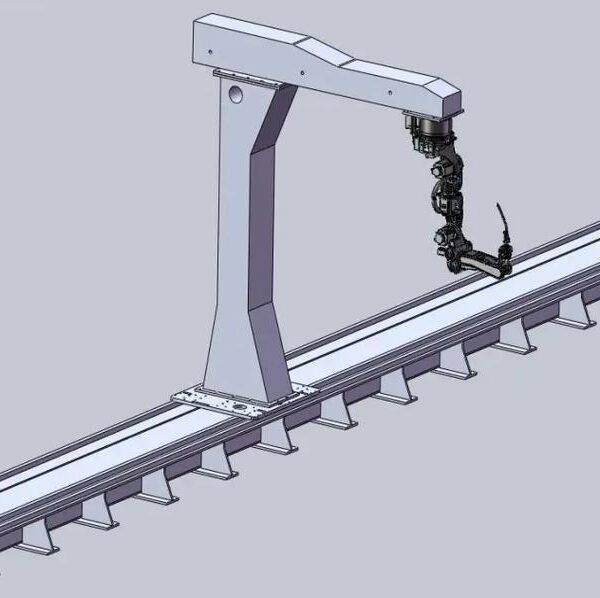
Cantilever Welding Robot solution
-
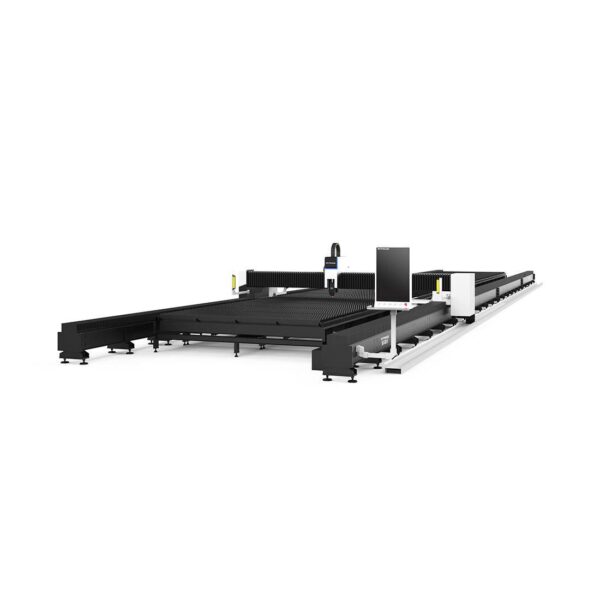
GF laser cutting machine
-
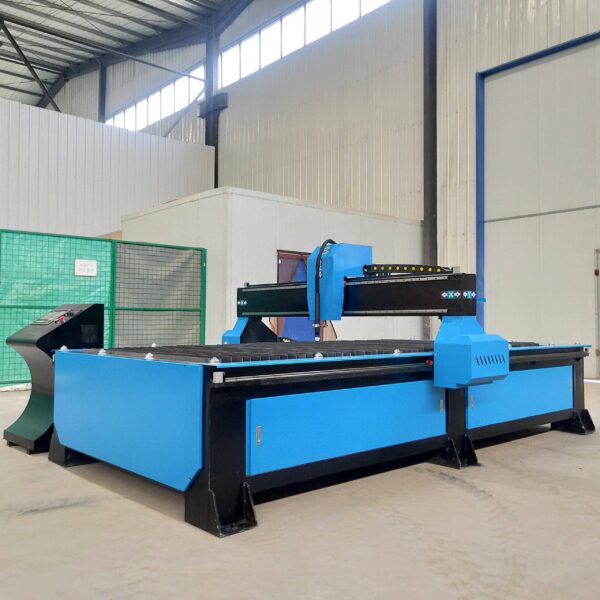
P3015 plasma cutting machine
-

LFP3015 Fiber Laser Cutter
-
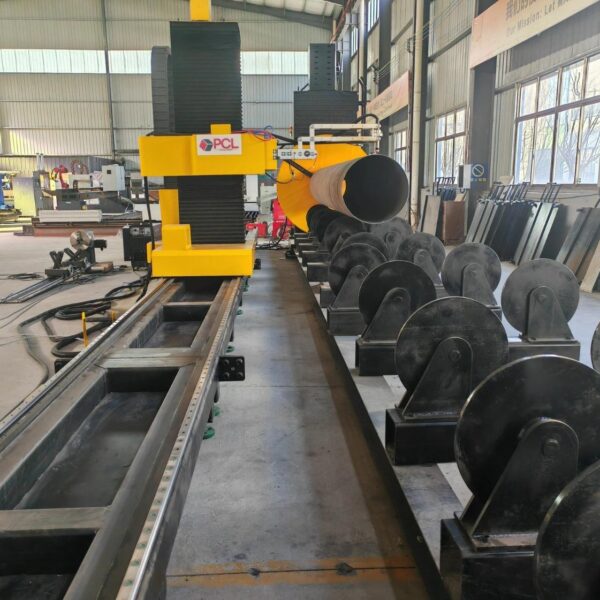
pipe plasma cutting machine
-
LFH 4020 Fiber Laser Cutting Machine
-
LFP4020
-
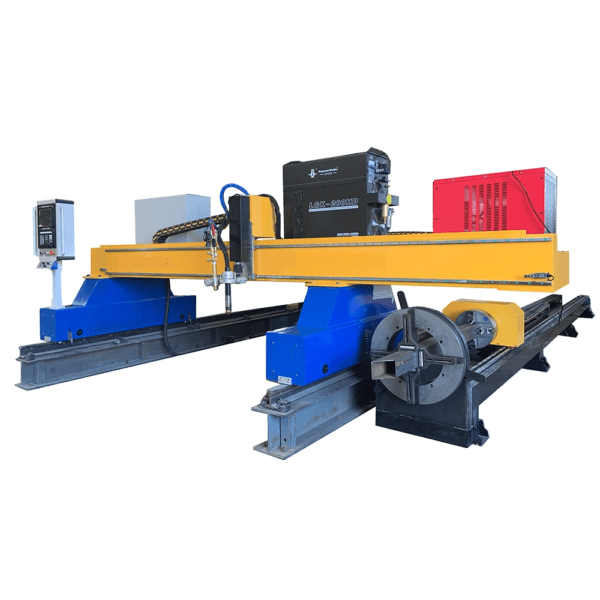
gantry plasma air cutting machine
-
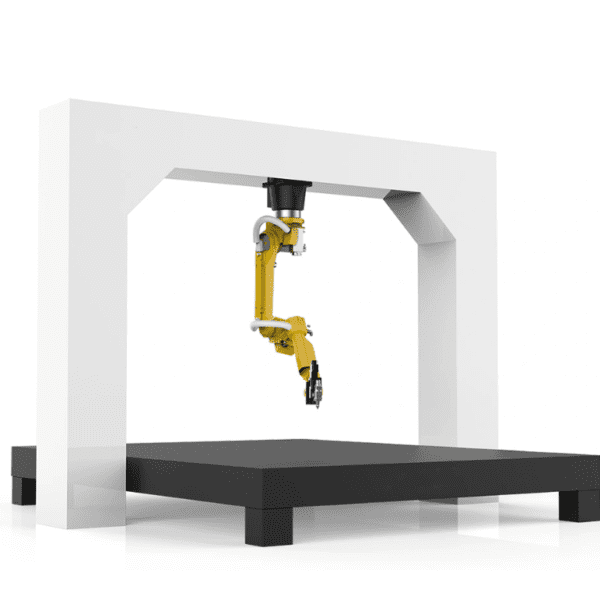
3D robot cutting machine
-
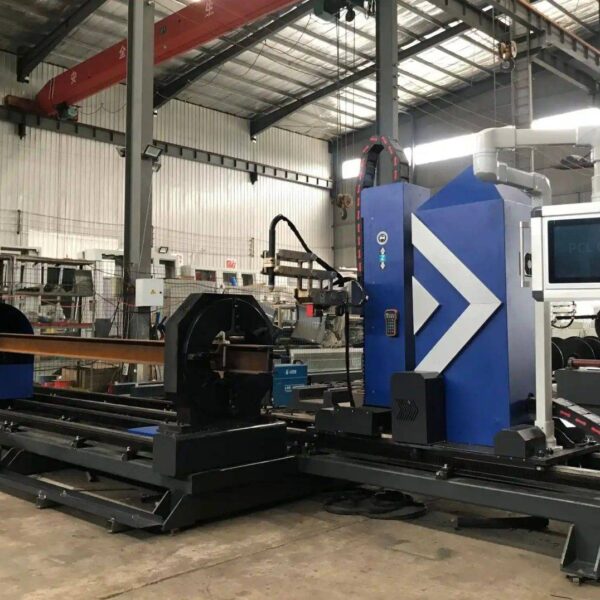
8 axis plasma cutting machine
-
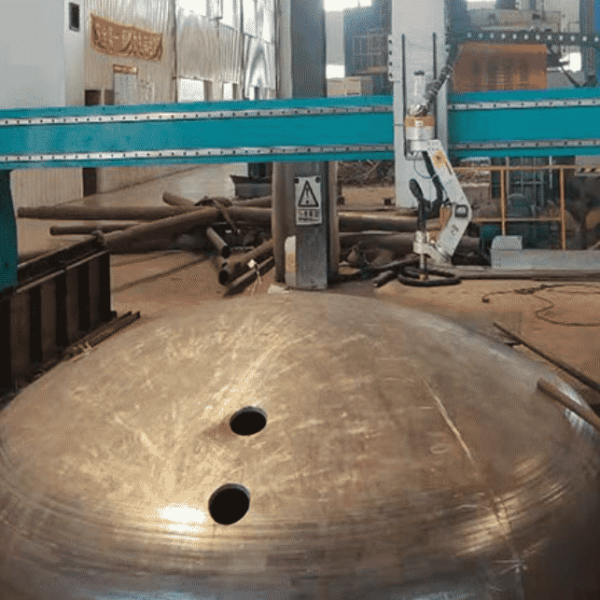
5 axis plasma cutting machine
-

LT360 tube laser cutting machine
-
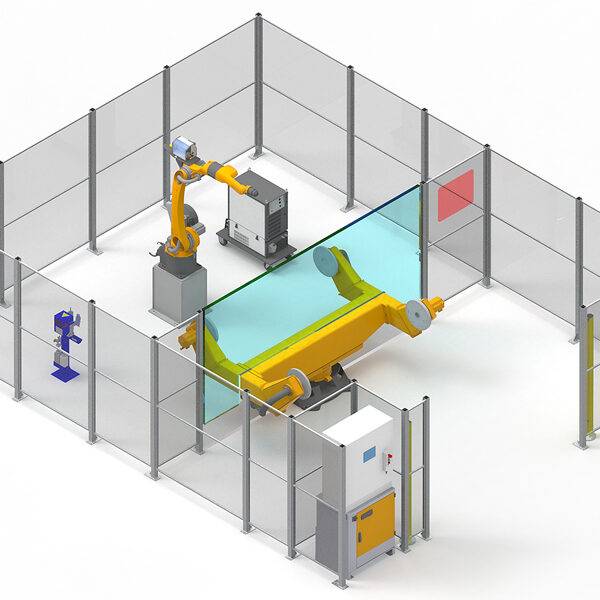
robot welding workstation
-
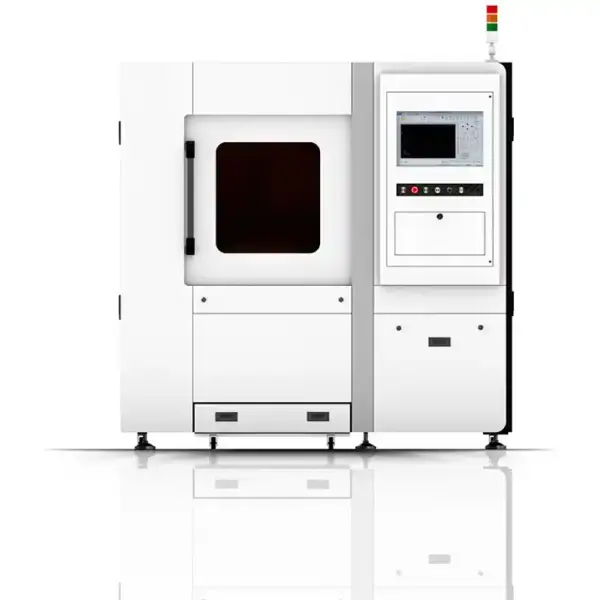
SF6060 fiber laser cutting machine
Advanced Fiber Laser Tube Processing Technology
Our CNC Fiber Laser Tube Cutting systems revolutionize metal fabrication by integrating high-precision cutting, punching, and profiling into a single automated workflow. Designed for versatility, this technology handles a wide array of profiles including Round, Square, Rectangular, and Oval tubes, as well as complex L-shaped and U-shaped channels.
- Precision Punching: High-speed hole punching with micron-level accuracy, eliminating the need for mechanical drilling or die-stamping.
- Complex Profiling: Advanced 3D pathing allows for intricate interlocking joints and specialized notch cuts, ideal for structural frames.
- High Material Efficiency: Intelligent nesting software minimizes scrap, reducing raw material costs across large production runs.
- Clean Finish: Delivers oxide-free, burr-free edges that require zero secondary grinding before welding.

Seamlessly processing multiple profiles with consistent precision.
Global Delivery & Logistics



From our high-tech manufacturing facility directly to your global site. PCL WeldCut ensures secure packaging, professional handling, and reliable international logistics to safeguard your equipment throughout the entire journey.
