Optimization of Structural Steel Fabrication via CNC Tube Laser Integration
The structural steel industry is undergoing a transition from traditional mechanical sawing and drilling toward integrated CNC fiber laser processing. This shift is driven by the necessity for higher tolerances in complex assemblies and the reduction of labor-intensive secondary operations. By consolidating multiple fabrication steps into a single automated cycle, CNC tube laser cutters provide a measurable increase in throughput while maintaining geometric precision that traditional methods cannot replicate. The integration of intelligent nesting and cloud-based tracking further bridges the gap between raw material procurement and final assembly, ensuring a transparent data flow across the production floor.
Advanced Profile Processing and Material Versatility
Modern structural fabrication requires the ability to process more than just standard round or square tubing. High-capacity CNC tube lasers are now engineered to handle heavy-duty profiles, including H-beams, C-channels, and L-angles. This is achieved through multi-axis cutting heads capable of 3D motion, allowing for precise miter cuts, complex notches, and bolt-hole patterns across non-linear surfaces. The use of a high-performance Fiber laser source allows for the stable processing of highly reflective materials such as aluminum and copper. In the past, back-reflections posed a significant risk to the optical components of the laser. Current systems utilize optical isolators and specialized beam delivery paths to neutralize these reflections, enabling continuous high-speed cutting in materials previously considered difficult for fiber technology.
The precision of these cuts is governed by real-time sensing. When processing structural profiles like H-beams, the system must account for dimensional deviations inherent in hot-rolled steel. Integrated sensors map the actual profile of the material and adjust the cutting path in real-time, ensuring that the Kerf compensation remains accurate across the entire length of the workpiece. This eliminates the fit-up issues commonly encountered during the welding phase, as every component is cut to its exact theoretical coordinate regardless of minor material warping.
Intelligent Nesting and Weld Seam Recognition
Material cost accounts for a significant portion of the total project budget in structural steel. Traditional nesting often results in significant “remnant” or scrap material. Intelligent nesting software addresses this by employing Nesting algorithms that optimize the placement of parts based on the full length of the stock. By analyzing the entire production queue, the software can interleave small parts within the dead space of larger components, consistently achieving material utilization rates of up to 95%. This level of efficiency directly impacts the bottom line by reducing raw material requirements and minimizing the footprint of scrap management.
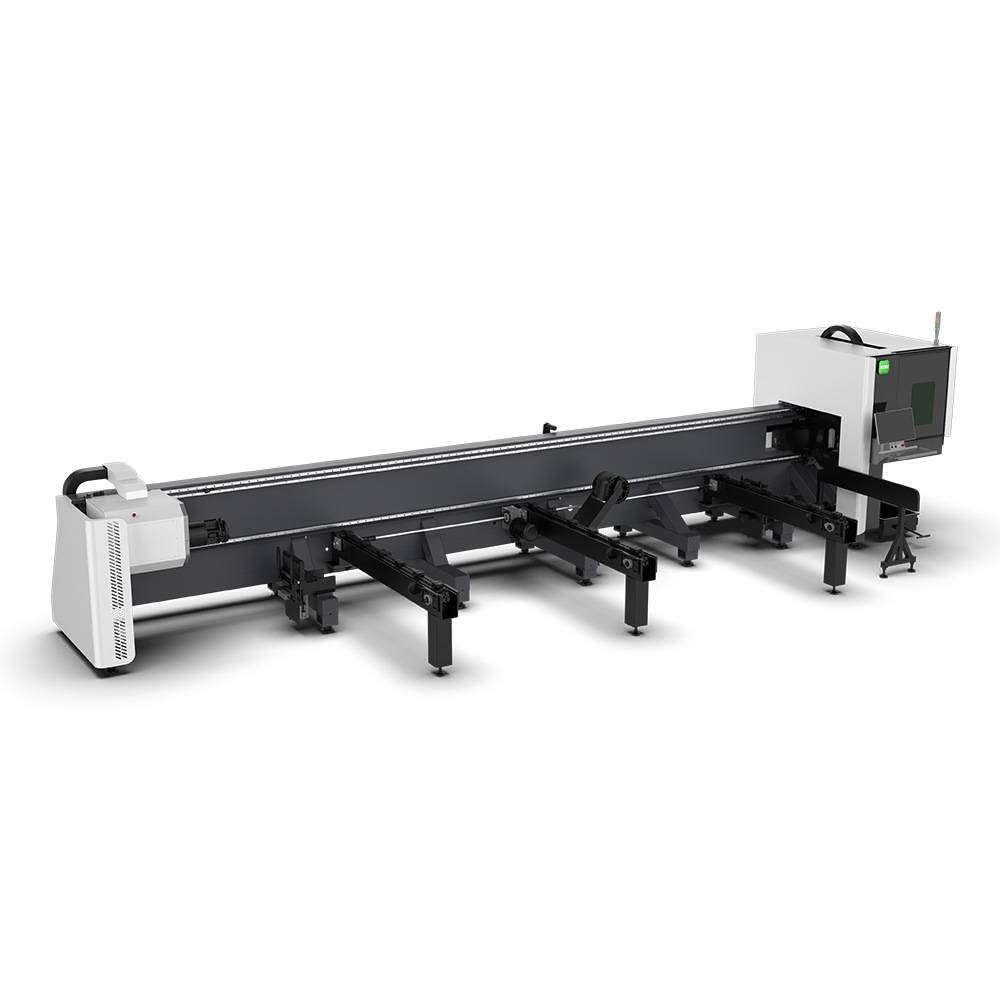
Another critical intelligent feature is automated weld seam recognition. When tubes are formed and welded, the resulting seam can interfere with both the aesthetics and the structural integrity of the finished part, especially if the seam lands on a bend line or a critical hole location. Utilizing high-resolution cameras and Point cloud reconstruction, the CNC system identifies the orientation of the weld seam before the first cut is made. The software then automatically rotates the tube to a programmed “safe zone,” ensuring that all downstream processes, such as laser-cut notches or holes, avoid the seam. This automation removes the need for manual operator inspection and prevents the rejection of parts due to seam-related structural weaknesses.
Cloud-Based Production Tracking and ERP Interoperability
The efficiency of the hardware is maximized only when it is synchronized with the facility’s management systems. Cloud-based production tracking allows project managers to monitor the status of every part in real-time. Each job is assigned a digital identity that follows it through the nesting, cutting, and sorting phases. This data is fed back into the Enterprise Resource Planning (ERP) system, providing accurate metrics on cycle times, gas consumption, and power usage. This transparency allows for more accurate bidding on future projects and identifies bottlenecks in the workflow before they cause significant delays.
One of the primary advantages of this digital integration is the elimination of secondary processing. Traditional plasma or mechanical cutting often leaves heavy dross or burrs, requiring manual grinding. CNC tube lasers produce a minimal Heat-affected zone (HAZ), resulting in burr-free edges that are ready for immediate welding or assembly. By removing the grinding stage, manufacturers reduce labor costs and improve the safety of the shop environment by minimizing airborne metal dust and noise levels.
Technical Comparison: Traditional vs. CNC Tube Laser
| Feature | Traditional (Saw/Drill/Punch) | CNC Tube Laser (Integrated) |
|---|---|---|
| Dimensional Accuracy | +/- 1.5mm to 3.0mm | +/- 0.1mm to 0.3mm |
| Material Utilization | 75% – 80% | 92% – 97% |
| Secondary Processing | Manual deburring/grinding required | None (Burr-free finish) |
| Complexity of Geometry | Limited to simple angles/holes | Unlimited (Complex 3D paths) |
| Data Integration | Manual log entries | Real-time Cloud/ERP sync |
The implementation of CNC tube laser technology represents a fundamental change in the economics of structural steel fabrication. By leveraging high-efficiency nesting, reflective material handling, and digital tracking, facilities can scale their production without a proportional increase in floor space or headcount. The resulting components are not only produced faster but are also of a higher quality, facilitating easier downstream assembly and superior structural performance. As the industry moves toward “smart factory” standards, the integration of these intelligent cutting platforms becomes a prerequisite for maintaining competitive standing in the global market.
-


LT240S tube laser cutting machine
-
LT120S tube laser cutting machine
-
Sale

Tank Fillet Welding Machine
Original price was: $1,000.00.$900.00Current price is: $900.00. -
Sale

MAK100 tube laser cutting machine
Original price was: $5,500.00.$5,000.00Current price is: $5,000.00. -

portable plasma air cutting machine
$1,200.00 -

2in1 fiber laser cutting machine
-

Air cooling Laser welding machine
-

HF h beam laser cutting machine
-

LT240 laser cutting machine
-

Laser welding machine
-


Cobot Welding Station
-

Gantry welding robot solution
-

Tracked Wheeled AGV Welding robot
-

LFH6020 Fiber laser cutting machine
-
LFP6020
-

robotic welidng machine
Advanced Fiber Laser Tube Processing Technology
Our CNC Fiber Laser Tube Cutting systems revolutionize metal fabrication by integrating high-precision cutting, punching, and profiling into a single automated workflow. Designed for versatility, this technology handles a wide array of profiles including Round, Square, Rectangular, and Oval tubes, as well as complex L-shaped and U-shaped channels.
- Precision Punching: High-speed hole punching with micron-level accuracy, eliminating the need for mechanical drilling or die-stamping.
- Complex Profiling: Advanced 3D pathing allows for intricate interlocking joints and specialized notch cuts, ideal for structural frames.
- High Material Efficiency: Intelligent nesting software minimizes scrap, reducing raw material costs across large production runs.
- Clean Finish: Delivers oxide-free, burr-free edges that require zero secondary grinding before welding.

Seamlessly processing multiple profiles with consistent precision.
Global Delivery & Logistics



From our high-tech manufacturing facility directly to your global site. PCL WeldCut ensures secure packaging, professional handling, and reliable international logistics to safeguard your equipment throughout the entire journey.