Advanced Plasma Processing for LNG Structural Integrity
The construction of Liquefied Natural Gas (LNG) facilities demands an unprecedented level of structural precision. These projects involve massive quantities of H-beams, channels, and heavy-wall pipes that must support cryogenic tanks and high-pressure piping systems. In this industrial environment, the primary challenge is not just throughput, but the repeatable accuracy of complex structural intersections. A Beam Processing Center integrated with Laser Seam Tracking provides the necessary technical framework to bridge the gap between theoretical CAD models and the physical reality of rolled steel.
The Critical Role of Intersection Accuracy
In LNG infrastructure, structural steel serves as the backbone for pipe racks and modular process skids. When dealing with large-scale H-beams, “intersection accuracy” refers to the precision with which one structural member fits into another. Traditional manual layout methods are prone to cumulative error, especially when accounting for the natural “bow” and “twist” found in hot-rolled sections.
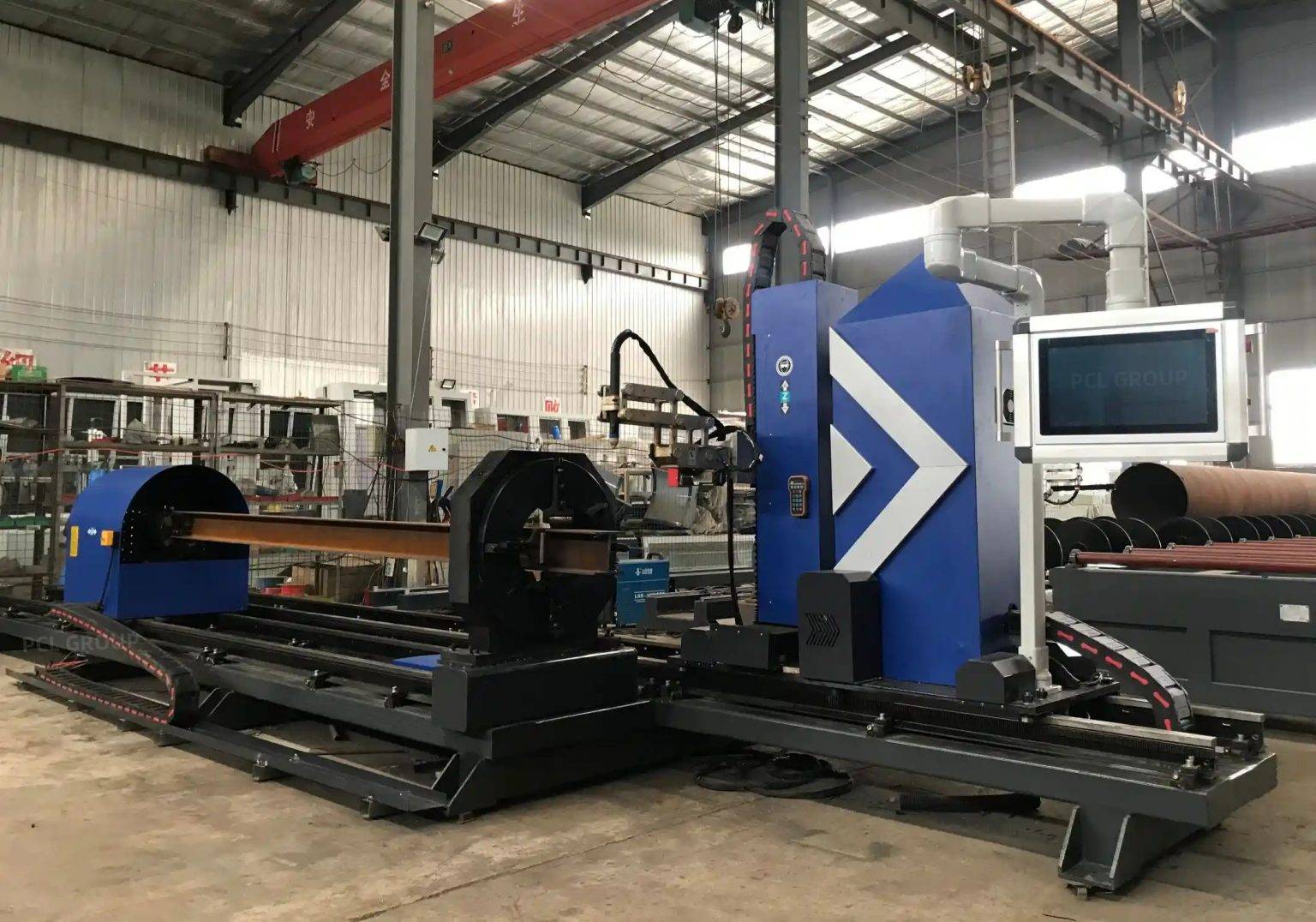
A robotic Plasma Cutting center utilizes laser sensors to scan the actual surface of the beam before and during the cut. This real-time data allows the control system to shift the cutting path to match the true center of the web or the exact orientation of the flanges. By achieving Plasma Cutting Intersection Accuracy within fractions of a millimeter, fabricators eliminate the need for “gap filling” or excessive grinding during the assembly phase. This is particularly vital for LNG Projects where structural nodes are subject to extreme thermal expansion and contraction, requiring perfect load distribution across all joined surfaces.
Compensating for Mill Tolerances with Laser Seam Tracking
Standard mill tolerances for H-beams often exceed the tight tolerances required for modular LNG construction. A beam might meet ASTM standards but still possess a flange tilt that would derail an automated assembly line. Laser seam tracking systems mitigate this by projecting a laser line across the profile. The reflected light is captured by a high-speed camera, providing a 3D topographic map of the steel surface.
As the plasma torch approaches a cut zone—such as a cope, a notch, or a bolt hole—the system adjusts the robotic arm’s kinematics to compensate for any deviation. This ensures that the geometry of the cut remains perpendicular or at the specified bevel angle relative to the actual face of the material, rather than a theoretical coordinate system. For the industrial engineer, this means a drastic reduction in rework and a streamlined flow from the cutting cell to the assembly floor.
Low Maintenance H-Beam Processing Strategies
Operational uptime is a key performance indicator in heavy industrial fabrication. In the context of LNG projects, where timelines are aggressive and liquidated damages are high, equipment reliability is paramount. Plasma cutting systems are inherently suited for high-duty cycle environments. Unlike mechanical drilling or sawing, which involve significant tool wear and physical force, plasma is a non-contact thermal process.
Achieving H-Beam Processing Efficiency requires a system designed for minimal intervention. Modern beam processing centers utilize robust robotic designs that isolate sensitive electronics from the harsh dust and slag generated by the plasma arc. The use of high-definition plasma power sources with long-life consumable technology extends the intervals between torch maintenance. Furthermore, by automating the material handling and measuring process, the system reduces the mechanical wear associated with manual positioning and heavy lifting, leading to a lower total cost of ownership over the project lifecycle.
Robotic Versatility in Plasma Cutting
The integration of a six-axis or seven-axis robot within the beam center allows for cutting on all four sides of an H-beam in a single pass. This multi-axis capability is essential for processing the complex geometry of LNG pipe rack supports. Because the plasma torch can move dynamically around the workpiece, it can perform intricate “rat hole” cuts, flange thinning, and web penetrations without the need to flip or rotate the heavy beam multiple times. This reduction in material handling not only saves time but also decreases the likelihood of equipment damage and workplace injuries.
Structural Steel Beveling for High-Pressure Loads
Weld preparation is perhaps the most labor-intensive aspect of structural steel fabrication. In LNG projects, most structural connections require full-penetration or partial-penetration welds to handle seismic and cryogenic loads. This necessitates precise beveling of the beam ends and flange edges.
A beam processing center equipped with a tilting plasma head can execute Structural Steel Beveling (V, X, Y, and K cuts) during the initial cutting phase. By integrating the beveling into the primary processing cycle, the need for secondary manual grinding is virtually eliminated. The laser seam tracking system ensures that the bevel angle remains consistent even if the flange thickness varies across the length of the beam.
Optimizing Plasma Gas Mixtures for Edge Quality
The quality of the beveled edge is a direct result of the plasma gas chemistry and the torch’s motion control. For the carbon steel typically used in LNG substructures, oxygen-plasma provides the fastest cutting speeds and a weld-ready surface finish. However, for specialized stainless steel components used in proximity to cryogenic valves, nitrogen or water-mist plasma may be utilized to prevent oxidation. The ability of the beam processing center to automatically switch gas parameters based on the material type ensures that every cut meets the specific metallurgical requirements of the project.
Technical Synergies and ROI
From an industrial engineering perspective, the investment in a laser-tracked plasma processing center is justified by the compression of the production schedule. When intersection accuracy is guaranteed, the assembly stage becomes a “Lego-like” process. Laborers no longer spend hours correcting fit-up issues with torches and grinders. Instead, the focus shifts to high-speed welding and quality assurance.
Furthermore, the data generated by the laser tracking system can be fed back into the project management software, providing a digital twin of the fabricated member. This traceability is essential for LNG projects, where material certifications and dimensional reports are required for every major structural component. By automating the data capture at the point of cut, the facility improves its compliance posture while simultaneously increasing its throughput.
Conclusion
The transition to automated beam processing centers with laser seam tracking represents a significant leap forward for LNG infrastructure fabrication. By prioritizing plasma cutting precision, minimizing maintenance through robotic integration, and perfecting the beveling process, industrial engineers can ensure that structural steel components are produced with the highest level of integrity. This technological approach does not merely replace manual labor; it enhances the fundamental capability of the fabrication shop to deliver complex, high-stakes projects on time and within the most stringent safety tolerances.
-


LT240S tube laser cutting machine
-
LT120S tube laser cutting machine
-
Sale

Tank Fillet Welding Machine
Original price was: $1,000.00.$900.00Current price is: $900.00. -
Sale

MAK100 tube laser cutting machine
Original price was: $5,500.00.$5,000.00Current price is: $5,000.00. -

portable plasma air cutting machine
$1,200.00 -

2in1 fiber laser cutting machine
-

Air cooling Laser welding machine
-

HF h beam laser cutting machine
-

LT240 laser cutting machine
-

Laser welding machine
-


Cobot Welding Station
-

Gantry welding robot solution
-

Tracked Wheeled AGV Welding robot
-

LFH6020 Fiber laser cutting machine
-
LFP6020
-

robotic welidng machine
Advanced Fiber Laser Tube Processing Technology
Our CNC Fiber Laser Tube Cutting systems revolutionize metal fabrication by integrating high-precision cutting, punching, and profiling into a single automated workflow. Designed for versatility, this technology handles a wide array of profiles including Round, Square, Rectangular, and Oval tubes, as well as complex L-shaped and U-shaped channels.
- Precision Punching: High-speed hole punching with micron-level accuracy, eliminating the need for mechanical drilling or die-stamping.
- Complex Profiling: Advanced 3D pathing allows for intricate interlocking joints and specialized notch cuts, ideal for structural frames.
- High Material Efficiency: Intelligent nesting software minimizes scrap, reducing raw material costs across large production runs.
- Clean Finish: Delivers oxide-free, burr-free edges that require zero secondary grinding before welding.

Seamlessly processing multiple profiles with consistent precision.
Global Delivery & Logistics



From our high-tech manufacturing facility directly to your global site. PCL WeldCut ensures secure packaging, professional handling, and reliable international logistics to safeguard your equipment throughout the entire journey.