Optimizing LNG Tank Fabrication through Robotic Automation
The construction of large-scale LNG storage tanks demands extreme precision and structural consistency. Given the cryogenic nature of the stored media, the integrity of the horizontal girth seams is non-negotiable. Traditionally, these seams were welded using manual or semi-automatic methods that were susceptible to operator fatigue and environmental variables. The introduction of the Automatic Girth Seam Welder (AGW) equipped with Zero-tailing technology represents a shift toward industrial-grade robotics designed to maximize throughput while maintaining stringent X-ray quality standards.
Zero-tailing technology specifically addresses the inefficiencies found at the start and stop points of the welding cycle. In standard automated systems, the overlap area often requires significant grinding and manual intervention to ensure a flush finish. Zero-tailing mechanisms utilize synchronized carriage movement and wire-feed retardation to close the weld loop seamlessly, eliminating the “tail” or excess buildup that typically necessitates post-weld machining. This is critical in LNG projects where the shell plates can exceed 40mm in thickness, requiring multiple passes that must be perfectly aligned.
The Mechanics of the Robotic MAG Welding Process
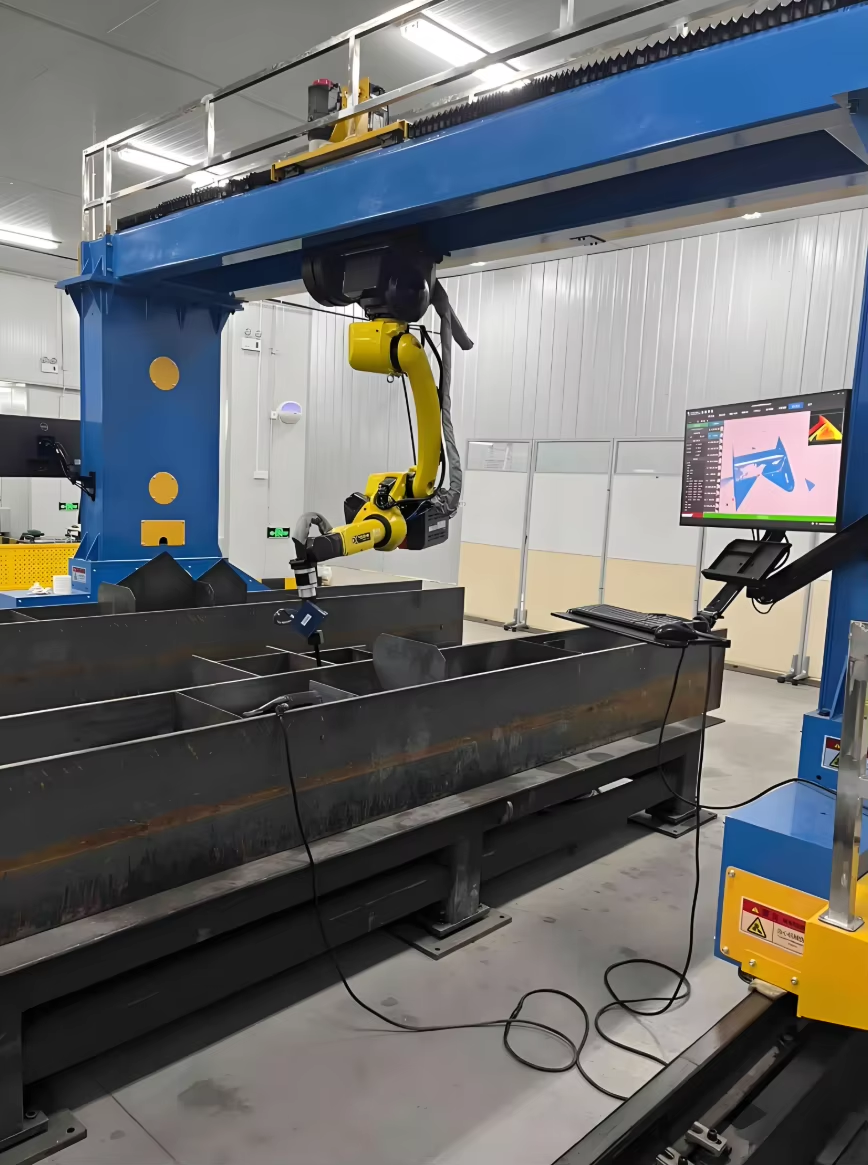
The core of the modern AGW system is the MAG welding process (Metal Active Gas). Unlike older submerged arc processes used in flat-track applications, robotic MAG welding provides the versatility needed for the vertical-up and horizontal girth positions found in tank farms. The system utilizes a continuous solid wire electrode shielded by a gas mixture—typically Argon and CO2—which allows for deep penetration and a stable arc even in high-wind field environments, provided adequate shielding curtains are employed.
Parameter Control and Deposition Efficiency
In an industrial engineering context, the deposition rate is the primary metric for success. Robotic MAG systems in LNG applications typically operate at deposition rates of 4 to 6 kg/h, compared to the 1.5 to 2 kg/h achievable by manual stick welding (SMAW). The robotic controller manages the arc voltage, wire feed speed, and travel speed in a closed-loop system. When the Zero-tailing technology is engaged, the controller adjusts the oscillation width as the carriage approaches the completion of the circumference, ensuring the weld pool merges with the starting point without thermal shock or porosity.
Maintenance Protocols for High-Duty Cycle Robotics
To realize the benefits of an automated system, the equipment must maintain a high availability rate. Maintenance for a robotic AGW is categorized into three distinct streams: the welding power source, the mechanical carriage, and the torch consumable chain.
Consumable Management and Torch Alignment
The contact tip and gas nozzle are the most frequent points of failure. In a zero-tailing system, the precision of the wire exit point is paramount. Even a 0.5mm deviation in the contact tip center can result in lack of fusion at the seam edge. Maintenance schedules must dictate the replacement of contact tips every 4-6 hours of continuous arc time. Furthermore, the wire liners must be purged with compressed air to remove copper flaking, which can cause erratic wire feeding and arc instability.
Mechanical Drive Calibration
The carriage tracks on the tank shell are subject to grit, dust, and thermal expansion. Weekly inspections of the drive gears and the magnetic or vacuum-clamping rollers are necessary. Any slippage in the drive system will invalidate the zero-tailing logic, as the controller relies on precise encoder feedback to calculate the overlap point. Lubrication of the oscillation tracks must be performed with high-temperature graphite-based lubricants to prevent seizing during long-duration passes.
Labor ROI and Economic Impact Analysis
The transition to zero-tailing technology is often viewed through the lens of capital expenditure (CAPEX) versus operational expenditure (OPEX). From an industrial engineering perspective, the labor ROI is calculated not just by the reduction in headcount, but by the dramatic increase in the “arc-on” time or duty cycle.
Manual welding crews typically achieve a duty cycle of 25% to 30% due to the need for repositioning, rod changes, and physical breaks. A robotic AGW system can maintain a duty cycle of 75% to 85%. In a standard LNG tank project involving 10,000 linear meters of girth welding, a single robotic unit can replace approximately four to six highly skilled manual welders.
Quantifying the Reduction in Rework
One of the hidden costs in LNG construction is the repair of defective welds identified by Non-Destructive Testing (NDT). Manual welding defects often stem from inconsistent travel speeds or poor tie-ins at the start of a new electrode. By utilizing the zero-tailing robotic approach, the “tie-in” is handled by the machine’s logic. Historical data from LNG sites indicates that robotic MAG welding reduces the repair rate from 5-8% (manual) to less than 1.5%. When accounting for the cost of gouging, re-welding, and re-testing, the ROI for the robotic system is often realized within the first 12 months of a multi-tank project.
Implementation Strategy in LNG Environments
Deploying an Automatic Girth Seam Welder requires a specific site preparation workflow. The shell plates must be fitted with tighter tolerances than manual welding requires. The root gap must be consistent within +/- 1mm to allow the robotic sensors to track the seam effectively. Industrial engineers must oversee the integration of the welding units with the tank’s hydraulic jacking system, ensuring that the welding occurs at the optimal ergonomic height for the technician monitoring the interface.
The “Zero-tailing” feature is particularly beneficial during the final “closing” pass of each ring. In this phase, the machine’s ability to taper the current and fill the crater automatically ensures that the most vulnerable point of the tank—the final tie-in—is as strong as the rest of the seam. This level of consistency is the primary driver behind the global adoption of robotic MAG systems in energy infrastructure.
Conclusion: The Engineering Mandate for Automation
for LNG Projects, where timelines are compressed and safety standards are absolute, the move toward automated girth welding is an operational necessity. The synergy between high-deposition MAG processes and the precision of zero-tailing technology allows for a predictable construction schedule. By focusing on rigorous maintenance and leveraging the labor ROI of robotic systems, engineering firms can ensure long-term structural integrity while maintaining a competitive edge in the global energy market.
-


LT240S tube laser cutting machine
-
LT120S tube laser cutting machine
-
Sale

Tank Fillet Welding Machine
Original price was: $1,000.00.$900.00Current price is: $900.00. -
Sale

MAK100 tube laser cutting machine
Original price was: $5,500.00.$5,000.00Current price is: $5,000.00. -

portable plasma air cutting machine
$1,200.00 -

2in1 fiber laser cutting machine
-

Air cooling Laser welding machine
-

HF h beam laser cutting machine
-

LT240 laser cutting machine
-

Laser welding machine
-


Cobot Welding Station
-

Gantry welding robot solution
-

Tracked Wheeled AGV Welding robot
-

LFH6020 Fiber laser cutting machine
-
LFP6020
-

robotic welidng machine
Advanced Fiber Laser Tube Processing Technology
Our CNC Fiber Laser Tube Cutting systems revolutionize metal fabrication by integrating high-precision cutting, punching, and profiling into a single automated workflow. Designed for versatility, this technology handles a wide array of profiles including Round, Square, Rectangular, and Oval tubes, as well as complex L-shaped and U-shaped channels.
- Precision Punching: High-speed hole punching with micron-level accuracy, eliminating the need for mechanical drilling or die-stamping.
- Complex Profiling: Advanced 3D pathing allows for intricate interlocking joints and specialized notch cuts, ideal for structural frames.
- High Material Efficiency: Intelligent nesting software minimizes scrap, reducing raw material costs across large production runs.
- Clean Finish: Delivers oxide-free, burr-free edges that require zero secondary grinding before welding.

Seamlessly processing multiple profiles with consistent precision.
Global Delivery & Logistics



From our high-tech manufacturing facility directly to your global site. PCL WeldCut ensures secure packaging, professional handling, and reliable international logistics to safeguard your equipment throughout the entire journey.