Optimizing Bridge Truss Fabrication via Automatic Girth Seam Welding
In the field of heavy structural engineering, the production of bridge trusses demands high-precision execution and metallurgical integrity. The transition from traditional welding methodologies to narrow gap welding using robotic systems represents a critical shift in industrial efficiency. A girth seam welder designed for cylindrical or tubular truss members must manage complex heat inputs while ensuring full penetration. By utilizing robotic Metal Active Gas (MAG) processes, manufacturers can standardize weld quality across thousands of linear feet, mitigating the variances inherent in manual labor.
The Mechanics of Narrow Gap Robotic MAG Welding
Narrow gap technology focuses on reducing the total volume of the weld groove. In standard V-groove preparations, the volume of filler metal increases exponentially with the thickness of the plate. Conversely, narrow gap preparations utilize nearly parallel sidewalls, typically with a gap width between 9mm and 15mm. This geometry significantly reduces the number of passes required to complete a girth seam. However, it introduces technical challenges regarding sidewall fusion and slag entrapment.
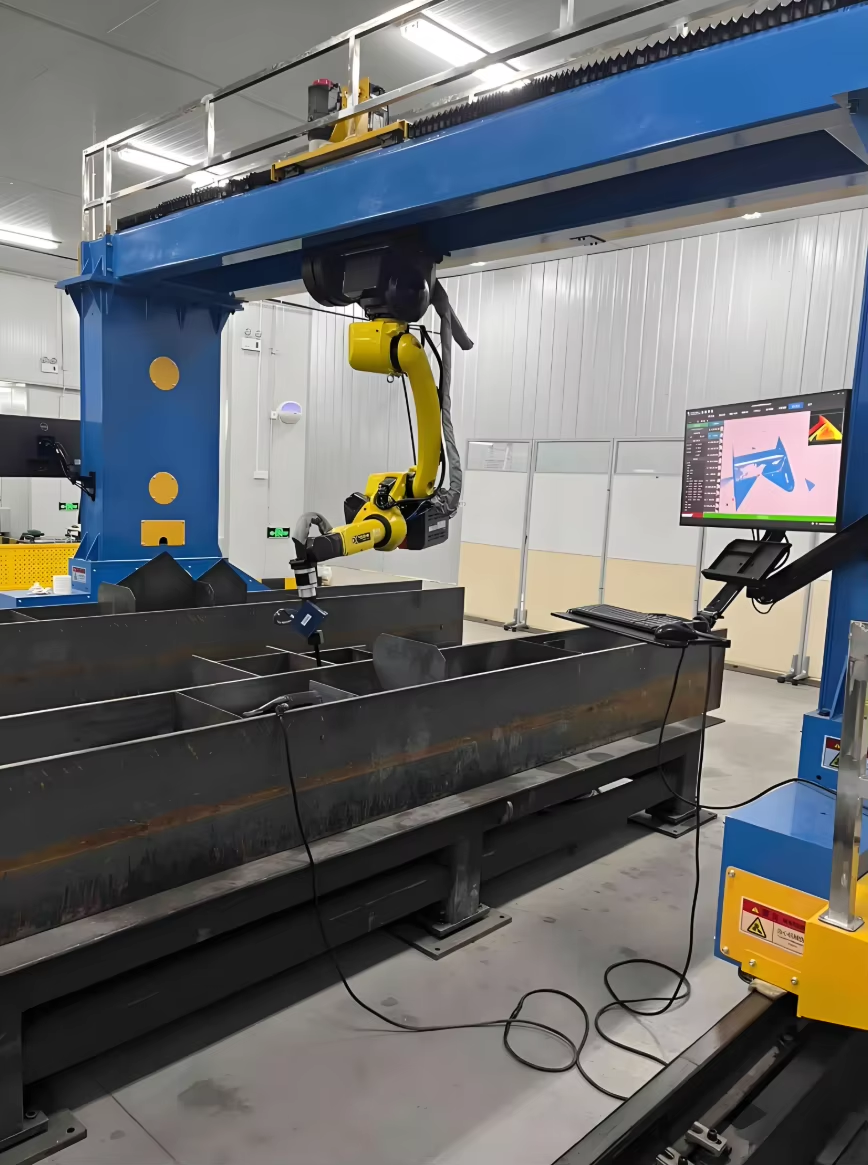
Robotic MAG welding addresses these challenges through precise oscillation patterns and real-time arc monitoring. The robotic MAG welding system employs specialized torches with slim profiles to reach the root of the narrow groove. By utilizing high-speed wire feed sensors and through-arc seam tracking, the robot adjusts its trajectory to compensate for minor fit-up deviations. This level of control is unattainable by manual operators, who struggle with the visual obstructions and heat concentrations found within deep, narrow preparations.
Deposition Rates and Thermal Management
From an industrial engineering perspective, the deposition rate is a primary KPI. MAG welding, particularly when using metal-cored or flux-cored wires in a robotic environment, allows for high current densities. Because the narrow gap requires less filler material, the total “arc-on” time per joint is reduced by 40% to 60% compared to conventional submerged arc or standard MIG/MAG joints. Reduced arc time leads to lower overall heat input, which minimizes the heat-affected zone (HAZ) and reduces the risk of thermal distortion in large bridge truss components. Maintaining dimensional stability is crucial for ensuring that truss segments align perfectly during site erection.
Maintenance Protocols for High-Duty Cycle Robotic Cells
The reliability of an Automatic Girth Seam Welder is dependent on a rigorous preventative maintenance schedule. Unlike manual setups, a robotic cell operates at duty cycles exceeding 80%. This puts significant stress on the wire delivery system and the torch consumables. Industrial engineers must implement a tiered maintenance strategy to avoid unplanned downtime.
Consumables and Torch Alignment
The contact tip and gas nozzle are the most frequent points of failure. In narrow gap applications, even minor copper erosion in the contact tip can cause arc wandering, leading to lack of fusion on the sidewalls. Automated nozzle cleaning stations (reamers) should be programmed to cycle every 30 to 60 minutes of arc time. Furthermore, the wire liner must be replaced at set intervals to prevent friction-induced feed fluctuations, which jeopardize the stability of the MAG process.
Mechanical Drive Systems and Calibration
The girth seam welder typically utilizes a rotary positioner or a travel carriage. Calibration of the rotational speed (RPM) against the robot’s linear travel speed (IPM) is essential for maintaining a consistent weld bead profile. Lubrication of the gear drives and inspection of the grounding brushes must be performed monthly to ensure electrical continuity and prevent arc blow. Any fluctuation in voltage due to poor grounding can result in porosity, necessitating costly repairs.
Quantitative Analysis of Labor ROI
The financial justification for investing in robotic girth seam welding is rooted in labor ROI and throughput consistency. In the current labor market, certified welders capable of performing multi-pass narrow gap welds on heavy structural steel are scarce and expensive. A robotic system allows a single operator—often with a lower certification level—to oversee multiple welding stations.
To calculate the ROI, we must look at the “Man-Hours per Ton” metric. Manual welding of a heavy-duty bridge truss girth seam might require 12 hours of labor, including setup, welding, and inter-pass cleaning. A robotic narrow gap system can reduce this to 4 hours. If we factor in the reduction in rework (defects typically drop from 5-8% in manual processes to less than 1% in robotic processes), the payback period for a $250,000 robotic cell often falls within 18 to 24 months, depending on project volume.
Furthermore, the labor ROI extends to health and safety. Robotic systems remove the human element from the immediate proximity of welding fumes and high radiant heat. This reduction in environmental exposure lowers long-term liability costs and decreases employee turnover, which is a hidden but significant cost in heavy fabrication shops.
Throughput and Scalability
Industrial scalability relies on predictability. A robotic girth seam welder provides a fixed cycle time, allowing project managers to schedule bridge truss assembly with high accuracy. This predictability eliminates the bottlenecks often found in the welding department, enabling a smoother flow of material through the shop. When the welding process is no longer a variable, the entire facility’s overhead can be more effectively distributed across the output.
Quality Control and NDT Integration
In bridge construction, welds are subject to stringent Non-Destructive Testing (NDT), including Ultrasonic Testing (UT) and Radiographic Testing (RT). The consistency of a robotic MAG welding process ensures that the weld profile is uniform, which simplifies the interpretation of NDT results. Narrow gap welds, when executed by a robot, exhibit superior grain structure and consistent penetration depth. The digital integration of the robot also allows for “data logging” of every weld parameter—voltage, current, gas flow, and travel speed. This digital twin of the weld serves as a permanent quality record, providing an additional layer of accountability for infrastructure projects.
Conclusion on Industrial Implementation
The integration of an automatic girth seam welder with narrow gap capabilities is a strategic necessity for modern bridge truss fabrication. By prioritizing robotic MAG technology, firms can overcome the limitations of manual labor, reduce material costs through optimized joint geometry, and ensure a high return on investment. The focus remains on mechanical precision and system uptime, ensuring that the critical infrastructure of tomorrow is built with the highest standards of engineering efficiency and structural reliability.
-
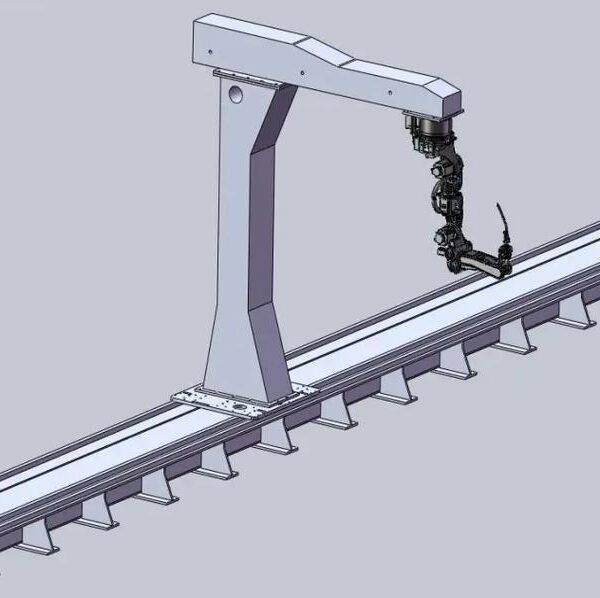

Cantilever Welding Robot solution
-
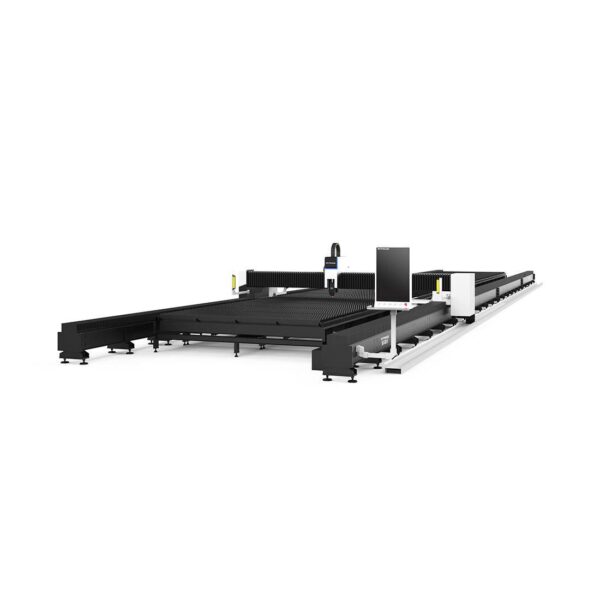

GF laser cutting machine
-
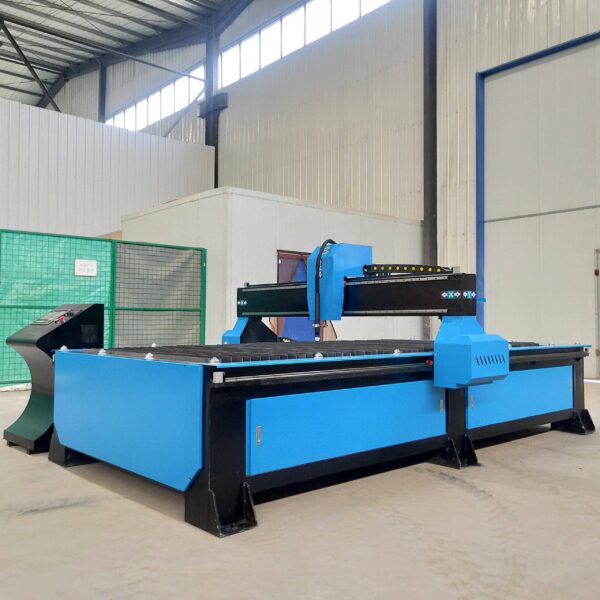
P3015 plasma cutting machine
-

LFP3015 Fiber Laser Cutter
-
pipe plasma cutting machine
-
LFH 4020 Fiber Laser Cutting Machine
-
LFP4020
-
gantry plasma air cutting machine
-
3D robot cutting machine
-
8 axis plasma cutting machine
-
5 axis plasma cutting machine
-

LT360 tube laser cutting machine
-
robot welding workstation
-
SF6060 fiber laser cutting machine
Advanced Fiber Laser Tube Processing Technology
Our CNC Fiber Laser Tube Cutting systems revolutionize metal fabrication by integrating high-precision cutting, punching, and profiling into a single automated workflow. Designed for versatility, this technology handles a wide array of profiles including Round, Square, Rectangular, and Oval tubes, as well as complex L-shaped and U-shaped channels.
- Precision Punching: High-speed hole punching with micron-level accuracy, eliminating the need for mechanical drilling or die-stamping.
- Complex Profiling: Advanced 3D pathing allows for intricate interlocking joints and specialized notch cuts, ideal for structural frames.
- High Material Efficiency: Intelligent nesting software minimizes scrap, reducing raw material costs across large production runs.
- Clean Finish: Delivers oxide-free, burr-free edges that require zero secondary grinding before welding.

Seamlessly processing multiple profiles with consistent precision.
Global Delivery & Logistics



From our high-tech manufacturing facility directly to your global site. PCL WeldCut ensures secure packaging, professional handling, and reliable international logistics to safeguard your equipment throughout the entire journey.