Single Pulse Fiber Laser Cobot – Hanoi, Vietnam
In this article
- Field Report: Deployment of Single Pulse Fiber Laser Cobot Systems
- Site Overview: Hanoi Industrial Sector Implementation
- Core Technical Dynamics: Laser Technology and Aluminum Alloy Welding
- The Physics of Single Pulse Modulation
- Integrating the Fiber Laser Cobot into the Production Line
- Path Repeatability vs. Manual Variability
- Reflectivity Management and Focal Point Calibration
- Field Observations: Environmental Challenges in Vietnam
- Chiller Condensation and Optical Integrity
- Power Quality and Voltage Stabilization
- Aluminum Alloy Welding: Process Optimization Parameters
- Lessons Learned and Engineering Recommendations
- 1. Cleanliness is Non-Negotiable
- 2. Technician Training over Programming
Field Report: Deployment of Single Pulse Fiber Laser Cobot Systems
Site Overview: Hanoi Industrial Sector Implementation
This report summarizes the technical deployment and performance evaluation of a 2kW Single Pulse Fiber Laser Cobot at a Tier 2 automotive component facility in the Thang Long Industrial Park, Hanoi, Vietnam. The primary objective was to replace traditional manual TIG (Tungsten Inert Gas) stations with automated Laser Technology to address inconsistencies in Aluminum Alloy welding, specifically for 5052 and 6061 grades.
Hanoi’s manufacturing environment presents unique challenges, primarily high ambient humidity (averaging 75-85%) and fluctuating power grid stability. These factors significantly impact the stability of high-frequency laser discharges and the integrity of the fiber delivery system. Our implementation focused on synchronizing the robotic motion of the Fiber Laser Cobot with modulated pulse parameters to mitigate the high thermal conductivity inherent in aluminum workpieces.
Core Technical Dynamics: Laser Technology and Aluminum Alloy Welding
Aluminum Alloy welding has historically been the “problem child” of the Hanoi workshop. The material’s high reflectivity at the 1070nm wavelength (standard for fiber lasers) and its rapid thermal dissipation often lead to poor penetration or surface blow-back. By leveraging advanced Laser Technology, specifically Single Pulse modulation, we have transitioned from a continuous wave (CW) approach—which often over-penetrates thin-gauge sheets—to a controlled energy delivery system.
The Physics of Single Pulse Modulation
In this field application, the Single Pulse mode allows the Fiber Laser Cobot to deliver a high peak power to break the aluminum oxide layer (which melts at approximately 2,000°C) without saturating the base metal (which melts at ~660°C). This precision is critical. By setting the pulse frequency between 50Hz and 150Hz, we created a “shiver” effect in the molten pool, which helps in venting trapped hydrogen gas—the primary cause of porosity in Hanoi’s humid assembly lines.
Keyhole Stability and Shielding Gas Synergy
One of the critical lessons learned during the first week in Hanoi was the relationship between the Fiber Laser Cobot’s travel speed and gas flow. We utilized a 99.999% pure Argon shield. We found that at a travel speed of 25mm/s, a flow rate of 15L/min was insufficient due to the local shop’s cross-ventilation. Increasing the flow to 20L/min with a specialized trailing shield nozzle was necessary to prevent atmospheric contamination before the Aluminum Alloy welding zone could solidify.
Integrating the Fiber Laser Cobot into the Production Line
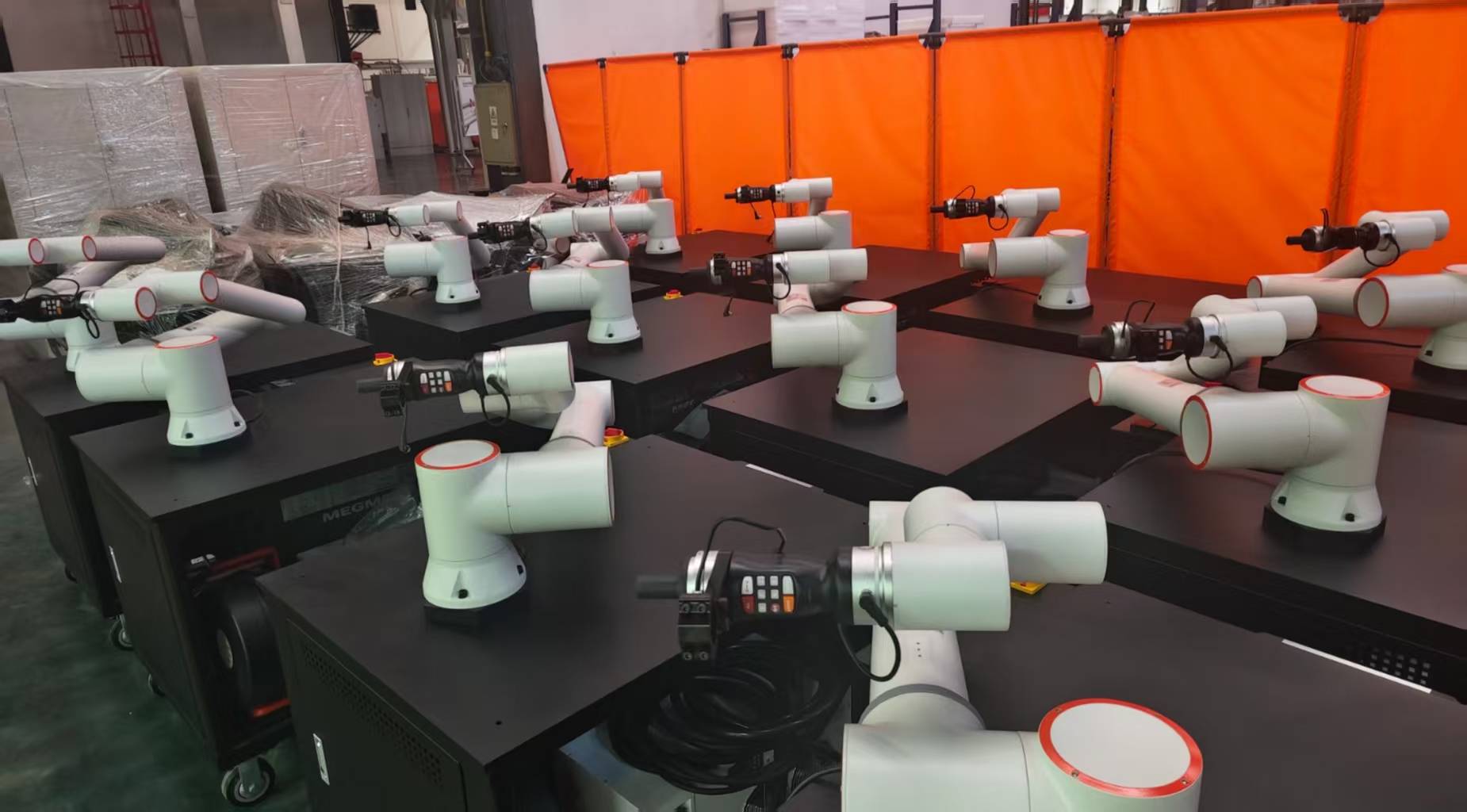
The “Cobot” aspect of the Fiber Laser Cobot is what makes it viable for the Vietnamese SME (Small to Medium Enterprise) market. Unlike traditional high-precision industrial robots that require extensive safety cages and specialized PLC programming, the cobot allows for “lead-through” programming. This was essential in Hanoi, where the workforce is highly skilled in manual welding but has a steep learning curve for complex coding.
Path Repeatability vs. Manual Variability
Manual TIG welding of aluminum in this facility showed a 12% reject rate due to “burn-through” on 1.5mm 6061-T6 tubes. After calibrating the Fiber Laser Cobot, the reject rate dropped to 0.8%. The Laser Technology provides a concentrated heat source (spot size of 0.15mm), which minimizes the Heat Affected Zone (HAZ). This ensures that the structural integrity of the Aluminum Alloy welding remains within the T6 temper specifications, a feat nearly impossible with manual arc processes in a high-production environment.
Reflectivity Management and Focal Point Calibration
A major technical hurdle was the “back-reflection” of the laser beam. Aluminum reflects over 90% of fiber laser energy in its solid state. We addressed this by tilting the laser head at a 10-degree angle relative to the perpendicular axis. The Fiber Laser Cobot’s 6-axis flexibility allowed us to maintain this precise “leading angle” across complex circular geometries, ensuring the reflected light did not damage the laser source’s optical isolator.
Field Observations: Environmental Challenges in Vietnam
Technical field reports from Southeast Asia cannot ignore the climate. Laser Technology is sensitive to temperature-induced drift. In Hanoi, the dew point often nears the operating temperature of the laser’s internal chillers.
Chiller Condensation and Optical Integrity
We encountered an issue where condensation formed on the protective window of the laser head during the afternoon shifts. This condensation, when hit by the 2kW beam, caused immediate pitting of the lens. Our solution was to implement a pressurized dry-air purge system around the optics and set the chiller temperature to 2°C above the ambient dew point, rather than a fixed 25°C. This is a vital takeaway for any Fiber Laser Cobot deployment in tropical climates.
Power Quality and Voltage Stabilization
The Hanoi power grid experienced voltage sags during peak industrial hours (2 PM – 4 PM). These sags directly affected the pulse consistency of the laser. While the Fiber Laser Cobot’s controllers are resilient, the laser generator’s pump diodes are not. We mandated the installation of a 15kVA servo-controlled voltage stabilizer to ensure the Laser Technology functioned within a +/- 1% tolerance, preventing “cold welds” during power fluctuations.
Aluminum Alloy Welding: Process Optimization Parameters
For the specific task of welding 2.0mm to 2.0mm Aluminum Alloy lap joints, we established the following “Gold Standard” parameters for the Hanoi site:
- Peak Power: 1800W
- Duty Cycle: 30% (Single Pulse)
- Frequency: 100Hz
- Speed: 1.8 meters/minute
- Wobble Pattern: Circular, 1.5mm width, 120Hz frequency
The “Wobble” function integrated into the Fiber Laser Cobot is a game-changer for Aluminum Alloy welding. It allows the beam to oscillate, effectively widening the weld bead and bridging gaps of up to 0.5mm, which is common in stamped aluminum parts that haven’t been perfectly deburred.
Lessons Learned and Engineering Recommendations
1. Cleanliness is Non-Negotiable
In the Hanoi shop, we initially saw black soot on the weld margins. This was traced to residual machining oils and the rapid oxidation of the aluminum in the humid air. We implemented a “Weld within 2 hours of cleaning” rule. Stainless steel wire brushing followed by an acetone wipe is the only way to ensure the Laser Technology produces X-ray quality joints in these conditions.
2. Technician Training over Programming
Don’t overcomplicate the logic. The most successful Fiber Laser Cobot operators in the Hanoi plant were the veteran manual welders, not the IT graduates. The manual welders understood the “puddle” behavior and could tell by the sound of the pulse if the shielding gas was sufficient. Training should focus on safety (Class 4 laser hazards) and basic optical maintenance.
3. Preventive Maintenance of the Fiber Delivery Cable
The Fiber Laser Cobot moves constantly. In a high-humidity environment, the outer conduit of the fiber optic cable can become brittle or trap moisture. We recommend a weekly inspection of the fiber’s bending radius. If the radius exceeds 200mm, the “leakage” of light can heat the cladding, leading to premature fiber failure.
Conclusion
The deployment of the Fiber Laser Cobot in Hanoi has proven that modern Laser Technology can thrive in challenging environments if the parameters are tuned for the specific material—in this case, Aluminum Alloy welding. By shifting from continuous wave to single pulse modulation and strictly controlling the environmental variables (humidity and power), we achieved a 400% increase in throughput compared to manual TIG. The synergy between robotic repeatability and laser precision is the future of Vietnamese light-industrial manufacturing.
Senior Engineer: [Signature/ID 88-04-HAN]