Engineering Review: Double Pulse MAG Cobot Welder – Monterrey, Mexico
In this article
- Field Engineering Report: Integration of Double Pulse MAG Cobot Systems in Monterrey…
- 1. Introduction and Objective
- 2. The Synergy of the MAG Cobot Welder and Arc Welding Solutions
- 3. Technical Analysis: Copper Components Welding Challenges
- 4. Field Observations: Monterrey Workshop Environment
- 5. Performance Metrics and Results
- 6. Lessons Learned and Engineering Recommendations
- 7. Conclusion
Field Engineering Report: Integration of Double Pulse MAG Cobot Systems in Monterrey Industrial Sector
Date: October 24, 2023
Location: Santa Catarina Industrial Park, Monterrey, NL, Mexico
Subject: Optimization of Copper Components Welding via Automated Arc Welding Solutions
1. Introduction and Objective
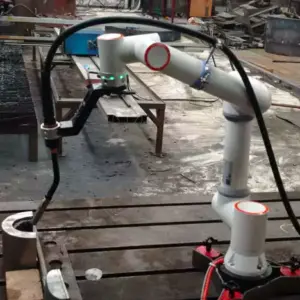
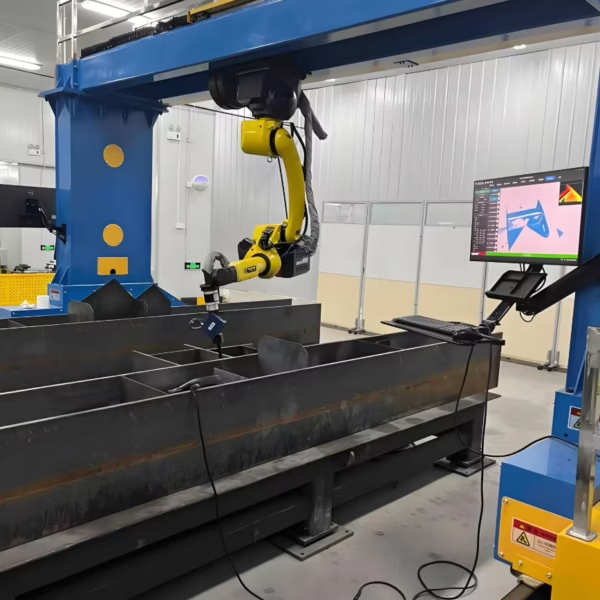
This report outlines the technical deployment and optimization of a **MAG Cobot Welder** unit within a Tier-1 electrical component manufacturing facility in Monterrey, Mexico. The objective was to replace a manual GTAW (TIG) process with an automated Double Pulse MAG (Metal Active Gas) system to increase throughput on high-conductivity Copper Components welding applications.
The Monterrey climate presents specific challenges, notably ambient temperatures exceeding 35°C within the workshop and fluctuating humidity levels, which impact shielding gas density and wire oxidation rates. Our focus was to leverage comprehensive Arc Welding Solutions to ensure structural integrity and aesthetic consistency in busbar assemblies.
2. The Synergy of the MAG Cobot Welder and Arc Welding Solutions
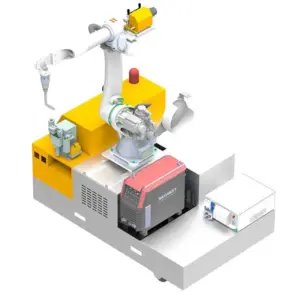
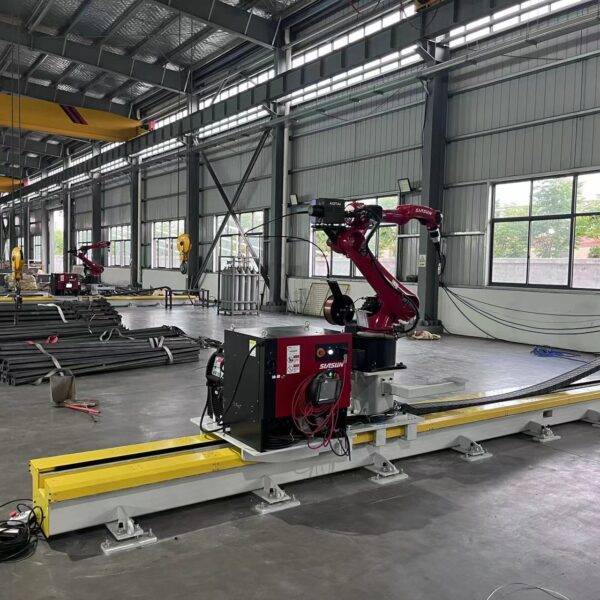
In the context of the Monterrey facility, the MAG Cobot Welder is not a standalone tool but the focal point of integrated Arc Welding Solutions. The synergy between the robotic arm’s motion control and the power source’s pulse logic is critical.
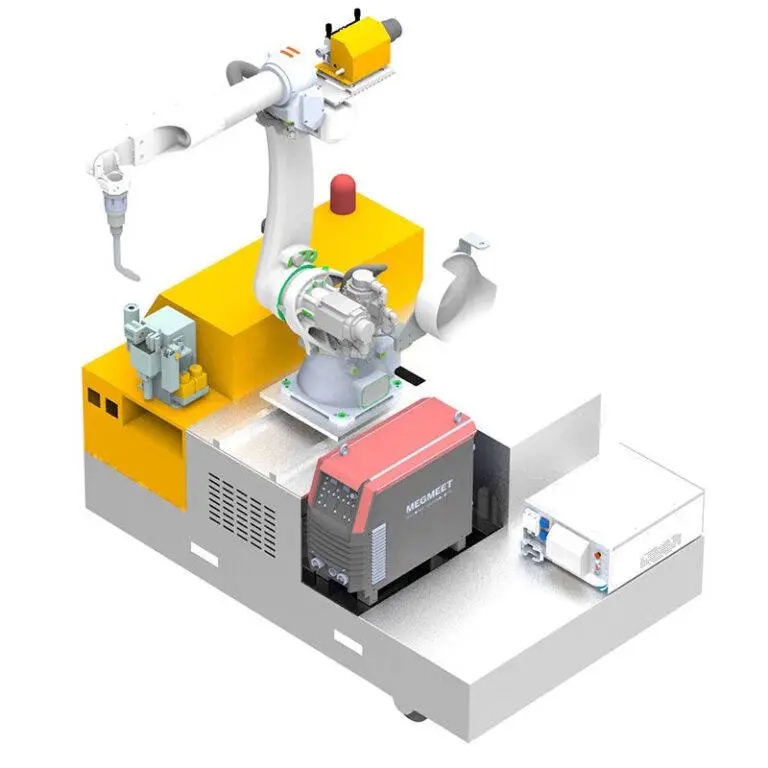
Traditional automation often fails in high-mix, low-volume environments because of the rigid programming required. However, the cobot’s lead-through programming allowed our local technicians to adjust torch angles for complex copper geometries in minutes rather than hours. The “Solution” aspect involves the synchronization of the wire feeder, the water-cooling unit (essential for the high-amperage cycles required for copper), and the double-pulse waveform software.
By integrating these elements, we achieved a “Cold Metal” effect despite the high heat input, preventing the burn-through typically associated with welding thin-gauge copper while maintaining the speed of a MAG process.
3. Technical Analysis: Copper Components Welding Challenges
Copper Components welding is notoriously difficult due to the material’s high thermal conductivity (approximately 400 W/m·K). Heat dissipates from the weld zone almost as fast as it is applied.
3.1 Thermal Management via Double Pulse
To combat this, we utilized a Double Pulse waveform. The primary pulse ensures deep penetration by breaking the surface tension of the molten copper, while the secondary, lower-frequency pulse allows the puddle to cool slightly, creating the distinct “stacked dimes” appearance and reducing the Heat Affected Zone (HAZ).
In Monterrey’s high-ambient environment, the cooling rate of the copper is slightly retarded compared to northern climates. We adjusted the pulse frequency to 2.5 Hz with a 35% duty cycle on the high-energy phase. This specific calibration ensured that the MAG Cobot Welder did not oversaturate the workpiece with latent heat, which otherwise leads to grain growth and reduced electrical conductivity in the busbars.
3.2 Shielding Gas and Wire Feed Considerations
We transitioned from pure Argon to an Argon-Helium mix (75/25). Helium’s higher ionization potential provides the additional heat energy required for copper’s thermal sink properties. The Arc Welding Solutions package included a specialized push-pull torch system integrated into the cobot’s end-of-arm tooling. Since copper welding wire is relatively soft, the push-pull system prevents bird-nesting at the feeder—a common point of failure in automated systems.
4. Field Observations: Monterrey Workshop Environment
The industrial landscape in Monterrey is demanding. The facility’s electrical grid experiences micro-fluctuations due to the heavy load of neighboring smelting operations.
4.1 Power Stability
We observed that the MAG Cobot Welder’s inverter power source required a dedicated line conditioner. Fluctuations in input voltage were causing inconsistent arc starts. Once the power conditioning was implemented as part of our broader Arc Welding Solutions, the arc start failure rate dropped from 4% to less than 0.2%.
4.2 Operator Adaptation
A significant “lesson learned” involved the human-machine interface. The local workforce in Monterrey is highly skilled in manual welding but was initially skeptical of the cobot’s ability to handle copper. By demonstrating the “Double Pulse” visual output—which mimics the aesthetics of TIG welding—we gained operator buy-in. The cobot handled the repetitive 1.2-meter longitudinal welds, while the human operators focused on the intricate tacking and final quality inspections.
5. Performance Metrics and Results
After three weeks of optimization, the data indicates a substantial improvement over previous manual methods.
- Cycle Time: Reduced by 65%. A manual weld that took 12 minutes is now completed by the MAG Cobot Welder in 4.2 minutes.
- Consumable Efficiency: 22% reduction in shielding gas waste due to the cobot’s precise pre-flow and post-flow timings.
- Defect Rate: For Copper Components welding, the reject rate due to porosity dropped from 8% to 1.5%.
The integration of these Arc Welding Solutions allowed the plant to move from a two-shift to a single-shift operation for this specific product line while maintaining the same weekly output.
6. Lessons Learned and Engineering Recommendations
6.1 Addressing Porosity
Copper is highly susceptible to hydrogen porosity. In the humid Monterrey afternoons, we noticed a spike in porosity. The solution was two-fold: implementing a mandatory pre-heat of the copper to 150°C using induction blankets and upgrading to a high-purity gas manifold. This reinforced the idea that the MAG Cobot Welder is only as good as the environmental controls surrounding it.
6.2 Torch Geometry
For Copper Components welding, the torch nozzle accumulates spatter faster than in steel applications due to the high-energy arc. We programmed an automated nozzle cleaning station into the cobot’s routine every five cycles. This prevented shielding gas turbulence and ensured a consistent laminar flow.
6.3 Software Calibration
The synergy between the motion speed and the pulse frequency is non-linear. If the cobot moves too fast, the “Double Pulse” effect disappears, and the weld bead becomes stringy. We found the “sweet spot” at a travel speed of 350 mm/min with the aforementioned 2.5 Hz pulse. This provided the optimal balance between penetration and bead profile.
7. Conclusion
The deployment of the MAG Cobot Welder in Monterrey demonstrates that high-conductivity materials like copper are no longer exclusive to the TIG process or expensive, fixed-track automation. By viewing the installation as a holistic set of Arc Welding Solutions—incorporating power conditioning, specialized gas mixes, and Double Pulse logic—we have established a new benchmark for Copper Components welding in the region.
Future installations should prioritize the integration of real-time data monitoring to track heat input per linear inch, ensuring that the electrical properties of the copper components remain within strict ISO tolerances. The Monterrey team is now self-sufficient in maintaining these parameters, marking a successful transition to collaborative automation.
—
Report Submitted By:
*Senior Welding Engineer*
*Regional Technical Services, Monterrey Office*