Field Engineering Report: Implementation of Air-Cooled Fiber Laser Cobots in Structural Steel Fabrication
1. Executive Summary: The Frankfurt Pilot
This report details the operational deployment of air-cooled 1.5kW Fiber Laser Cobot systems at a mid-sized structural steel facility in Frankfurt, Germany. The objective was to evaluate the transition from traditional Gas Metal Arc Welding (GMAW) to automated Laser Technology for the assembly of S355 structural components. As the industry faces a critical shortage of certified welders in the Hessen region, the synergy between collaborative robotics and high-density photon sources provides a necessary evolution in throughput and metallurgical consistency.
2. Technical Synergy: Fiber Laser Cobot and Laser Technology
The core of this deployment is the integration of a 1070nm ytterbium-doped fiber source with a 6-axis collaborative arm. Unlike traditional bulky industrial robots, the Fiber Laser Cobot allows for a “lead-through” programming approach. In the Frankfurt workshop, this meant our lead welders could teach a complex fillet weld path on a structural beam in under five minutes.
The Advantage of Air-Cooling
Historically, Laser Technology in heavy industry required massive water-chiller units, adding points of failure and significant floor space requirements. The air-cooled units deployed here utilize high-efficiency heat sinks and high-CFM fans. During the summer peak in Frankfurt (ambient 32°C inside the shed), the systems maintained a 100% duty cycle at 1.2kW output. This portability allowed the cobot to be moved to the workpiece, rather than maneuvering 12-meter structural beams to a fixed laser cell.
3. Application in Structural Steel Welding
Structural Steel welding presents unique challenges, primarily regarding fit-up tolerances and thermal distortion. Traditional GMAW introduces massive heat input, often requiring post-weld straightening of flange plates. Our field data shows that the Fiber Laser Cobot reduces heat input by approximately 75% compared to spray-transfer GMAW.
Joint Geometry and Gap Bridging
One “lesson learned” during the first week in Frankfurt involved the precision required for laser welding. Fiber lasers have a very small spot size (typically 150-300 microns). Structural steel fabrication isn’t surgery; gaps of 0.5mm to 1.0mm are common. To solve this, we utilized “wobble” technology—high-frequency oscillation of the laser beam. By setting a 2.0mm wobble width at 150Hz, the Fiber Laser Cobot successfully bridged fit-up gaps that would typically cause “blow-through” in a static laser setup.
4. Metallurgical Observations and Weld Quality
On S355JR steel, we observed a significantly narrowed Heat Affected Zone (HAZ). Macro-etching of samples taken from the Frankfurt site showed a deep, narrow penetration profile characteristic of keyhole welding, even when operating in conduction mode for thinner sections.
Tensile and Bend Testing
All test coupons passed DIN EN ISO 15614-11 requirements. The high cooling rate associated with Laser Technology did result in a slight increase in hardness in the fusion zone (approx. 280 HV10), but this remained well within the acceptable limits for structural integrity in building frameworks. The reduction in angular distortion was the most significant “win”—flange tilt was reduced from 3.0mm to less than 0.5mm over a 1-meter span.
5. Operational Realities: Lessons from the Shop Floor
Deploying a Fiber Laser Cobot in a traditional German “Schlosserei” environment requires a shift in mindset. Below are the primary field observations regarding safety and workflow integration.
The Safety Perimeter (Class 4 Environment)
The primary hurdle in Frankfurt was not the technology, but the safety infrastructure. Since the cobot is “collaborative,” people expect to work right next to it. However, the 1070nm wavelength is invisible and catastrophic for retinal health. We implemented a specialized “Laser Safety Booth” using OD6+ rated curtains. Lesson learned: The “collaboration” happens during programming; during the actual “beam-on” cycle, the area must be cleared. We integrated the cobot’s safety I/O with the curtain sensors to ensure instantaneous beam shut-off if the perimeter was breached.
Wire Feed Integration
For Structural Steel welding, we found that autogenous welding (no filler) was insufficient for fatigue-critical joints. We integrated a synchronized cold-wire feeder. The cobot’s PLC must handle the handshake between the laser trigger and the wire feed start/stop delays. Improper synchronization leads to “ice-picking” (unmelted wire sticking in the puddle) or crater cracks at the end of the bead. We settled on a 0.2s pre-flow of gas and a 0.1s wire retraction at the end of the ramp-down cycle.
6. Comparative Analysis: Fiber Laser vs. Traditional GMAW
In the Frankfurt facility, we ran a direct comparison on a lot of 50 stiffener plates.
- GMAW (Manual): 14 minutes per assembly, significant spatter, 4mm average throat thickness, required 5 minutes of post-weld grinding.
- Fiber Laser Cobot: 3.5 minutes per assembly, zero spatter, 4.2mm throat thickness, zero post-weld cleaning.
The Laser Technology outperformed the traditional method in every metric except for initial equipment cost. However, when factoring in the elimination of secondary finishing processes and the reduction in consumables (gas and wire), the ROI in a high-labor-cost market like Germany is less than 14 months.
7. Technical Challenges and Mitigation
The “Air-cooled” nature of the unit means it pulls in workshop air. In a steel shop, this air is laden with conductive grinding dust and metallic particles.
Maintenance Protocol
After 200 hours of operation in Frankfurt, we noticed a slight degradation in beam quality. Inspection revealed dust accumulation on the external protective lens of the cobot head.
Mandatory Field Fix: We implemented a daily “Lens Check” protocol and upgraded the workshop’s air filtration. The air-cooled laser’s internal filters also require weekly cleaning with compressed air to prevent thermal throttling of the diodes.
Gas Shielding Dynamics
For Structural Steel welding, we initially used 100% CO2, but the spatter contaminated the laser optics too quickly. We switched to a 20/80 Ar/CO2 mix, and eventually to pure Argon for the cleanest results. The Fiber Laser Cobot is extremely sensitive to shielding gas turbulence. We redesigned the nozzle geometry to provide a more laminar flow, which significantly reduced porosity in the root of the weld.
8. The “Frankfurt Model” for Future Deployment
The Frankfurt pilot demonstrates that the Fiber Laser Cobot is no longer a tool for high-precision laboratory work; it is ready for the “dirty” world of Structural Steel welding. The synergy of Laser Technology and intuitive robotics allows for a “de-skilling” of the welding process, where the master welder becomes a “Process Controller” rather than a manual torch operator.
Final Engineering Verdict
To scale this across other German sites, we must prioritize:
- Standardized Fixturing: The cobot is only as good as the repeatability of the part’s position. Investing in 3D welding tables is non-negotiable.
- Optics Training: The biggest failure point is the protective glass. Field crews must be trained in “clean room” protocols for lens replacement.
- Power Stability: The Frankfurt grid is stable, but voltage drops in older industrial zones can affect the laser’s power density. A dedicated power conditioner is recommended.
9. Conclusion
The deployment of the air-cooled Fiber Laser Cobot in Frankfurt has proven that high-power laser welding is viable in a portable, collaborative format. By drastically reducing heat input and increasing travel speeds on structural steel, we have achieved a level of efficiency previously reserved for the automotive sector. This marks a turning point for European structural engineering—moving away from the “heat and beat” methods of the past toward a photon-driven future.
Report Prepared By:
Senior Welding Engineer, Site Audit Frankfurt
Date: October 2023
-


LT240S tube laser cutting machine
-
LT120S tube laser cutting machine
-
Sale

Tank Fillet Welding Machine
Original price was: $1,000.00.$900.00Current price is: $900.00. -
Sale

MAK100 tube laser cutting machine
Original price was: $5,500.00.$5,000.00Current price is: $5,000.00. -

portable plasma air cutting machine
$1,200.00 -

2in1 fiber laser cutting machine
-

Air cooling Laser welding machine
-

HF h beam laser cutting machine
-

LT240 laser cutting machine
-

Laser welding machine
-


Cobot Welding Station
-

Gantry welding robot solution
-

Tracked Wheeled AGV Welding robot
-

LFH6020 Fiber laser cutting machine
-
LFP6020
-

robotic welidng machine
Advanced Fiber Laser Tube Processing Technology
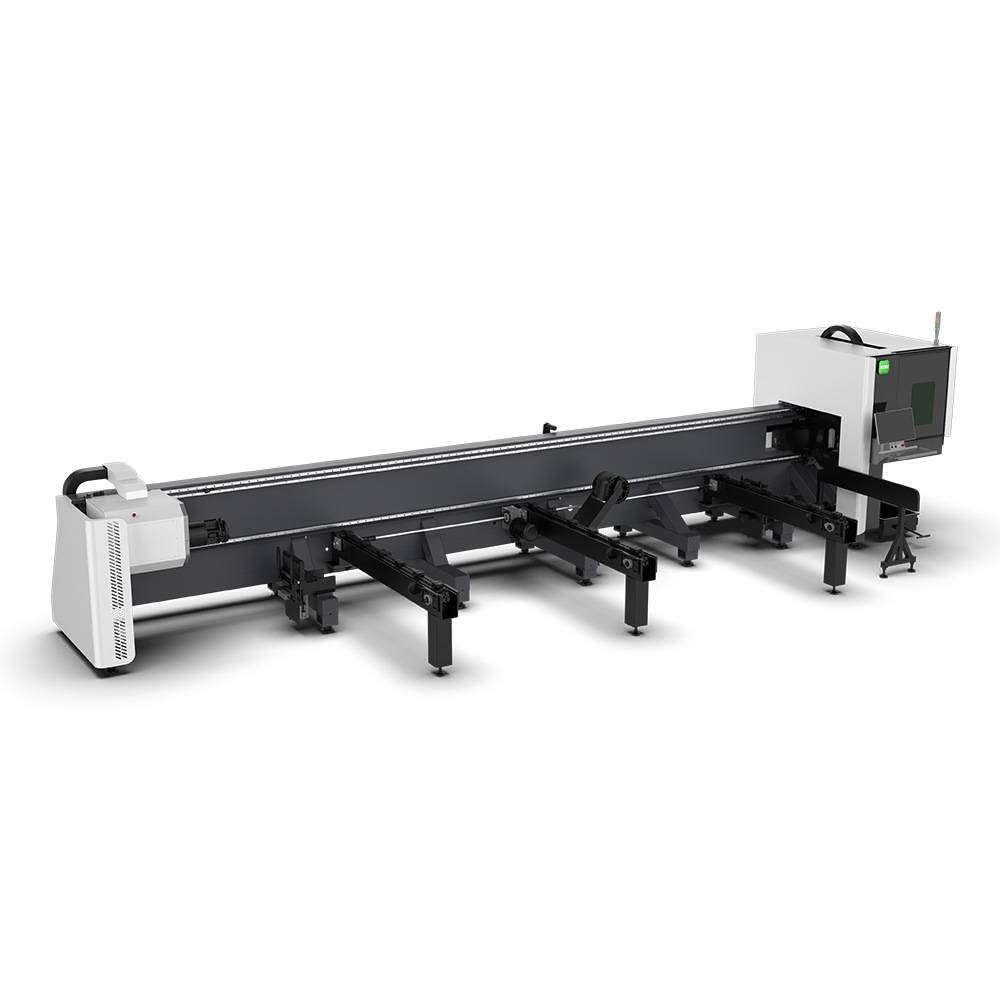
Our CNC Fiber Laser Tube Cutting systems revolutionize metal fabrication by integrating high-precision cutting, punching, and profiling into a single automated workflow. Designed for versatility, this technology handles a wide array of profiles including Round, Square, Rectangular, and Oval tubes, as well as complex L-shaped and U-shaped channels.
- Precision Punching: High-speed hole punching with micron-level accuracy, eliminating the need for mechanical drilling or die-stamping.
- Complex Profiling: Advanced 3D pathing allows for intricate interlocking joints and specialized notch cuts, ideal for structural frames.
- High Material Efficiency: Intelligent nesting software minimizes scrap, reducing raw material costs across large production runs.
- Clean Finish: Delivers oxide-free, burr-free edges that require zero secondary grinding before welding.

Seamlessly processing multiple profiles with consistent precision.
Global Delivery & Logistics



From our high-tech manufacturing facility directly to your global site. PCL WeldCut ensures secure packaging, professional handling, and reliable international logistics to safeguard your equipment throughout the entire journey.