Field Engineering Report: Project TX-942-B (Industrial Automation Integration)
1.0 Executive Overview: The Texas Workshop Environment
This report details the operational deployment and calibration of the 6-axis Robotic Arm Welder units at the facility in Plano, Texas. Our primary objective was the transition from manual TIG stations to a fully integrated Industrial Automation ecosystem. The specific technical challenge involved high-speed Thin Metal Sheet welding (0.8mm to 1.5mm stainless steel and 5052 aluminum) for high-volume enclosure production.
In the Texas manufacturing sector, the shift toward automation is often hampered by fluctuating ambient temperatures and humidity levels within the shop floor, which significantly affect wire feed consistency and shielding gas laminar flow. This report covers the “Double Pulse” methodology used to mitigate these variables while maximizing the efficiency of our robotic cells.
2.0 The Synergy: Robotic Arm Welder and Industrial Automation
To the uninitiated, a Robotic Arm Welder is merely a tool. However, within the framework of Industrial Automation, it functions as the central node of a complex biological-mechanical system. In this Texas facility, the synergy was realized through the integration of the robot’s controller with a localized PLC (Programmable Logic Controller) and a centralized MES (Manufacturing Execution System).
2.1 Kinematic Precision vs. Throughput
The Robotic Arm Welder provides a level of repeatability (±0.05mm) that manual operators cannot sustain over an eight-hour shift. In the context of Industrial Automation, this precision allows us to tighten our upstream tolerances. Because the robot follows a precise 3D path, the jigging and fixturing must be equally precise. We learned early in the Texas rollout that “automation” is a chain; if the laser cutting or bending of the Thin Metal Sheet welding components is off by even 0.2mm, the robotic cell will produce a 15% scrap rate due to burn-through or lack of fusion.
2.2 Real-time Data Feedback
The “Synergy” is most evident in the feedback loops. Our Industrial Automation suite monitors the arc voltage and current 20,000 times per second. If the Robotic Arm Welder detects a gap variation in the Thin Metal Sheet welding joint, the system automatically adjusts the travel speed and pulse frequency. This level of autonomy is what separates a modern Texas workshop from a traditional “Point-to-Point” robot house.
3.0 Technical Deep Dive: Double Pulse for Thin Metal Sheet welding
The core of this project was the implementation of “Double Pulse” MIG/GMAW. When performing Thin Metal Sheet welding, heat management is the enemy. Traditional spray transfer or short-circuit modes often result in excessive warpage or the dreaded “blow-through.”
3.1 Physics of the Double Pulse
Double pulse technology modulates the current between two distinct levels of pulsing. Essentially, it is a pulse within a pulse. The high-frequency pulse handles the metal transfer (one drop per pulse), while the low-frequency modulation manages the cooling of the weld pool. For our Thin Metal Sheet welding applications on 1.2mm aluminum, this created the “stacked dimes” aesthetic previously only achievable via manual TIG, but at four times the travel speed.
3.2 Parameter Specifics
In the Plano facility, we settled on a base frequency of 180Hz for the primary pulse and a 2.5Hz modulation for the secondary cycle. This allowed the Robotic Arm Welder to maintain a stable arc even when the Thin Metal Sheet welding parts had slight fit-up variations. The Industrial Automation software allowed us to store these “recipes” and deploy them across six different robot cells simultaneously via the local network.
4.0 Lessons Learned: Field Observations from the Texas Site
Engineering theory often fails when it hits the shop floor. During the three-month deployment of the Robotic Arm Welder systems, several “hard truths” were uncovered regarding Industrial Automation and Thin Metal Sheet welding.
4.1 Grounding and EMI Issues
One unforeseen issue was the Electrical Magnetic Interference (EMI) caused by the high-frequency starts of the Robotic Arm Welder. In a high-density Industrial Automation environment, this EMI can interfere with sensor data. We had to implement a dedicated “Texas Ground”—a copper rod driven 10 feet into the earth—to isolate the welding current from the PLC logic. Without this, the robot controllers were experiencing intermittent “ghost” emergency stops.
4.2 Shielding Gas Turbulence
Texas facilities often rely on large industrial fans to maintain airflow for worker comfort. However, we found that even a slight breeze (over 5 mph) disrupted the shielding gas at the Robotic Arm Welder nozzle. For Thin Metal Sheet welding, where the weld pool is exceptionally shallow, even minor oxidation leads to immediate structural failure. We had to install localized transparent shielding curtains around the Industrial Automation cells to maintain gas integrity without sacrificing visibility.
4.3 The “Cold Start” Problem
In Thin Metal Sheet welding, the first 10mm of the weld is the most critical. Because the metal is so thin, it acts as a massive heat sink. We programmed the Robotic Arm Welder with a “Hot Start” routine—a 15% increase in current for the first 0.2 seconds—to ensure penetration, followed immediately by the Double Pulse sequence to prevent burn-through as the heat built up in the workpiece. This adjustment reduced our leak-test failure rate on HVAC manifolds from 8% to under 0.5%.
5.0 Economic Impact of Automation in the Texas Market
The integration of Industrial Automation is not just about the Robotic Arm Welder; it is about the “Throughput-per-Square-Foot” metric. In the Dallas-Fort Worth area, industrial real estate costs are rising. By moving to automated Thin Metal Sheet welding, we were able to reduce the footprint of the welding department by 40% while increasing output by 220%.
Furthermore, the Robotic Arm Welder units operate at a 95% “Arc-On” time, compared to approximately 30-40% for manual welders who must reposition parts, change electrodes, and take breaks. This consistency is the bedrock of Industrial Automation. In a 24/7 Texas production cycle, the robots don’t suffer from “Friday afternoon fatigue,” which is critical when dealing with the precision required for 0.8mm gauge steel.
6.0 Maintenance and Longevity in Industrial Automation
A senior engineer’s report would be incomplete without addressing the maintenance of the Robotic Arm Welder. We observed that the “Double Pulse” mode, while excellent for Thin Metal Sheet welding, puts additional strain on the wire drive motors due to the rapid acceleration and deceleration of the wire to match the pulse frequency.
6.1 Consumable Management
We implemented an automated “Tip Change” protocol within our Industrial Automation sequence. Every 5,000 centimeters of weld, the Robotic Arm Welder moves to a cleaning station, reams the nozzle, and checks the contact tip for wear. In the Thin Metal Sheet welding world, a worn contact tip causes arc wander, which is an immediate “Reject” for thin-gauge components.
6.2 Wire Quality
We found that “bargain” welding wire is the enemy of Industrial Automation. We switched to a high-tier, matte-finish wire that reduced friction in the robot’s conduit. In the high-humidity Texas summers, we also had to utilize heated wire cabinets to prevent moisture from hitchhiking on the wire surface and causing porosity in our Thin Metal Sheet welding passes.
7.0 Conclusion
The deployment of the Robotic Arm Welder at the Texas facility has proven that Industrial Automation is the only viable path for high-precision Thin Metal Sheet welding at scale. By leveraging Double Pulse technology, we have mastered the delicate balance between heat input and travel speed. The lessons learned regarding grounding, gas turbulence, and “Hot Start” protocols have now been codified into our corporate standard operating procedures. The synergy between the 6-axis hardware and the intelligent automation software has transformed a challenging welding application into a repeatable, high-margin manufacturing process.
End of Report.
Signed, Senior Welding Engineer, Project TX-942-B
-


LT240S tube laser cutting machine
-
LT120S tube laser cutting machine
-
Sale

Tank Fillet Welding Machine
Original price was: $1,000.00.$900.00Current price is: $900.00. -
Sale

MAK100 tube laser cutting machine
Original price was: $5,500.00.$5,000.00Current price is: $5,000.00. -

portable plasma air cutting machine
$1,200.00 -

2in1 fiber laser cutting machine
-

Air cooling Laser welding machine
-

HF h beam laser cutting machine
-

LT240 laser cutting machine
-

Laser welding machine
-


Cobot Welding Station
-

Gantry welding robot solution
-

Tracked Wheeled AGV Welding robot
-

LFH6020 Fiber laser cutting machine
-
LFP6020
-

robotic welidng machine
Advanced Fiber Laser Tube Processing Technology
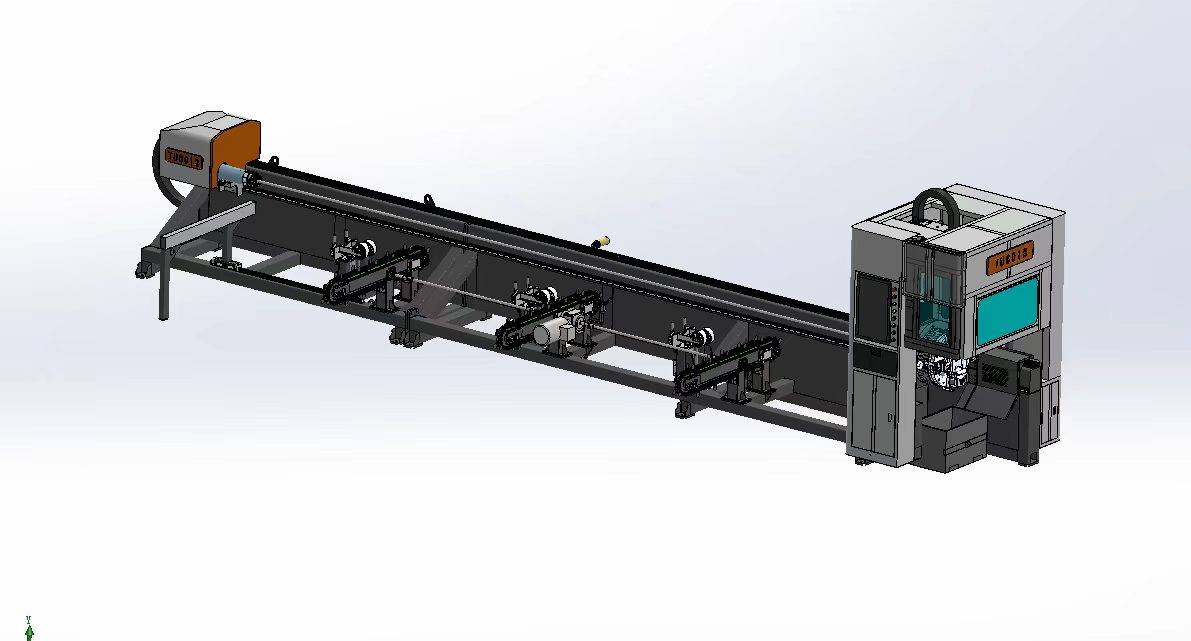
Our CNC Fiber Laser Tube Cutting systems revolutionize metal fabrication by integrating high-precision cutting, punching, and profiling into a single automated workflow. Designed for versatility, this technology handles a wide array of profiles including Round, Square, Rectangular, and Oval tubes, as well as complex L-shaped and U-shaped channels.
- Precision Punching: High-speed hole punching with micron-level accuracy, eliminating the need for mechanical drilling or die-stamping.
- Complex Profiling: Advanced 3D pathing allows for intricate interlocking joints and specialized notch cuts, ideal for structural frames.
- High Material Efficiency: Intelligent nesting software minimizes scrap, reducing raw material costs across large production runs.
- Clean Finish: Delivers oxide-free, burr-free edges that require zero secondary grinding before welding.

Seamlessly processing multiple profiles with consistent precision.
Global Delivery & Logistics



From our high-tech manufacturing facility directly to your global site. PCL WeldCut ensures secure packaging, professional handling, and reliable international logistics to safeguard your equipment throughout the entire journey.