Beam Processing Center with Arc Voltage Control for for Shipbuilding
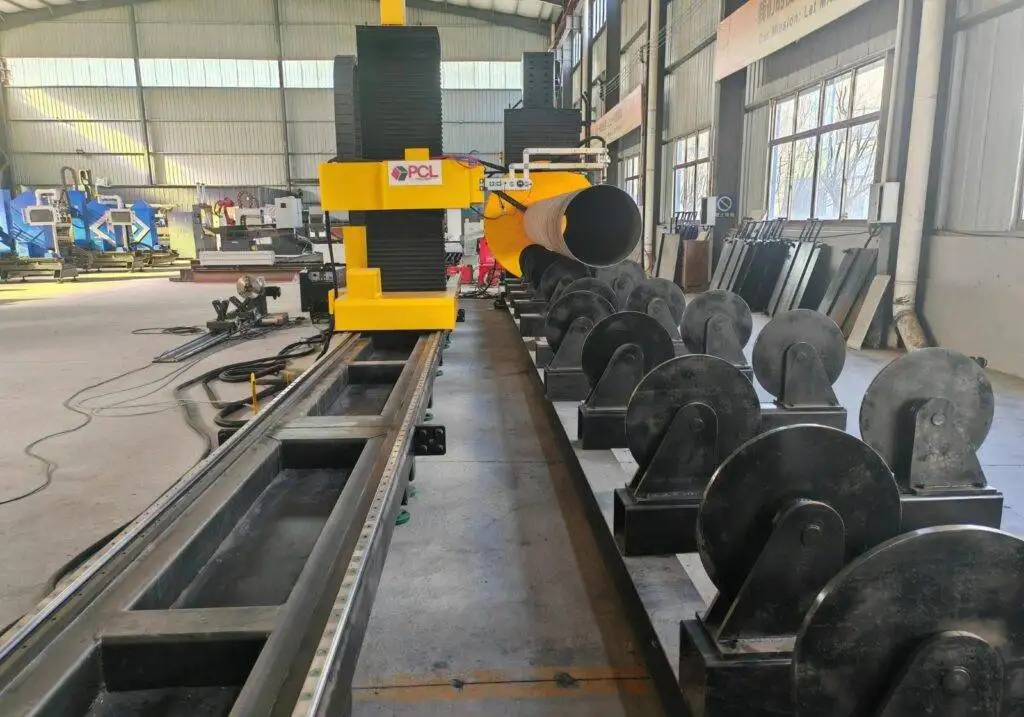
In this article
The Role of Arc Voltage Control in Modern Shipbuilding
In the heavy industrial landscape of shipbuilding, the efficiency of structural fabrication is dictated by the precision of the primary steel processing phase. A Beam Processing Center equipped with Arc Voltage Control (AVC) represents a critical evolution in how shipyards handle structural sections such as H-beams, channels, and bulb flats. Unlike manual or semi-automated systems, these centers integrate advanced sensing technology to mitigate the inherent irregularities found in hot-rolled steel profiles.
The primary challenge in processing large-scale beams is the material’s dimensional variance. Even within ISO standards, H-beams often exhibit camber, sweep, or flange tilt. When a plasma torch travels along a programmed path, any deviation in the distance between the torch tip and the material surface results in fluctuations in the plasma arc’s intensity and width. AVC solves this by continuously monitoring the electrical potential between the electrode and the workpiece. By maintaining a constant voltage, the system ensures a consistent standoff distance, which is fundamental to achieving repeatable tolerances in a high-volume production environment.
Precision Through Arc Voltage Control Feedback Loops
Arc Voltage Control operates as a real-time closed-loop feedback system. During Plasma Cutting, the power supply maintains a specific voltage setpoint that correlates directly to the physical arc length. As the torch moves across a warped beam, the AVC logic detects millivolt changes in the arc. If the distance increases, the voltage rises; the system immediately commands the Z-axis motor to lower the torch until the setpoint is restored.
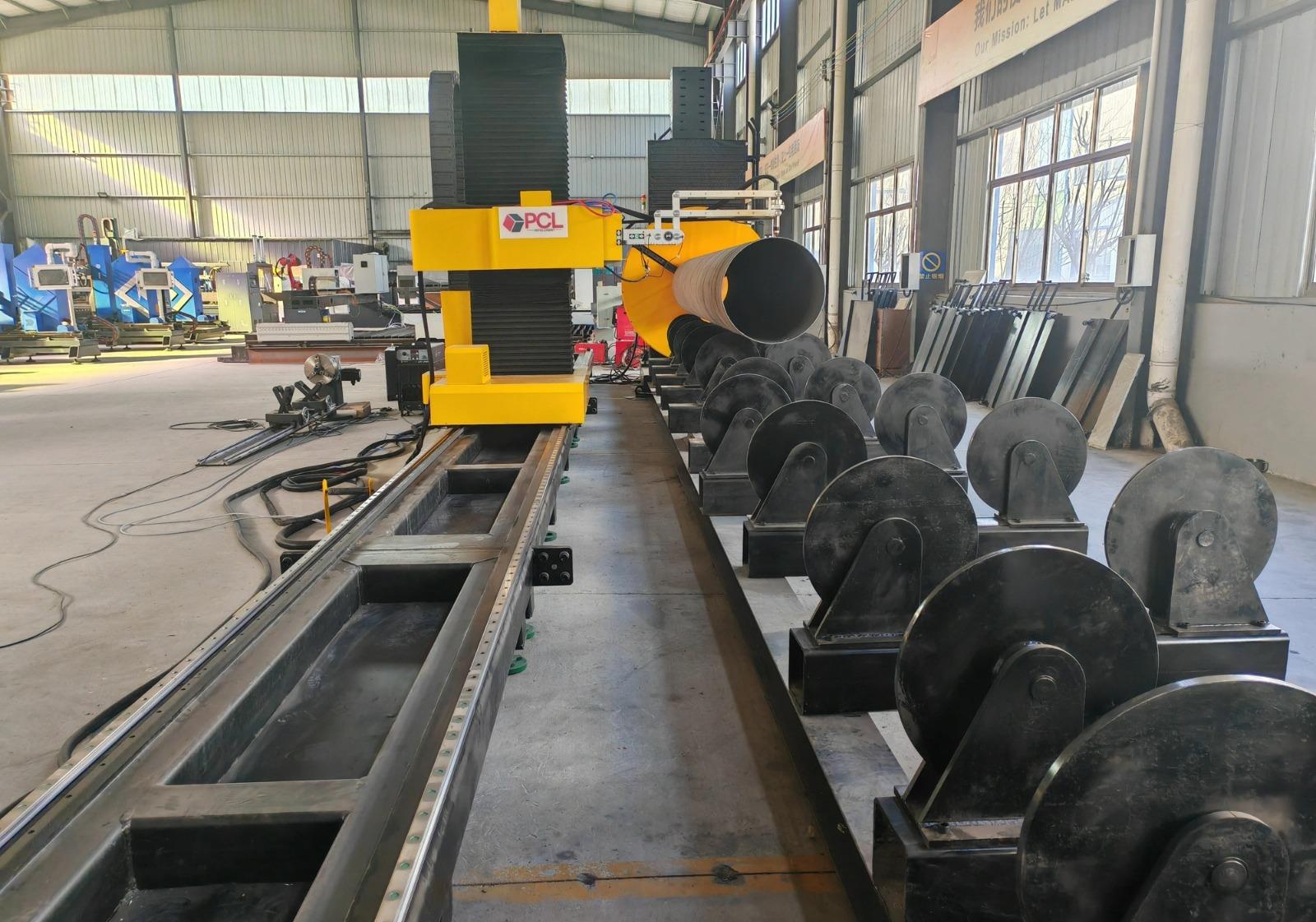
For shipbuilders, this responsiveness is vital for maintaining the “sweet spot” of the plasma stream. Operating at the correct height minimizes the Heat Affected Zone (HAZ) and prevents dross accumulation on the underside of the flange. In an industry where thousands of meters of stiffeners are cut monthly, the ability to maintain this precision without manual intervention directly impacts the downstream assembly speed and the structural integrity of the hull modules.
Achieving Intersection Accuracy in Complex Geometries
Ship designs involve intricate intersections where longitudinal stiffeners pass through transverse bulkheads. These “cut-outs” or “rat holes” require extreme geometric accuracy to ensure a flush fit during assembly. A Beam Processing Center utilizes multi-axis robotic arms or specialized gantry systems to navigate the plasma torch around the web and flanges of the beam.
Intersection accuracy is not merely a function of robotic motion; it depends on the synchronization of the motion controller with the plasma arc’s characteristics. When cutting a circular or elliptical opening in a thick web, the torch must compensate for the kerf width and the arc’s natural taper. By utilizing high-definition plasma and AVC, the system ensures that the entry and exit points of the cut are perfectly aligned. This eliminates the need for manual grinding or “fitting” on the shop floor, as the processed beams slide into their designated slots with millimeter precision, satisfying the stringent requirements of classification societies.
Advanced Beveling for Weld Preparation
Weld preparation is a significant cost driver in Shipbuilding. Traditional methods involve cutting a beam to length and then using hand-held torches or milling machines to create bevels for V, Y, or K-joints. A modern plasma-based beam line integrates beveling into the primary cutting cycle. The ability of the plasma head to tilt up to 45 degrees—and in some configurations, up to 50 degrees—allows for the creation of complex weld preps in a single pass.
The AVC system plays a specialized role during beveling. Because the effective thickness of the material increases when the torch is tilted, the arc voltage characteristics change. Advanced controllers use “bevel compensation” algorithms that adjust the voltage setpoint relative to the angle of attack. This ensures that the bevel face remains smooth and consistent, providing the ideal surface for automated welding systems used later in the fabrication process. Without precise AVC, the torch would likely crash into the material or drift too far away, causing a lost arc and ruining expensive structural components.
H-Beam Processing and Low Maintenance Design
From an industrial engineering perspective, the Total Cost of Ownership (TCO) of a Beam Processing Center is heavily influenced by maintenance requirements. Plasma systems designed for H-beams must operate in an environment saturated with metallic dust and high thermal loads. To ensure low maintenance, these centers utilize specific design philosophies:
First, the integration of robust fume extraction and slag management is paramount. Efficient downdraft tables or internal beam extraction systems remove 99% of the particulates generated during the Plasma Cutting process, protecting the precision linear guides and rack-and-pinion drives from abrasive wear. Second, the use of long-life consumables in the plasma torch reduces the frequency of downtime. Modern torches feature improved cooling paths that extend the life of electrodes and nozzles, even when performing the long, continuous pierces required for thick-walled H-beams.
Furthermore, the elimination of complex mechanical probes for height sensing—replacing them with the non-contact AVC system—significantly reduces mechanical failure points. There are no tactile sensors to get caught on slag or bent flanges, allowing the machine to run at higher traverse speeds with minimal risk of hardware damage. This results in a high “duty cycle” or “up-time,” which is the benchmark for any shipyard looking to optimize its steel shop throughput.
Optimizing Throughput and Material Utilization
Beyond the mechanical cutting process, the integration of CAD/CAM software with the beam line allows for sophisticated nesting. Software modules can take 3D models from ship design programs (like AVEVA or ShipConstructor) and convert them into optimized cutting patterns. The Beam Processing Center can then execute these patterns, including part marking, bolt hole drilling (via plasma), and coping, all in one setup.
The precision afforded by AVC means that margins for error can be reduced. Parts can be nested closer together, and the “lead-in” and “lead-out” lengths can be minimized. For a shipyard, even a 2% improvement in material utilization across a multi-vessel project translates into hundreds of tons of saved steel. When combined with the reduction in secondary processing (grinding and fitting), the economic justification for high-precision plasma beam lines becomes undeniable.
Conclusion: The Standard for Modern Maritime Fabrication
The shift toward automated, plasma-based beam processing is a strategic necessity for competitive shipyards. By leveraging Arc Voltage Control, engineers can guarantee the intersection accuracy required for complex maritime structures while simultaneously handling the challenging geometries of H-beams and bulb flats. The combination of high-definition beveling and low-maintenance operational design ensures that the fabrication line remains a high-throughput asset rather than a bottleneck. As global shipbuilding standards continue to move toward tighter tolerances and faster delivery cycles, the role of precise thermal cutting technology will remain central to industrial excellence.






