Beam Processing Center with Offline Programming for for Bridge Trusses
In this article
- Optimizing Bridge Truss Fabrication via Robotic Plasma Processing
- Intersection Accuracy in Complex Nodal Connections
- Volumetric Precision and Kerf Compensation
- Mitigating Thermal Distortion
- H-Beam Processing Efficiency and System Maintenance
- Multi-Axis Beveling for Weld Preparation
- The Role of Offline Programming (OLP)
- Direct BIM Integration
- Nesting and Material Optimization
- Conclusion: A New Standard for Infrastructure Fabrication
Optimizing Bridge Truss Fabrication via Robotic Plasma Processing
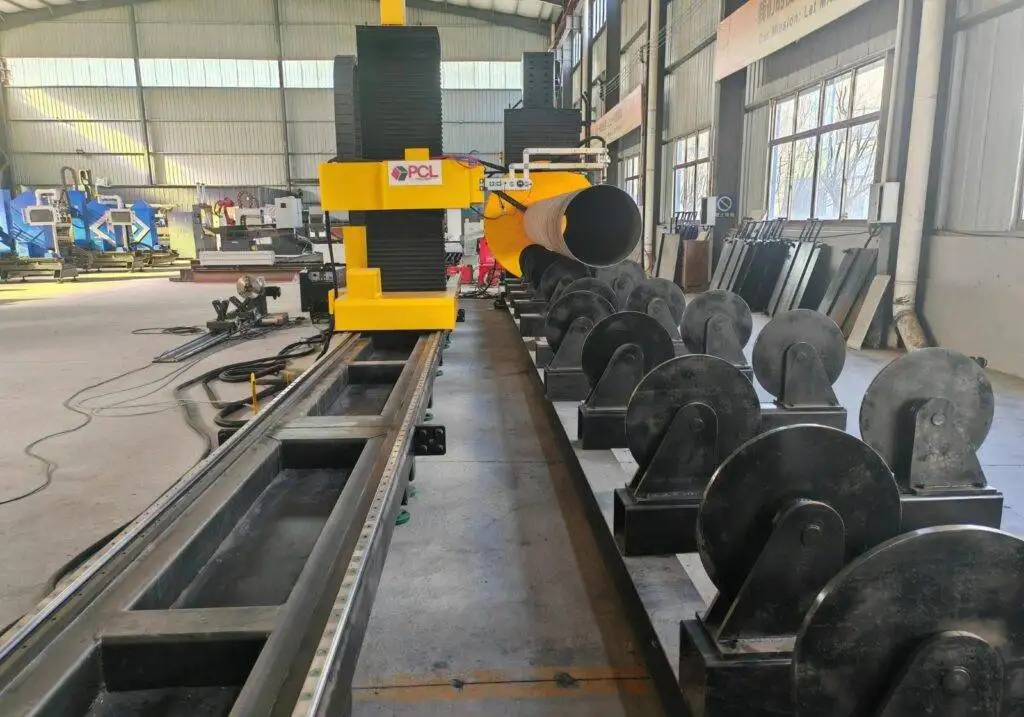
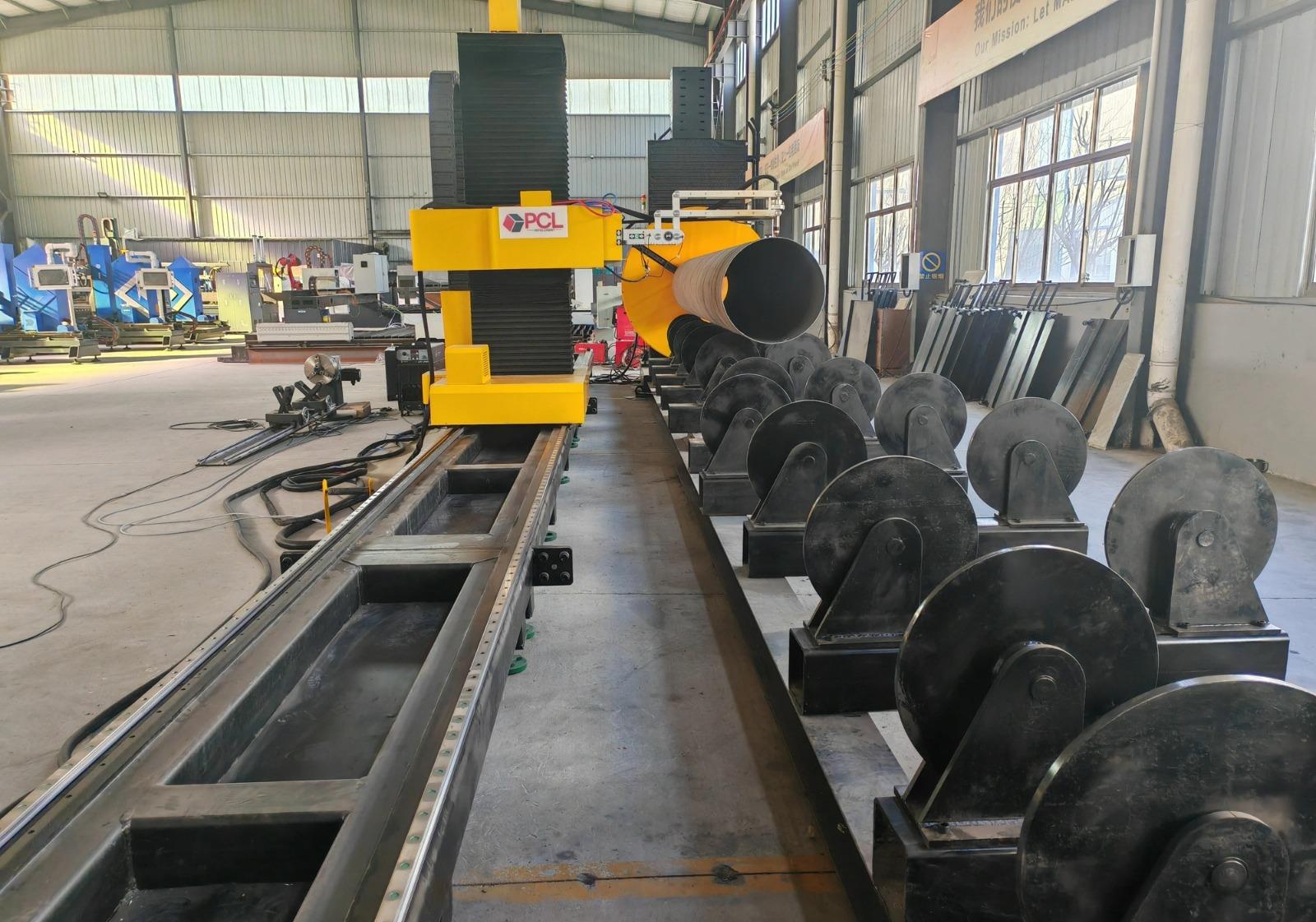
In the sector of structural infrastructure, bridge truss fabrication represents one of the most demanding applications for industrial engineering workflows. The requirement for extreme geometric precision, combined with the massive scale of H-beam and I-beam components, necessitates a shift from manual layout to automated Beam Processing Centers. These systems utilize multi-axis Plasma Cutting heads to execute complex geometries that were previously labor-intensive or technically unfeasible with mechanical sawing or drilling.
The core objective of implementing an automated center is the total synchronization between the digital design model and the physical steel member. for Bridge Trusses, where load paths are distributed through intricate nodal connections, any deviation in cut geometry can lead to structural misalignment or catastrophic failure during assembly. Plasma technology, when paired with sophisticated motion control, provides the necessary agility to handle the three-dimensional cutting paths required for modern bridge designs.
Intersection Accuracy in Complex Nodal Connections
The structural integrity of a bridge truss depends almost entirely on the fit-up at the intersections. Traditionally, fabricators relied on manual templates and hand-held torches to create copes, blocks, and miters. This human-centric approach introduces a margin of error that compounds across the length of a span. A robotic plasma center mitigates this by utilizing 6-axis or 7-axis robotic arms that can reach all four sides of a beam in a single pass.
Volumetric Precision and Kerf Compensation
Achieving high intersection accuracy involves more than just following a programmed path. Industrial-grade plasma systems incorporate real-time kerf compensation and torch height control (THC). As the plasma arc fluctuates or the material surface varies slightly due to mill tolerances, the system adjusts the standoff distance and the path offset. This ensures that the final dimensions of the cutouts—whether they are circular bolt holes or complex fish-mouth cuts for intersecting diagonals—match the CAD specifications within fractions of a millimeter.
Mitigating Thermal Distortion
While plasma is a thermal process, modern high-definition plasma power sources concentrate the energy density into a narrower arc. This reduces the Heat Affected Zone (HAZ) and minimizes the thermal distortion of the H-beam web and flanges. For bridge engineers, preserving the metallurgical properties of the base steel while maintaining tight tolerances is a non-negotiable requirement.
H-Beam Processing Efficiency and System Maintenance
From an operational standpoint, the H-beam low maintenance profile of plasma-based processing centers offers a significant advantage over mechanical alternatives. Mechanical drills and saws require constant sharpening, coolant management, and frequent replacement of consumable bits, which adds significant overhead and downtime.
Simplified Consumable Lifecycle
Plasma systems utilize a simplified consumable set—primarily electrodes, nozzles, and shields. These components are designed for rapid changeover, often taking less than two minutes to replace. Because there is no physical contact between the cutting tool and the workpiece, there is no mechanical stress on the robotic arm or the gantry system. This lack of vibration and torque leads to a longer lifespan for the motion control hardware, reducing the Mean Time Between Failures (MTBF).
Automated Debris Management
Modern centers are equipped with integrated dust extraction and dross collection systems. In a high-volume bridge shop, the accumulation of metal dust can interfere with sensitive electronics. By containing the plasma byproduct within a localized extraction zone, the facility maintains a cleaner environment, which further protects the beam processing center and reduces the frequency of deep-cleaning maintenance cycles.
Multi-Axis Beveling for Weld Preparation
Bridge trusses often require full-penetration or partial-penetration welds at critical junctions. Preparing these joints traditionally required a secondary operation involving manual grinding or beveling machines. An automated plasma center integrates this step into the primary cutting cycle.
Advanced Bevel Profiles
The flexibility of a 6-axis robot allows the plasma torch to tilt and rotate, creating V, Y, X, and K-bevel profiles on the fly. This beveling capability is essential for bridge codes such as AASHTO or AWS D1.5, where specific weld prep angles are mandated to ensure deep penetration. Because the bevel is cut simultaneously with the length of the beam, the root face and angle remain consistent throughout the entire profile, providing a superior surface for subsequent joining processes.
The Role of Offline Programming (OLP)
The intelligence of the hardware is only as effective as the data driving it. Offline programming is the catalyst that transforms a plasma cutter into a high-performance production hub. Rather than programming the robot at the machine (which stops production), engineers use OLP software to simulate the entire cutting process in a virtual environment.
Direct BIM Integration
OLP software allows for the direct import of STEP, IGES, or Tekla files. The software automatically identifies the beam type, detects the necessary cuts, and generates the toolpath. This eliminates the need for manual G-code entry and reduces the risk of human error. For complex bridge trusses with hundreds of unique members, the ability to batch-process files and simulate for collisions ensures that the machine runs continuously with minimal idle time.
Nesting and Material Optimization
In addition to path generation, OLP systems optimize material usage through advanced nesting algorithms. By calculating the most efficient way to place various truss components on a standard length of H-beam, the software minimizes scrap. In large-scale infrastructure projects where raw material costs can reach millions of dollars, a 5% to 10% increase in material utilization significantly impacts the project’s bottom line.
Conclusion: A New Standard for Infrastructure Fabrication
The implementation of a plasma-based beam processing center represents a strategic evolution for bridge truss manufacturers. By prioritizing intersection accuracy through robotic precision, maintaining high uptime via low-maintenance plasma systems, and leveraging offline programming for complex beveling, fabricators can meet the rigorous demands of modern civil engineering. The result is a faster, more accurate, and more cost-effective production cycle that ensures the long-term structural integrity of our global infrastructure.







