Beam Processing Center with Offline Programming for for Bridge Trusses
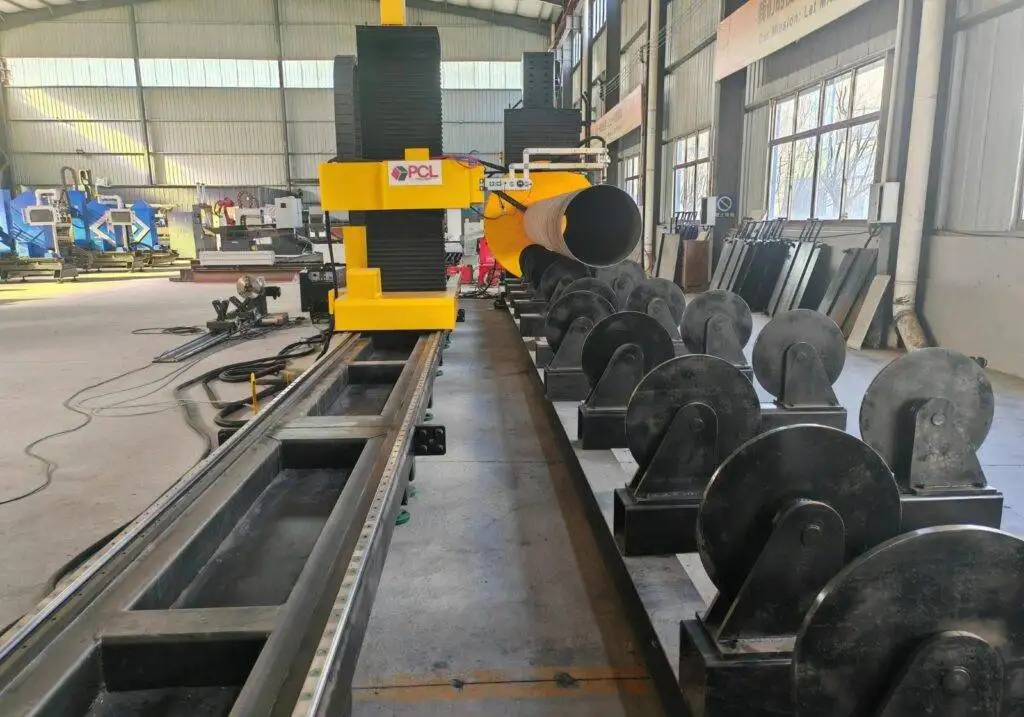
In this article
Optimizing Bridge Truss Fabrication via 3D Plasma Beam Processing
The fabrication of bridge trusses represents one of the most demanding applications in structural steel engineering. Unlike standard commercial framing, bridge components require extreme load-bearing capacities and must adhere to stringent fatigue-resistance standards. The transition from manual layout and traditional drilling to automated plasma arc stability centers has redefined the throughput potential for H-beams and structural channels. This evolution is driven by the need for geometric precision at the intersections of chords and web members, where even a three-millimeter deviation can compromise the structural integrity of the entire truss assembly.
The Role of Offline Programming in Complex Truss Geometry
In a modern industrial environment, the bottleneck of beam processing is rarely the speed of the torch, but rather the time spent in data entry and machine setup. Offline Programming (OLP) decouples the engineering design phase from the production cycle. By utilizing specialized software that ingests DSTV or STEP files directly from detailing programs like Tekla or SDS/2, engineers can simulate the entire cutting path in a virtual environment.
for Bridge Trusses, which often feature non-orthogonal intersections and complex camber requirements, OLP allows for the calculation of exact volumetric intersections. The software generates the toolpath for 6-axis or 7-axis robotic arms, ensuring that the plasma torch maintains the correct standoff distance and angle relative to the beam’s flange and web. This preemptive calculation eliminates trial-and-error on the shop floor, effectively reducing scrap rates to near zero. Furthermore, offline programming integration enables collision detection, ensuring the torch head does not interfere with the material handling clamps or the beam’s own structural profile during complex maneuvers.
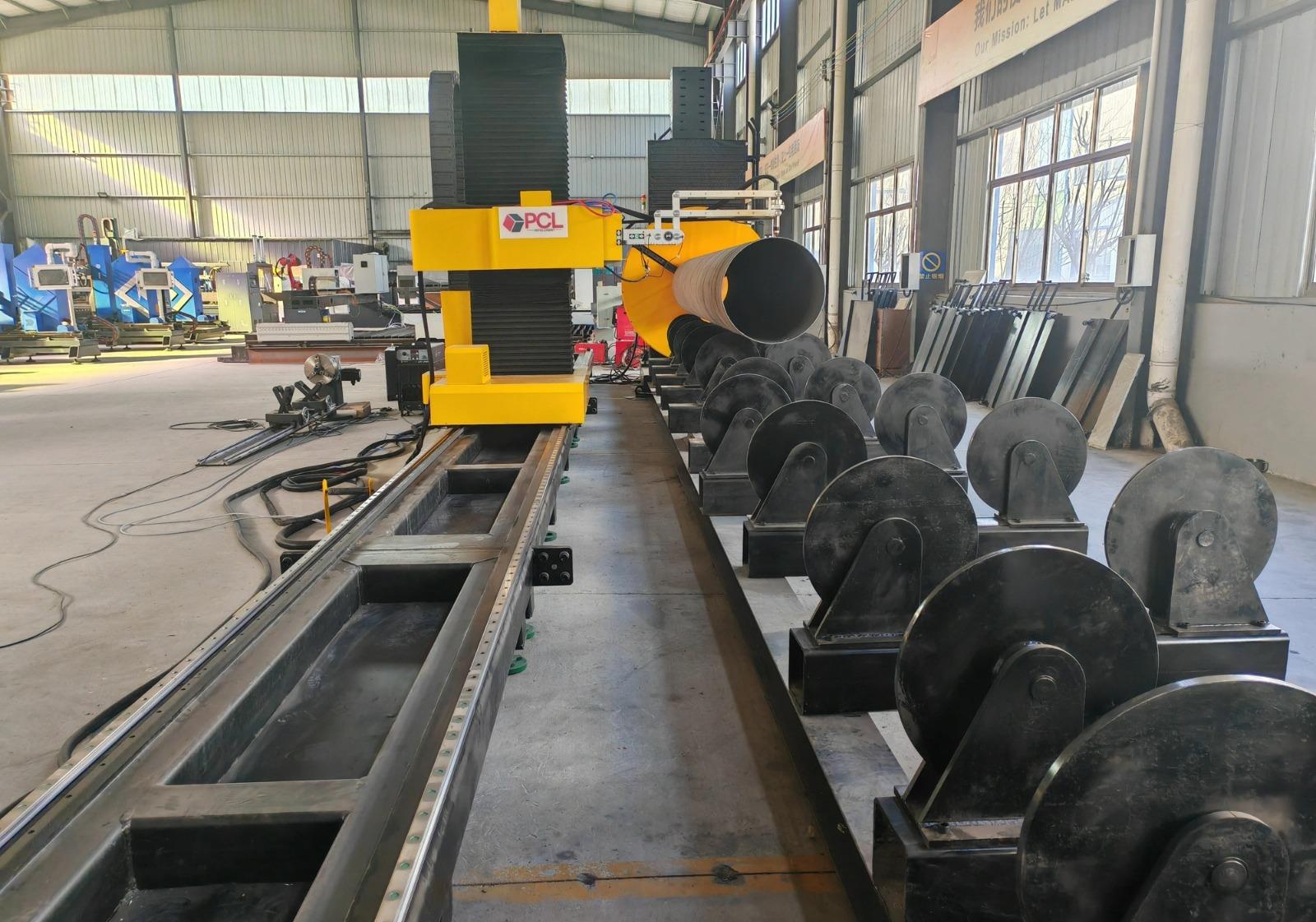
Precision in Intersection Accuracy and Fit-Up
The primary engineering challenge in truss assembly is the “fit-up.” When diagonal web members meet the top or bottom chords, the tolerances for the gaps must be minimized to ensure high-quality penetration welds. Plasma Cutting centers utilizing high-definition power sources can achieve surgical precision on thick-walled H-beams.
The accuracy of these intersections is governed by the machine’s ability to compensate for inherent beam deviations. Structural steel is rarely perfectly straight; it possesses natural mill tolerances involving sweep, camber, and flange out-of-squareness. Advanced Beam Processing Centers utilize mechanical probing or laser scanning to map the actual profile of the beam before the first arc is struck. The OLP-generated path is then dynamically adjusted to the “as-built” dimensions of the steel. This results in intersections where the web members sit flush against the chords, eliminating the need for excessive filler metal and reducing the heat-affected zone (HAZ) during subsequent welding phases.
Multi-Axis Beveling for Weld Preparation
In bridge construction, the majority of connections are designed as CJP (Complete Joint Penetration) welds. This necessitates complex bevel profiles—including V, X, K, and Y cuts—on the ends of the beams and within the flange access holes (rat holes). A 3D plasma processing center performs multi-axis beveling in a single pass, a task that would otherwise require manual grinding or secondary oxy-fuel stations.
The robotic plasma head tilts and rotates to create the necessary prep angles while simultaneously cutting the primary geometry. This integration ensures that the bevel angle is consistent along the entire perimeter of the cut, regardless of whether it is on the flange or the web. From an industrial engineering perspective, this consolidation of tasks reduces the “work-in-progress” (WIP) buffer, as the beam moves directly from the processing center to the assembly jig without requiring manual edge preparation.
H-Beam Processing Efficiency and Low Maintenance Requirements
Operational uptime is the most critical metric in heavy-scale fabrication. Plasma cutting systems are inherently robust and suited for the harsh environments of structural steel shops. Unlike other thermal cutting processes that are sensitive to dust, vibration, or ambient light, plasma systems rely on a localized ionized gas stream that is remarkably resilient.
The maintenance profile of a plasma-based beam center is centered on consumable management—nozzles, electrodes, and shields. Because the process is non-contact, there is no mechanical wear on the cutting head. For H-beam processing, this translates to a high “arc-on” time. Modern systems feature automatic consumable monitoring, alerting operators before cut quality degrades. Furthermore, the mechanical simplicity of a plasma torch means that field repairs are straightforward, typically involving the replacement of a lead set or a cooling block, rather than the recalibration of complex optical paths. This bridge truss geometry specialist equipment is designed to run multiple shifts with only routine slag removal and filter changes, ensuring the production line stays synchronized with the site delivery schedule.
Thermal Management and Material Integrity
A common concern in thermal cutting is the introduction of residual stress. However, high-speed plasma cutting minimizes the total heat input into the H-beam. By optimizing the cutting speed and gas flow through the OLP interface, the energy is concentrated specifically at the kerf. This localized heating ensures that the metallurgical properties of the high-strength steel used in bridge trusses remain within the specified design parameters. The rapid cooling associated with high-definition plasma also results in a smaller HAZ compared to oxy-fuel, which is vital for maintaining the fatigue life of the bridge components under cyclic loading.
Streamlining the Workflow for Industrial Throughput
The integration of a beam processing center into a bridge fabrication workflow transforms the facility from a manual shop into a precision manufacturing plant. The sequence is linear and logical:
1. Importation of 3D detailing data into the OLP environment.
2. Simulation and optimization of the nested cutting patterns.
3. Automated loading of the H-beam via cross-transfers.
4. Real-time sensing of beam irregularities and path adjustment.
5. High-definition plasma cutting of bolt holes, copes, and bevels.
6. Automated unloading and marking for the assembly team.
This systematic approach removes the variability of human skill from the primary shaping phase. By ensuring that every intersection is accurate and every bevel is precise, the industrial engineer can guarantee that the downstream assembly and welding teams are working with components that fit perfectly the first time. The result is a significant reduction in man-hours per ton and a substantial increase in the overall quality of the structural steel output.
Final Engineering Considerations
When selecting a beam processing center for bridge work, the focus must remain on the synergy between the software and the plasma delivery system. The ability to handle the heavy tonnage of H-beams while maintaining the agility of a 6-axis robot is what defines a top-tier facility. By prioritizing plasma technology, fabricators benefit from a versatile, low-maintenance solution that thrives in the demanding conditions of heavy industrial manufacturing. The precision achieved through offline programming ensures that the most complex bridge trusses are fabricated with a level of accuracy that meets the rigorous safety standards of modern infrastructure, all while maintaining an aggressive production schedule.






