Beam Processing Center with Offline Programming for Shipbuilding
In this article
- Optimizing Maritime Structural Fabrication via Beam Processing Centers
- The Role of Offline Programming in Continuous Production
- Eliminating Machine Idle Time
- Data Integrity and Traceability
- Precision Plasma Cutting for Complex Intersections
- Achieving Tight Fit-Up Tolerances
- Managing H-Beam Transitions
- Low Maintenance and Industrial Durability of Plasma Systems
- Automated Beveling for Weld Preparation
- Conclusion: The Engineer’s Perspective on ROI
Optimizing Maritime Structural Fabrication via Beam Processing Centers
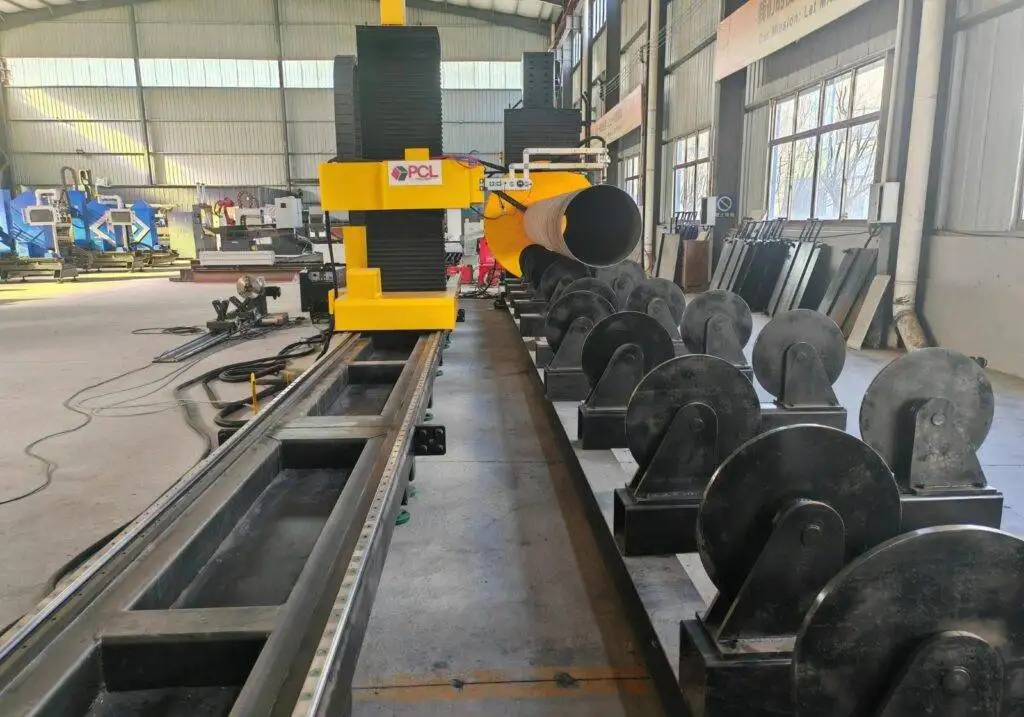
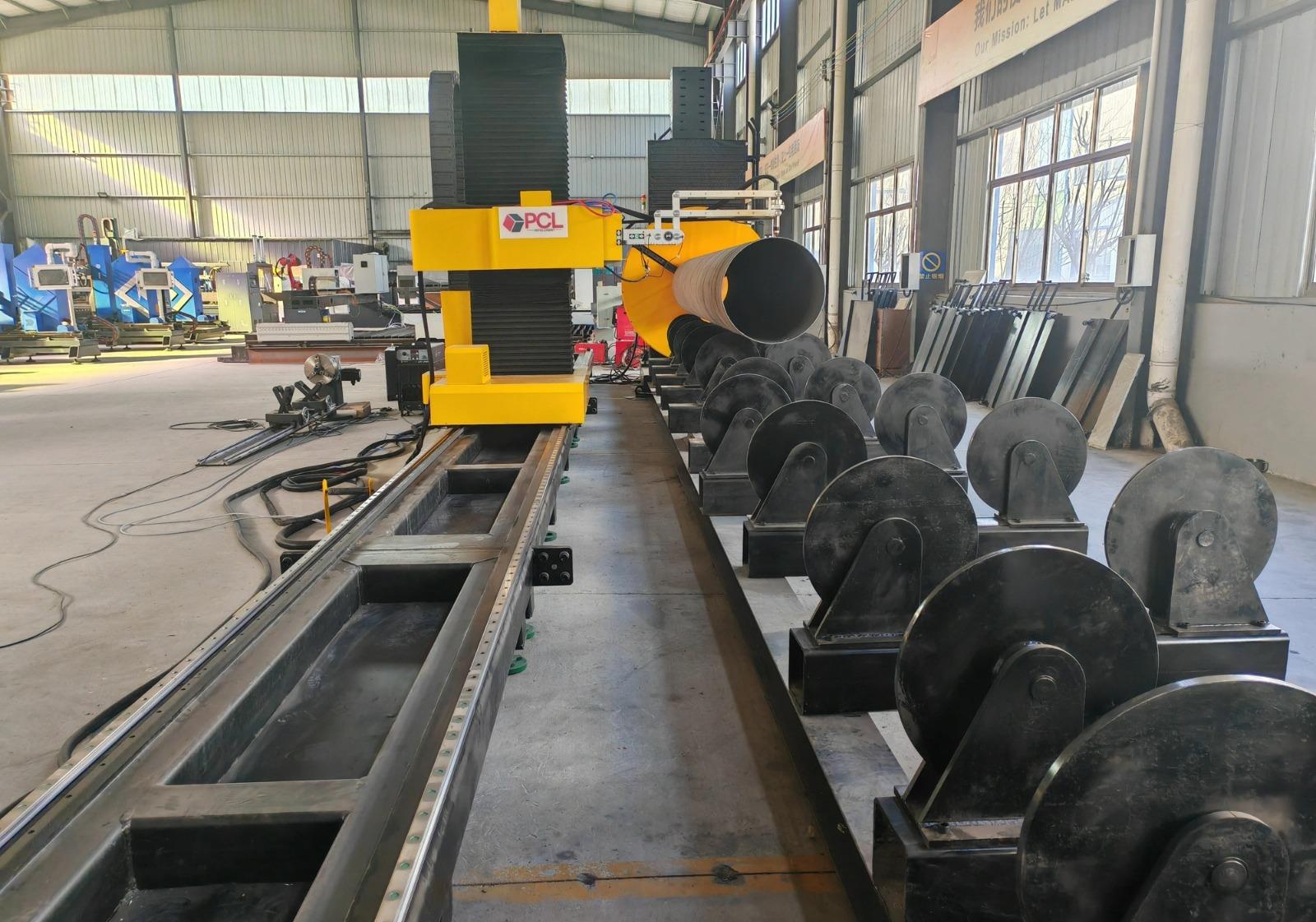
In the heavy industry of shipbuilding, the efficiency of structural steel fabrication determines the pace of the entire vessel construction timeline. The transition from manual marking and handheld cutting to integrated beam processing centers represents a fundamental shift in naval architecture execution. These centers are engineered to handle various profiles, including bulb flats, unequal angles, and H-beams, which form the skeletal framework of hulls and bulkheads. By utilizing plasma profile cutting technology, shipyards can achieve a level of repeatable precision that manual labor cannot match, especially when dealing with the complex geometries required for hydrodynamics and structural integrity.
The Role of Offline Programming in Continuous Production
One of the primary bottlenecks in traditional beam fabrication is the downtime associated with machine programming and manual data entry at the controller. Modern beam processing centers resolve this through advanced offline programming software. This allows engineers to import 3D CAD data directly from platforms like Tekla or ShipConstructor and generate cutting paths without interrupting the machine’s operation.
Eliminating Machine Idle Time
Offline programming (OLP) enables the simulation of the cutting process in a virtual environment. This simulation detects potential collisions between the robotic arm and the workpiece, optimizes the nesting of parts to minimize scrap, and calculates precise cycle times. Because the G-code is generated remotely, the beam processing center maintains a high duty cycle, moving from one profile to the next with minimal setup time. This is critical in shipbuilding where thousands of unique profiles must be processed in a specific sequence to feed the sub-assembly lines.
Data Integrity and Traceability
Beyond path generation, OLP systems manage the metadata associated with each beam. This includes part numbers, heat numbers, and assembly markings. The software can instruct the plasma torch or a separate marking head to scribe layout lines and orientation text directly onto the steel. This digital continuity ensures that the physical part perfectly matches the naval architect’s digital twin, reducing errors during the block assembly phase.
Precision Plasma Cutting for Complex Intersections
Shipbuilding relies heavily on the intersection of longitudinal stiffeners and transverse frames. The accuracy of these intersections is paramount to the structural rigidity of the vessel. High-definition plasma systems, mounted on multi-axis robotic manipulators, provide the dexterity required to cut these complex profiles with extreme thermal cutting accuracy.
Achieving Tight Fit-Up Tolerances
When an H-beam or a bulb flat passes through a transverse bulkhead, the “mouse hole” or the penetration cut must be exact. Excessive gaps lead to increased weld volume and potential thermal distortion of the plating, while undersized cuts require costly manual grinding. A robotic beam processor uses sophisticated probing systems to detect the actual dimensions of the raw material—accounting for mill tolerances and slight twists in the beam—and adjusts the cutting path in real-time. This ensures that the intersection point is accurate within fractions of a millimeter, facilitating a seamless fit-up.
Managing H-Beam Transitions
H-beams present unique challenges due to the transition between the web and the flanges. Traditional mechanical processing methods often struggle with the interior radius of the beam. Plasma cutting, however, utilizes a non-contact process that can easily navigate the interior corners of an H-beam. This capability allows for complex coping, block-outs, and flange thinning that are often required for weight reduction or utility routing in engine rooms and cargo holds.
Low Maintenance and Industrial Durability of Plasma Systems
In the harsh environment of a shipyard, equipment reliability is a core KPI for industrial engineers. Plasma-based structural beam processing centers offer a distinct advantage regarding maintenance overhead. Unlike mechanical cutting tools that suffer from tool wear, breakage, and the need for constant lubrication, plasma systems are inherently more robust.
Simplified Consumable Management
The primary maintenance requirement for a plasma system involves the periodic replacement of nozzles and electrodes. Modern plasma power supplies feature “long-life” technology that modulates the arc start and stop sequences to preserve consumable integrity. For a shipyard, this translates to fewer mid-shift interventions and a predictable cost-per-meter of cut. The absence of heavy mechanical forces on the robotic gantry also reduces the wear on bearings and drive systems, extending the total lifecycle of the machine.
Resilience to Scaled Surface Conditions
Marine-grade steel often carries heavy mill scale or primer coatings. Plasma cutting is highly tolerant of these surface conditions. The high-temperature ionized gas pierces through scale and primer without the risk of tool deflection. This makes it the ideal choice for processing H-beams and angles that may have been stored in outdoor yards and subjected to surface oxidation.
Automated Beveling for Weld Preparation
Weld preparation is perhaps the most labor-intensive aspect of beam fabrication. In shipbuilding, where full penetration welds are mandatory for structural members, profiles must be beveled to specific angles (V, Y, or K-cuts). A beam processing center equipped with a tilt-rotator plasma head automates this process entirely.
Multi-Angle Beveling in a Single Pass
By utilizing the 5 or 6-axis movement of the robotic arm, the plasma torch can bevel the edges of a beam while performing the length cut. This eliminates the need for a secondary operation where workers use grinders or portable beveling machines. The consistency of a robotically beveled edge ensures that the welding robots or manual welders in the next stage of production have a uniform groove to fill, which significantly improves weld quality and reduces the likelihood of non-destructive testing (NDT) failures.
Variable Beveling Transitions
Sophisticated shipbuilding designs often require variable bevels, where the angle of the cut changes along the length of the profile to accommodate the changing curvature of the hull. Offline programming calculates these transitions and coordinates the torch motion to maintain the correct land thickness and bevel angle throughout the cut. This level of geometric complexity is virtually impossible to achieve manually but is a standard output for a high-end beam processing center.
Conclusion: The Engineer’s Perspective on ROI
From an industrial engineering standpoint, the integration of a beam processing center with Offline Programming is not merely an upgrade in cutting speed; it is a total optimization of the structural workflow. By focusing on plasma cutting for its versatility and low maintenance, shipyards can achieve superior intersection accuracy and automated weld preparation. The result is a drastic reduction in man-hours per ton of steel, a decrease in material waste, and a significant acceleration of the vessel’s launch date. As global maritime standards continue to demand higher structural integrity and lower costs, the reliance on automated plasma profile processing will only increase.







