Optimizing H-Beam Production Through Advanced Plasma Cutting
In the fabrication of heavy-duty construction machinery—such as excavator frames, crane booms, and chassis components—the H-beam serves as the primary load-bearing architecture. To meet the rigorous demands of dynamic loading and fatigue resistance, the production line must transition from conventional thermal cutting to high-precision High-Definition Plasma Cutting. This shift is not merely about speed; it is about the engineering of a joint geometry that supports Narrow Gap welding. Unlike standard structural steelwork, construction machinery requires deep penetration and minimal thermal distortion, making the initial plasma cut the most critical stage of the manufacturing workflow.
The Engineering Necessity of Intersection Accuracy
In a high-throughput H-beam line, the intersection where the web meets the flange dictates the overall structural integrity of the finished component. Intersection Accuracy refers to the mechanical tolerance maintained during the multi-axis movement of the plasma torch as it traverses the raw plate. for Construction Machinery, where H-beams are often custom-fabricated from high-tensile plates rather than hot-rolled sections, the alignment of the web-to-flange joint must be within ±0.5mm to accommodate Narrow Gap welding parameters.
High-definition plasma systems utilize sophisticated CNC algorithms to compensate for kerf width variations. As the torch moves, the system dynamically adjusts the arc voltage and gas flow to ensure the cut face remains square. This level of precision eliminates the secondary grinding processes typically required in lower-tier production lines. By achieving a perfect fit-up at the intersection, the Narrow Gap welding process can proceed with a minimized root opening, significantly reducing the volume of weld metal required and decreasing the total heat input into the workpiece.
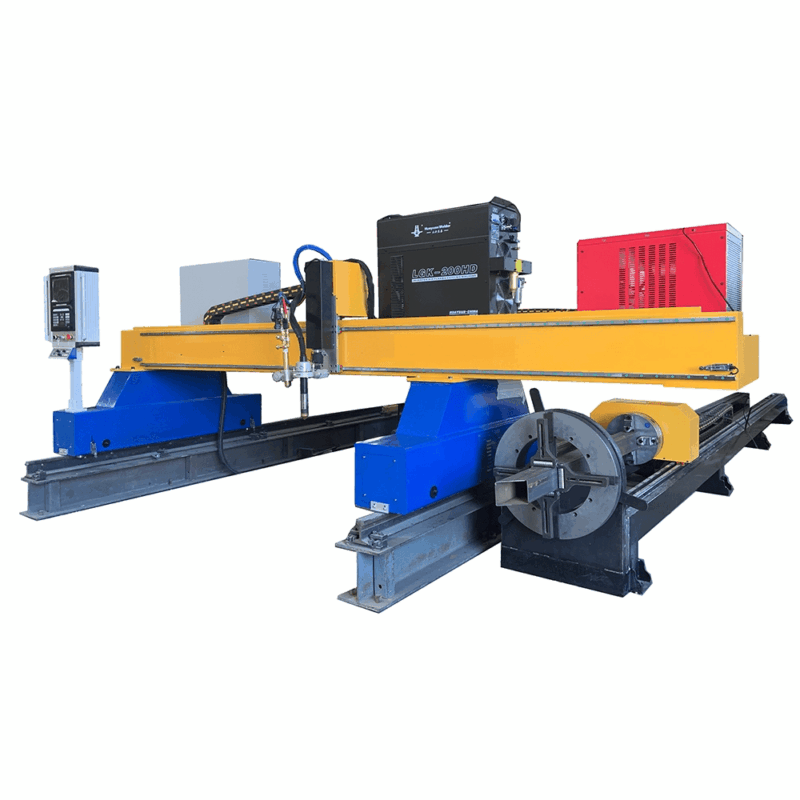
Beveling Strategies for Narrow Gap Welding Preparation
Narrow Gap welding is the preferred joining method for thick-walled construction machinery components because it optimizes the mechanical properties of the fusion zone. However, this method is entirely dependent on the quality of the Narrow Gap Welding Preparation performed during the cutting phase. Plasma cutting systems equipped with 5-axis or 6-axis beveling heads allow for the creation of complex edge geometries—such as V, Y, or K-shaped bevels—in a single pass.
The engineering advantage of using plasma for beveling lies in its ability to maintain a consistent “land” or root face. In H-beam production, the bevel angle is typically kept narrow (often between 5 to 20 degrees) to facilitate deep penetration while using less filler material. The plasma system must manage the “bevel twist” phenomenon, where the arc naturally tends to lag behind the torch movement at high angles. Advanced power supplies and real-time gas mixing (using Oxygen or Nitrogen/Hydrogen blends) ensure that the beveled surface is dross-free and metallurgically sound, preventing hydrogen embrittlement in high-strength steels.
Thermal Management and Material Integrity
Construction machinery components often utilize quenched and tempered steels. Excessive heat during the cutting process can create an oversized Heat Affected Zone (HAZ), which compromises the local hardness and tensile strength of the H-beam. Plasma cutting, characterized by its high energy density and high travel speeds, narrows the HAZ compared to oxy-fuel methods. This localized thermal impact ensures that the base metal properties remain intact, which is vital for parts subjected to high stress, such as the mounting points of a hydraulic arm.
Engineering for H-Beam Low Maintenance and Operational Uptime
In an industrial environment, the reliability of the plasma station is a direct driver of the production line’s Overall Equipment Effectiveness (OEE). H-Beam Low Maintenance design philosophy is integrated into the mechanical hardware of modern plasma cutters. This involves several critical engineering choices:
First, the protection of linear guides and rack-and-pinion systems from fine metallic dust and slag is paramount. Enclosed bellows and pressurized carriage assemblies prevent abrasive particulates from entering the bearings. Second, the use of “long-life” consumable technology reduces the frequency of torch interventions. By optimizing the cooling flow around the electrode and nozzle, the system can sustain thousands of pierces before requiring part replacement.
Furthermore, the integration of automated slag extraction systems beneath the cutting table prevents the buildup of dross that can interfere with material positioning. For H-beam production, where large plates are continuously loaded, a self-cleaning water table or a zoned downdraft system ensures that the machine remains operational for three-shift cycles with minimal manual cleaning.
CNC Trajectory Control and Error Compensation
The software layer of the plasma system plays a significant role in maintenance reduction. Soft-start and soft-stop routines for the plasma arc prevent catastrophic nozzle failure. Additionally, collision detection sensors protect the bevel head during high-speed traverses across the plate. If the plate has slight warping—common in large structural sections—the torch height control (THC) uses ohmic sensing or arc voltage sampling to maintain a constant standoff distance, preventing torch “diving” and reducing mechanical stress on the gantry.
Integration with the Narrow Gap Welding Workflow
The final stage of the H-beam cutting process involves the preparation of the web-to-flange interface for Narrow Gap welding. Unlike standard welding which uses wide beads, Narrow Gap welding relies on a tight, deep groove. The plasma system must provide a cut that is free of nitride contamination, particularly when cutting with air. Using High-Definition Nitrogen or H35 (Argon-Hydrogen) shielding gases ensures that the cut edge is ready for immediate welding without the need for chemical etching or mechanical descaling.
This seamless transition from cutting to welding is what defines a modern construction machinery H-beam line. The accuracy of the plasma bevel ensures that the automated welding tractor or robotic arm can maintain a consistent arc length within the narrow groove. This results in a weld joint with high grain refinement and superior impact toughness, essential for the harsh operating environments of heavy machinery.
Summary of Technical Specifications for Plasma Systems
To achieve the benchmarks required for heavy-duty H-beam fabrication, the plasma cutting station must adhere to the following parameters:
– Positioning Accuracy: ±0.1mm per meter of travel.
– Bevel Angle Consistency: ±0.5 degrees.
– Maximum Cut Capacity: Up to 50mm for flange plates in construction equipment.
– Gas Control: Fully automated multi-gas mixing consoles for material-specific optimization.
Conclusion on Industrial Efficiency
By focusing on High-Definition Plasma Cutting as the foundational step in H-beam production, manufacturers of construction machinery can achieve a level of precision that facilitates advanced Narrow Gap welding. The combination of high intersection accuracy, robust low-maintenance hardware, and precise beveling capabilities allows for the creation of structural members that are both lighter and stronger. As the industry moves toward higher automation, the role of the plasma cutter evolves from a simple parting tool to a sophisticated CNC machining center that defines the quality of the entire structural assembly.
-


LT240S tube laser cutting machine
-
LT120S tube laser cutting machine
-
Sale

Tank Fillet Welding Machine
Original price was: $1,000.00.$900.00Current price is: $900.00. -
Sale

MAK100 tube laser cutting machine
Original price was: $5,500.00.$5,000.00Current price is: $5,000.00. -

portable plasma air cutting machine
$1,200.00 -

2in1 fiber laser cutting machine
-

Air cooling Laser welding machine
-

HF h beam laser cutting machine
-

LT240 laser cutting machine
-

Laser welding machine
-


Cobot Welding Station
-

Gantry welding robot solution
-

Tracked Wheeled AGV Welding robot
-

LFH6020 Fiber laser cutting machine
-
LFP6020
-

robotic welidng machine
Advanced Fiber Laser Tube Processing Technology
Our CNC Fiber Laser Tube Cutting systems revolutionize metal fabrication by integrating high-precision cutting, punching, and profiling into a single automated workflow. Designed for versatility, this technology handles a wide array of profiles including Round, Square, Rectangular, and Oval tubes, as well as complex L-shaped and U-shaped channels.
- Precision Punching: High-speed hole punching with micron-level accuracy, eliminating the need for mechanical drilling or die-stamping.
- Complex Profiling: Advanced 3D pathing allows for intricate interlocking joints and specialized notch cuts, ideal for structural frames.
- High Material Efficiency: Intelligent nesting software minimizes scrap, reducing raw material costs across large production runs.
- Clean Finish: Delivers oxide-free, burr-free edges that require zero secondary grinding before welding.

Seamlessly processing multiple profiles with consistent precision.
Global Delivery & Logistics



From our high-tech manufacturing facility directly to your global site. PCL WeldCut ensures secure packaging, professional handling, and reliable international logistics to safeguard your equipment throughout the entire journey.
One thought on “H-Beam Production Line with Narrow Gap welding for for Construction Machinery”
Excellent cut quality on 10mm carbon steel. The edges are clean and burr-free.