Strategic Implementation of Plasma Cutting in H-Beam Fabrication
In the landscape of modern structural steel engineering, the shift toward high-efficiency production lines is driven by the need for superior joint integrity and reduced secondary operations. The H-Beam Production Line, a cornerstone of industrial infrastructure, has seen a significant evolution through the integration of plasma beveling and narrow gap welding techniques. Unlike traditional thermal cutting methods, high-definition plasma systems offer a unique balance of speed, precision, and operational longevity that is essential for processing thick-walled sections used in high-rise construction, bridge building, and maritime engineering.
The primary objective for any industrial engineer managing these lines is the synchronization of the preparation phase with the welding phase. For narrow gap welding to be successful, the fit-up tolerances must be exceptionally tight. This requirement places the burden of performance squarely on the plasma cutting station. By utilizing multi-axis robotic arms or specialized gantry systems, plasma torches can execute complex 3D profiles that traditional mechanical sawing or oxygen-fuel systems cannot match in terms of throughput or flexibility.
Maximizing Intersection Accuracy for Structural Fit-up
Precision at the intersection of web and flange components is the most critical factor in H-beam assembly. When preparing beams for narrow gap welding, even a deviation of one millimeter can lead to excessive weld volume or incomplete penetration. Intersection accuracy in plasma cutting is achieved through advanced sensing technologies, such as Initial Height Sensing (IHS) and continuous torch height control (THC). These systems compensate for variations in the raw material’s surface, ensuring the kerf width remains consistent throughout the cut.
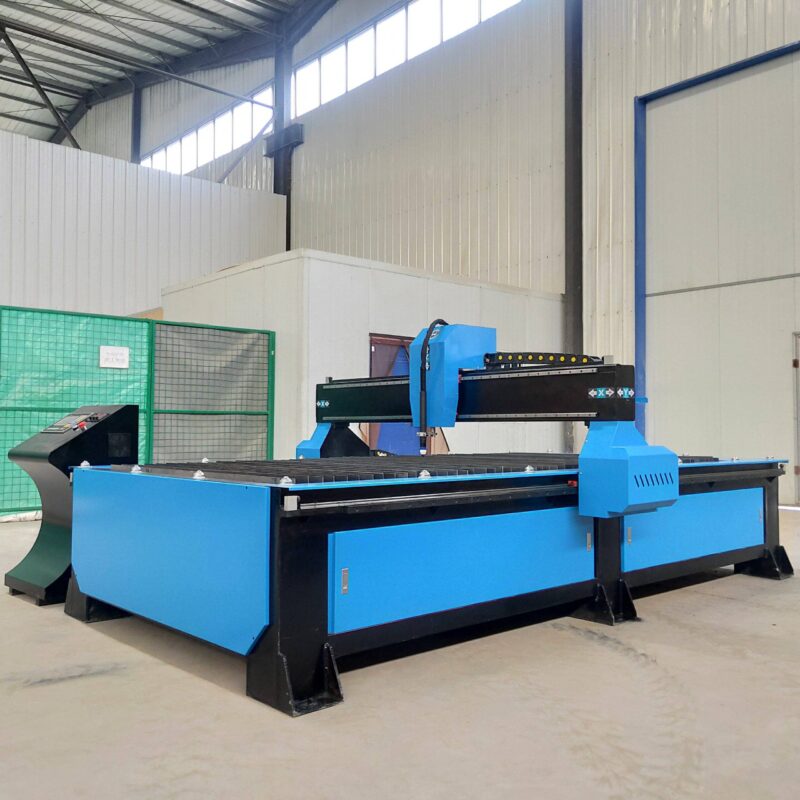
Furthermore, the use of sophisticated nesting and motion control software allows for the compensation of the plasma arc’s natural taper. By dynamically adjusting the torch angle during the cut, the system produces edges that are perfectly perpendicular or precisely beveled. This geometric fidelity is paramount when beams are moved to the assembly station. High intersection accuracy eliminates the need for manual grinding or “fill-up” welding, directly impacting the overall cycle time of the H-beam fabrication process.
Low Maintenance Profiles and Operational Reliability
From a maintenance perspective, plasma systems are engineered for the harsh environments of heavy industry. An industrial engineer must account for downtime when calculating the Total Cost of Ownership (TCO). Plasma power sources are characterized by their robust solid-state designs, which lack the sensitive optical components found in other high-energy beam technologies. This makes them less susceptible to the dust, vibration, and temperature fluctuations common in steel mills.
The consumables—nozzles, electrodes, and swirl rings—are designed for rapid replacement, often utilizing “quick-change” torch designs that minimize the mean time to repair (MTTR). Modern plasma systems also incorporate predictive maintenance alerts, monitoring gas flow rates and coolant temperatures to prevent catastrophic torch failure. By maintaining a consistent schedule for consumable replacement, the production line achieves a high duty cycle, ensuring that the downstream narrow gap welding stations are never starved of material. The inherent durability of the plasma torch leads to a stable production environment where mechanical failure is a rare outlier rather than a weekly occurrence.
Advanced Beveling for Narrow Gap Preparation
Narrow gap welding requires specific groove geometries—typically small-angle V-grooves or U-grooves—that allow the welding torch to reach the root of the joint with minimal filler metal consumption. High-definition plasma cutting excel in this area due to the development of 5-axis and 6-axis bevel heads. These heads can rotate and tilt in real-time, creating varied bevel angles along a single edge if required by the structural design.
The thermal impact of plasma is also a key consideration. While it is a thermal process, the high speed of the plasma arc limits the Heat Affected Zone (HAZ). This preservation of the base metal’s metallurgical properties is vital for high-strength steel grades. When the plasma-cut edge is presented to the narrow gap welding system, the clean, dross-free surface facilitates better arc stability and fusion. Because narrow gap welding uses a smaller volume of weld metal, any impurities or irregularities on the cut surface are magnified in the final weld quality. Therefore, the ability of plasma to produce a clean, ready-to-weld edge is a significant process advantage.
Optimizing Material Flow and Energy Efficiency
Integrating plasma cutting directly into the H-beam line allows for a “one-pass” philosophy. A raw beam enters the cell, and the plasma system performs the length cutting, bolt hole piercing, and edge beveling in a single sequence. This reduces material handling—a major source of hidden costs in industrial engineering. By reducing the number of times a heavy beam must be lifted and repositioned, the risk of geometric distortion and workplace injury is significantly lowered.
Energy consumption is another metric where modern plasma systems show strength. High-definition power supplies are now more efficient than ever, with many featuring “green” modes that reduce power draw during idle periods. When compared to older oxy-fuel methods, the speed of plasma cutting means the machine is active for shorter durations to achieve the same output, resulting in lower kilowatt-hour consumption per ton of steel processed. This efficiency, combined with the reduction in welding consumables enabled by narrow gap preparation, creates a highly sustainable production model.
Data-Driven Quality Control in the Production Line
The final stage of integrating plasma cutting into an H-beam line involves data feedback loops. Industrial Internet of Things (IIoT) sensors on the plasma cutter can record the exact parameters used for every cut—gas pressure, amperage, and travel speed. This data provides a “digital birth certificate” for each H-beam, which is invaluable for quality assurance in structural engineering. If a deviation is detected during the narrow gap welding stage, engineers can trace back to the cutting data to identify if a nozzle change was overdue or if the material composition caused an anomaly.
In conclusion, the optimization of an H-beam production line for narrow gap welding is contingent upon the capabilities of the plasma cutting system. By focusing on intersection accuracy, leveraging the low maintenance nature of the hardware, and utilizing advanced plasma beveling techniques, manufacturers can achieve a superior level of structural integrity and economic efficiency. The synergy between precise preparation and advanced welding is what defines the next generation of steel structure fabrication.
-


LT240S tube laser cutting machine
-
LT120S tube laser cutting machine
-
Sale

Tank Fillet Welding Machine
Original price was: $1,000.00.$900.00Current price is: $900.00. -
Sale

MAK100 tube laser cutting machine
Original price was: $5,500.00.$5,000.00Current price is: $5,000.00. -

portable plasma air cutting machine
$1,200.00 -

2in1 fiber laser cutting machine
-

Air cooling Laser welding machine
-

HF h beam laser cutting machine
-

LT240 laser cutting machine
-

Laser welding machine
-


Cobot Welding Station
-

Gantry welding robot solution
-

Tracked Wheeled AGV Welding robot
-

LFH6020 Fiber laser cutting machine
-
LFP6020
-

robotic welidng machine
Advanced Fiber Laser Tube Processing Technology
Our CNC Fiber Laser Tube Cutting systems revolutionize metal fabrication by integrating high-precision cutting, punching, and profiling into a single automated workflow. Designed for versatility, this technology handles a wide array of profiles including Round, Square, Rectangular, and Oval tubes, as well as complex L-shaped and U-shaped channels.
- Precision Punching: High-speed hole punching with micron-level accuracy, eliminating the need for mechanical drilling or die-stamping.
- Complex Profiling: Advanced 3D pathing allows for intricate interlocking joints and specialized notch cuts, ideal for structural frames.
- High Material Efficiency: Intelligent nesting software minimizes scrap, reducing raw material costs across large production runs.
- Clean Finish: Delivers oxide-free, burr-free edges that require zero secondary grinding before welding.

Seamlessly processing multiple profiles with consistent precision.
Global Delivery & Logistics



From our high-tech manufacturing facility directly to your global site. PCL WeldCut ensures secure packaging, professional handling, and reliable international logistics to safeguard your equipment throughout the entire journey.
One thought on “H-Beam Production Line with Narrow Gap welding for for Steel Structure”
Been using this for 3 months now. Still running like a beast. Very reliable.