Optimizing H-Beam Production for Wind Tower Internals
In the fabrication of wind towers, the structural integrity of internal platforms, ladders, and secondary support structures relies heavily on the precision of H-beam components. An automated H-Beam Production Line is the cornerstone of this manufacturing process. Unlike general construction, wind tower components must adhere to strict aerodynamic and load-bearing tolerances. This demands a transition from manual marking and cutting to integrated thermal processing systems. The focus of this technical evaluation is the application of high-definition plasma technology coupled with advanced height sensing to achieve repeatable results in heavy-section steel.
The Role of Arc Voltage Control in Thermal Stability
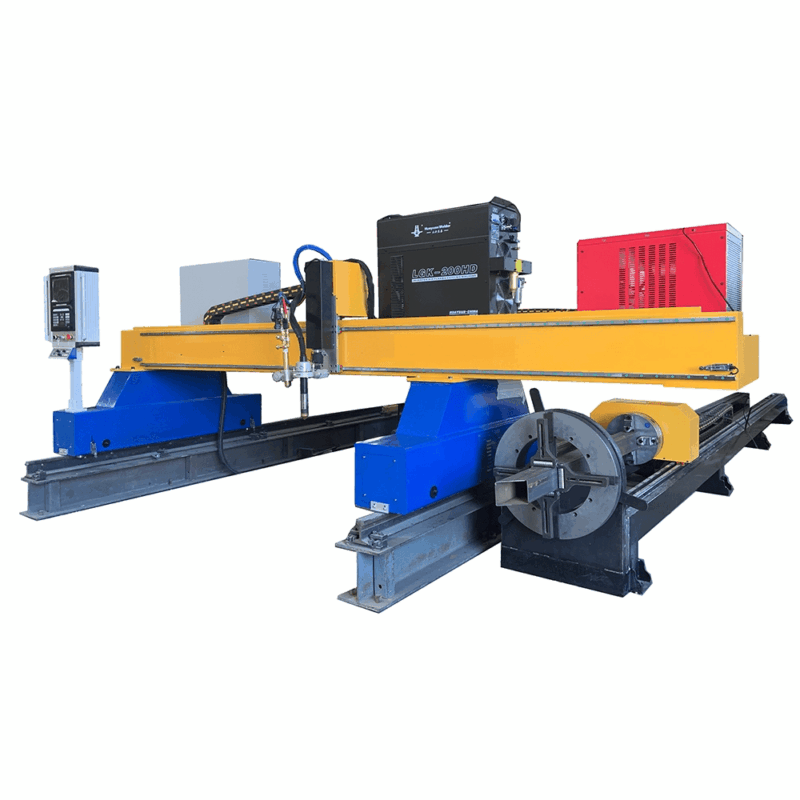
Maintaining a constant standoff distance between the plasma torch and the workpiece is critical for edge quality and kerf consistency. Arc Voltage Control (AVC) serves as the primary feedback mechanism in modern H-beam processing. During the cutting cycle, the system monitors the electrical potential between the electrode and the H-beam surface. As the beam moves through the gantry, any material warping or structural deviations are compensated for in real-time.
If the distance between the torch and the flange increases, the voltage rises; the AVC system detects this fluctuation and immediately adjusts the Z-axis motor to lower the torch. This ensures that the plasma arc remains at its optimal focal point. For wind tower internals, where H-beams often exceed 12 meters in length, even a slight material bow can ruin a cut if not managed by active height control. By stabilizing the arc length, we eliminate dross accumulation and minimize the heat-affected zone (HAZ), which is vital for preserving the metallurgical properties of high-tensile steel.
Intersection Accuracy in Complex Geometries
Wind tower shells are cylindrical or conical, requiring internal H-beams to be cut with precise “fish-mouth” or contoured profiles to fit the curvature of the tower wall. Achieving high intersection accuracy is where automated Plasma Cutting outperforms traditional mechanical sawing or manual oxy-fuel methods.
Using 4-axis or 6-axis robotic torch heads, the production line can execute complex tool paths that account for the intersection of the beam’s web and flanges with the curved internal surface of the tower. The software calculates the exact coordinates for the plasma arc to penetrate the steel, ensuring a seamless fit-up. This precision reduces the need for manual grinding or gap-filling during the assembly phase, significantly lowering the total man-hours per tower section. The accuracy is further enhanced by the AVC, which prevents the torch from diving or crashing when traversing the varied heights of the beam’s profile.
Advanced Beveling for Structural Integrity
The internal components of a wind tower are subjected to significant vibration and cyclical loading. Consequently, the joints must be prepared with high-quality bevels to ensure deep penetration during subsequent joining processes. Plasma Cutting systems integrated into H-beam lines are now capable of multi-angle beveling in a single pass.
Common profiles include V, Y, and K-bevels. The plasma torch, controlled by the CNC system, can tilt up to 45 degrees or more, creating the necessary preparation on both the web and the flanges. This automated beveling ensures that the root face and bevel angle remain consistent across the entire length of the cut. For an industrial engineer, this consistency translates to a predictable consumption of consumables and a standardized workflow that meets ISO and AWS standards for wind energy structures.
Low Maintenance and Operational Uptime
A primary concern in high-volume production is the Mean Time Between Failures (MTBF). Plasma systems for H-beam processing are engineered for low maintenance and high durability. Unlike mechanical cutting tools that suffer from blade wear, vibration, and coolant contamination, plasma is a non-contact thermal process. This eliminates the mechanical stresses placed on the machine gantry and drive systems.
Key maintenance advantages include:
- Simplified Consumable Replacement: Modern quick-change torch designs allow for electrode and nozzle replacement in under two minutes.
- Robust Feedback Loops: AVC systems reduce the risk of torch collisions, which is the leading cause of downtime in automated cutting.
- Debris Management: Integrated extraction systems and slag trays are designed for heavy industrial use, allowing for continuous operation without frequent stops for cleaning.
By reducing the frequency of mechanical adjustments and tool sharpening, the H-beam production line maintains a higher duty cycle, essential for meeting the aggressive timelines of offshore and onshore wind projects.
Efficiency Metrics and Material Throughput
From an engineering perspective, the efficiency of an H-beam line is measured by throughput per square meter of floor space. Integration of plasma cutting with automated loading and unloading conveyors creates a “lean” flow. When a raw H-beam enters the station, the system performs a laser scan to identify the exact dimensions and positioning. The Arc Voltage Control then takes over as the cutting begins, ensuring that even if the beam is not perfectly seated on the rollers, the cut remains true to the digital twin provided by the CAD/CAM software.
The speed of plasma cutting on sections typically used in wind towers (ranging from 10mm to 40mm thickness) is significantly higher than oxy-fuel. This allows the production line to process more tons of steel per shift. Furthermore, the high-definition nature of contemporary plasma power sources results in a surface finish that is often ready for coating or assembly without further processing.
Conclusion: Technical Synergy in Fabrication
The synthesis of automated motion control, real-time voltage feedback, and high-energy thermal cutting defines the modern standard for H-beam fabrication in the wind energy sector. By prioritizing intersection accuracy and utilizing Plasma Cutting for both profiling and beveling, manufacturers can guarantee the structural reliability of wind tower internals. The shift toward these automated solutions is not merely an upgrade in speed, but a fundamental improvement in the precision and lifecycle maintenance of the production environment, ensuring that the infrastructure supporting global renewable energy is built to the highest possible technical standards.
-


LT240S tube laser cutting machine
-
LT120S tube laser cutting machine
-
Sale

Tank Fillet Welding Machine
Original price was: $1,000.00.$900.00Current price is: $900.00. -
Sale

MAK100 tube laser cutting machine
Original price was: $5,500.00.$5,000.00Current price is: $5,000.00. -

portable plasma air cutting machine
$1,200.00 -

2in1 fiber laser cutting machine
-

Air cooling Laser welding machine
-

HF h beam laser cutting machine
-

LT240 laser cutting machine
-

Laser welding machine
-


Cobot Welding Station
-

Gantry welding robot solution
-

Tracked Wheeled AGV Welding robot
-

LFH6020 Fiber laser cutting machine
-
LFP6020
-

robotic welidng machine
Advanced Fiber Laser Tube Processing Technology
Our CNC Fiber Laser Tube Cutting systems revolutionize metal fabrication by integrating high-precision cutting, punching, and profiling into a single automated workflow. Designed for versatility, this technology handles a wide array of profiles including Round, Square, Rectangular, and Oval tubes, as well as complex L-shaped and U-shaped channels.
- Precision Punching: High-speed hole punching with micron-level accuracy, eliminating the need for mechanical drilling or die-stamping.
- Complex Profiling: Advanced 3D pathing allows for intricate interlocking joints and specialized notch cuts, ideal for structural frames.
- High Material Efficiency: Intelligent nesting software minimizes scrap, reducing raw material costs across large production runs.
- Clean Finish: Delivers oxide-free, burr-free edges that require zero secondary grinding before welding.

Seamlessly processing multiple profiles with consistent precision.
Global Delivery & Logistics



From our high-tech manufacturing facility directly to your global site. PCL WeldCut ensures secure packaging, professional handling, and reliable international logistics to safeguard your equipment throughout the entire journey.