Fiber Laser Cutting Machine with 5-Axis Beveling for Bridge Trusses
In this article
Advanced Structural Fabrication: The Role of 5-Axis Fiber Laser Systems
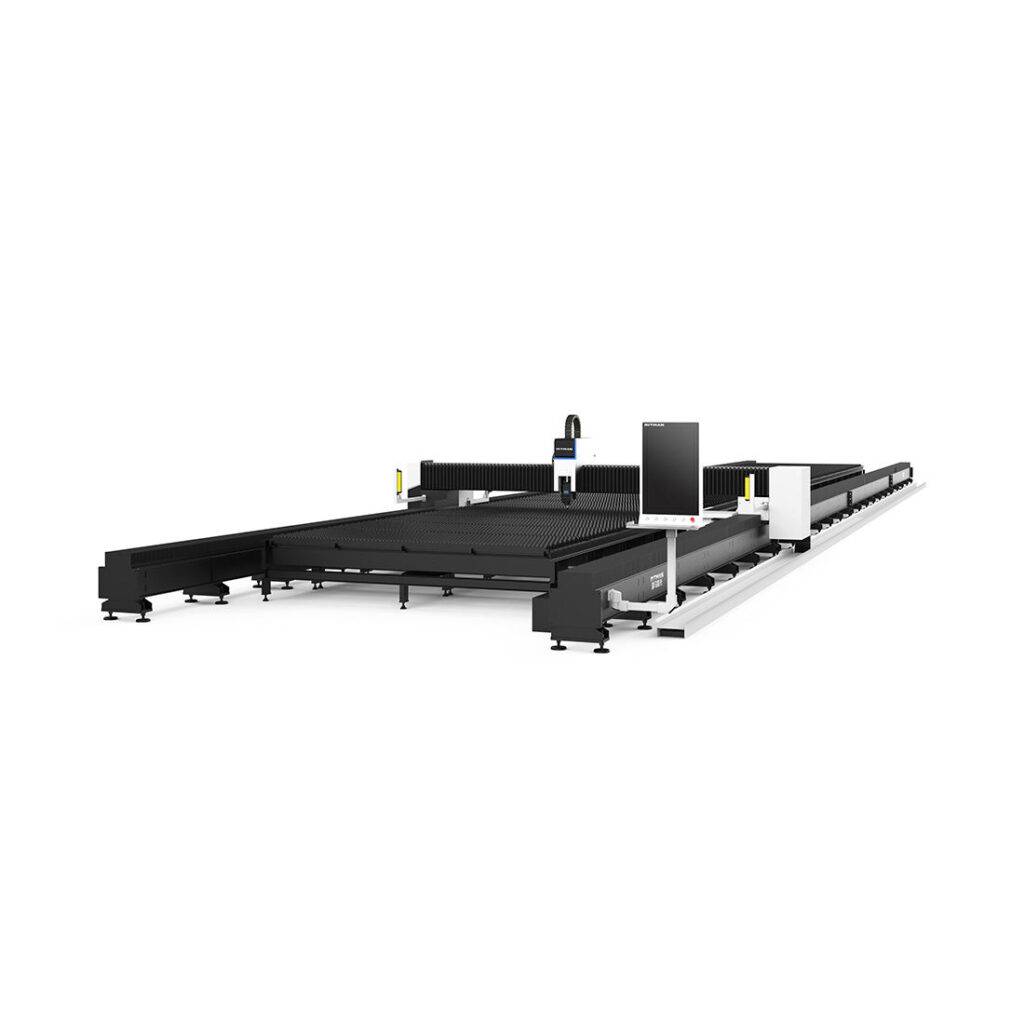
In the field of bridge engineering, the transition from traditional mechanical processing to high-energy beam technologies has redefined production benchmarks. The implementation of fiber laser beveling for Bridge Trusses addresses the most stringent requirements for dimensional accuracy and metallurgical integrity. Unlike legacy methods, a fiber laser operating in the 10kW to 30kW range provides a concentrated energy density that allows for rapid sublimation and expulsion of molten material. This precision is critical when fabricating gusset plates, chords, and web members where fit-up tolerances are measured in tenths of a millimeter.
The industrial engineering perspective focuses on the total cost of ownership and process flow optimization. By utilizing a 5-axis kinematic head, the machine can execute complex V, Y, X, and K-shaped bevels. This capability is essential for structural joints that require full penetration welds without the labor-intensive requirement of manual edge preparation. The 5-axis head moves across the B and C axes, allowing the laser beam to maintain a perpendicular or angled orientation relative to the material surface, even during intricate contouring.
Eliminating Secondary Processes: The Zero-Grinding Mandate
One of the most significant advantages of high-precision Laser Cutting in bridge truss manufacturing is the resulting surface finish. Bridge components are subject to cyclic loading, making them highly susceptible to fatigue failure. Micro-fissures or rough edges can act as stress concentrators. Fiber laser cutting produces a surface roughness (Ra) that often falls below 12.5 micrometers, which meets or exceeds the requirements for structural steel edges without further intervention.
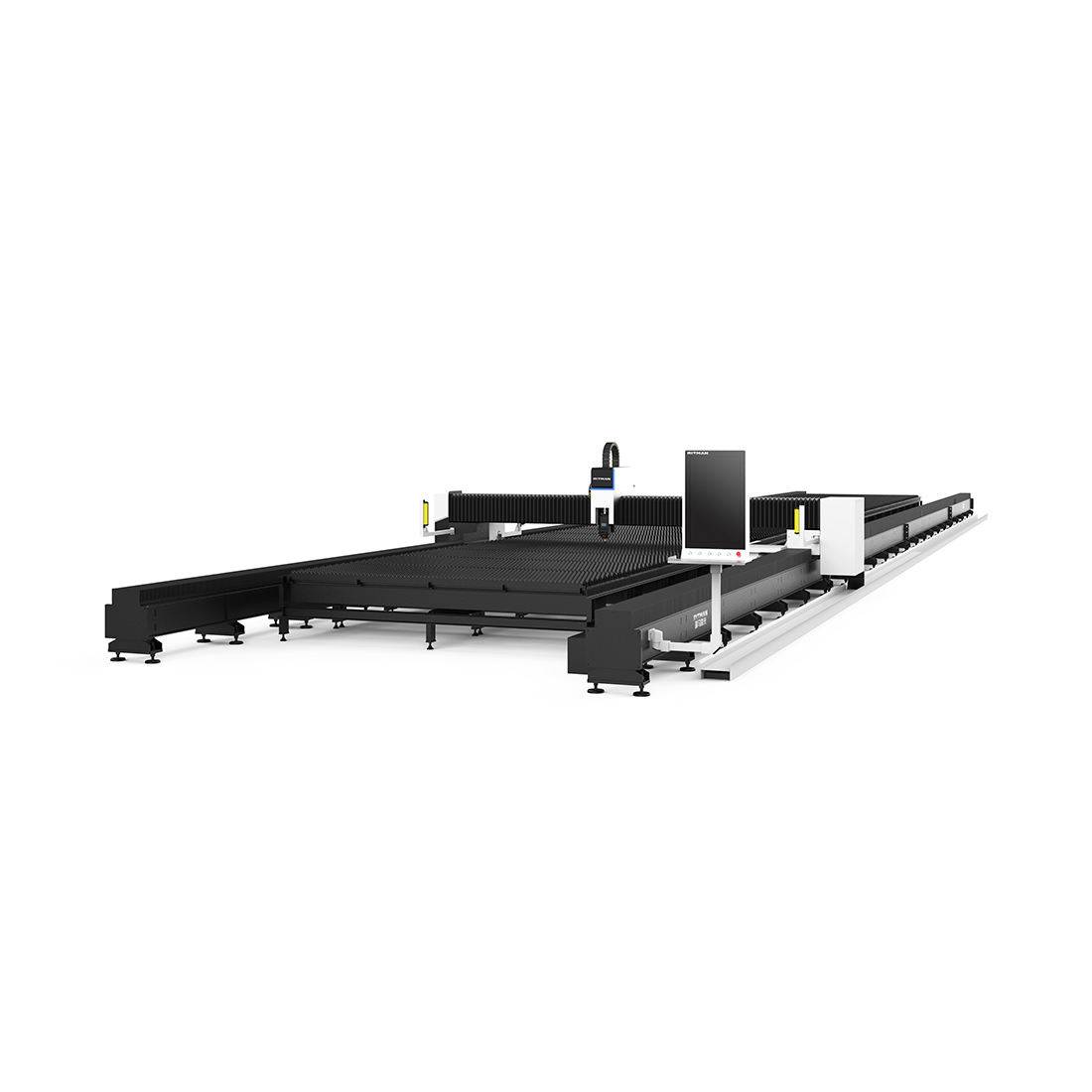
From a lean manufacturing standpoint, the elimination of the grinding stage represents a massive reduction in “non-value-added” time. In conventional fabrication, an operator would spend hours post-cut to remove dross and smooth the edge profile. With fiber laser technology, the high-pressure nitrogen or oxygen assist gas ensures a clean, dross-free exit at the bottom of the kerf. This creates a ready-to-assemble edge that moves directly from the cutting table to the assembly jig, streamlining the internal logistics of the fabrication shop.
Three-In-One Workflow: Punch, Mark, and Cut
The efficiency of bridge truss fabrication is further enhanced by the multi-functional capabilities of the fiber laser controller. Modern CNC systems allow for the integration of three distinct operations within a single nesting program:
1. High-Precision Punching (Piercing)
The laser executes controlled piercing sequences that prevent material spatter and maintain the circularity of bolt holes. Unlike mechanical punching, there is no tool wear, ensuring that the 1,000th hole is as precise as the first. This is critical for truss connections where alignment of multi-layered plates is required.
2. Optical Marking and Etching
Traceability is a legal requirement in infrastructure. The fiber laser can be de-focused or pulsed at lower power to etch heat numbers, part IDs, and assembly orientation marks directly onto the steel. This eliminates the need for manual stamping or inkjet marking, which can be obscured during subsequent painting or galvanizing processes.
3. Final Contour Cutting
Once the internal geometries and markings are complete, the system transitions to high-speed contouring. The narrow kerf width of the fiber laser (typically 0.2mm to 0.4mm) allows for extremely tight nesting, maximizing material utilization and reducing the scrap rate of expensive high-strength low-alloy (HSLA) steels.
Mechanical Integrity and the Heat Affected Zone (HAZ)
A primary concern for industrial engineers is the metallurgical impact of thermal cutting. Fiber lasers operate at a wavelength of approximately 1.06 micrometers, which is highly absorbed by metallic materials. This high absorption rate, combined with the extreme travel speeds of the laser head, results in a significantly reduced Heat Affected Zone compared to other thermal methods. For bridge trusses, a narrow HAZ is vital to maintain the specified yield strength and ductility of the base metal.
The localized heat input ensures that the crystalline structure of the steel remains largely unaltered, preserving the fatigue resistance of the truss. Technical data indicates that fiber laser edges exhibit minimal hardening, which is advantageous for subsequent machining or hole-reaming if required by specific project codes. This thermal control is a cornerstone of automated material handling and processing in modern smart factories.
CNC Integration and CAD/CAM Synergy
The 5-axis fiber laser is not merely a cutting tool; it is a node within a digital manufacturing ecosystem. Advanced CAD/CAM software translates complex 3D truss models into G-code that accounts for beam offset, lead-in/lead-out strategies, and 5-axis tilt compensation. The software simulates the cutting path to prevent collisions between the nozzle and the workpiece, especially when dealing with non-planar surfaces or pre-bent sections.
Engineers can utilize nesting algorithms that prioritize grain direction and thermal balancing to prevent plate warping. By distributing the heat across the sheet through an optimized cutting sequence, the machine maintains the flatness of the truss components, which is essential for the high-tolerance fit-ups required in long-span bridge sections.
Economic Impact and Sustainability
From a fiscal perspective, the 5-axis fiber laser represents a high initial capital expenditure that is offset by rapid ROI through operational efficiency. The wall-plug efficiency of fiber lasers is approximately 30-40%, significantly higher than CO2 alternatives, leading to lower utility costs per meter of cut. Furthermore, the absence of consumables—excluding nozzles and protective windows—reduces the overhead associated with spare parts inventory.
Environmental sustainability is also improved. The precision of the laser reduces material waste, and the lack of secondary grinding reduces the volume of airborne metallic dust in the facility. This creates a safer working environment and reduces the load on factory filtration systems. For bridge contractors, the ability to deliver a project faster, with higher precision and lower material waste, provides a distinct competitive advantage in the bidding process for government and private infrastructure tenders.
Conclusion: The Standard for Modern Infrastructure
The deployment of 5-axis Fiber Laser Cutting Machines for bridge trusses represents the pinnacle of current fabrication technology. By combining the ability to cut, mark, and bevel in a single automated process, industrial engineers can achieve a level of throughput and quality that was previously unattainable. The focus on high-precision edges, the elimination of manual grinding, and the preservation of material integrity ensures that the structural components produced will meet the 100-year service life requirements of modern bridge design. As infrastructure demands grow more complex, the fiber laser stands as the primary tool for the next generation of civil engineering excellence.






