Field Engineering Report: Implementation of Water-Cooled robotic welding Systems
Location: Helwan Industrial District, Cairo, Egypt
This report details the operational deployment and performance validation of the heavy-duty water-cooled 6-axis Robotic Arm Welder at the Cairo heavy fabrication facility. The primary objective of this installation was to transition from manual Metal Active Gas (MAG) welding to a fully integrated Industrial Automation workflow, specifically targeting the high-volume production of structural components involving Thick Plate Steel welding. In the high-ambient temperatures of Cairo, where workshop floors can exceed 40°C, the thermal management of the welding equipment is as critical as the weld integrity itself.
The Role of the Robotic Arm Welder in Modern Infrastructure
The core of our installation is a high-payload 6-axis Robotic Arm Welder integrated with a 500-ampere water-cooled power source. In the context of Cairo’s expanding infrastructure, the demand for structural steel that can withstand seismic and thermal loads is unprecedented. We are no longer looking for “good enough” welds; we require the repeatability that only Industrial Automation can provide.
The decision to utilize a water-cooled torch was dictated by the 100% duty cycle required for our multi-pass procedures. In previous manual operations, air-cooled torches would frequently overheat, leading to contact tip degradation and wire-feed erraticism. By mounting a water-cooled system onto the Robotic Arm Welder, we have maintained a consistent arc-on time of 85%, compared to the 35% achieved during manual Thick Plate Steel welding.
Synergy Between Industrial Automation and Local Manufacturing Constraints
The synergy between a Robotic Arm Welder and broader Industrial Automation in a Cairo workshop environment is not merely about replacing a hand with a machine. It is about the synchronization of external axes—specifically the heavy-duty positioners—with the robot’s motion controller. In this project, we integrated a two-axis head-and-tailstock positioner that communicates via Profinet with the robot.
This integration allows for “coordinated motion,” where the Robotic Arm Welder adjusts its travel speed and torch angle in real-time as the Thick Plate Steel welding assembly rotates. This is vital for maintaining a flat welding position (1G/PA), which ensures maximum penetration and minimizes the risk of cold-lapping or lack of fusion—common defects when welding 25mm to 40mm plates manually.
Technical Deep Dive: Thick Plate Steel Welding Procedures
The transition to Thick Plate Steel welding using automated systems requires a fundamental shift in Welding Procedure Specifications (WPS). For this Cairo project, we focused on S355JR structural steel with thicknesses ranging from 20mm to 50mm.
Multi-Pass Strategy and Heat Input Control
When dealing with Thick Plate Steel welding, managing the Heat Affected Zone (HAZ) is paramount. Using the Robotic Arm Welder, we programmed a staggered multi-pass sequence. The automation software calculates the necessary offset for each pass, ensuring that the root, fill, and cap passes are deposited with surgical precision.
- Root Pass: Short-circuit transfer to ensure 100% penetration without burn-through.
- Fill Passes: High-deposition Pulse-Spray transfer, utilizing 1.2mm metal-cored wire.
- Cap Pass: Weaved pattern to ensure aesthetic uniformity and required throat thickness.
By utilizing Industrial Automation, we have reduced the total interpass cleaning time. The robotic system’s ability to maintain a constant stick-out (CTWD) means less spatter, which is critical when the subsequent NDT (Non-Destructive Testing) involves 100% Ultrasonic Testing (UT).
Water-Cooling and Thermal Stability
In Cairo, the ambient temperature is a variable that cannot be ignored. The water-cooling unit integrated into the Robotic Arm Welder serves two purposes: protecting the torch consumables and cooling the internal power electronics. During our 12-hour shifts, the coolant temperature is monitored via the PLC. We observed that without the dedicated chiller unit, the contact tip orifice would expand by 0.05mm within two hours of Thick Plate Steel welding, leading to arc instability. The water-cooled system kept the tip temperature below 180°C, effectively doubling the life of the consumables.
The “Cairo Factor”: Environmental Challenges and Solutions
Implementing Industrial Automation in Egypt presents unique challenges, specifically dust and grid stability. The Helwan district is prone to fine particulate matter which can wreak havoc on the Robotic Arm Welder‘s encoders and the wire drive rolls.
Dust Mitigation
We implemented a pressurized cabinet for the controller and utilized high-grade bellows for the robotic joints. Furthermore, the wire delivery system was enclosed from the bulk drum to the feeder. This prevents the “sandpaper effect” where dust on the wire wears down the internal liner of the Robotic Arm Welder, a common cause of bird-nesting in automated setups.
Power Fluctuations
The Cairo electrical grid can experience voltage sags during peak cooling months (June–August). To protect the Industrial Automation investment, we installed a dedicated servo-controlled voltage stabilizer. This ensures that the Thick Plate Steel welding parameters—specifically voltage—stay within the ±2% tolerance required by our WPS. A 5-volt drop might go unnoticed in manual welding but can cause a 3mm shift in the arc length of a Robotic Arm Welder, potentially failing a UT inspection.
Lessons Learned from the Field
1. Calibration is Non-Negotiable
The greatest “lesson learned” during this deployment was the impact of Tool Center Point (TCP) drift. With Thick Plate Steel welding, the weight of the water-cooled torch and the stiffness of the heavy-gauge power cables can cause minor deflections. We implemented an automated TCP check station. Every 50 cycles, the Robotic Arm Welder touches a sensing probe to recalibrate its coordinates. If the deviation is >0.5mm, the system halts. This prevented what could have been a catastrophic scrap rate on expensive 40mm plates.
2. The Synergy of Human and Machine
Industrial Automation in the Egyptian market works best when it empowers the local workforce rather than bypassing them. Our senior manual welders were trained as “Robotic Technicians.” Their “tribal knowledge” of how Thick Plate Steel welding behaves—noticing the subtle sound of a good arc or the look of the molten puddle—allowed us to fine-tune the Robotic Arm Welder‘s weave parameters much faster than a software engineer could alone.
3. Consumable Management
In a high-heat environment, the “cheap” contact tips failed instantly. We switched to high-quality Chrome-Zirconium-Copper (CuCrZr) tips. While the upfront cost is 30% higher, the downtime reduction in a 24/7 Industrial Automation cycle paid for the investment within the first week of production.
Conclusion: The Future of Fabrication in Cairo
The successful integration of the Robotic Arm Welder at the Cairo site proves that Industrial Automation is the only viable path for high-specification Thick Plate Steel welding in extreme environments. By addressing the thermal challenges with robust water-cooling and mitigating environmental factors like dust and power instability, we have achieved a 300% increase in throughput compared to traditional methods.
The data collected from the Robotic Arm Welder‘s sensors now feeds into our plant-wide monitoring system, allowing for predictive maintenance. This shift from reactive “fix-it” engineering to proactive “optimize-it” engineering marks a significant milestone for Egyptian heavy industry. Moving forward, the expansion of this cell to include laser-vision tracking will further enhance our capability to handle fit-up variations in Thick Plate Steel welding, cementing our position as a leader in automated structural fabrication.
Prepared by: Senior Welding Engineer
Field Office: Cairo, Egypt
Project: Infrastructure Expansion Phase III
-

LT240S tube laser cutting machine
-
LT120S tube laser cutting machine
-
Sale

Tank Fillet Welding Machine
Original price was: $1,000.00.$900.00Current price is: $900.00. -
Sale

MAK100 tube laser cutting machine
Original price was: $5,500.00.$5,000.00Current price is: $5,000.00. -

portable plasma air cutting machine
$1,200.00 -

2in1 fiber laser cutting machine
-

Air cooling Laser welding machine
-

HF h beam laser cutting machine
-

LT240 laser cutting machine
-

Laser welding machine
-

Cobotic Welding Station
-

Gantry welding robot solution
-

Tracked Wheeled AGV Welding robot
-

LFH6020 Fiber laser cutting machine
-
LFP6020
-

robotic welidng machine
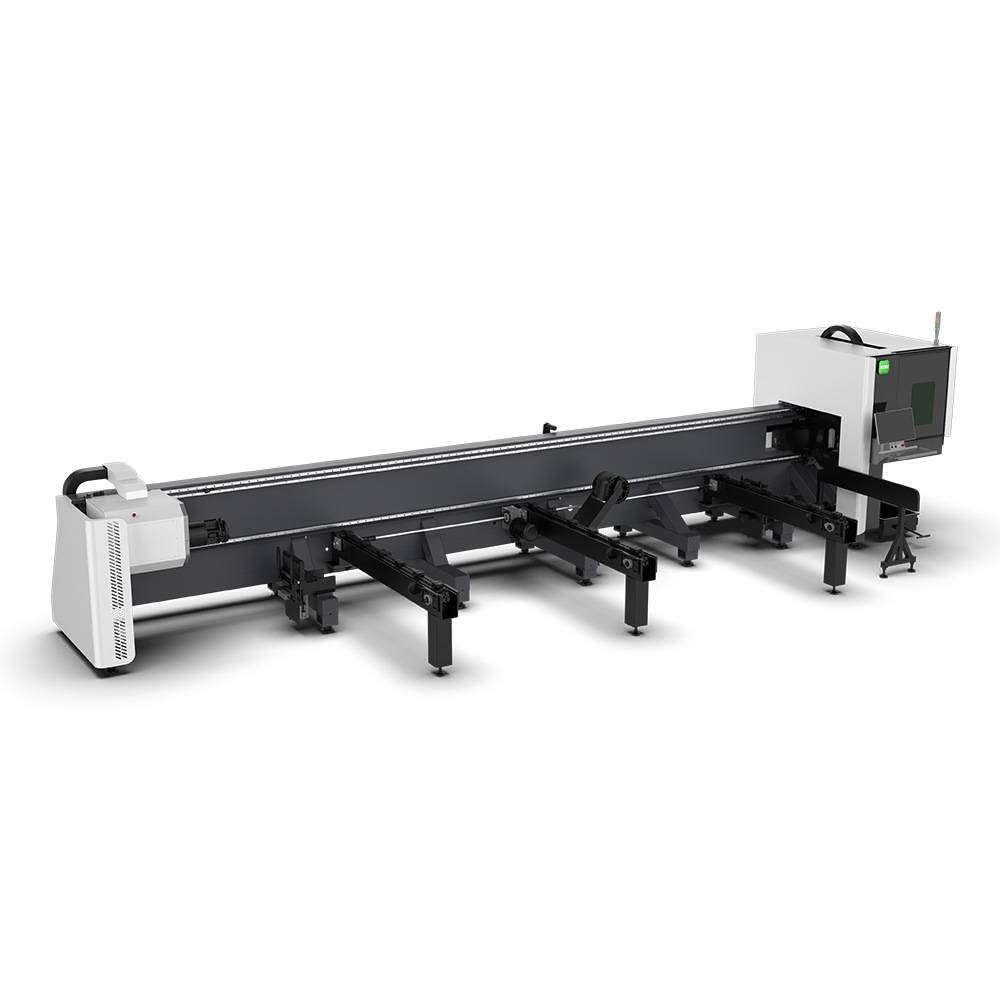
Advanced Fiber Laser Tube Processing Technology
Our CNC Fiber Laser Tube Cutting systems revolutionize metal fabrication by integrating high-precision cutting, punching, and profiling into a single automated workflow. Designed for versatility, this technology handles a wide array of profiles including Round, Square, Rectangular, and Oval tubes, as well as complex L-shaped and U-shaped channels.
- Precision Punching: High-speed hole punching with micron-level accuracy, eliminating the need for mechanical drilling or die-stamping.
- Complex Profiling: Advanced 3D pathing allows for intricate interlocking joints and specialized notch cuts, ideal for structural frames.
- High Material Efficiency: Intelligent nesting software minimizes scrap, reducing raw material costs across large production runs.
- Clean Finish: Delivers oxide-free, burr-free edges that require zero secondary grinding before welding.

Seamlessly processing multiple profiles with consistent precision.
Global Delivery & Logistics



From our high-tech manufacturing facility directly to your global site. PCL WeldCut ensures secure packaging, professional handling, and reliable international logistics to safeguard your equipment throughout the entire journey.
