Precision tube laser cutting: Eliminating Secondary Grinding in Furniture Manufacturing
In the high-end metal furniture industry, the edge quality of a cut tube determines the total cost of the assembly. Traditional mechanical sawing and plasma cutting methods leave significant burrs and slag, necessitating manual grinding before any welding can occur. Precision fiber laser cutting integrates the cutting and finishing processes into a single stage, achieving a surface roughness that allows for immediate, seamless welding. This technical shift eliminates the need for secondary processing, directly impacting the factory floor’s throughput and aesthetic consistency.
The Mechanics of Burr-Free Cutting and Seamless Preparation
The elimination of grinding is achieved through controlled Heat-Affected Zone (HAZ) management. By utilizing high-frequency pulse modulation, the laser minimizes the thermal impact on the tube’s edge, preventing the molten metal from adhering to the interior or exterior walls. This results in a clean, perpendicular cut that meets the strict tolerances required for robot-assisted welding.
For luxury furniture, aesthetics are paramount. Precision laser systems allow for the integration of hidden industrial design holes and intricate interlocking tabs. These features are cut with micron-level accuracy, ensuring that components snap together with zero gaps. Because the laser creates a concentrated energy beam, the resulting kerf is narrow and clean, allowing for invisible joints that do not require excessive filler wire or post-weld sanding to hide structural imperfections.
ROI and Labor Substitution Dynamics
The primary financial driver for adopting precision tube lasers in furniture manufacturing is the reduction of headcount. A single automated laser tube cutting system can replace the output of three to five workers dedicated to sawing, deburring, and drilling. In a traditional workflow, one worker operates the saw, two workers handle the manual grinding, and another manages the drill press for assembly holes. The laser consolidates these four stations into one.
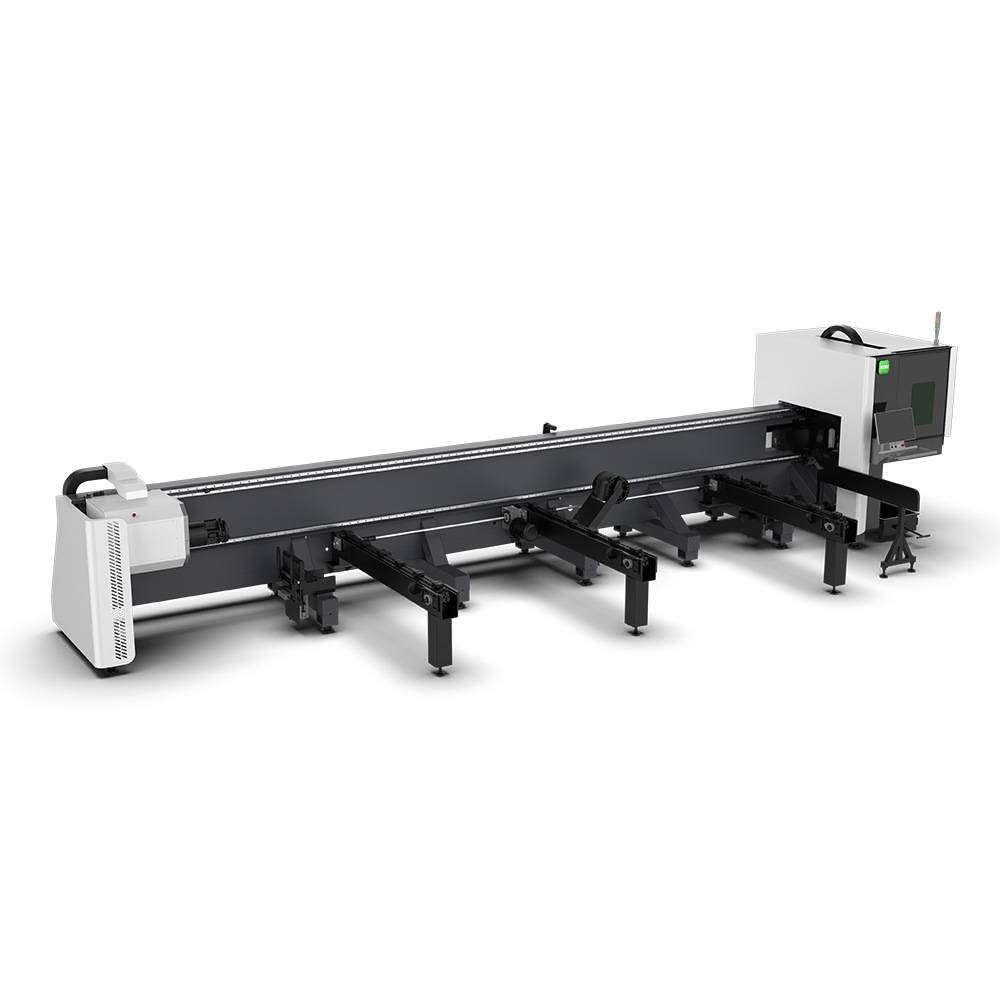
Beyond labor, the reduction in material waste significantly lowers the cost per part. Conventional tube cutting machines often leave a tailing (waste piece) of 20cm to 30cm at the end of every pipe due to the distance between the chuck and the cutting head. Modern Zero-Tailing Technology utilizes a three-chuck or four-chuck system that allows the laser head to cut between the chucks, reducing waste to as little as 10mm to 50mm. Over a standard production run of 1,000 pipes, this saves approximately 150 to 200 meters of raw material.
Technical Performance Comparison
| Feature | Manual Sawing & Grinding | Precision Tube Laser |
|---|---|---|
| Edge Quality | Heavy burrs; requires manual grinding | Clean, burr-free; weld-ready |
| Material Waste | 20-30cm tailing per tube | 0-5cm (Zero-tailing tech) |
| Labor Requirement | 3-5 Workers | 1 Operator |
| Hole Precision | +/- 1.0mm (Manual) | +/- 0.05mm (Digital) |
Intelligence and Material Utilization
The software layer of modern tube lasers provides a level of material efficiency that manual methods cannot match. Advanced Nesting Algorithms analyze the production queue to arrange different parts on a single length of tube. By nesting complex shapes into one another, these systems routinely achieve a 95% material utilization rate. In furniture manufacturing, where thin-walled stainless steel or brass is common, a 5-10% improvement in material yield can pay for the machine’s maintenance costs annually.
Another critical intelligent feature is Weld Seam Recognition. Most industrial tubes are welded pipes, which have a visible internal or external seam. If a cut or a hole is placed directly on this seam, the structural integrity of the furniture piece is compromised, and the aesthetic finish is ruined. Precision laser systems use capacitive sensors and cameras to detect the seam position automatically. The software then rotates the tube so that all cuts and holes are positioned away from the seam, or conversely, ensures the seam is hidden on the internal face of the furniture frame.
Integration into High-End Production Lines
For manufacturers transitioning to high-end markets, the ability to produce complex geometries without manual intervention is a competitive necessity. The precision laser handles round, square, rectangular, and even custom extruded profiles with the same setup. By eliminating the grinding phase, the manufacturer also removes the dust and noise pollution associated with manual abrasive tools, creating a cleaner environment suitable for high-precision assembly and sensitive powder coating processes.
The shift to laser-centric manufacturing also supports the “Just-In-Time” (JIT) production model. Since there is no need to wait for a batch of tubes to be deburred or ground, the time from raw material input to the welding jig is reduced by up to 70%. This agility allows furniture brands to respond to custom orders without maintaining large inventories of pre-cut components.
Final Technical Considerations
When implementing precision tube laser technology, manufacturers should focus on the stability of the bed and the intelligence of the chuck system. A stable machine base ensures that vibrations do not affect the cut quality at high speeds, which is essential for maintaining a burr-free edge. Furthermore, the integration of automatic loading systems can extend the ROI benefits, allowing for “lights-out” manufacturing during off-peak hours. By focusing on these technical dimensions—aesthetics, cost reduction through zero-tailing, and intelligent material utilization—furniture manufacturers can achieve a significant leap in both quality and profitability.
-


Cantilever Welding Robot solution
-


GF laser cutting machine
-

P3015 plasma cutting machine
-

LFP3015 Fiber Laser Cutter
-

pipe plasma cutting machine
-
LFH 4020 Fiber Laser Cutting Machine
-
LFP4020
-

gantry plasma air cutting machine
-

3D robot cutting machine
-

8 axis plasma cutting machine
-

5 axis plasma cutting machine
-

LT360 tube laser cutting machine
-

robot welding workstation
-

SF6060 fiber laser cutting machine
