Optimizing Heavy-Duty Fabrication: Robotic MAG Welding with Laser Seam Tracking
In the production of construction machinery, such as excavators, bulldozers, and cranes, the structural integrity of the chassis and boom assemblies is paramount. These components typically involve thick-plate steel (S355 or Q345 grades) requiring multi-pass welds. The transition to Robotic Welding systems represents a strategic shift from manual intervention to precision engineering. Unlike manual Metal Active Gas (MAG) welding, where human fatigue and inconsistent torch angles lead to volumetric defects, intelligent robotic cells ensure a standardized deposition rate and penetration depth.
The Role of Laser Seam Tracking in Structural Integrity
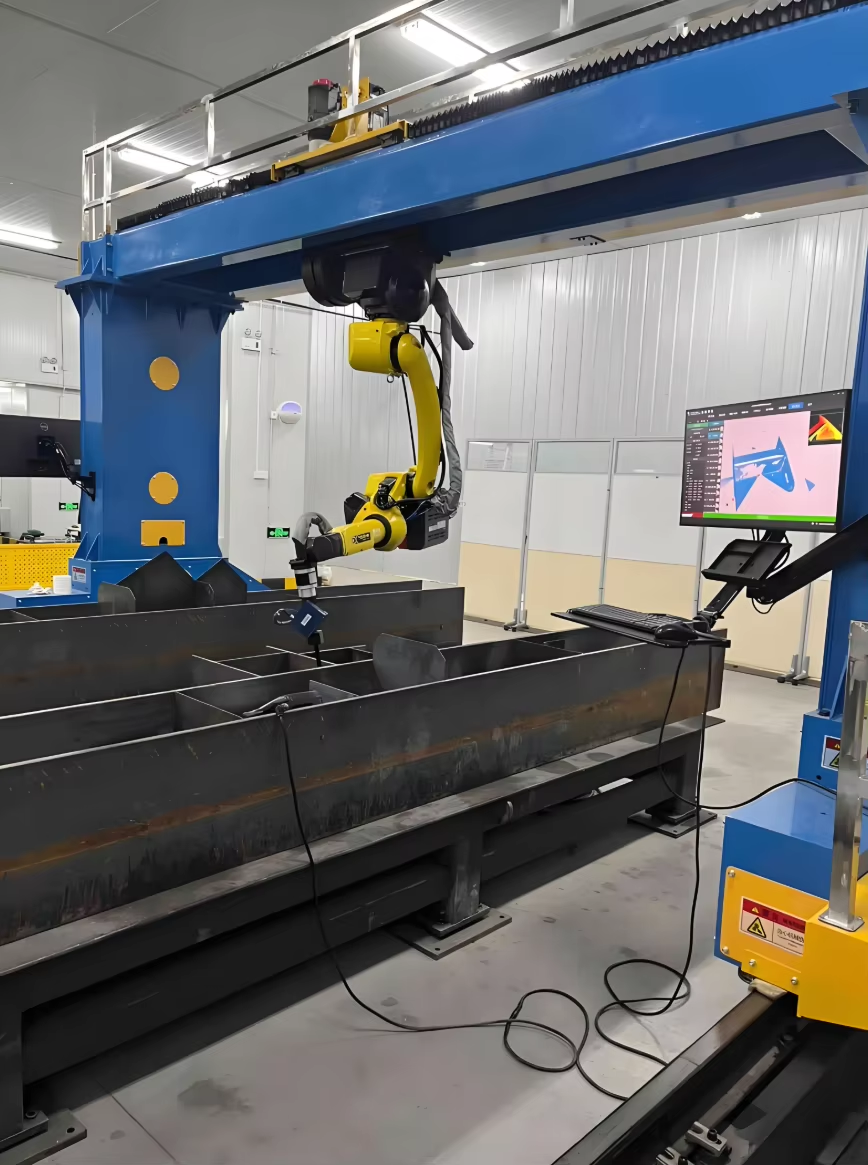
Heavy-duty weldments often suffer from fit-up variations due to upstream machining tolerances or thermal expansion during the welding process. Conventional “teach-and-repeat” robotics fail when the physical seam deviates from the programmed path. Intelligent laser seam tracking solves this by providing real-time feedback to the robot controller. The sensor, mounted ahead of the MAG torch, projects a laser line across the joint, capturing the cross-sectional profile.
This data allows the system to adjust the torch position dynamically in three dimensions. for Construction Machinery, where V-groove or J-groove preparations are common, the system calculates the gap volume and adjusts travel speed or wire feed speed to ensure the groove is filled correctly. This eliminates the risk of undercut or lack of fusion, which are critical failure points in high-stress earthmoving equipment.
Technical Specifications of MAG Welding in Automation
MAG welding remains the industry standard for construction equipment due to its high deposition rates and deep penetration capabilities. When integrated into a robotic cell, the process parameters—voltage, amperage, shielding gas flow (typically an Argon/CO2 mix), and wire feed speed—are digitally synchronized.
High-current MAG processes, often utilizing pulsed or double-pulsed waveforms, minimize spatter and reduce the Heat Affected Zone (HAZ). By controlling the droplet transfer, the robotic system maintains a stable arc even at high travel speeds. In thick-plate applications, the robot can execute complex multi-layer strategies, alternating the sequence of passes to balance thermal stresses and prevent the warping of large-scale frames.
Labor ROI and Economic Impact Analysis
The primary driver for adopting robotic welding in construction machinery is the mitigation of the skilled labor shortage. A manual welder typically operates at a duty cycle (arc-on time) of 20% to 30% due to repositioning, slag removal, and fatigue. In contrast, a robotic cell often achieves a duty cycle of 70% to 85%.
Calculating the Payback Period
To determine the ROI, industrial engineers must look beyond the initial capital expenditure (CAPEX). The calculation includes:
1. Labor Savings: A single robotic operator can oversee two or three cells, effectively replacing multiple high-cost certified welders.
2. Rework Reduction: In manual heavy-plate welding, rework rates often hover between 3% and 5%. Robotic systems with seam tracking reduce this to less than 0.5%.
3. Consumable Efficiency: Precise control over the weld pool reduces over-welding (applying more metal than specified), which can save up to 15% in wire consumption annually.
For a standard excavator boom production line, the typical payback period for a fully integrated robotic MAG cell is between 18 and 24 months, depending on shift patterns and local labor rates.
Maintenance Protocols for High-Duty Cycle Systems
Maintaining Overall Equipment Effectiveness (OEE) requires a rigorous preventive maintenance schedule. Because robotic MAG welding involves moving parts and high thermal loads, the following components require specific attention:
Torch and Consumable Management
The contact tip, gas nozzle, and liner are high-wear items. An automated torch cleaning station (reamer) should be integrated into the robot’s cycle. Every few cycles, the robot moves to the station to clear spatter and apply anti-spatter spray. This prevents gas turbulence and ensures stable current transfer to the wire.
Wire Feed System Integrity
In construction machinery fabrication, large wire drums (250kg-500kg) are used to minimize downtime. The conduit and feed rollers must be inspected weekly for wear. Any friction in the wire delivery path leads to arc instability and “burn-back” issues, which can damage the contact tip and halt production.
Sensor Calibration
The laser seam tracking sensor is an optical device operating in a harsh environment. While protective air knives and splash guards are used, the lens must be cleaned according to a strict schedule. Periodic calibration checks ensure that the spatial offset between the laser sensor and the wire tip remains accurate within ±0.1mm.
Improving Safety and Environmental Conditions
Robotic automation removes the operator from the immediate vicinity of hazardous fumes and intense UV radiation. Modern robotic cells are equipped with high-efficiency fume extraction systems integrated directly into the torch or the cell housing. This not only complies with increasingly stringent environmental health and safety (EHS) regulations but also reduces the facility’s overall HVAC load by localizing air filtration.
Conclusion for Industrial Implementation
The integration of predictive maintenance and intelligent tracking into the welding workflow is no longer an option but a necessity for competitive construction machinery manufacturing. By focusing on the mechanical precision of the MAG process and the data-driven corrections provided by seam tracking, facilities can achieve a level of throughput and structural consistency that manual operations cannot match. The transition requires an initial investment in training and infrastructure, but the resulting gains in OEE and the reduction in total cost per kilogram of weld metal provide a definitive competitive advantage in the global market.
-


Cantilever Welding Robot solution
-


GF laser cutting machine
-

P3015 plasma cutting machine
-

LFP3015 Fiber Laser Cutter
-

pipe plasma cutting machine
-
LFH 4020 Fiber Laser Cutting Machine
-
LFP4020
-

gantry plasma air cutting machine
-

3D robot cutting machine
-

8 axis plasma cutting machine
-

5 axis plasma cutting machine
-

LT360 tube laser cutting machine
-

robot welding workstation
-

SF6060 fiber laser cutting machine
