Advanced MAG Welding Automation in Heavy Machinery Fabrication
The fabrication of construction machinery—ranging from excavator booms to bulldozer chassis—presents unique challenges that traditional fixed-automation systems struggle to address. These components typically involve thick-walled carbon steel plates, complex geometries, and significant heat-induced shrinkage. The transition to intelligent Robotic Welding represents a fundamental shift in how heavy industrial sectors manage throughput and structural integrity. Unlike manual processes, which are prone to fatigue-related inconsistencies, robotic systems utilizing Metal Active Gas (MAG) welding provide a stabilized arc and controlled deposition rates that are critical for structural safety.
The Role of 3D Vision Positioning in Large-Scale Assemblies
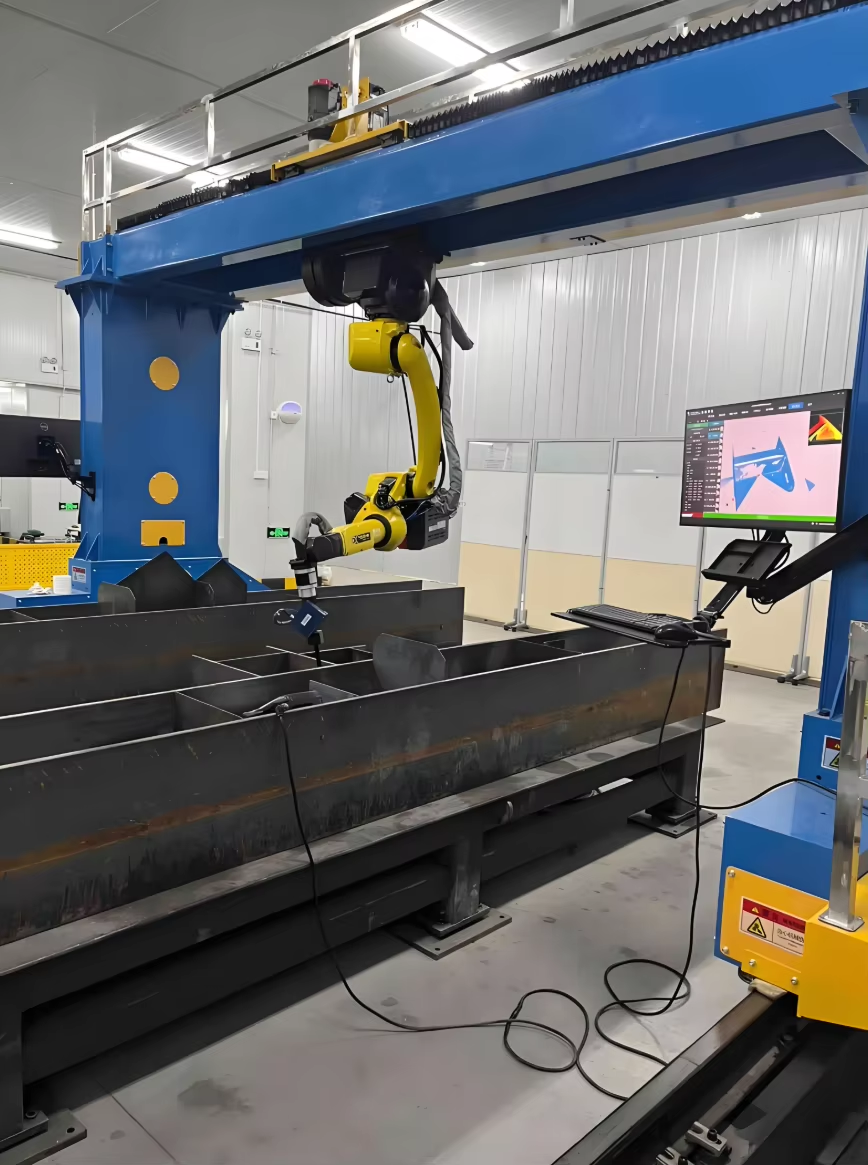
In construction machinery, parts are rarely perfect. Large-scale weldments often arrive at the welding cell with variations resulting from upstream bending or fit-up tolerances. Conventional robots follow a pre-programmed “blind” path, which leads to weld defects if the joint has shifted by even a few millimeters. The integration of 3D vision systems allows the robot to “see” and adapt.
Using structured light or point-cloud mapping, the 3D vision sensor scans the joint geometry before the arc is struck. The system calculates the actual starting point, the orientation of the groove, and the volume of the gap. This data is fed back to the robot controller in real-time, which adjusts the Tool Center Point (TCP) and welding parameters. This 3D vision positioning ensures that the MAG torch maintains the correct stick-out distance and angle, regardless of the physical deviations in the workpiece.
Adaptive MAG Welding Parameters
Intelligence in welding goes beyond path correction; it extends to parameter adaptation. For heavy machinery, deep penetration is non-negotiable. When the 3D sensor detects a wider-than-specified gap, the system can automatically adjust the wire feed speed, voltage, and travel speed to ensure the root pass is sufficient without causing burn-through. In multi-pass welding, which is common for 20mm to 50mm plates, the robot uses the vision data to determine the number of layers required to fill the joint to the specified throat thickness.
Quantifying the ROI: Labor and Throughput Analysis
From an industrial engineering perspective, the Return on Investment (ROI) for Intelligent Robotic Welders is driven by three primary factors: labor substitution, duty cycle optimization, and the reduction of rework.
The scarcity of skilled MAG welders capable of working in the harsh environments of heavy fabrication has driven labor costs to an all-time high. A single robotic cell, operated by a technician rather than a master welder, can often match the output of three to four manual stations. While a manual welder typically achieves a duty cycle (arc-on time) of 20% to 30% due to repositioning, breaks, and helmet-down time, a robotic system can maintain a duty cycle of 70% to 85%.
Direct Labor Savings and Scalability
By automating the construction machinery manufacturing process, companies can reallocate their skilled human capital to more complex assembly tasks or quality control oversight. The ROI calculation should account for the reduction in “wasted” consumables—robotic systems use precisely the amount of shielding gas and wire required, minimizing the over-welding that is common in manual processes where welders tend to build larger fillets than necessary for “insurance.”
Reduction in Post-Weld Rework
In heavy machinery, a failed weld scan (UT or X-ray) results in expensive gouging and re-welding. 3D-vision-guided robots significantly lower the defect rate by maintaining consistent heat input and travel speed. The elimination of human error in multi-pass sequences means that the probability of slag inclusion or lack of fusion is virtually eliminated, directly impacting the bottom line by reducing the costs associated with quality-related bottlenecks.
System Maintenance and Reliability Protocols
The harsh environment of MAG welding, characterized by spatter and high radiant heat, requires a robust maintenance strategy to ensure the longevity of the robotic investment. An intelligent system must be supported by a preventive maintenance (PM) schedule that focuses on the wire delivery system and the vision sensor’s optical clarity.
The torch nozzle is a high-wear component. Automated reaming stations should be integrated into the robot’s cycle, where the robot periodically stops to have the nozzle cleaned of spatter and sprayed with anti-spatter fluid. This prevents gas turbulence, which can lead to porosity in the weld metal. Furthermore, the wire feed rolls must be inspected weekly for wear to ensure a constant MAG welding wire speed, as any fluctuation here will destabilize the arc and negate the benefits of the 3D vision precision.
Maintaining the 3D Vision Sensor
The sensor is the “brain” of the operation and is often protected by an air-knife system and a replaceable clear shield. Maintenance protocols must include daily inspection of these shields. If the sensor’s “sight” is obscured by smoke or dust, the positioning accuracy degrades. Industrial engineers should implement a calibration check once per shift to verify that the coordinate system of the 3D sensor remains perfectly aligned with the robot’s TCP.
Strategic Implementation and Process Integration
Implementing an intelligent robotic welder is not merely a “plug-and-play” operation. It requires a holistic view of the production line. Upstream processes, such as the precision of the plate cutting (non-laser) and the quality of the tack-welding fixtures, must be optimized to work in harmony with the robot’s capabilities.
Data logging is another critical advantage of these systems. Modern robotic controllers can log every weld parameter for every joint. This creates a “digital birth certificate” for each piece of construction machinery. If a component fails in the field five years later, the manufacturer can trace back the specific voltage, amperage, and vision-scan data from the day it was welded. This level of traceability is becoming a requirement for high-stakes infrastructure projects and provides an additional layer of value that manual welding cannot provide.
Conclusion on Industrial Efficiency
The integration of 3D vision with robotic MAG welding solves the fundamental problem of variability in heavy manufacturing. By allowing the robot to adapt to the physical reality of the workpiece, manufacturers achieve a level of consistency that was previously impossible. When the increased duty cycle is combined with the significant reduction in labor overhead and the elimination of rework, the capital expenditure for such systems is typically recovered within 18 to 24 months, depending on the shift structure. For the construction machinery industry, automated welding systems are no longer an optional upgrade but a core requirement for remaining competitive in a globalized, high-precision market.
-
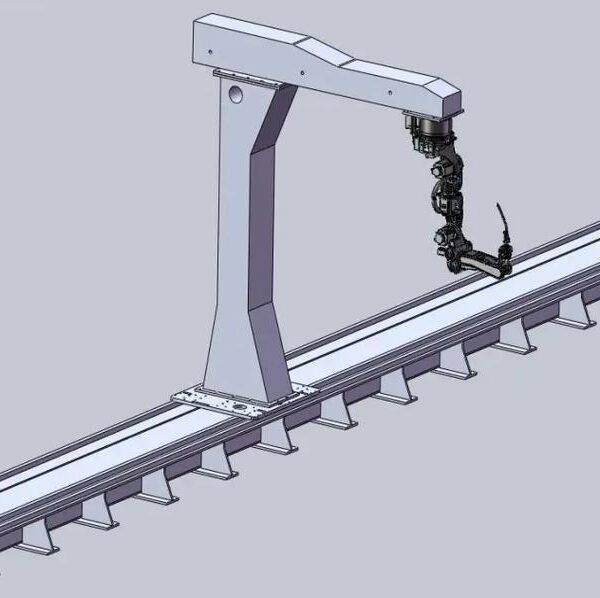

Cantilever Welding Robot solution
-
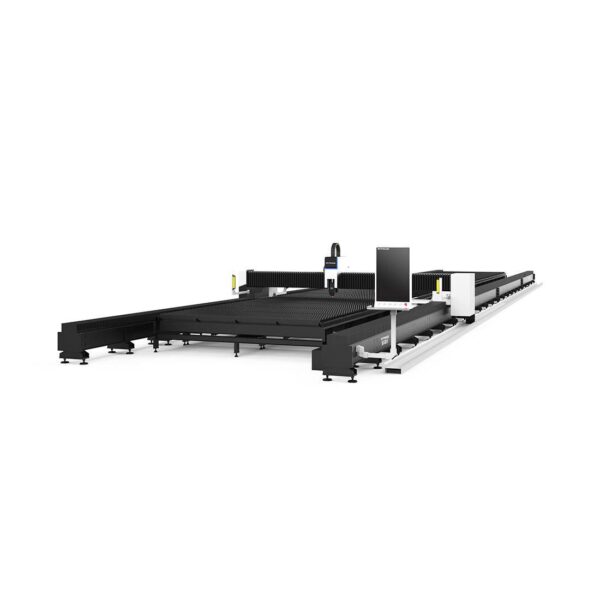

GF laser cutting machine
-
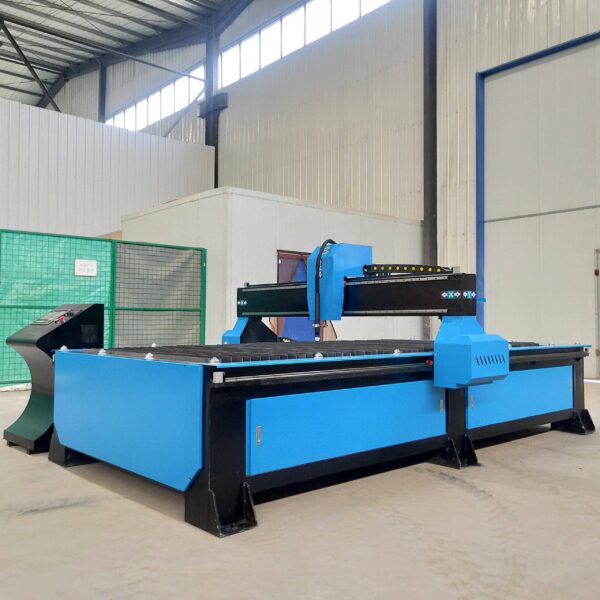
P3015 plasma cutting machine
-

LFP3015 Fiber Laser Cutter
-
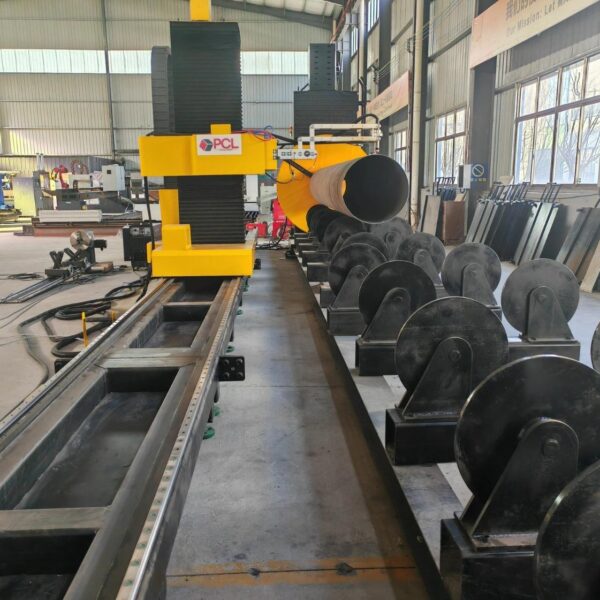
pipe plasma cutting machine
-
LFH 4020 Fiber Laser Cutting Machine
-
LFP4020
-
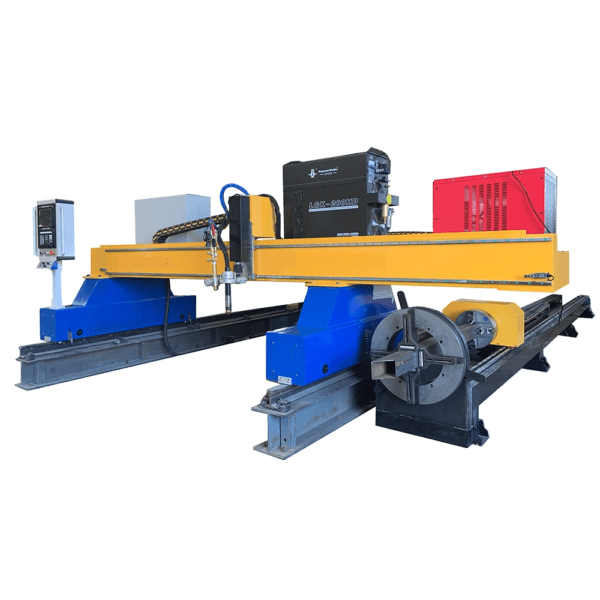
gantry plasma air cutting machine
-
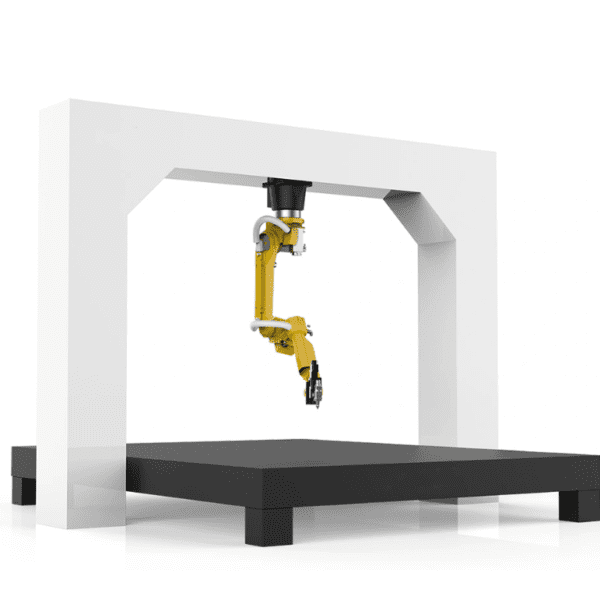
3D robot cutting machine
-
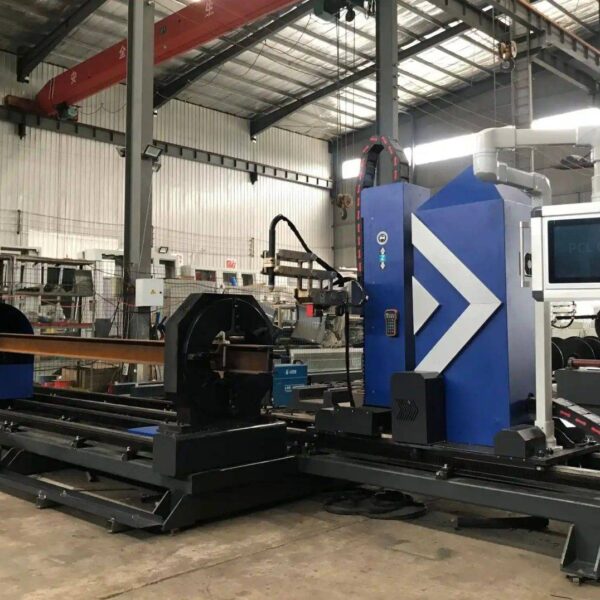
8 axis plasma cutting machine
-
5 axis plasma cutting machine
-

LT360 tube laser cutting machine
-
robot welding workstation
-
SF6060 fiber laser cutting machine
Advanced Fiber Laser Tube Processing Technology
Our CNC Fiber Laser Tube Cutting systems revolutionize metal fabrication by integrating high-precision cutting, punching, and profiling into a single automated workflow. Designed for versatility, this technology handles a wide array of profiles including Round, Square, Rectangular, and Oval tubes, as well as complex L-shaped and U-shaped channels.
- Precision Punching: High-speed hole punching with micron-level accuracy, eliminating the need for mechanical drilling or die-stamping.
- Complex Profiling: Advanced 3D pathing allows for intricate interlocking joints and specialized notch cuts, ideal for structural frames.
- High Material Efficiency: Intelligent nesting software minimizes scrap, reducing raw material costs across large production runs.
- Clean Finish: Delivers oxide-free, burr-free edges that require zero secondary grinding before welding.

Seamlessly processing multiple profiles with consistent precision.
Global Delivery & Logistics



From our high-tech manufacturing facility directly to your global site. PCL WeldCut ensures secure packaging, professional handling, and reliable international logistics to safeguard your equipment throughout the entire journey.
