Fiber Laser Cutting Machine with Offline Programming for LNG Projects
In this article
- Optimization of LNG Component Fabrication via Fiber Laser Technology
- Eliminating Secondary Operations: The No-Grinding Standard
- Metallurgical Integrity in Cryogenic Applications
- Integrated Punch, Mark, and Cut Workflows
- Maximizing Efficiency with Offline Programming Software
- Advanced Nesting and Material Yield
- Digital Twin Integration and Process Simulation
- The Industrial Engineering Perspective on Fiber Laser ROI
- Conclusion: Setting the Standard for LNG Excellence
Optimization of LNG Component Fabrication via Fiber Laser Technology
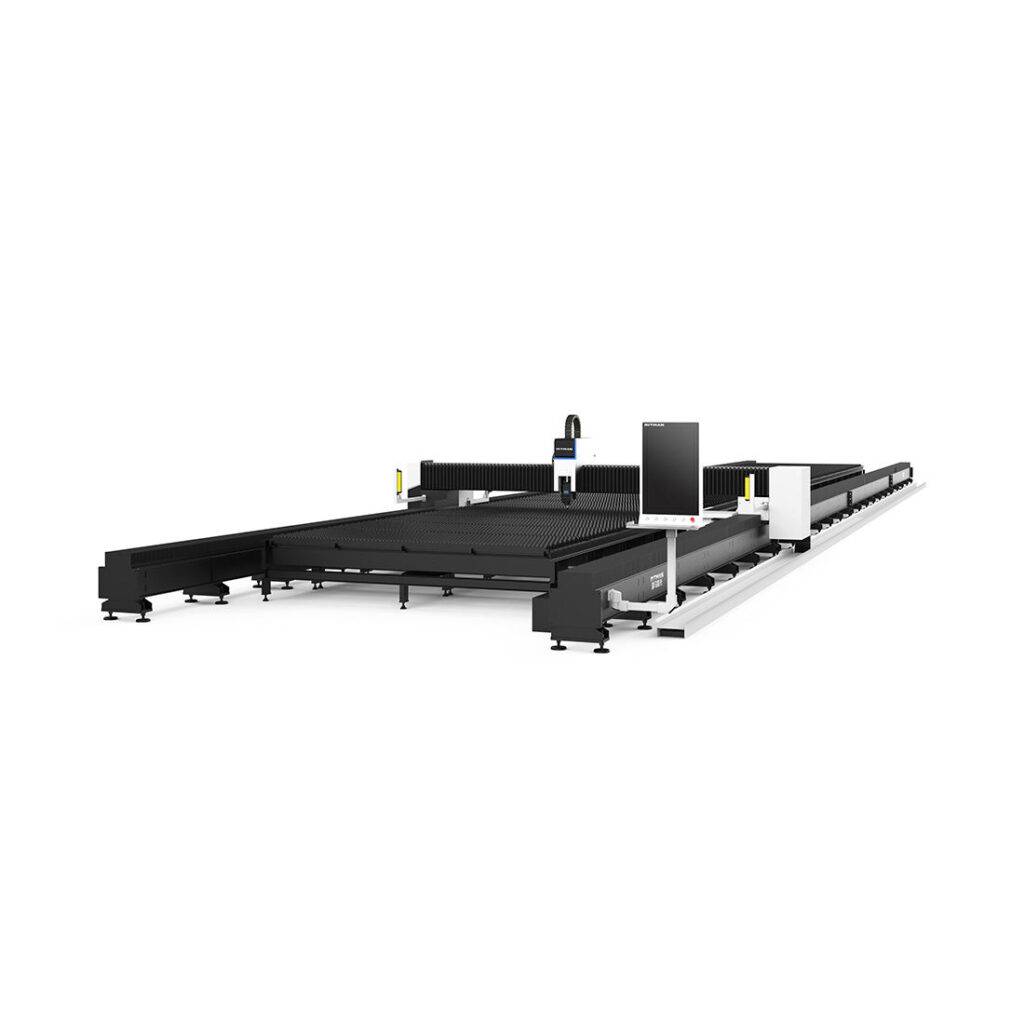
In the specialized field of LNG infrastructure—encompassing storage tanks, vaporizers, and complex piping manifolds—the engineering requirements for material integrity and dimensional accuracy are absolute. The industry has shifted toward fiber Laser Cutting precision as the primary method for processing high-alloy materials, such as 9% nickel steel and 304/316L stainless steel. Unlike legacy thermal cutting processes, fiber lasers utilize a concentrated beam with a wavelength of approximately 1.06 microns, allowing for an incredibly small spot size and high energy density. This technical advantage translates directly into narrow kerf widths and minimal heat input, which are essential for maintaining the cryogenic properties of the base metal.
Eliminating Secondary Operations: The No-Grinding Standard
For industrial engineers focused on lean manufacturing, the most significant bottleneck in plate fabrication is often the secondary processing stage. Conventional cutting methods frequently leave dross, heavy oxidation, or a hardened heat-affected zone (HAZ) that necessitates manual grinding or edge milling before any assembly can occur. Fiber laser cutting, when optimized with high-pressure nitrogen or oxygen assist gases, produces a clean, square edge that meets the stringent requirements of LNG pressure vessel codes.
Metallurgical Integrity in Cryogenic Applications
The HAZ produced by a high-power fiber laser is negligible. In LNG projects, where materials must remain ductile at temperatures as low as -162°C, excessive heat input can lead to grain growth or phase transformations that compromise structural safety. By utilizing a high-speed fiber laser, the duration of thermal exposure is minimized. The result is a cut edge that requires no mechanical dressing, allowing components to move directly from the cutting bed to the assembly jig, effectively removing hours of labor-intensive grinding from the production schedule.
Integrated Punch, Mark, and Cut Workflows
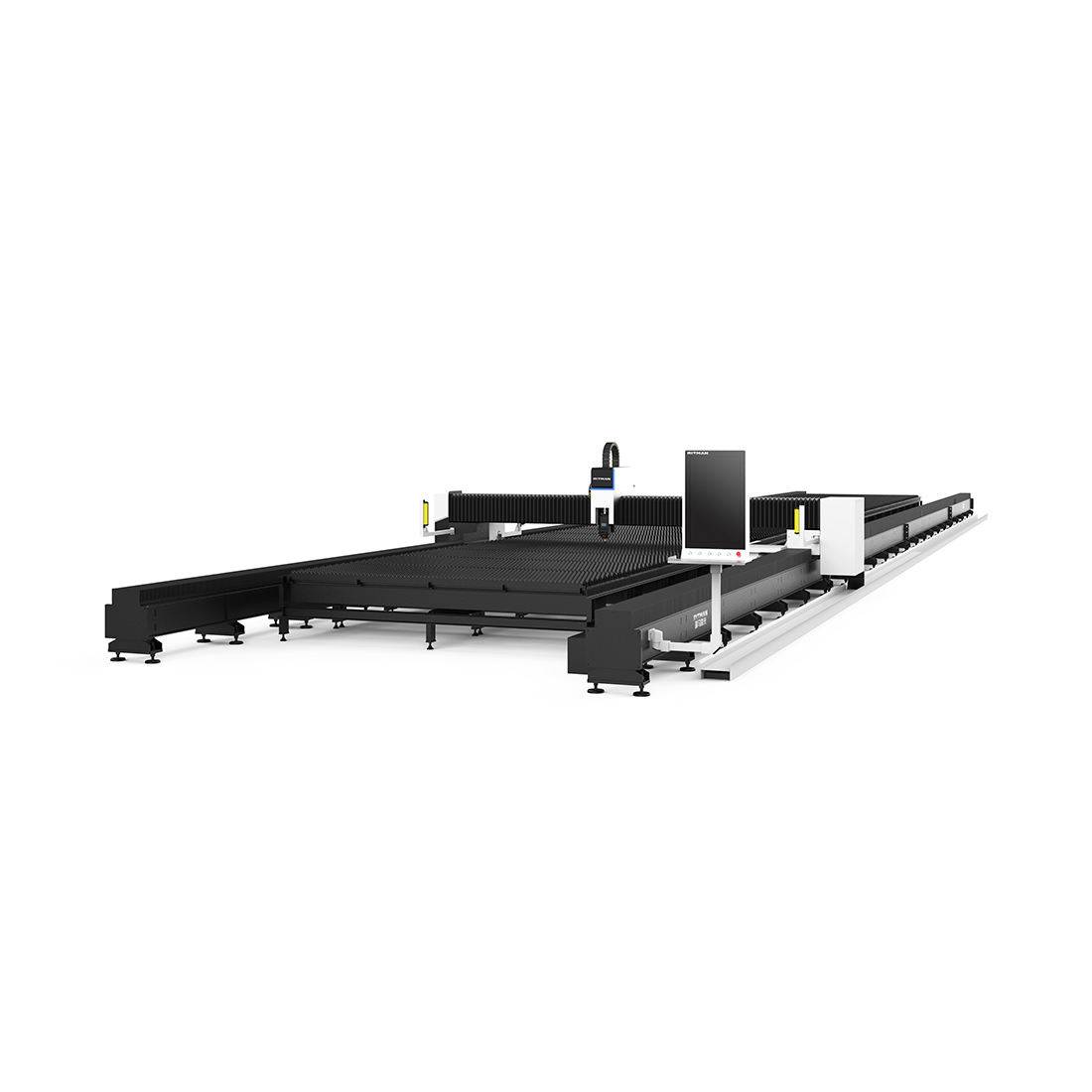
Modern fiber laser systems for LNG Projects are not merely cutting tools; they are multi-functional machining centers. The ability to integrate punching (piercing), marking, and cutting into a single automated sequence is a force multiplier for floor efficiency. Traceability is a mandatory requirement for LNG components, where every bracket, flange, and support plate must be linked to a specific heat number and material certificate.
Automated Part Identification and Layout
Through the use of low-power laser etching (marking), the machine can engrave QR codes, part numbers, and bend lines directly onto the surface of the workpiece during the cutting cycle. This eliminates the risk of human error in part identification and facilitates faster downstream sorting. Furthermore, the precision of the laser allows for “punching” or small-diameter piercing with a level of accuracy that ensures bolt holes and alignment points are perfectly positioned, reducing the need for reaming or correction during field installation.
Maximizing Efficiency with Offline Programming Software
The hardware’s capability is only as effective as the data driving it. In complex LNG projects involving thousands of unique parts, offline programming software serves as the central nervous system of the fabrication process. Moving the programming task from the machine console to a dedicated engineering station ensures that the laser remains in “beam-on” mode for the maximum possible duration, drastically improving the overall equipment effectiveness (OEE).
Advanced Nesting and Material Yield
LNG materials, particularly high-nickel steels, represent a significant portion of project costs. Offline programming allows industrial engineers to utilize advanced nesting algorithms that optimize plate layout beyond what is possible with manual intervention. Features such as common-line cutting, where a single cut separates two parts, reduce both processing time and gas consumption. The software can simulate the entire cutting path to identify potential head collisions or tipping parts, ensuring that the machine runs unattended during night shifts or high-volume production runs.
Digital Twin Integration and Process Simulation
The use of cryogenic steel fabrication techniques requires a high degree of predictability. Offline programming platforms allow for the creation of a digital twin of the fiber laser machine. Engineers can import 3D CAD models directly from the project’s BIM (Building Information Modeling) environment, ensuring that the transition from design to physical part is seamless. This integration allows for the detection of geometric inconsistencies before a single millimeter of expensive alloy is cut.
Reducing Lead Times in Module Construction
LNG projects are increasingly built using modular construction techniques. These modules require thousands of interlocking components that must fit together with zero tolerance for error in the field. By utilizing a fiber laser system governed by sophisticated offline instructions, fabricators can guarantee part interchangeability. The precision of the cut—typically within +/- 0.05mm—ensures that the modular assembly process is not delayed by fit-up issues that typically plague less precise fabrication methods.
The Industrial Engineering Perspective on Fiber Laser ROI
When evaluating the capital expenditure for a fiber laser system with offline capabilities, the return on investment (ROI) is found in the total cost of ownership and the reduction of the “cost of quality.” By eliminating the need for grinding, the facility reduces consumable costs (grinding disks) and labor costs. By utilizing high-precision laser cutting, the scrap rate is reduced through superior nesting. Finally, the offline programming component ensures that the machine’s duty cycle is optimized, allowing the facility to take on higher volumes without increasing the physical footprint of the shop floor.
Conclusion: Setting the Standard for LNG Excellence
The integration of fiber laser cutting and offline programming represents the pinnacle of modern industrial engineering in the LNG sector. By focusing on high-speed, high-precision processing that ignores the need for secondary mechanical finishing, fabricators can achieve a level of throughput and quality that legacy systems cannot match. As global demand for LNG infrastructure continues to grow, the adoption of these automated, data-driven fabrication workflows will be the defining factor for companies looking to maintain a competitive edge while meeting the world’s most stringent safety and quality standards.






