Fiber Laser Cutting Machine with 3D Vision positioning for Shipbuilding
In this article
Technical Integration of Fiber Laser Cutting in Shipbuilding
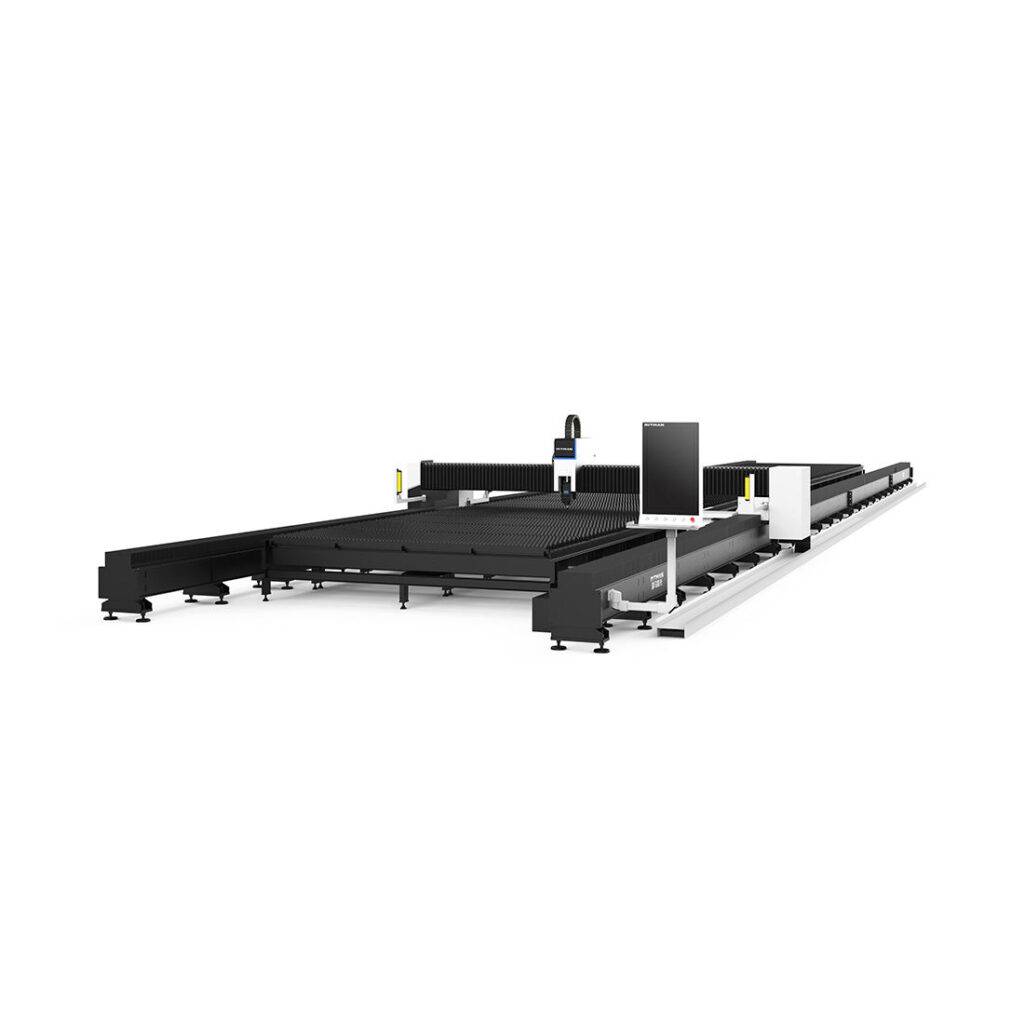
The maritime industry is currently undergoing a significant shift toward automated fabrication to address the demand for higher throughput and structural reliability. Central to this evolution is the implementation of the Fiber Laser Cutting Machine, a tool that has moved beyond thin-sheet applications into the realm of heavy-plate maritime engineering. Unlike legacy thermal cutting methods, fiber lasers utilize a short wavelength (typically 1.064 microns), allowing for superior absorption rates in reflective metals and a concentrated energy density that facilitates high-speed separation of thick carbon steel and aluminum alloys.
In the context of shipbuilding, where plate dimensions can exceed 20 meters, maintaining geometric tolerance is a logistical challenge. The application of fiber laser technology ensures that the kerf width remains minimal—often under 0.5mm—minimizing material loss and providing a level of precision that is critical for the modular assembly of hull sections. This precision is not merely a matter of aesthetics; it is a fundamental requirement for achieving tight fit-up tolerances during block assembly.
3D Vision Positioning: Solving Spatial Variance
One of the primary obstacles in large-scale shipbuilding is the inherent deformation of raw steel plates and the slight misalignments that occur during material loading. A standard 2D CNC program cannot account for the undulations or the physical shift of a 15-ton plate. This is where 3D Vision Positioning becomes an essential industrial component. By utilizing high-resolution industrial cameras and laser line profilers, the system creates a digital twin of the workpiece in real-time.
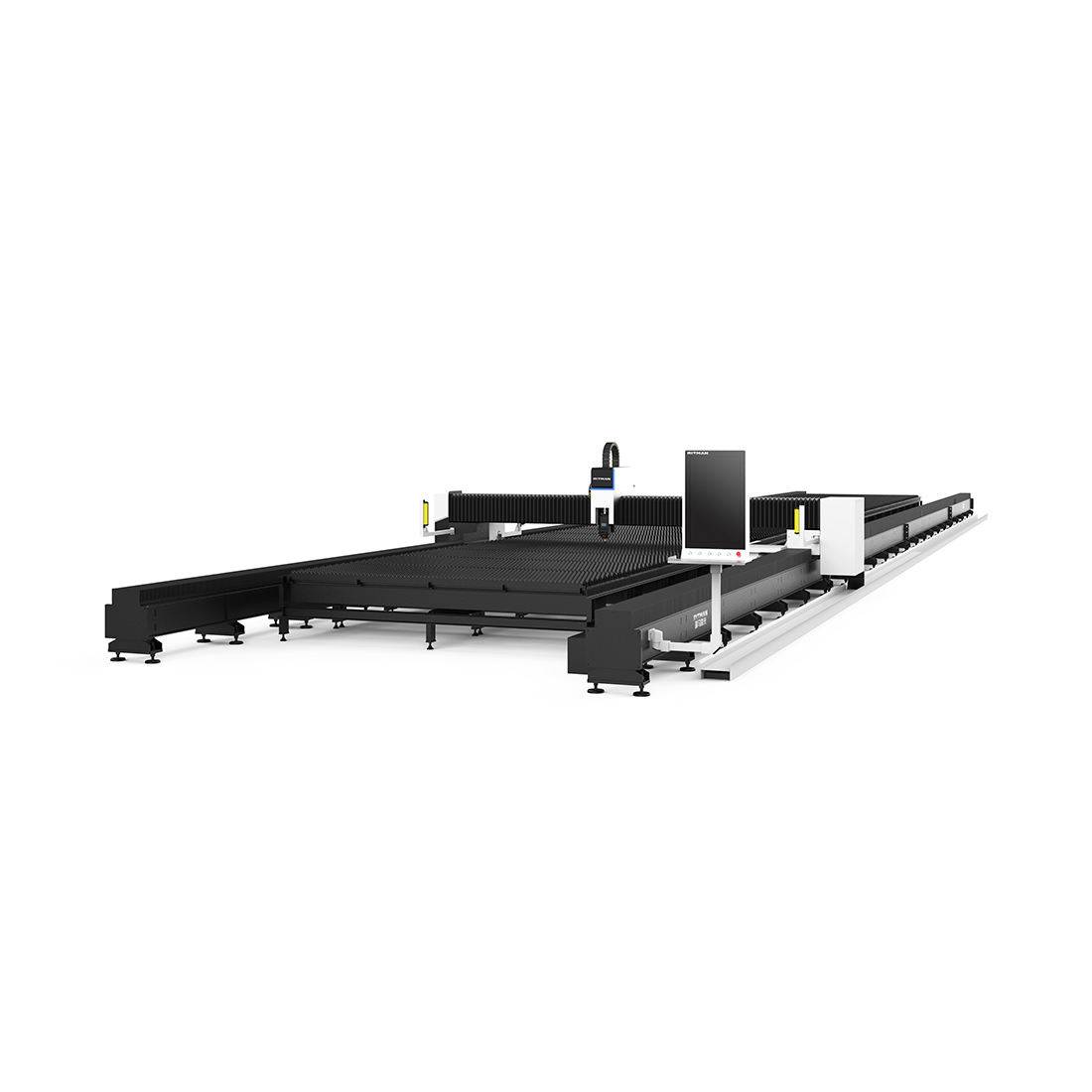
The vision system scans the plate or the structural profile (such as T-beams or bulb flats) and identifies its exact spatial orientation. The software then applies a coordinate transformation to the cutting path. If a plate is bowed or slightly rotated on the cutting bed, the 3D vision system compensates for these variances automatically. This eliminates the need for manual edge-finding and ensures that every cut, punch, and mark is aligned with the global coordinate system of the ship’s design, regardless of the physical placement of the raw material.
Eliminating Secondary Processing: No Grinding Requirements
In traditional shipyards, the cutting process is often followed by a labor-intensive grinding phase. This is necessary to remove heavy dross and to smooth out the serrations left by lower-quality thermal processes. However, a high-power fiber laser operating with optimized assist gases (Oxygen or Nitrogen) produces a surface finish that meets or exceeds ISO 9013 standards for cut quality.
The high energy density of the fiber laser creates a narrow Heat-Affected Zone (HAZ). This is critical for maritime applications where the metallurgical properties of the steel must remain intact to prevent brittle fractures in high-stress environments. Because the cut edge is clean and square, the need for Secondary Processing Elimination is realized. Plates can move directly from the laser bed to the assembly area without intermediate grinding or edge cleaning, significantly reducing the man-hours per ton of steel processed.
Integrated Punching, Marking, and Cutting Workflows
Modern shipbuilding requires more than just part separation. Identification for logistics and precise location marking for stiffeners are vital for lean manufacturing. The Shipbuilding Automation capabilities of modern fiber lasers allow for a triple-function operation: punching, marking, and cutting, all within a single nesting program.
Precision Marking and Etching
Before the perimeter of a part is cut, the laser head can be tuned to a lower power frequency to etch alphanumeric codes, QR codes, or alignment lines onto the surface. These marks are permanent and remain visible through the priming process, allowing downstream workers to identify parts immediately. This replaces the manual chalking and stamping processes that are prone to human error.
Automated Punching and Pilot Holes
For plates that require subsequent mechanical fastening or specific drainage points, the fiber laser can perform high-speed “punching” or hole piercing. Unlike mechanical punching, which can cause local deformation, laser piercing is non-contact. The 3D vision system ensures that these holes are perfectly centered even if the plate has moved. The ability to switch from marking to piercing to high-speed cutting in milliseconds is the hallmark of an efficient industrial laser cell.
Thermal Management and Structural Integrity
Shipbuilding involves heavy plates that are susceptible to thermal expansion during the cutting process. An industrial engineer must account for the heat input into the material to prevent “walking” of the part. Fiber lasers, through high-speed processing, minimize the total heat input per millimeter of cut. The rapid travel speed ensures that the energy is dissipated quickly, preventing the plate from reaching temperatures that would cause significant warping.
Furthermore, the 3D vision system can monitor the plate during the process. If thermal expansion is detected, the system can dynamically adjust the cutting path to maintain dimensional accuracy. This level of active feedback is what separates modern fiber laser systems from traditional automated machinery. The resulting parts have higher dimensional stability, which is essential for the automated welding systems that follow in the production line.
Economic Impact and Resource Utilization
From an engineering management perspective, the transition to fiber laser technology with 3D vision is justified by the reduction in Total Cost of Ownership (TCO). While the initial capital expenditure for a high-power laser system is significant, the operational costs are substantially lower than alternative methods. Fiber lasers boast electrical efficiency rates of over 30%, compared to the 10% or less found in older laser technologies.
Moreover, the integration of 3D vision reduces scrap rates. By accurately mapping the plate, nesting software can utilize more of the material, placing parts closer together with a shared-edge cutting technique. When the risk of “mis-cuts” due to plate misalignment is removed, the shipyard saves thousands of dollars in wasted raw material and the energy required to re-process failed parts.
Conclusion: The Standard for Modern Shipyards
The implementation of a fiber laser cutting machine with 3D Vision positioning represents the pinnacle of current maritime fabrication technology. By focusing on high precision, the elimination of manual grinding, and the integration of multi-functional processes like marking and punching, shipbuilders can achieve unprecedented levels of efficiency. The removal of secondary operations and the mitigation of thermal distortion ensure that the structural integrity of the vessel is maintained while significantly accelerating the production timeline. As ship designs become more complex and tolerances become tighter, the reliance on high-precision fiber laser systems will only increase, cementing their role as the backbone of modern industrial shipbuilding.






