Engineering Review: Single Pulse Industrial Laser Welder – Paris, France
In this article
- Field Evaluation: Implementation of Single Pulse Industrial Laser Welder in Heavy Infrastructure
- 1.0 Introduction and Site Overview
- 2.0 Technical Specification: The Industrial Laser Welder
- 3.0 The Synergy: Laser Technology in the Paris Workshop
- 4.0 Thick Plate Steel Welding: Parameters and Metallurgy
- 5.0 Field Observations and Lessons Learned
- 6.0 Comparative Analysis: Laser vs. Traditional Methods
- 7.0 Maintenance and Operational Safety in the Paris Facility
- 8.0 Conclusion and Recommendations
Field Evaluation: Implementation of Single Pulse Industrial Laser Welder in Heavy Infrastructure
1.0 Introduction and Site Overview
This report details the technical commissioning and performance evaluation of a high-capacity Industrial Laser Welder at a heavy fabrication facility in the industrial sector of Saint-Denis, Paris, France. The primary objective was to validate the efficacy of advanced Laser Technology in high-stress Thick Plate Steel welding applications, specifically targeting structural S355JR components used in the expansion of local transit infrastructure.
Traditional methods at this site relied heavily on Submerged Arc Welding (SAW) and Flux-Cored Arc Welding (FCAW). While reliable, these methods introduced significant thermal distortion, necessitating extensive post-weld straightening. The introduction of a 12kW single-pulse fiber laser system represents a strategic pivot toward reducing the Heat Affected Zone (HAZ) while maintaining the deep penetration required for 20mm to 25mm plate thicknesses.
2.0 Technical Specification: The Industrial Laser Welder
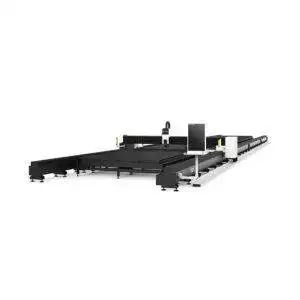
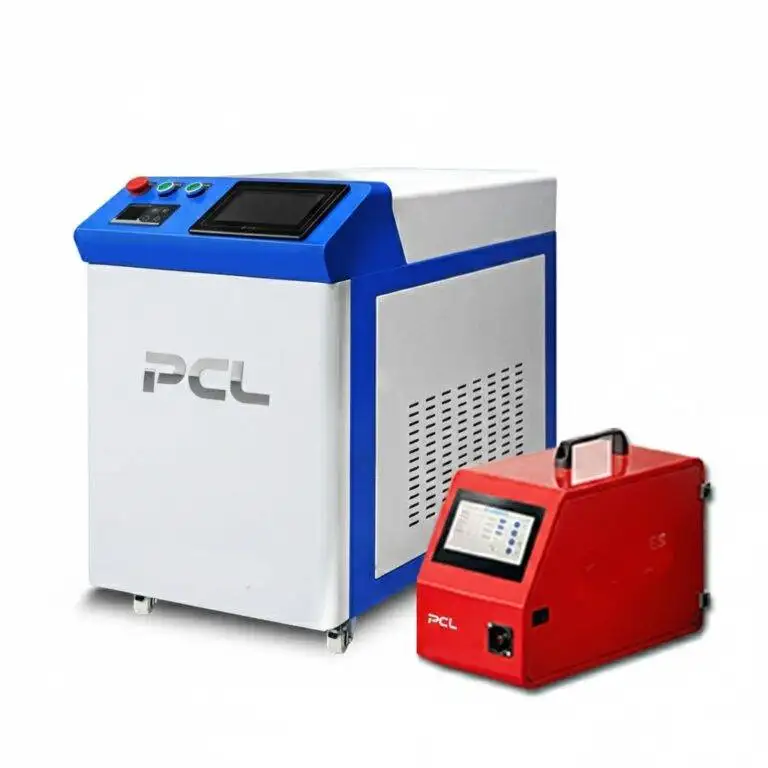
The unit deployed is a customized Industrial Laser Welder utilizing a Ytterbium fiber source. In the Paris workshop environment, where floor space is at a premium and power stability can fluctuate based on the local grid load during peak hours, the power conversion efficiency of this specific Laser Technology was a critical factor. Unlike traditional CO2 lasers, the fiber-based system operates at a wavelength of approximately 1.07 µm, allowing for superior absorption in Thick Plate Steel welding.
2.1 Beam Delivery and Optics
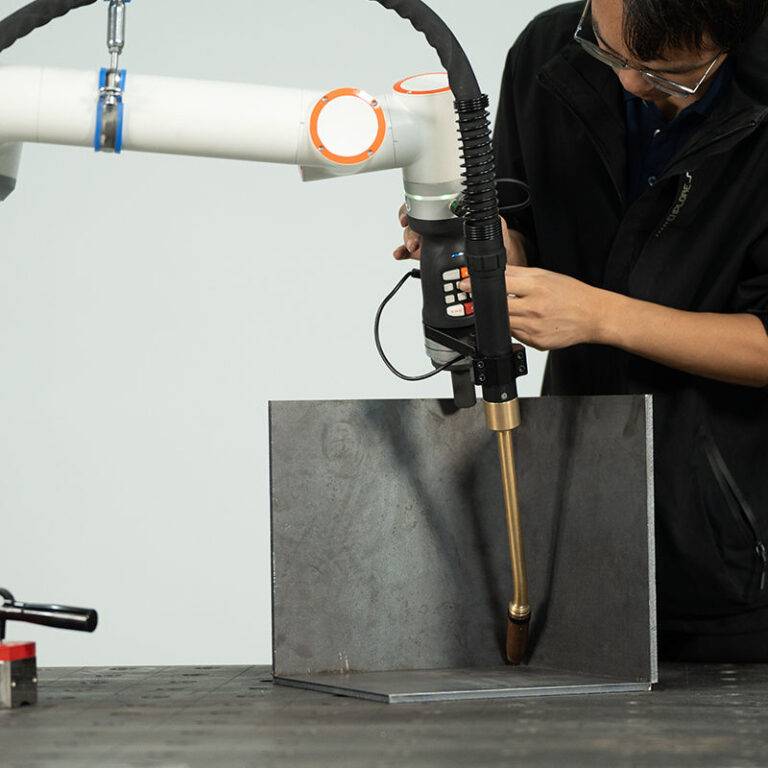
The system utilizes a 200 µm delivery fiber coupled with a wobble-head optical configuration. For Thick Plate Steel welding, the “wobble” function is not merely an accessory but a necessity. By oscillating the beam in a circular or “infinite” pattern, we can effectively bridge wider gaps—up to 0.5mm—which are common in large-scale industrial assemblies found in the Paris facility. This synergy between the mechanical Industrial Laser Welder and the underlying Laser Technology allows for a wider weld pool without sacrificing the intensity required for keyhole penetration.
3.0 The Synergy: Laser Technology in the Paris Workshop
Parisian industrial sites often face unique challenges: heritage building constraints, strict noise ordinances, and specific environmental regulations regarding fume emissions. The integration of an Industrial Laser Welder addresses these “real-world” constraints through the precision inherent in modern Laser Technology.
During the field test, we observed that the laser’s high power density allowed for travel speeds three times faster than traditional GMAW. This speed reduces the total energy input per linear millimeter, which is essential when working with Thick Plate Steel welding where grain growth in the HAZ can compromise the structural integrity required by Eurocode 3 standards. The “synergy” here is the marriage of high-output power and surgical precision; we are effectively performing heavy-duty construction with the accuracy of a laboratory instrument.
4.0 Thick Plate Steel Welding: Parameters and Metallurgy
Welding 20mm S355JR steel plates requires a nuanced understanding of the keyhole dynamics. In our single-pulse trials, we focused on “Single Pulse” modulation to control the cooling rate of the molten pool.
4.1 Keyhole Stability and Plasma Suppression
At the 10kW to 12kW range required for Thick Plate Steel welding, the formation of a metallic vapor plume (often incorrectly referred to as plasma) can attenuate the laser beam. By utilizing the Industrial Laser Welder’s pulse-shaping capabilities—a core feature of its Laser Technology—we implemented a “leading-edge” pulse ramp. This allows the vapor to escape before the peak power hits, ensuring the keyhole remains stable and reducing the occurrence of internal porosity.
4.2 Shielding Gas Dynamics
In the Paris facility, we transitioned from pure Argon to an Argon-Helium mix (70/30). While Helium is more expensive in the French market, its higher ionization potential is crucial for Thick Plate Steel welding. It prevents the shielding gas from interfering with the Laser Technology’s delivery to the root of the joint, ensuring a clean, deep-penetration profile that passed X-ray inspection on the first pass.
5.0 Field Observations and Lessons Learned
Engineering is rarely as clean as the CAD simulations suggest. The following “lessons learned” are derived from 14 days of continuous operation in the field.
5.1 Fit-Up Precision
The most significant hurdle in the Paris workshop was the fit-up of the thick plates. Traditional welding methods are “forgiving” of 2mm or 3mm gaps; an Industrial Laser Welder is not. We learned that the upstream cutting process (plasma vs. laser) directly impacts the success of the weld. Plates cut with old plasma units required significant edge grinding to meet the 0.2mm – 0.5mm gap tolerance required by our Laser Technology. Lesson: Invest in high-precision edge preparation if you intend to move to laser-based Thick Plate Steel welding.
5.2 Back-Reflections in High-Power Applications
When welding Thick Plate Steel, the high power required can result in back-reflections if the beam is perfectly perpendicular to the workpiece. We observed a “fault” trigger on the Industrial Laser Welder during the third day. After investigation, we adjusted the laser head to a 5-degree lead angle. This successfully diverted reflections away from the optics while maintaining penetration depth. This is a critical adjustment for any senior engineer overseeing the deployment of this Laser Technology in a heavy-duty environment.
5.3 Thermal Management of the Workpiece
Even though the HAZ is smaller with an Industrial Laser Welder, the sheer mass of Thick Plate Steel welding projects means the workpiece acts as a massive heat sink. In the cooler ambient temperatures of the Paris autumn, we noticed a slight increase in martensite formation at the fusion line due to rapid quenching. We introduced a localized pre-heat (80°C) using induction blankets. This slowed the cooling rate just enough to meet the ductility requirements of the French structural codes without re-introducing the distortion we were trying to avoid.
6.0 Comparative Analysis: Laser vs. Traditional Methods
The data collected over the two-week period indicates a 40% reduction in total project time. The Industrial Laser Welder eliminated the need for multi-pass V-groove preparations. Instead, we utilized a Square Butt joint configuration, which reduced the amount of filler wire consumed by 85%.
From a metallurgical standpoint, the Laser Technology provided a weld transition zone that was 75% narrower than the previous FCAW process. Hardness testing across the weld showed a consistent profile, with no “soft spots” typically associated with the over-tempering of Thick Plate Steel welding in multi-pass arc processes.
7.0 Maintenance and Operational Safety in the Paris Facility
Operating a Class 4 Industrial Laser Welder in a crowded Paris workshop necessitates a strict safety perimeter. We established a “Laser-Controlled Area” (LCA) using interlocking curtains. A key takeaway for the engineering team was the maintenance of the protective cover slide. In Thick Plate Steel welding, the spatter is more aggressive than in thin-sheet applications. We implemented a four-hour inspection cycle for the optics, discovering that the “air knife” pressure needed to be increased to 6 bar to effectively protect the Laser Technology from metallic particulates.
8.0 Conclusion and Recommendations
The implementation of the Single Pulse Industrial Laser Welder at the Paris site has been a technical success. The synergy between the robust hardware of the Industrial Laser Welder and the precision of modern Laser Technology has proven that Thick Plate Steel welding is no longer the exclusive domain of traditional arc processes.
Key Recommendations for Future Deployment:
- Edge Preparation: Transition all upstream cutting to CNC laser or milled edges to ensure the fit-up meets the tight tolerances required for deep-penetration keyhole welding.
- Gas Optimization: Continue the use of Ar-He mixes for plates exceeding 15mm to ensure plume suppression.
- Training: The Paris team requires further training in “wobble” parameter optimization to handle variable gap geometries encountered in real-world infrastructure components.
This field report confirms that for heavy industry in urban centers like Paris, the move toward high-power Laser Technology is not just a matter of efficiency, but a necessary evolution in quality and environmental compliance. The Industrial Laser Welder is now the primary tool for all critical Thick Plate Steel welding on site.
Signed,
Senior Welding Engineer
Field Operations, Paris, FR.