Technical Commissioning Report: Double Pulse MAG Cobot Welder Integration
Site Overview: Antwerp Maritime Fabrication Zone
This report details the field implementation and parameter optimization of a Double Pulse (DP) MAG Cobot Welder system at a mid-sized facility in the Port of Antwerp, Belgium. The primary objective was to transition a series of high-complexity Sheet Metal Fabrication welding tasks from manual TIG processes to an automated collaborative environment. Unlike traditional robotic cells, the focus here was on “high-mix, low-volume” production of marine-grade aluminum and stainless steel enclosures.
Antwerp’s industrial environment presents specific challenges, including fluctuating humidity levels in the port area and a highly skilled but aging workforce. The deployment of advanced Arc Welding Solutions in this context serves a dual purpose: maintaining the high aesthetic standards required for maritime hardware while mitigating the ergonomic strain on senior welders. During the three-week commissioning phase, we focused on the synergy between the cobot’s motion control and the power source’s double-pulse waveform logic.
Synergy Between MAG Cobot Welder and Integrated Arc Welding Solutions
Defining the System Architecture
The core of the installation is a 10kg-payload collaborative arm integrated with a 400A high-speed inverter. In our Arc Welding Solutions framework, the cobot is not merely a “torch mover.” It acts as the master controller for the welding parameters, adjusting wire feed speed and peak current in real-time based on its spatial orientation.
The MAG Cobot Welder utilizes a Double Pulse (DP) process, which is essential for the thin-gauge work required here. In DP mode, the power source toggles between two distinct pulse frequencies. This creates a “shingled” bead appearance similar to TIG welding but at the travel speeds associated with MIG/MAG. This synergy allowed us to achieve travel speeds of 60 cm/min on 2.5mm AlMg3 alloy, a significant leap over the 15-20 cm/min typically seen in manual TIG applications in this workshop.
Addressing the Sheet Metal Fabrication Welding Constraints
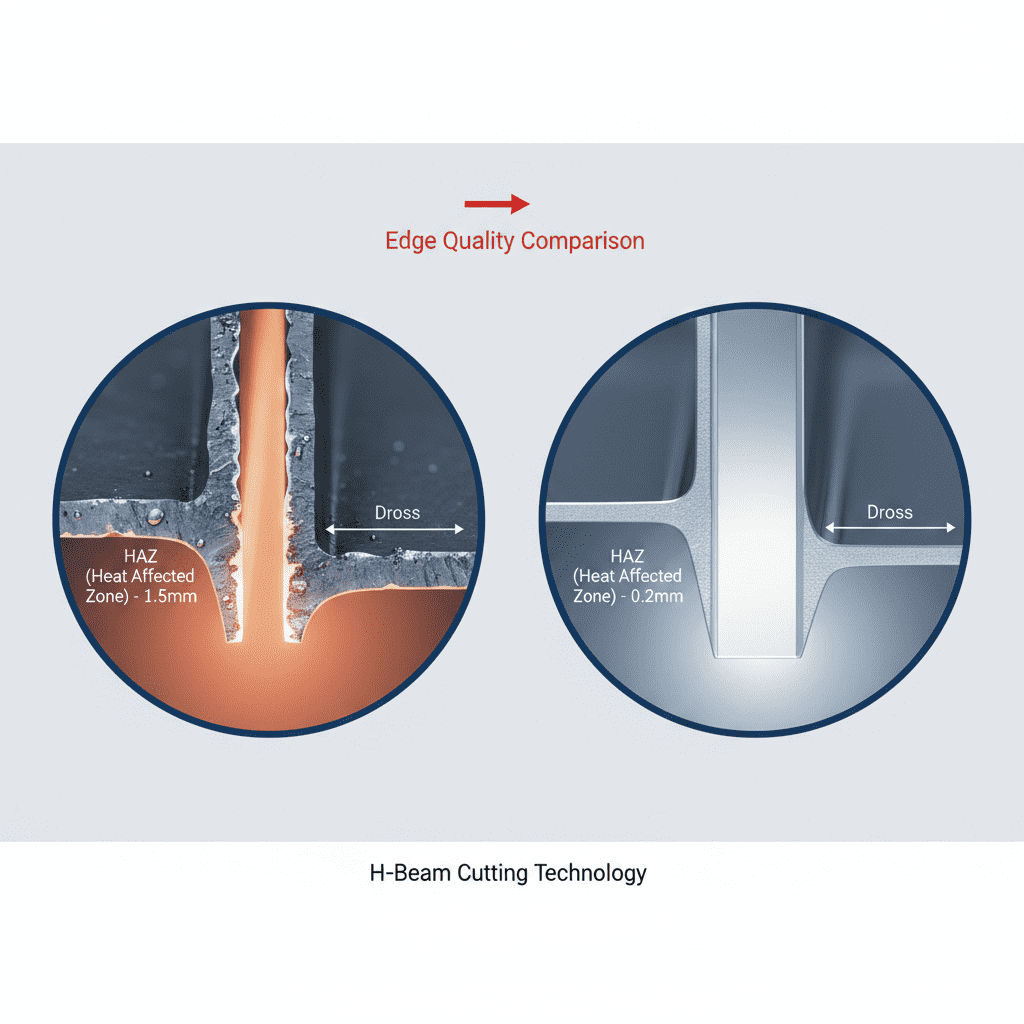
In Sheet Metal Fabrication welding, heat management is the primary technical hurdle. Excessive Heat Input (HI) leads to plate distortion, burn-through, and degradation of mechanical properties in the Heat Affected Zone (HAZ). By utilizing the MAG Cobot Welder, we achieved a level of precision in energy delivery that manual operators found difficult to sustain over an eight-hour shift.
The “Double Pulse” specifically addresses the “gap-bridging” capability. In the Antwerp facility, we encountered fit-up tolerances of ±1.0mm on large-format stainless steel panels. The DP waveform allows the weld pool to cool slightly during the low-energy pulse cycle, increasing surface tension and preventing the puddle from falling through the joint. This is a critical component of modern Arc Welding Solutions for thin-wall structures.
Parameter Optimization and Field Observations
Waveform Tuning for Aluminum AlMg3
During the second week in Antwerp, we focused on 5083-grade aluminum. Our initial sets resulted in excessive spatter at the start/stop points. We adjusted the “Hot Start” parameters within the cobot’s interface to provide a 15% current boost for the first 0.3 seconds, followed by a controlled ramp-down.
Double Pulse Frequency Settings
We found the “sweet spot” for 3mm Sheet Metal Fabrication welding to be a pulse frequency of 1.5 Hz to 2.5 Hz.
- Base Current: 85A
- Peak Current: 190A
- Pulse Width: 35%
These settings produced the distinct “fish-scale” pattern required by the client’s quality inspectors while ensuring 100% root penetration on fillet joints. The MAG Cobot Welder maintained a consistent contact-tip-to-work distance (CTWD) of 15mm, which is vital for maintaining the stability of the arc plasma in a double-pulse configuration.
Gas Shielding and Environmental Factors
Antwerp’s proximity to the Scheldt river means ambient humidity can impact arc stability and hydrogen porosity in aluminum welds. We upgraded the Arc Welding Solutions package to include a dual-stage regulator and a specialized “triple-mix” gas (Argon/Helium/CO2) for the stainless steel lines. The cobot’s ability to maintain a perfectly perpendicular torch angle—something a human welder struggles with during long reaches—ensured the gas lens worked at maximum efficiency, reducing the oxidation levels observed in previous manual samples.
Lessons Learned: Technical Hurdles in the Field
1. Grounding and Electromagnetic Interference (EMI)
One unforeseen issue in the Antwerp workshop was EMI. The facility’s overhead cranes and heavy plasma cutting tables created electrical noise that occasionally desynced the MAG Cobot Welder from its power source.
Lesson: We had to implement dedicated grounding for the cobot pedestal and use shielded Ethernet cables for the communication bridge between the power source and the cobot controller. In Arc Welding Solutions, “clean power” is as important as the wire chemistry.
2. Tool Center Point (TCP) Calibration
In Sheet Metal Fabrication welding, a deviation of even 0.5mm can result in a missed joint on a lap weld. We discovered that the torch neck was deforming slightly due to the heat of the DP process over long continuous runs.
Lesson: We integrated an automated TCP check station. Every 20 cycles, the cobot moves to a touch-probe to verify its coordinates. If a deviation >0.2mm is detected, the system alerts the operator for recalibration. This is a non-negotiable step for high-precision MAG Cobot Welder setups.
3. Jigging and Fixturing Rigidity
The speed of the DP-MAG process creates a different thermal expansion profile than TIG. Initially, the parts were “walking” out of alignment during the weld.
Lesson: We redesigned the toggle clamps to provide more localized pressure near the start of the weld. When implementing Arc Welding Solutions, the fixture is an equal partner to the robot and the power source.
Comparative Analysis: Manual vs. Cobot DP-MAG
Productivity Metrics
Before the installation of the MAG Cobot Welder, a standard marine electronics enclosure took 45 minutes to weld manually, including tacking and post-weld cleaning. With the optimized Sheet Metal Fabrication welding workflow, the cycle time was reduced to 12 minutes.
- Post-Weld Cleaning: Reduced by 70% due to the low-spatter nature of the Double Pulse waveform.
- Rework Rate: Dropped from 8% (manual) to under 1% (cobot).
- Gas Consumption: Increased by 10% per minute, but decreased by 40% per part due to the drastically shorter arc-on time.
Structural Integrity
Macro-etch tests performed at a laboratory in Ghent confirmed that the MAG Cobot Welder produced a more uniform grain structure in the HAZ compared to manual welding. The controlled pulsing of the Arc Welding Solutions software allows for a “vibration” effect in the molten pool, which helps in degassing and refining the dendritic structure of the aluminum weld metal.
Conclusion: The Future of Fabrication in Antwerp
The successful deployment of the MAG Cobot Welder in Antwerp demonstrates that high-end Arc Welding Solutions are no longer the exclusive domain of automotive assembly lines. For the specific demands of Sheet Metal Fabrication welding, the Double Pulse MAG process provides a middle ground: the speed of MIG/MAG with the aesthetic and metallurgical control of TIG.
As we move forward, the next phase will involve integrating “seam tracking” sensors to further enhance the cobot’s autonomy in handling larger, less-predictable maritime components. For now, the Antwerp site serves as a benchmark for how collaborative automation can be seamlessly integrated into a traditional heavy-industrial environment without losing the “welder’s touch.”
Senior Engineer’s Final Note: Do not overlook the importance of wire quality. In DP-MAG, the wire feed consistency is paramount. We switched to a high-grade, “matte-finish” wire to prevent slippage in the drive rolls, which resolved the last of our arc-instability issues on the 304L stainless lines.
-


LT240S tube laser cutting machine
-
LT120S tube laser cutting machine
-
Sale

Tank Fillet Welding Machine
Original price was: $1,000.00.$900.00Current price is: $900.00. -
Sale

MAK100 tube laser cutting machine
Original price was: $5,500.00.$5,000.00Current price is: $5,000.00. -

portable plasma air cutting machine
$1,200.00 -

2in1 fiber laser cutting machine
-

Air cooling Laser welding machine
-

HF h beam laser cutting machine
-

LT240 laser cutting machine
-

Laser welding machine
-


Cobotic Welding Station
-

Gantry welding robot solution
-

Tracked Wheeled AGV Welding robot
-

LFH6020 Fiber laser cutting machine
-
LFP6020
-

robotic welidng machine
