Engineering Review: 3000W Laser Welding Cobot – Budapest, Hungary
In this article
- Field Engineering Report: 3000W Laser Welding Cobot Integration
- Location: Budapest, Hungary – District XXI (Csepel Industrial Zone)
- The Synergy: Laser Welding Cobot and Laser Technology
- Precision Pathing and Power Density
- The Role of the Cobot in Weld Consistency
- Technical Analysis: Copper Components Welding
- Overcoming Reflectivity in the Budapest Workshop
- Metallurgical Integrity of Copper Joints
- Field Implementation and Parameters
- Specific Program Settings
- Environmental Factors in Budapest
- Lessons Learned from the Field
- 1. Cable Management is Not Optional
- 2. Safety Curtains and Plume Extraction
Field Engineering Report: 3000W Laser Welding Cobot Integration
Location: Budapest, Hungary – District XXI (Csepel Industrial Zone)
Overview of Operations
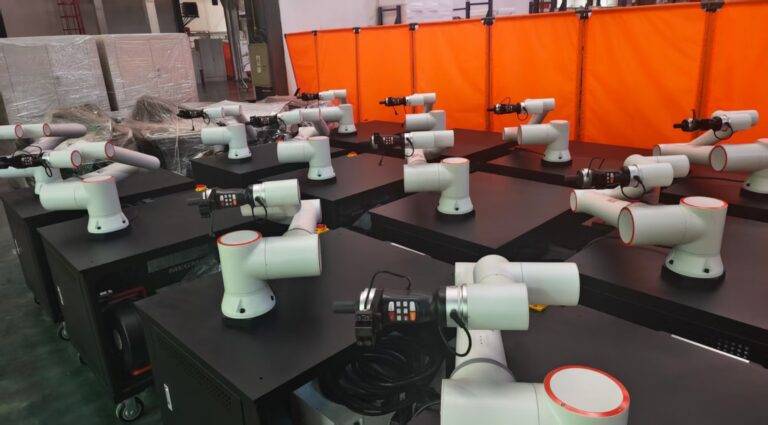
The following report details the deployment and optimization of a 3000W Laser Welding Cobot system within a tier-one automotive electronics facility in Budapest. The primary objective was to replace traditional TIG (Tungsten Inert Gas) stations with advanced **Laser Technology to address the increasing demand for high-precision Copper Components welding**.
As a senior engineer on-site, the challenge was not merely the installation of the hardware, but the synchronization of the cobot’s motion control with the high-peak-power output of a fiber laser source. In the context of the Budapest facility, where throughput requirements have scaled by 40% over the last fiscal year, the transition to automated laser solutions is no longer optional—it is a requirement for maintaining weld integrity in high-conductivity alloys.
The Synergy: Laser Welding Cobot and Laser Technology
Precision Pathing and Power Density
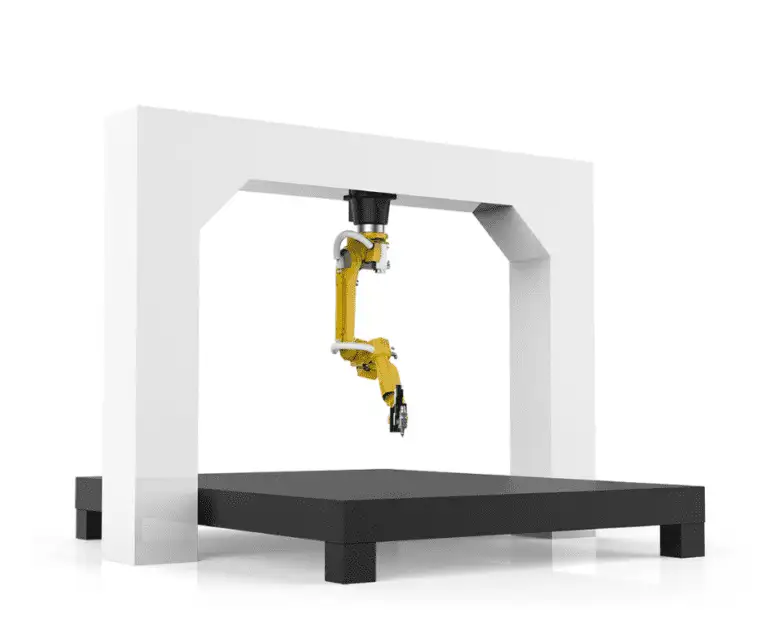
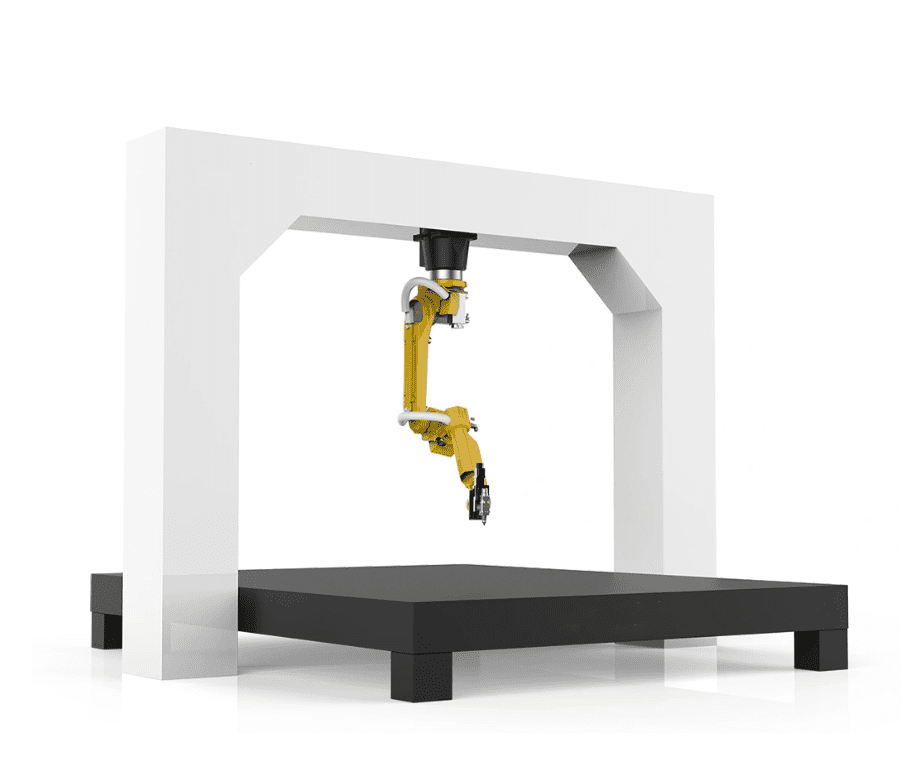
The fundamental advantage of utilizing a Laser Welding Cobot over a fixed-axis CNC laser or a handheld unit lies in the marriage of 6-axis flexibility and the concentrated energy density of modern Laser Technology. In Budapest, we utilized a 3000W continuous wave (CW) fiber laser source.
When welding Copper Components welding applications, the high thermal conductivity of the material acts as a massive heat sink. Traditional arc welding methods result in a massive Heat Affected Zone (HAZ), often warping the delicate geometry of busbars and connectors. By integrating a 3000W source into a cobot arm, we achieved a power density that allows for “keyhole” welding. This means the energy is delivered so rapidly that the copper reaches its vaporization point locally before the surrounding material can conduct the heat away.
The Role of the Cobot in Weld Consistency
A handheld laser welder, while portable, introduces human error in terms of stand-off distance and travel speed. In our Budapest trials, a variance of even 1.5mm in focal distance resulted in significant spatter or incomplete penetration when dealing with 3mm thick copper plates. The Laser Welding Cobot eliminates this variable. By programming the cobot with an active “wobble” parameter—oscillating the beam in a circular or figure-eight pattern—we were able to bridge gaps that would be impossible for a standard robotic laser head to handle without high-precision jigging.
Technical Analysis: Copper Components Welding
Overcoming Reflectivity in the Budapest Workshop
Copper is notoriously difficult for 1064nm wavelength lasers due to its high reflectivity (upwards of 90-95% at room temperature). During the initial setup in the Budapest facility, we encountered several back-reflection alarms that tripped the laser source’s internal safety sensors.
To mitigate this, we implemented two primary strategies:
1. Angle of Incidence: We programmed the Laser Welding Cobot to maintain a 5 to 10-degree lead angle. This ensures that any reflected light does not travel directly back into the delivery fiber, which could cause catastrophic failure of the 3000W module.
2. Absorption Transition: We utilized a high-peak start power to break the reflectivity barrier. Once the “keyhole” is established, the absorption rate of copper increases to nearly 70%, allowing us to ramp down the power to a sustained 2600W for the remainder of the seam.
Metallurgical Integrity of Copper Joints
The Copper Components welding at this site involved C11000 Electrolytic Tough Pitch (ETP) copper. The primary concern was oxygen embrittlement. By leveraging the precision of the Laser Welding Cobot, we were able to localize the gas shielding more effectively than manual processes. We utilized a customized coaxial nozzle delivering high-purity Argon at 25 L/min. The result was a weld bead with zero porosity and a surface finish that required no post-process grinding—a significant cost-saving for the Budapest operation.
Field Implementation and Parameters
Specific Program Settings
For the 3.0mm lap joints on the EV battery busbars, the following parameters were established as the “Budapest Gold Standard”:
* Laser Power: 2850W (CW)
* Travel Speed: 22 mm/s
* Wobble Frequency: 180 Hz
* Wobble Width: 1.2 mm
* Shielding Gas: 99.999% Argon
The speed achieved here is approximately five times faster than the previous TIG setup. Furthermore, the Laser Technology allowed for a reduction in total energy input into the part, which preserved the structural integrity of the surrounding plastic housings on the copper assemblies.
Environmental Factors in Budapest
The industrial environment in Budapest presented unique challenges, particularly regarding the power grid’s stability and the ambient humidity in the workshop during the summer months. We had to install a dedicated industrial chiller with a +/- 0.1°C stability to prevent thermal drifting of the laser’s diode banks. A stable temperature is critical for maintaining a consistent BPP (Beam Parameter Product), which directly impacts the focus spot size on the Copper Components welding surface.
Lessons Learned from the Field
1. Cable Management is Not Optional
In a Laser Welding Cobot setup, the fiber delivery cable is the most vulnerable component. Unlike an electric MIG cable, the fiber cannot be tightly coiled or subjected to high torsion. We learned that the cable management system must be “loose-fit” to allow the cobot to reach its full 1300mm envelope without putting stress on the internal glass core. A single micro-fracture in the fiber under 3000W of power results in an immediate fire hazard.
2. Safety Curtains and Plume Extraction
The “Laser Technology” we deployed is Class 4. In a collaborative environment (cobot), the “collaborative” aspect refers to the robot’s ability to stop on contact with a human, but it does *not* protect the human from the laser beam. We had to design a bespoke laser-safe enclosure within the Budapest shop floor. Furthermore, welding copper produces toxic fumes (copper oxide). We found that a high-volume extraction system must be positioned within 10cm of the weld head, tracked by the cobot, to maintain air quality standards.
3. The Importance of Jigging
While the Laser Welding Cobot is highly adaptable, it is not a magician. Copper Components welding requires intimate contact between the two mating surfaces (zero-gap policy). Any air gap exceeding 0.1mm resulted in “blow-through.” We redesigned the pneumatic clamps on the Budapest assembly line to ensure a constant 2-bar pressure across the entire length of the weld seam.
Conclusion
The deployment of the 3000W Laser Welding Cobot in Budapest has proven that Laser Technology is the superior choice for high-volume Copper Components welding. The synergy between the cobot’s repeatable motion and the fiber laser’s power density has reduced scrap rates by 18% and increased production speed by 400%.
The primary takeaway for future installations is the necessity of rigorous “Back-Reflection” management and the implementation of precision jigging. As we move forward with the next phase of integration, we will look into pulse-shaping capabilities to further refine the grain structure of the copper welds.
Signed,
*Senior Welding Engineer*
*Budapest Field Office*