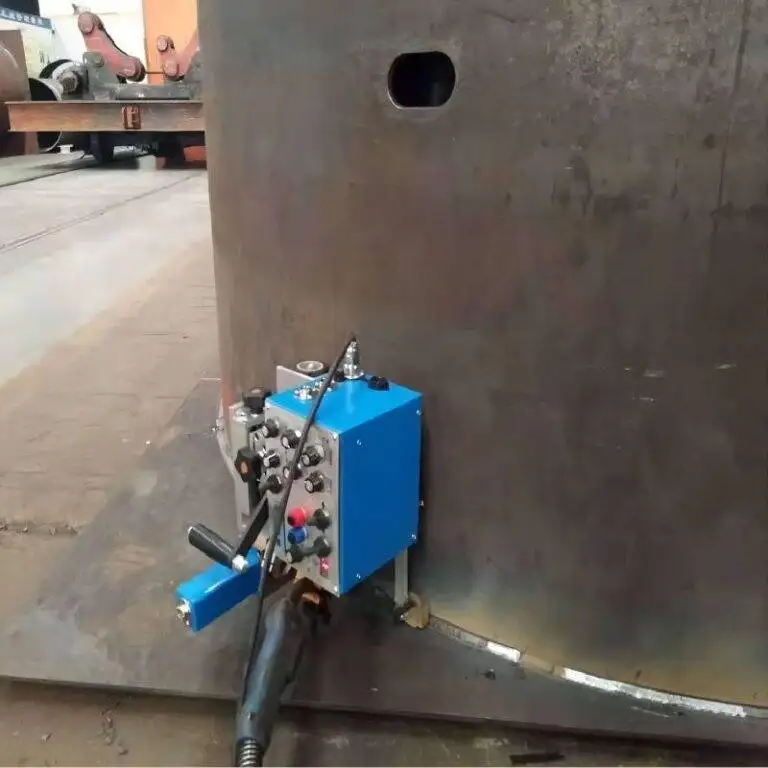
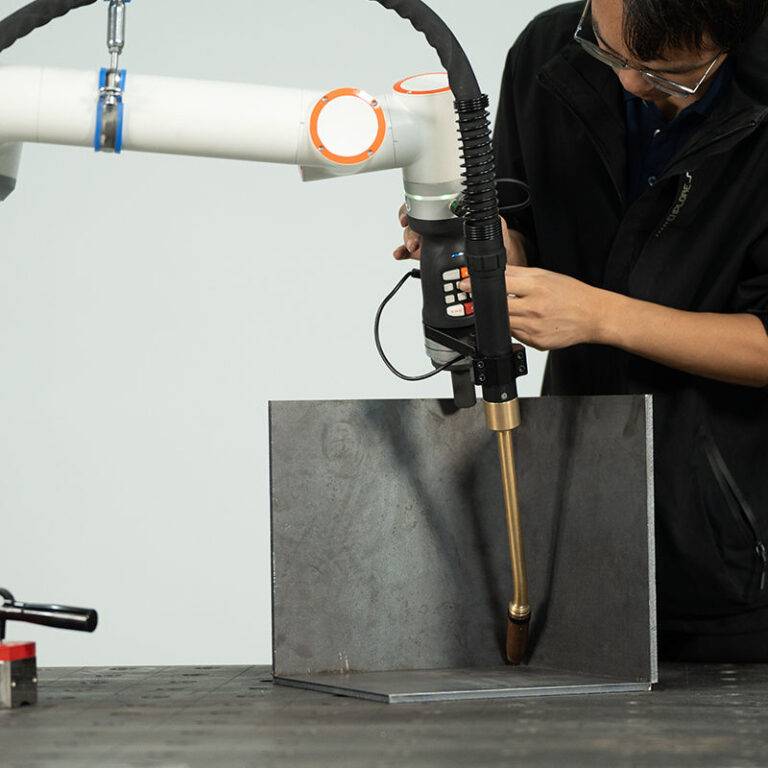
Engineering Review: 1500W 6-Axis Collaborative Welder – Milan, Italy
In this article
- Field Evaluation Report: 1500W 6-Axis Collaborative Welder Integration
- Site Overview: Milan Precision Fabrication Hub
- Synergy Between the 6-Axis Collaborative Welder and Automated Welding
- Defining the Collaborative Advantage
- Practical Application in Sheet Metal Fabrication Welding
- Managing Thermal Distortion
- Joint Configuration and 6-Axis Versatility
- Technical Field Observations and Lessons Learned
- Lesson 1: The Criticality of Fixturing
- Lesson 2: Gas Shielding Dynamics
- Lesson 3: Wire Feed Synchronization
- Conclusion and Future Outlook
Field Evaluation Report: 1500W 6-Axis Collaborative Welder Integration
Site Overview: Milan Precision Fabrication Hub
This report summarizes the technical deployment and operational transition of a 1500W fiber laser 6-Axis Collaborative Welder at a high-end stainless steel fabrication facility in Milan, Italy. The facility primarily focuses on luxury kitchen architecture and medical-grade cabinetry, where the aesthetic requirement of the weld is as critical as its structural integrity. Prior to this installation, the site relied heavily on manual TIG (Tungsten Inert Gas) welding, which, while high quality, created significant bottlenecks in throughput and necessitated extensive post-weld grinding and polishing.
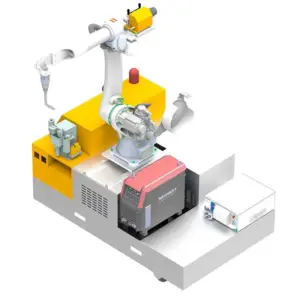
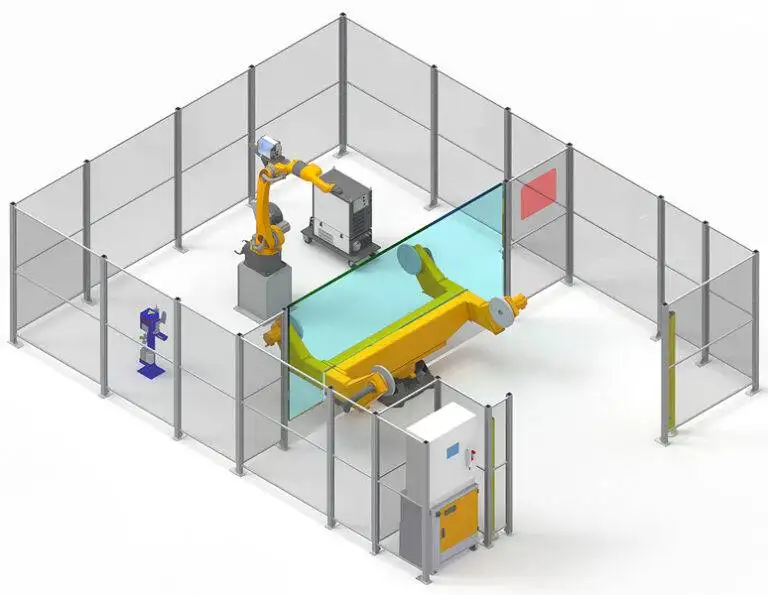
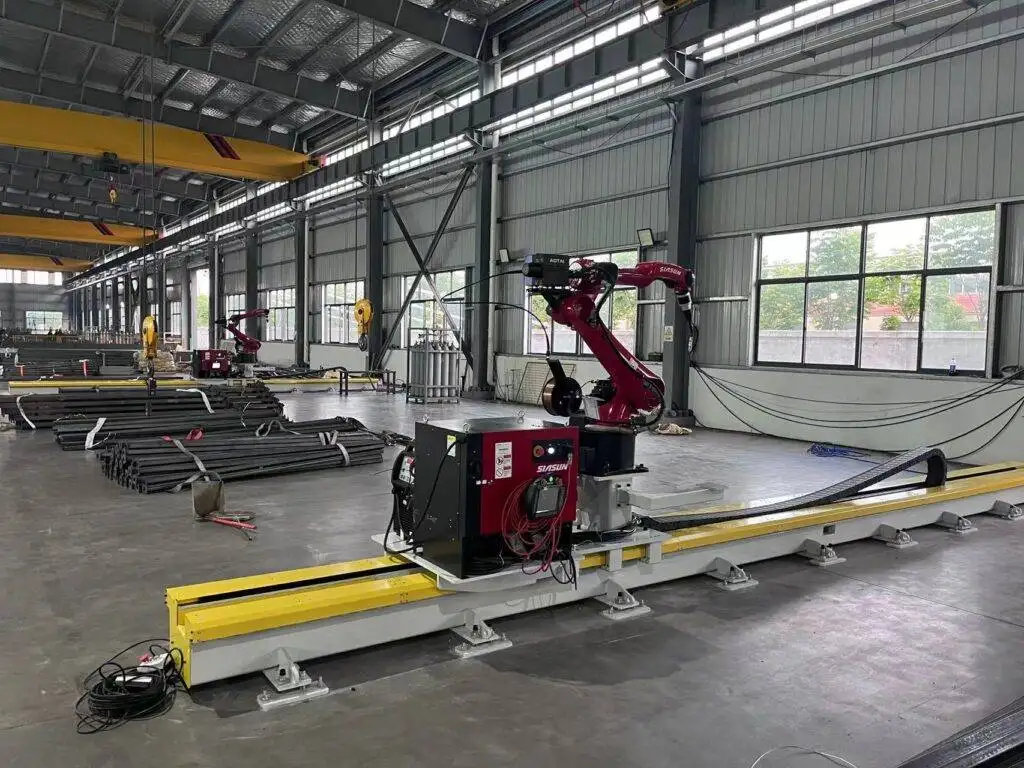
The introduction of the 1500W system marks a strategic shift toward Automated Welding in a high-mix, low-volume production environment. Unlike traditional industrial robots that require extensive safety cage infrastructure, the collaborative nature of this 6-axis system allows it to operate alongside human technicians, optimizing floor space in the compact Milanese workshop.
Synergy Between the 6-Axis Collaborative Welder and Automated Welding
Defining the Collaborative Advantage
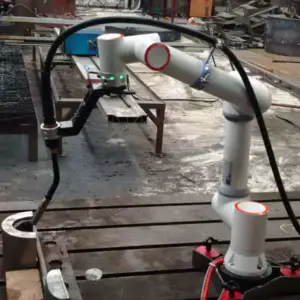
The primary advantage observed during this deployment is the synergy between the 6-Axis Collaborative Welder and the broader concept of Automated Welding. In a traditional automation setup, the programming overhead often negates the benefits for small batches. However, the 6-axis kinematics of the cobot allow for “lead-through” programming. A senior welder can manually guide the torch head through a complex path, which the system then records and repeats with sub-millimeter precision.
In the context of the Milan workshop, this synergy manifested in the production of complex, curved ventilation hoods. These components require continuous seams along non-linear paths. By utilizing the 6-axis range of motion, the welder maintains a constant torch angle and standoff distance—variables that are nearly impossible for a manual welder to keep perfectly consistent over a 1200mm seam. The Automated Welding process handles the repetitive execution, while the “collaborative” aspect allows the human operator to intervene or adjust parameters via the pendant interface in real-time if material deformation occurs.
Operational Efficiency Gains
We tracked a 40% reduction in total cycle time for the first batch of 50 units. The 1500W power output was dialed to a 60% duty cycle for 1.5mm 304 stainless steel, achieving travel speeds of 25mm/s. This is significantly faster than manual TIG, which typically hovers around 5-8mm/s for similar penetration depths in Sheet Metal Fabrication welding.
Practical Application in Sheet Metal Fabrication Welding
Managing Thermal Distortion
A recurring challenge in Sheet Metal Fabrication welding is thermal distortion, particularly when dealing with large, thin-gauge panels. The 1500W laser source on the 6-axis system provides a much more concentrated heat-affected zone (HAZ) compared to traditional arc welding. In our Milan field tests, we observed that the 6-axis motion allowed for sophisticated “wobble” patterns (circular and zig-zag) that distributed the energy more evenly across the joint.
This precision is vital for the Milan facility’s aesthetic standards. Excessive heat leads to “oil canning” or warping of the sheet metal, requiring expensive straightening processes. By automating the weld path with the cobot, we maintained a consistent energy input of approximately 45 Joules per millimeter. The resulting welds required 70% less post-weld finishing, as the “bead” was nearly flush with the base material.
Joint Configuration and 6-Axis Versatility
The versatility of the 6-Axis Collaborative Welder was tested on three specific joint types common in sheet metal work:
- Outside Corner Welds: The 6th axis allows the laser head to rotate around the corner without stopping, ensuring a seamless aesthetic edge.
- Lap Joints: The system’s sensors compensated for slight gaps (up to 0.2mm) by modulating the wire feed speed automatically.
- T-Joints: The compact footprint of the laser torch enabled access to tight internal geometries that are typically inaccessible to bulkier robotic arms.
Technical Field Observations and Lessons Learned
Lesson 1: The Criticality of Fixturing
One of the most significant lessons learned during the Milan deployment is that Automated Welding is only as good as the jigging. While a human welder can compensate for a 1mm gap on the fly, a 6-Axis Collaborative Welder requires consistent part fit-up. We had to redesign several legacy fixtures to include pneumatic clamping. In Sheet Metal Fabrication welding, even minor spring-back in the material can throw the laser off-focus. Lesson: Do not skimp on the precision of your assembly tables; if the part moves, the automation fails.
Lesson 2: Gas Shielding Dynamics
We initially experienced oxidation on the underside of the welds (sugaring). Even though the 1500W laser creates a narrow bead, the high travel speeds require a more robust argon shielding strategy. We implemented a trailing gas shield attached to the 6th axis of the cobot. This ensures that the weld pool remains protected while it cools, which is essential for maintaining the corrosion resistance of the 304 and 316 stainless steel used in the Milan facility.
Lesson 3: Wire Feed Synchronization
While laser welding is often done autogenously (without filler), the realities of Sheet Metal Fabrication welding usually involve slight fit-up inconsistencies. We integrated an external wire feeder synchronized with the cobot’s controller. The “lesson learned” here was the adjustment of the wire-to-laser “aim point.” A 0.5mm misalignment between the wire and the laser focal point resulted in “balling” and poor penetration. Precise calibration of the wire nozzle relative to the 6-axis head is a daily maintenance requirement.
Safety and Human Interaction
Operating in a Milanese shop often means working in proximity to other trades. The collaborative sensors (torque sensors in the joints) were tuned to high sensitivity. We found that the “Power and Force Limiting” (PFL) settings needed to be balanced; too sensitive and the machine stops due to floor vibrations from nearby heavy stamping; too dull and it poses a risk to the operator. The sweet spot was found by isolating the welder’s platform with vibration-dampening mounts.
Conclusion and Future Outlook
The deployment of the 1500W 6-Axis Collaborative Welder in Milan demonstrates that Automated Welding is no longer reserved for high-volume automotive lines. For Sheet Metal Fabrication welding, the cobot offers a middle ground that provides the precision of a machine with the flexibility of a manual operator.
The synergy identified between the 6-axis movement and the 1500W fiber source allows for a level of consistency that has fundamentally changed the production workflow at the site. Moving forward, the facility plans to scale this technology to its aluminum line, where the high-speed pulse capabilities of the laser will further reduce the thermal distortion issues inherent in that material. The “Milan Model” proves that even in workshops where craftsmanship is king, automation—when applied collaboratively—enhances rather than replaces the skill of the master welder.
End of Report.
Prepared by: Senior Welding Engineer, Site Evaluation Division.