Field Report: Implementation of 1000W Collaborative Arc Welding System – Bursa Industrial Zone
1. Project Overview and Site Context
This report summarizes the technical deployment and optimization of a 1000W Collaborative Arc Welding System at a Tier-2 automotive supplier facility in Nilüfer, Bursa. The primary objective was to transition a manual TIG station, responsible for high-precision components, into a semi-autonomous cell. Given Bursa’s competitive manufacturing landscape, the focus was placed on reducing cycle times for thin metal sheet welding while maintaining the aesthetic and structural integrity required for export-grade assemblies.
The facility specializes in 0.8mm to 1.5mm stainless steel (Grade 304) and galvanized steel enclosures. Traditional manual welding in this gauge often resulted in significant thermal distortion (oil-canning) and inconsistent penetration. The introduction of the 1000W collaborative unit sought to bridge the gap between high-cost, rigid industrial robotics and the artisanal skill of manual welders.
2. Technical Specifications: The 1000W Collaborative Arc Welding System
The system deployed is a fiber-delivered 1000W source integrated with a 6-axis collaborative arm. Unlike traditional Automated Welding cells that require light curtains and expansive safety perimeters, this Collaborative Arc Welding System utilizes power and force-limiting (PFL) sensors, allowing operators to work in proximity for part loading and inspection.
Power Density and Thermal Management
At 1000W, the energy density is significantly higher than a standard GMAW (MIG) setup. This allows for a concentrated heat-affected zone (HAZ). In the context of thin metal sheet welding, the goal is to achieve the “Keyhole” effect or a highly controlled conduction weld. We calibrated the system to a travel speed of 12mm/s for 1.0mm sheets, which is nearly triple the speed of a manual TIG operator. The reduced dwell time is the primary factor in mitigating the warping issues previously documented at this site.
3. Synergy Between Collaborative Systems and Automated Welding
The true value realized in the Bursa installation was the synergy between the Collaborative Arc Welding System and the broader automated welding workflow. Many engineers mistakenly view cobots as a direct replacement for manual torches. In reality, the success of this project relied on treating the cobot as a precision tool within an automated framework.
Programming and Lead-Through Teaching
One of the “Bursa Lessons” was the utilization of lead-through teaching. For complex geometries—specifically the curved corners of the HVAC ducts produced here—manually inputting coordinates into a traditional CNC-style automated welder would have taken hours. By using the collaborative arm, our lead welder “showed” the path to the system. The synergy exists in the system’s ability to take that human path and normalize the velocity. While a human hand fluctuates in speed, the system maintains a constant 1000W output relative to a constant velocity, ensuring a uniform bead profile that manual methods cannot replicate.
Workflow Integration
We implemented a “dual-zone” workflow. While the 1000W system is executing a weld on the left fixture, the operator is de-burring and loading on the right. This represents a hybrid form of automated welding where the bottleneck is no longer the welding arc, but the physical handling of the thin-gauge materials. This increased the Duty Cycle of the station from 25% to nearly 85%.
4. Deep Dive: Thin Metal Sheet Welding Challenges
Thin metal sheet welding (specifically below 1.2mm) is notoriously unforgiving. In Bursa, we encountered two primary technical hurdles: gap bridging and zinc vaporization on galvanized stocks.
Gap Bridging and Jigging
Automated systems are only as good as their fit-up. During the first week, we saw a 15% reject rate due to “blow-through.” Investigation revealed that the manual shearing process left gaps exceeding 0.2mm. While a manual welder compensates by slowing down and adding filler, a 1000W Collaborative Arc Welding System set for high-speed production will blow through the gap. We had to re-engineer the upstream clamping fixtures.
Lesson Learned: You cannot automate a bad fit-up. For thin-sheet automation, the fixturing must be pneumatic and maintain a gap tolerance of less than 10% of the material thickness.
Managing the HAZ in 304 Stainless
To maintain the corrosion resistance of the stainless steel, we utilized a pulsing frequency of 500Hz on the 1000W source. This “fast pulsing” in the Collaborative Arc Welding System further constricts the arc, ensuring that the automated welding process does not overheat the chromium in the alloy, which would lead to carbide precipitation. The resulting welds were “straw-colored,” indicating perfect gas coverage and heat control, requiring zero post-weld pickling or grinding.
5. Practical Field Observations and Lessons Learned
After 30 days of continuous operation in the Bursa facility, several non-obvious technical insights emerged regarding the 1000W setup.
Shielding Gas Turbulence
Initially, we used a standard flow rate of 15 L/min of Argon. However, the high travel speeds of the automated welding arm created a venturi effect, pulling atmospheric oxygen into the weld pool. We had to switch to a large-diameter gas lens and increase the flow to 20 L/min, specifically angled 10 degrees trailing the weld pool. This is a critical adjustment when moving from slow manual welding to high-speed thin metal sheet welding.
The “Collaborative” Safety Reality
While the system is “collaborative,” the 1000W arc is not. We had to install high-speed localized shielding (welding curtains) on the arm itself. The “synergy” here is that the arm stops if it touches the operator, but the operator still needs protection from the UV and IR radiation. The lesson for senior engineers is that “collaborative” refers to the kinematics of the robot, not the physics of the arc.
Maintenance of Optical Components
In the Bursa workshop environment, airborne particulates from nearby grinding stations were a concern. We observed that the protective window of the 1000W head required cleaning every 4 hours to prevent “thermal lensing,” where dust on the lens absorbs energy and shifts the focal point. For a Collaborative Arc Welding System to remain effective in thin metal sheet welding, the focal point must remain precisely at the material interface. A shift of even 0.5mm results in inconsistent penetration.
6. Conclusion and Future Recommendations
The implementation of the 1000W Collaborative Arc Welding System in Bursa has proven that automated welding is no longer reserved for heavy-plate automotive frames. By focusing on the specific parameters of thin metal sheet welding—namely travel speed, pulse frequency, and rigorous jigging—we reduced production costs by 40% per unit.
For future deployments, I recommend the following:
- Integrated Sensing: Move toward “Seam Tracking” sensors. While the collaborative arm is precise, variations in the stamped parts often exceed the 1000W laser’s spot size.
- Upstream Control: Ensure that the “synergy” extends to the laser-cutting or shearing department. Automated welding success starts at the cutting table.
- Operator Upskilling: The role of the welder in Bursa has shifted from “torch-holder” to “process controller.” Training should focus on metallurgy and robot kinematics rather than just hand-eye coordination.
The Bursa site now serves as a benchmark for the region. The 1000W system demonstrates that when the precision of automated welding is applied to the delicate requirements of thin metal sheet welding, the result is a significant leap in both throughput and quality.
Report Prepared By:
Senior Welding Engineer
Bursa Field Office
-
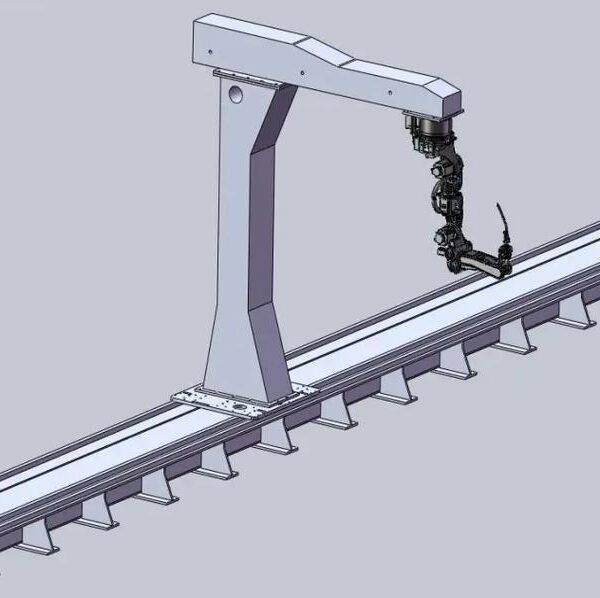
Cantilever Welding Robot solution
-
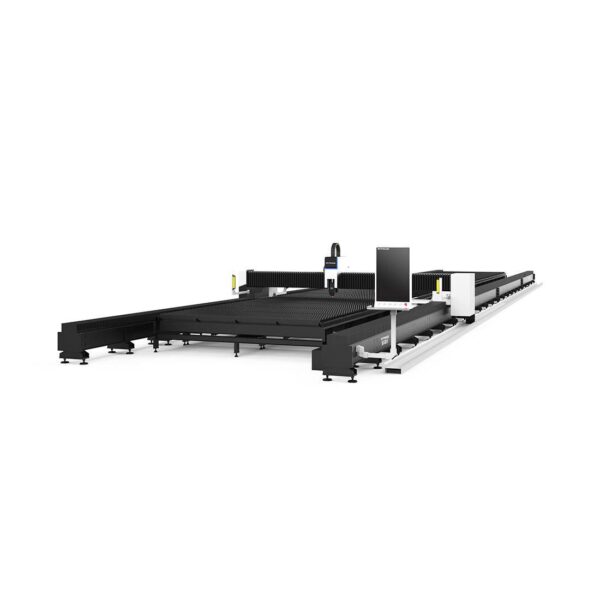
GF laser cutting machine
-
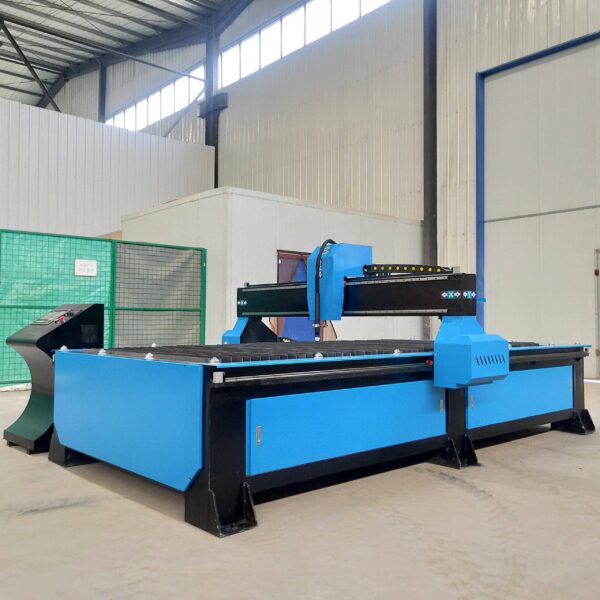
P3015 plasma cutting machine
-

LFP3015 Fiber Laser Cutter
-
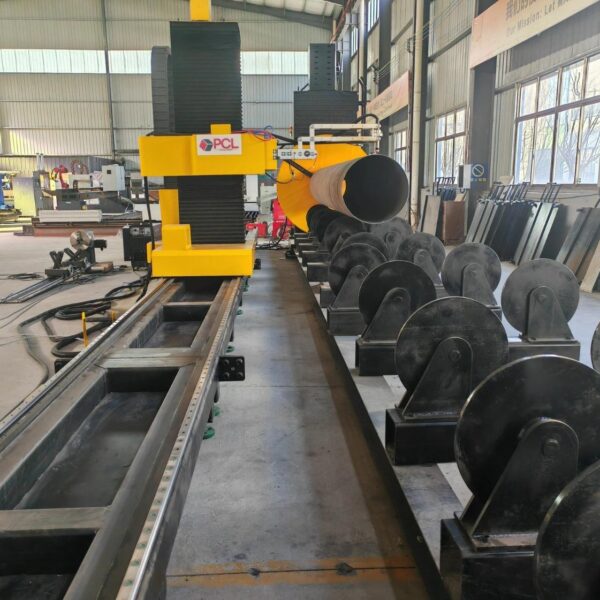
pipe plasma cutting machine
-
LFH 4020 Fiber Laser Cutting Machine
-
LFP4020
-
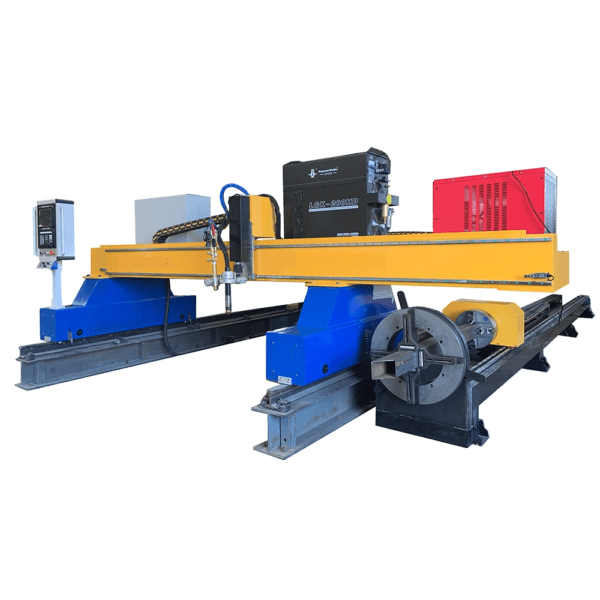
gantry plasma air cutting machine
-
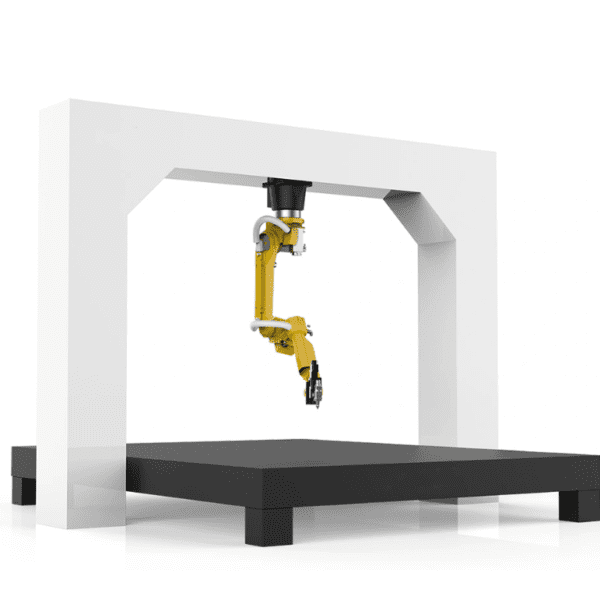
3D robot cutting machine
-
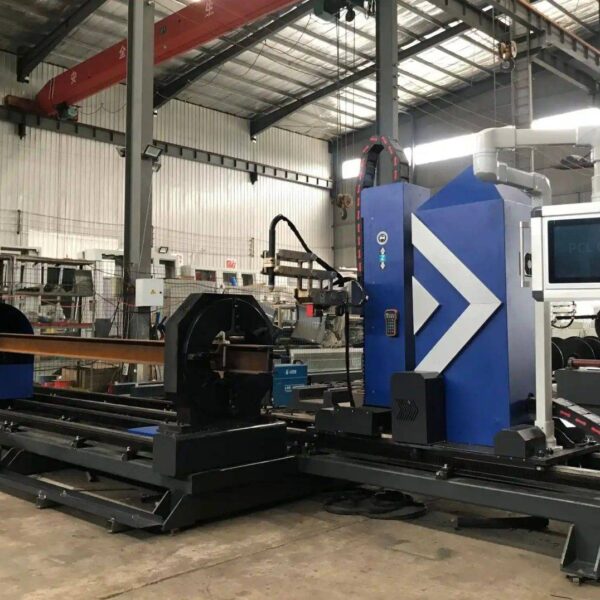
8 axis plasma cutting machine
-
5 axis plasma cutting machine
-

LT360 tube laser cutting machine
-
robot welding workstation
-
SF6060 fiber laser cutting machine
Advanced Fiber Laser Tube Processing Technology
Our CNC Fiber Laser Tube Cutting systems revolutionize metal fabrication by integrating high-precision cutting, punching, and profiling into a single automated workflow. Designed for versatility, this technology handles a wide array of profiles including Round, Square, Rectangular, and Oval tubes, as well as complex L-shaped and U-shaped channels.
- Precision Punching: High-speed hole punching with micron-level accuracy, eliminating the need for mechanical drilling or die-stamping.
- Complex Profiling: Advanced 3D pathing allows for intricate interlocking joints and specialized notch cuts, ideal for structural frames.
- High Material Efficiency: Intelligent nesting software minimizes scrap, reducing raw material costs across large production runs.
- Clean Finish: Delivers oxide-free, burr-free edges that require zero secondary grinding before welding.

Seamlessly processing multiple profiles with consistent precision.
Global Delivery & Logistics



From our high-tech manufacturing facility directly to your global site. PCL WeldCut ensures secure packaging, professional handling, and reliable international logistics to safeguard your equipment throughout the entire journey.
