Optimizing Agricultural Machinery Fabrication with Precision Tube Laser Systems
The manufacturing of agricultural equipment requires a balance of structural integrity and production efficiency. Traditional methods involving manual sawing, drilling, and secondary deburring are increasingly inadequate for the demands of modern chassis and frame construction. The integration of fiber laser resonator technology coupled with intelligent control systems provides a direct solution to these bottlenecks, enabling manufacturers to move from raw material to finished assembly with unprecedented speed and accuracy.
Material Intelligence and 95 Percent Utilization
In large-scale agricultural manufacturing, material costs represent a significant portion of the total expenditure. Standard nesting practices often result in significant scrap, particularly when dealing with long-form rectangular tubes and structural profiles. Modern Intelligent nesting software utilizes advanced algorithms to calculate the optimal placement of parts, including the nesting of smaller components within the scrap areas of larger cuts. This precision allows for a material utilization rate of up to 95 percent.
Beyond simple placement, intelligence extends to the physical properties of the material. Auto-weld seam recognition is a critical feature for agricultural applications. When tubes are formed and welded, the resulting seam possesses different metallurgical properties than the base metal. If a bend or a high-stress mounting hole is placed directly on this seam, the structural integrity of the component—such as a combine harvester frame—is compromised. Sensors and camera-based systems now detect these seams automatically, rotating the tube to ensure that all holes and cutouts are positioned at a safe distance from the weld line. This ensures consistent mechanical performance across every production unit.
Market Competitiveness: Reducing Lead Times from Days to Hours
The primary competitive advantage in modern fabrication is the reduction of the production cycle. In a traditional workflow, a complex assembly requiring multiple interlocking tubes would spend three days moving through various stations: the bandsaw for length cutting, the milling machine for notches, and a drill press for mounting points. Each transition introduces the risk of dimensional error and increases labor costs.
Custom profile laser solutions consolidate these operations into a single process. By utilizing high-speed nesting algorithm protocols, the system can process complex geometries—including saddle cuts, miter joints, and intricate intersections—in one pass. This shift reduces a three-day production window to approximately three hours. This speed does not come at the expense of quality; the CNC-controlled laser head maintains tolerances within ±0.1mm, ensuring that parts fit perfectly during the final welding stage, which further reduces assembly time and the need for expensive jigging.
Material Versatility and Profile Geometry
Agricultural machinery is rarely built from simple round tubing. The structural requirements of tillage equipment and sprayers necessitate the use of heavy-duty H-beams, C-channels, and L-angles. Traditional laser systems often struggle with the asymmetrical rotation of these profiles. However, modern three-chuck or four-chuck systems provide the necessary support to rotate and feed irregular sections without deformation. This allows for complex hole patterns and end-notches to be cut into structural galvanized steel beams that would otherwise require manual layout and oxy-fuel cutting.
Furthermore, the shift toward lighter, more corrosion-resistant machinery has increased the use of non-ferrous metals like Aluminum and Copper. These materials are traditionally difficult to cut due to their high reflectivity, which can cause back-reflections that damage the laser source. Advanced heat-affected zone (HAZ) management and specialized optical isolators now allow for the continuous cutting of these materials. Whether it is an aluminum radiator support or a copper electrical conduit for autonomous tractor systems, the laser provides a clean, burr-free edge that requires no secondary finishing.
Technical Comparison and ROI Analysis
To understand the economic impact of upgrading to a precision tube laser system, it is necessary to compare the operational metrics against traditional mechanical processing.
| Metric | Traditional Processing | Intelligent Tube Laser |
|---|---|---|
| Material Utilization | 70-80% | Up to 95% |
| Process Steps | Sawing, Drilling, Deburring | Single-pass Laser Cut |
| Setup Time | High (Manual Jigs) | Low (Software Import) |
| Dimensional Accuracy | ±1.0mm to 2.0mm | ±0.1mm |
| Labor Requirement | 3-4 Skilled Operators | 1 Machine Technician |
The Return on Investment (ROI) is realized not only through labor reduction but also through the elimination of consumable costs associated with drill bits, saw blades, and sanding discs. Furthermore, the precision of the laser-cut parts simplifies the downstream robotic welding process, as the consistent gaps allow for stable weld pools and reduced filler material usage.
High Difficulty Intersection Cutting
One of the most complex tasks in agricultural engineering is the joining of two or more tubes at oblique angles. Manual preparation of these “fishmouth” or saddle cuts is time-consuming and prone to error. If the fit is not perfect, the welder must use excessive heat to fill the gaps, which weakens the joint. Intelligent laser systems calculate the 3D path required to create a perfect interlocking fit, regardless of the tube diameter or the angle of intersection. This capability allows engineers to design more complex, lighter, and stronger frames without worrying about the feasibility of production.
Streamlining the Workflow from CAD to Cut
The software bridge between design and manufacturing is the final component of a high-efficiency system. By importing 3D models directly into the nesting software, the system automatically identifies the tube profiles and generates the cutting path. This eliminates the manual entry of coordinates and reduces the possibility of human error. In an industry where seasonal demand requires rapid scaling of production, the ability to go from a digital design to a physical part in minutes is a significant market advantage.
Conclusion on Industrial Implementation
The adoption of custom profile laser solutions is no longer an optional upgrade for agricultural machinery manufacturers; it is a requirement for maintaining relevance in a high-efficiency market. By leveraging 95 percent material utilization, automating weld seam detection, and mastering the cutting of complex profiles like H-beams and C-channels, manufacturers can significantly lower their cost per part. The transition from a 3-day lead time to a 3-hour cycle represents a fundamental shift in operational capacity, allowing for leaner inventories and more responsive production schedules.
-
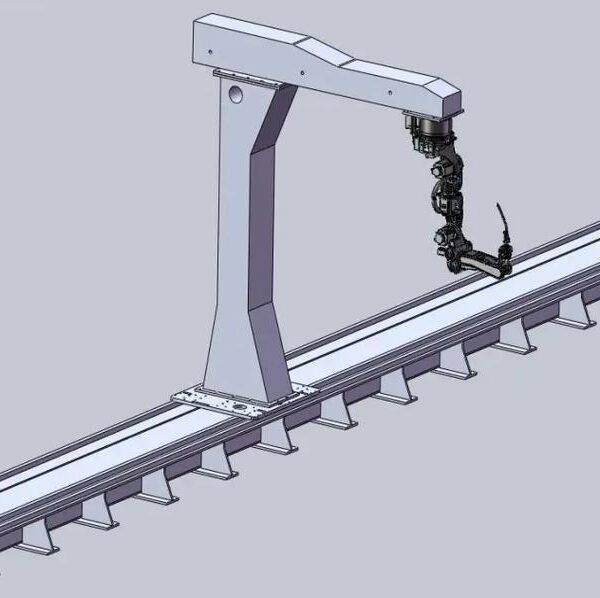

Cantilever Welding Robot solution
-
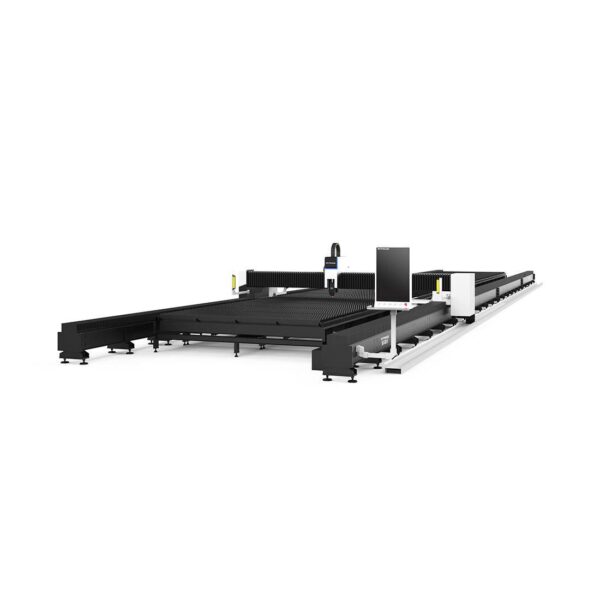

GF laser cutting machine
-
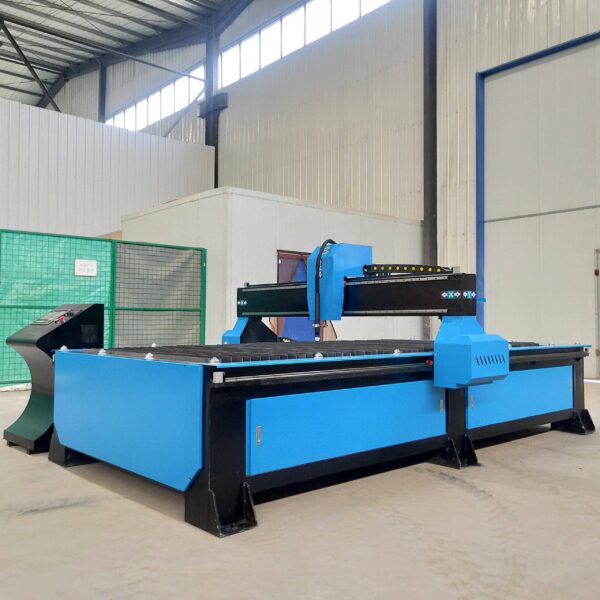
P3015 plasma cutting machine
-

LFP3015 Fiber Laser Cutter
-
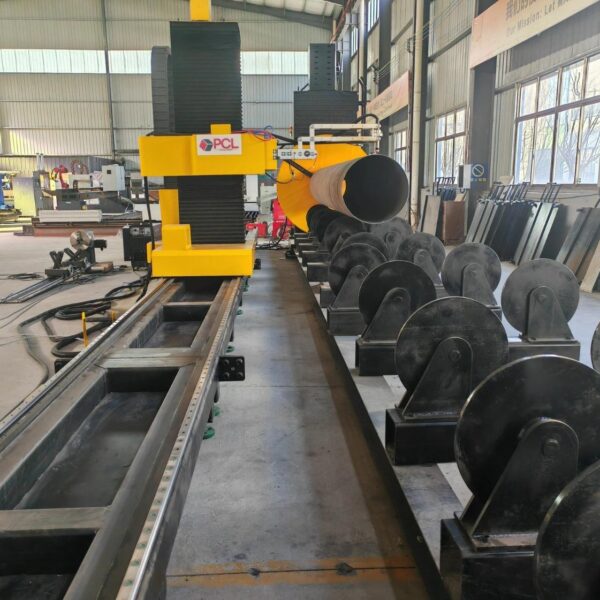
pipe plasma cutting machine
-
LFH 4020 Fiber Laser Cutting Machine
-
LFP4020
-
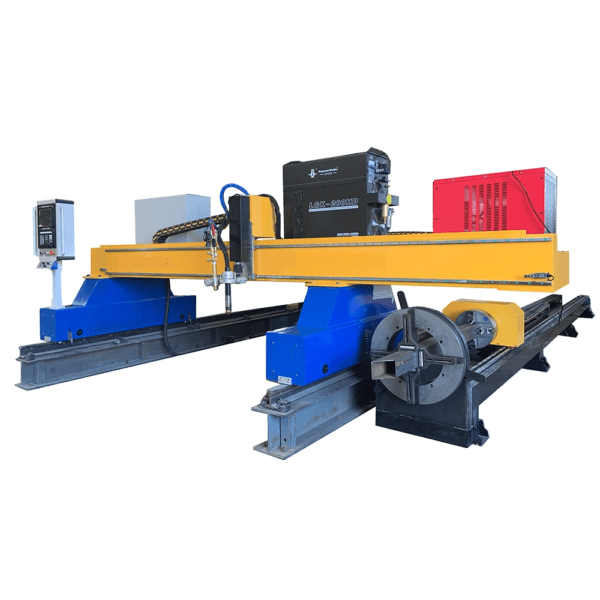
gantry plasma air cutting machine
-
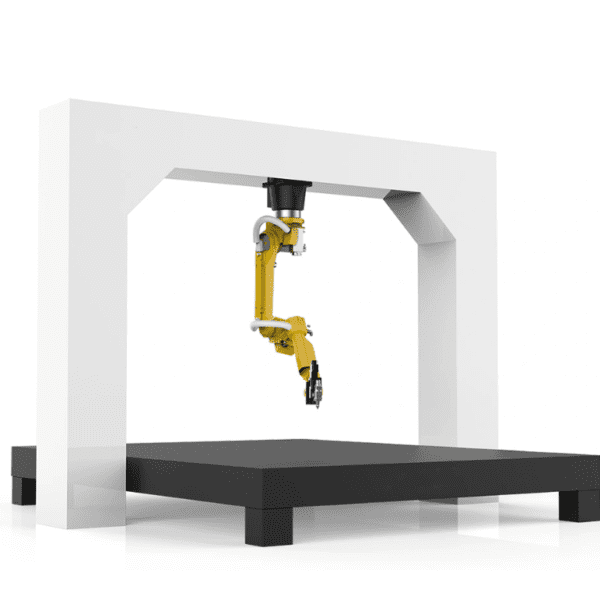
3D robot cutting machine
-
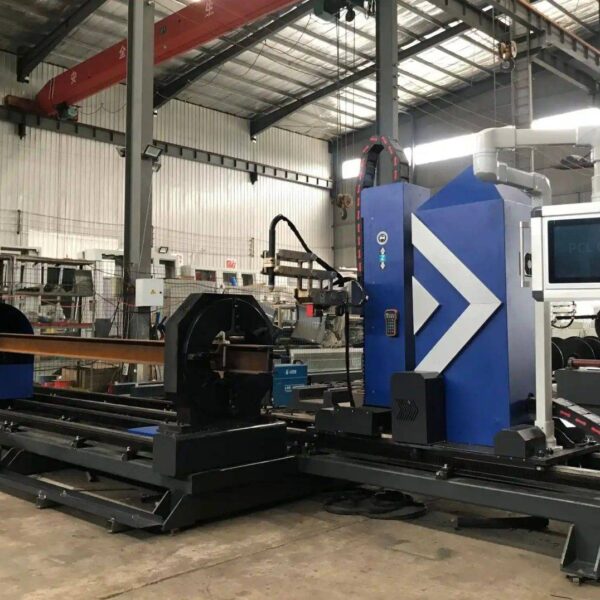
8 axis plasma cutting machine
-
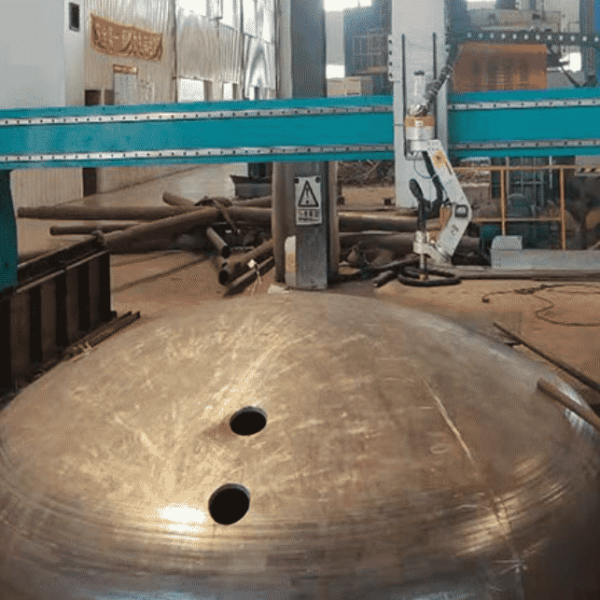
5 axis plasma cutting machine
-

LT360 tube laser cutting machine
-
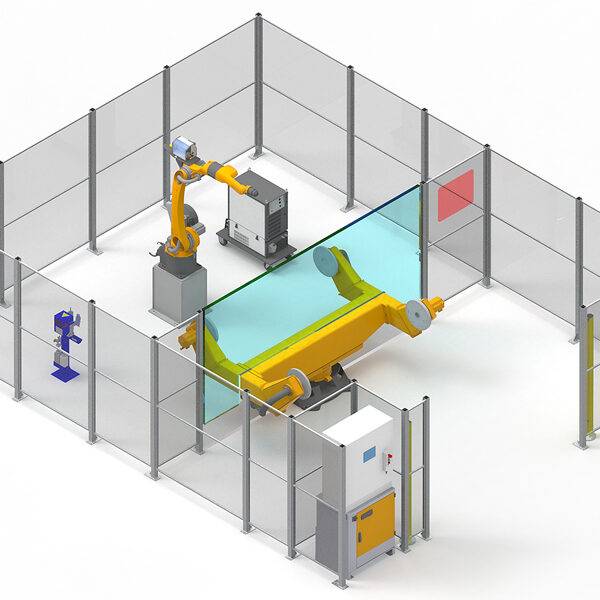
robot welding workstation
-
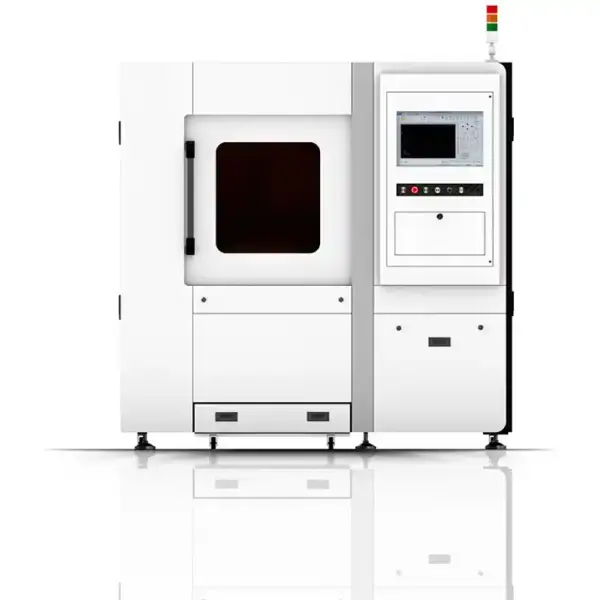
SF6060 fiber laser cutting machine
