Beam Processing Center with Narrow Gap welding for for Pressure Vessels
In this article
- Optimizing Pressure Vessel Fabrication via Plasma Beam Processing
- Intersection Accuracy in Complex Geometries
- High-Definition Plasma Arc Stability
- Maintenance Advantages of Plasma Systems for H-Beam Processing
- Precision Beveling for Narrow Gap Welding (NGW)
- Heat-Affected Zone (HAZ) Management
- Workflow Integration and ROI
Optimizing Pressure Vessel Fabrication via Plasma Beam Processing
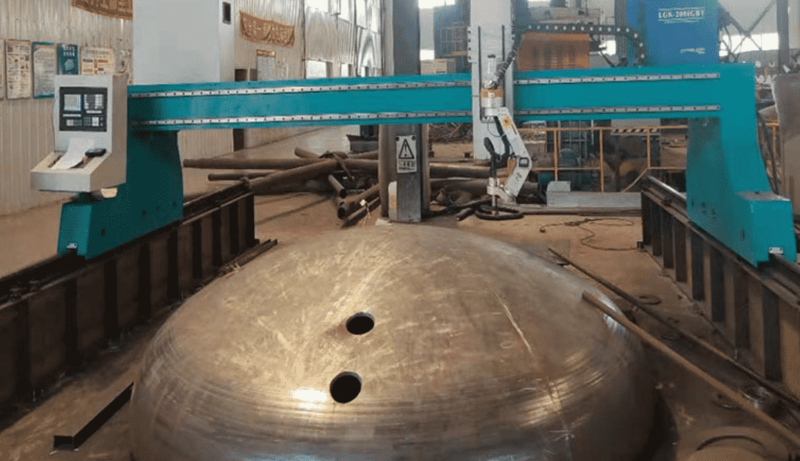
In the heavy fabrication sector, specifically regarding pressure vessel manufacturing, the transition from manual layout to automated Beam Processing Centers marks a significant shift in throughput and precision. These centers utilize sophisticated 3D profiling capabilities to handle both the structural H-beams used for vessel cradles and the primary cylindrical shells requiring nozzle penetrations. By centering the workflow around high-definition plasma technology, engineers can achieve the tight tolerances necessary for advanced joining techniques like Narrow Gap Welding (NGW).
Intersection Accuracy in Complex Geometries
The core challenge in pressure vessel construction lies in the precise fit-up of nozzles, manways, and reinforcing pads to the main shell. Traditional methods involve manual marking and hand-cutting, which often result in irregular gaps that must be managed during the welding phase. A beam processing center equipped with multi-axis plasma heads eliminates these variables through intersection accuracy driven by direct CAD-to-CAM integration.
The plasma torch, guided by 5-axis or 6-axis robotic arms, executes programmed paths that account for the curvature of the vessel shell. This ensures that the intersection profile—the “fishmouth” or “saddle” cut—matches the shell radius with sub-millimeter precision. When the cut is accurate, the subsequent fit-up requires minimal grinding or gap-filling. For heavy-wall vessels, where the shell thickness may exceed 50mm, maintaining a consistent root opening across the entire circumference of the intersection is paramount for preventing slag inclusions and ensuring full penetration in the subsequent weld passes.

High-Definition Plasma Arc Stability
Modern high-definition plasma systems utilize oxygen or nitrogen-water shield technologies to constrict the arc, increasing energy density. This constriction results in a narrower kerf and a cleaner edge finish. In a beam processing environment, arc stability translates directly to the repeatability of the cut. When processing the openings for large-diameter nozzles, the plasma system must maintain a constant standoff distance via high-speed torch height control (THC). This mechanical responsiveness prevents the torch from deviating due to shell imperfections, ensuring the intersection geometry remains true to the design specifications.
Maintenance Advantages of Plasma Systems for H-Beam Processing
Pressure vessels are rarely standalone units; they require robust structural frameworks, often composed of heavy H-beams or I-beams. The beam processing center serves a dual purpose by handling these structural components with high efficiency. One of the primary drivers for selecting plasma over alternative thermal cutting methods in these centers is the low maintenance profile relative to the output volume.
Unlike mechanical sawing or drilling lines that suffer from tool wear, or high-maintenance thermal alternatives that require sensitive optics and cleanroom-style environments, plasma systems are designed for the rugged atmosphere of a heavy fabrication shop. The primary wear items are limited to consumables—electrodes, nozzles, and swirl rings—which can be replaced in minutes without specialized calibration. For an industrial engineer, this minimizes “Mean Time to Repair” (MTTR) and ensures the beam line remains operational during peak production cycles.
H-Beam Durability and Throughput
Plasma-based beam centers are exceptionally resilient against the mill scale and surface rust commonly found on structural steel. The non-contact nature of Plasma Cutting means there is no mechanical stress on the machine frame during the cutting process. This leads to longer structural life for the processing center itself. Furthermore, the ability of plasma to perform “cope” cuts, bolt holes, and flange thinning in a single pass—without moving the workpiece to different stations—streamlines the fabrication of vessel supports and skids.
Precision Beveling for Narrow Gap Welding (NGW)
The adoption of Narrow Gap Welding (NGW) in pressure vessel manufacturing is a strategic move to reduce the volume of weld metal deposited, thereby lowering heat input and reducing the risk of distortion. However, NGW is highly sensitive to bevel consistency. The beam processing center must provide beveling precision that meets stringent NGW parameters, which typically feature narrow included angles (often between 1 and 7 degrees) and specific root face heights.
Plasma beveling heads on these centers are capable of producing V, Y, X, and K-cuts with high angular accuracy. By utilizing 3D profiling software, the plasma torch can vary the bevel angle dynamically along the cut path. This is particularly useful for nozzles entering a vessel at an angle (oblique nozzles), where the bevel must change constantly relative to the shell surface to maintain a uniform weld prep. This level of automation ensures that the NGW equipment can operate at optimal parameters without manual intervention to correct for fit-up errors.
Heat-Affected Zone (HAZ) Management
A common concern in heavy-wall vessel fabrication is the Heat-Affected Zone (HAZ) created by thermal cutting. High-definition plasma systems, through high travel speeds and optimized gas mixtures, significantly limit the duration of heat exposure to the base metal. The resulting HAZ is shallow, often requiring only minimal surface cleanup before welding. In the context of NGW, where the weld prep is narrow and deep, a clean, consistent edge is vital. The precision of the plasma bevel ensures that the first pass (the root pass) of the NGW process achieves consistent fusion without the risk of sidewall lack-of-fusion, which is a common failure mode in poorly prepared narrow-gap joints.
Workflow Integration and ROI
The integration of a plasma-based beam processing center into the pressure vessel production line offers a high Return on Investment (ROI) by consolidating multiple fabrication steps into a single automated cell. By removing the need for separate layout, cutting, and beveling stations, the engineer reduces material handling—a major source of hidden costs and safety risks in heavy manufacturing.
The data-driven nature of these centers allows for precise tracking of narrow gap welding preparation times. When the beam center delivers a perfectly beveled nozzle or a perfectly profiled shell opening, the welding station becomes a high-efficiency assembly point rather than a site for corrective metalwork. This predictability is essential for meeting the strict delivery schedules of the oil and gas, chemical processing, and power generation industries.
Summary of Technical Benefits
To summarize, the application of plasma cutting within a beam processing center for pressure vessel fabrication provides three core advantages:
1. Superior intersection accuracy for nozzles, reducing fit-up time and weld defects.
2. A low-maintenance, high-durability solution for structural H-beam fabrication, ensuring consistent uptime.
3. The high-precision beveling required to implement Narrow Gap Welding, which optimizes consumable usage and reduces total heat input into the vessel.
By focusing on the mechanical and thermal strengths of high-definition plasma, industrial engineers can create a fabrication environment that is both robust and capable of meeting the highest international standards for pressure vessel integrity.







