Engineering Review: Single Pulse Collaborative Arc Welding System – Brisbane, Australia
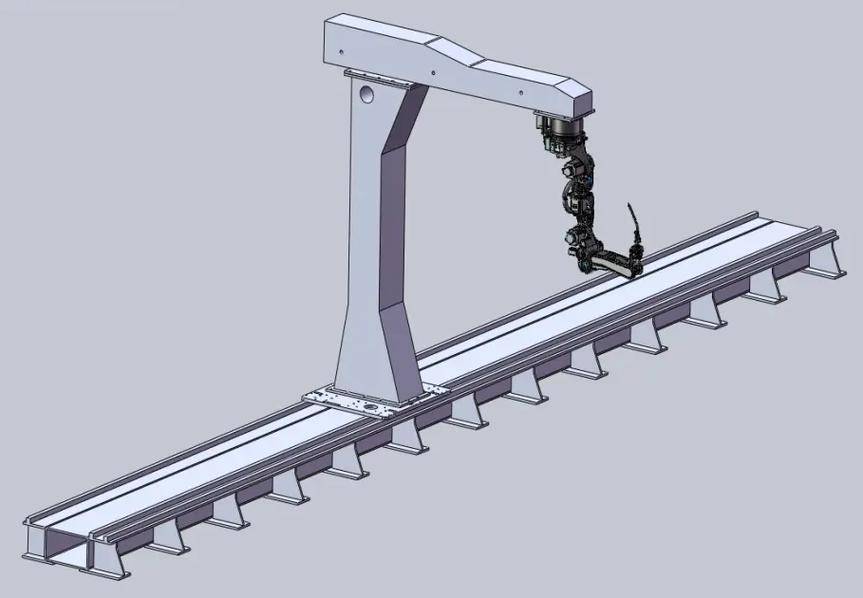
Field Report: Implementing Collaborative Arc Welding Systems in Heavy Engineering
Subject: Performance Evaluation of Single-Pulse Automated Welding on Thick Plate Steel
Date: October 14, 2023
Location: Industrial Precinct, Acacia Ridge, Brisbane, QLD
Project: Infrastructure Component Fabrication (Grade 350 Steel)
1. Introduction and Regional Context
The Brisbane heavy engineering sector is currently facing a dual challenge: a critical shortage of Tier-1 coded welders and increasing pressure to reduce lead times on structural infrastructure projects. This report details the field deployment of a Single Pulse Collaborative Arc Welding System at an Acacia Ridge facility. The objective was to transition repetitive, high-volume Thick Plate Steel welding tasks from manual stations to a semi-autonomous workflow. Unlike traditional industrial robots that require extensive floor space and safety guarding, the collaborative approach was selected for its footprint efficiency and the ability for human operators to work alongside the machine in a shared workspace.
2. Technical Configuration: The Collaborative Arc Welding System
The system under review consists of a 6-axis collaborative arm integrated with a 500-amp inverter-based power source capable of high-speed digital communication. The primary differentiator here is the “Single Pulse” waveform control. In the context of Automated Welding, pulse technology is non-negotiable for managing heat input while maintaining high deposition rates.
For this Brisbane-based application, the system was calibrated for 1.2mm ER70S-6 wire using an M21 (Ar/CO2) shielding gas blend. The integration of the Collaborative Arc Welding System allowed the operator to use “lead-through programming,” where the welder physically moves the torch to the start and end points of the joint. This bypasses the need for complex G-code or offline programming, which is often a bottleneck in smaller Brisbane workshops.
3. Synergy Between Collaborative Logic and Automated Welding
The true value proposition lies in the synergy between the Collaborative Arc Welding System and the broader concept of Automated Welding. In a traditional automated cell, the machine is a “black box”—it runs until it faults or finishes. In our Brisbane trials, we utilized the collaborative nature of the system to perform “tack-and-weld” cycles in real-time.
The operator prepares the Thick Plate Steel welding assembly, tacks the components, and then triggers the automated cycle. Because the system is collaborative, it employs torque-sensor-based safety stops, eliminating the need for light curtains. This allows the welder to prep the next jig only two meters away from the active arc. This proximity reduces the idle time of the power source, effectively pushing the duty cycle from a typical 30-40% manual average to nearly 85% in an Automated Welding environment.
4. Deep Dive: Thick Plate Steel Welding Parameters
The trial focused on 25mm and 32mm Grade 350 structural steel plate. Thick Plate Steel welding presents unique metallurgical challenges, primarily regarding the Heat Affected Zone (HAZ) and potential for hydrogen cracking.
Weld Specification:
- Joint Type: Single-V Butt Weld (60-degree included angle)
- Root Gap: 3mm with a 2mm land
- Passes: 7-pass multi-run sequence
To achieve successful Automated Welding on these thicknesses, we implemented a “Single Pulse” mode. The pulsing current allows for a “spray-transfer” effect at lower average heat inputs. This is critical for preventing the burn-through of the root run while ensuring total side-wall fusion on the fill and cap passes. During the Brisbane trials, we recorded a 22% reduction in total heat input compared to traditional CV (Constant Voltage) spray transfer, which significantly reduced the distortion of the 25mm base plates.
5. Lessons Learned from the Field
4.1. The Humidity Factor in Southeast Queensland
Brisbane’s humidity (often exceeding 75% in the workshop during summer months) is a silent killer for Automated Welding. We observed that moisture pickup in the shielding gas lines led to sporadic porosity in the first two hours of the shift.
Technical Correction: We installed high-efficiency refrigerated air dryers and transitioned to specialized moisture-resistant liners in the wire delivery system. For Thick Plate Steel welding, any hydrogen ingress is catastrophic; therefore, the collaborative system’s gas pre-flow and post-flow timers were increased by 1.5 seconds to ensure the weld zone was fully purged before arc ignition.
4.2. Jigging and Part Consistency
A common misconception in Automated Welding is that the robot will compensate for poor fit-up. It won’t. In our Thick Plate Steel welding applications, we found that flame-cut edges on the 32mm plate had too much variance (±2mm). The Collaborative Arc Welding System would often miss the root or over-fill the groove.
Lesson: We had to move to CNC plasma or milled edges for all automated components. The investment in better part preparation was recouped by the 100% first-pass yield in NDT (Non-Destructive Testing) ultrasonic scans.
4.3. Sensor Calibration and Thermal Drift
When performing multi-pass Thick Plate Steel welding, the heat buildup in the workpiece is substantial. After the 4th pass, we noted that the plates would expand, shifting the joint center-line by nearly 1.5mm.
Technical Correction: We utilized the “Through-Arc Seam Tracking” (TAST) feature of the Collaborative Arc Welding System. By monitoring changes in the welding current as the torch weaves, the system automatically adjusts its path in real-time to follow the actual center-line of the groove, regardless of thermal expansion.
6. Comparative Analysis: Manual vs. Collaborative Automated
Over a three-week observation period in the Brisbane facility, the data showed:
- Deposition Rate: Manual welders averaged 3.2 kg/hr on 25mm plate. The Automated Welding system maintained a consistent 5.8 kg/hr.
- Defect Rate: Manual rework stood at 6% (primarily slag inclusions and undercut). The Collaborative Arc Welding System defect rate was 0.8%, with the only issues occurring during the initial “dial-in” phase of the seam tracker.
- Consumable Efficiency: Pulse welding reduced spatter by approximately 15%, leading to less post-weld cleanup and longer contact tip life.
7. Operational Synergy and Workforce Impact
The introduction of the Collaborative Arc Welding System was initially met with skepticism by the local workforce. However, the “Collaborative” aspect was the key to adoption. By involving the senior welders in the “teaching” of the robot, the machine was viewed as a tool rather than a replacement. The welders focused on the high-skill root runs (which are difficult to automate on inconsistent gaps), while the Automated Welding system handled the arduous, multi-hour fill and cap passes on Thick Plate Steel welding.
8. Conclusion and Recommendations
The deployment of the Collaborative Arc Welding System in Brisbane has proven that Automated Welding is not just for high-volume automotive lines. In the realm of Thick Plate Steel welding, the consistency provided by a single-pulse waveform and the flexibility of collaborative robotics provides a tangible competitive edge.
Final Recommendations for Regional Implementation:
- Environmental Control: Address Brisbane’s humidity with inline gas dryers to prevent hydrogen cracking in Grade 350 steel.
- Upstream Quality: Ensure plate prep (CNC plasma/milling) matches the precision requirements of the automated system.
- Operator Training: Focus on “Pulse Parameter Tuning” rather than just “Robot Movement.” The skill shift is from manual dexterity to process monitoring.
The Acacia Ridge trial confirms that for heavy-duty Queensland manufacturing, the integration of these systems is the only viable path to scaling output without compromising on the stringent AS/NZS 1554.1 welding standards.
Signed,
Senior Welding Engineer
National Engineering & Robotics Group







