Field Commissioning Report: Integrated Laser Welding Cobot Implementation
Project Overview and Site Specifics: Bangkok, Thailand
This report details the field deployment and optimization of a Precision Laser Welding Cobot at a Tier-2 automotive component facility located in the Samut Prakan district, Bangkok. The primary objective was to transition from manual Gas Metal Arc Welding (GMAW) to an automated system capable of handling high-volume Mild Steel welding with minimal post-weld processing. In the humid, high-ambient temperature environment of a non-climate-controlled Bangkok workshop, the stability of Laser Technology faces unique challenges that manual processes ignore, but automated systems must account for.
The transition to a Laser Welding Cobot was driven by the local scarcity of Grade-A certified welders and the increasing demand for aesthetic, low-distortion joints on thin-gauge mild steel assemblies. Our focus was to synthesize the precision of 1.5kW fiber laser sources with the flexibility of a 6-axis collaborative arm, ensuring the system could be re-tasked across different production lines with minimal downtime.
The Synergy: Laser Technology Meets Collaborative Automation
Redefining the Workflow with a Laser Welding Cobot
In a traditional Bangkok shop floor setting, automation usually implies heavy industrial robots behind light curtains. However, the Laser Welding Cobot changes the footprint requirement. By integrating Laser Technology into a collaborative framework, we allowed operators to work in closer proximity to the cell (utilizing appropriate Class 4 laser safety enclosures), focusing on jig loading while the cobot handles the torch path.
The synergy here is technical: the cobot provides the “hand-eye coordination” through high-resolution encoders, while the Laser Technology provides the concentrated energy density required for deep penetration with minimal heat input. Unlike traditional welding, where the operator must manage the arc length and travel speed simultaneously, the cobot maintains a consistent 120mm focal length. In our testing on 2.0mm mild steel, this consistency reduced the Heat Affected Zone (HAZ) by 65% compared to manual MIG welding.
Environmental Factors in Thailand
One cannot discuss Laser Technology in Bangkok without addressing the environmental “Lessons Learned.” The high relative humidity (often exceeding 80%) poses a significant risk of condensation on the protective windows and the internal optics of the laser head. During the first week of commissioning, we observed beam instability caused by microscopic moisture accumulation in the gas lines. Lesson Learned: We implemented a dual-stage refrigerated air dryer and high-purity Nitrogen (99.999%) shielding gas specifically to purge the optical path. For any engineer deploying a Laser Welding Cobot in Southeast Asia, environmental stabilization is not optional; it is a prerequisite for weld consistency.
Technical Deep-Dive: Mild Steel Welding Performance
Optimizing for Mild Steel
Mild Steel welding is often perceived as forgiving, but when utilizing Laser Technology, the material’s surface condition becomes critical. In the Bangkok facility, we dealt with hot-rolled mild steel exhibiting light oil coatings for corrosion resistance. A primary challenge with the Laser Welding Cobot was the initial outgassing of these oils, which caused porosity in the weld bead.
To solve this, we utilized the “Wobble” function—a high-frequency oscillation of the laser beam. By seting a 2.0mm circular wobble at 150Hz, we effectively “stirred” the molten pool, allowing gases to escape before solidification. This technique, facilitated by the cobot’s steady travel speed of 25mm/s, produced a “stacked dimes” aesthetic previously thought impossible on mild steel without specialized TIG expertise.
Heat Input and Distortion Control
The core advantage of the Laser Welding Cobot in this application was the drastic reduction in rework. On a 1200mm longitudinal seam of 1.5mm mild steel, manual GMAW typically resulted in a 4mm bow across the workpiece due to thermal expansion. By utilizing the concentrated power of Laser Technology, we achieved full penetration with a 0.8mm weld width. The total heat input was calculated at roughly 15% of the traditional arc welding equivalent. Consequently, the bowing was reduced to less than 0.5mm, eliminating the need for post-weld hydraulic straightening—a massive labor save for the facility.
Operational Challenges and Engineering Solutions
The Fit-Up Bottleneck
The most significant “Lesson Learned” regarding the Laser Welding Cobot is the intolerance for poor fit-up. While a manual welder can “bridge” a 2mm gap on Mild Steel welding by weaving the torch, Laser Technology is unforgiving. If the beam hits a gap larger than 10% of the material thickness, it simply passes through without creating a join.
We spent three days re-tooling the client’s jigs. In Bangkok, where manual shearing and bending are common, the tolerances were often ±1.5mm. We had to upgrade their upstream process to CNC laser cutting and precision bending to ensure a gap of <0.2mm. Engineering takeaway: You do not just buy a Laser Welding Cobot; you must buy into a precision manufacturing ecosystem. The cobot is only as good as the edge preparation of the mild steel it is tasked to join.
Wire Feed Integration
To compensate for occasional fit-up variations, we integrated an automated wire feeder into the Laser Welding Cobot. Using 0.8mm ER70S-6 wire, we synchronized the wire feed speed with the cobot’s linear velocity. This “CMT-like” control (Cold Metal Transfer) allowed us to add filler metal precisely where needed, reinforcing the throat of the weld without increasing the HAZ. The synergy between the wire feeder and the laser’s power modulation (pulsing at 2kHz) allowed for superior control over the weld pool chemistry, especially when dealing with the slightly higher carbon content found in some locally sourced Thai mild steel batches.
Human-Machine Interface and Training
Upskilling the Local Workforce
A senior engineer’s duty includes the human element. In the Bangkok plant, there was initial resistance from the shop floor, fearing that Laser Technology would replace jobs. However, the “Collaborative” aspect of the Laser Welding Cobot proved to be a bridge. We trained three manual welders to become “Cobot Operators.”
Because the cobot uses a “Lead-through” teaching method—where the operator physically moves the arm to the start and end points—the transition was intuitive. Within 48 hours, a welder who had never touched a line of code was programming complex paths for Mild Steel welding. The cobot handled the high-heat, high-radiation task, while the human provided the situational awareness and quality oversight. This shift from “welder” to “technician” has significantly improved morale and reduced turnover at the site.
Conclusion: The Future of Fabrication in Bangkok
Key Performance Indicators (KPIs)
After thirty days of field operation, the data for the Laser Welding Cobot implementation is conclusive:
- Production Speed: 4x increase compared to manual GMAW on mild steel.
- Consumables: 60% reduction in shielding gas usage due to higher travel speeds and more efficient nozzle design.
- Quality: Rejection rate dropped from 8% to 0.4%, with the remaining errors attributed to upstream material defects rather than the welding process itself.
Final Engineering Summary
The deployment of Laser Technology via a collaborative platform represents the logical evolution for Bangkok’s manufacturing sector. While the initial capital expenditure is higher than traditional rigs, the ROI is realized through the elimination of post-weld grinding and straightening. For Mild Steel welding, the Laser Welding Cobot is no longer a luxury; it is a necessity for shops aiming to compete in the global automotive and electronics supply chains.
Final Note: Always keep an eye on the chiller’s dew point settings in the Bangkok heat. If the optics sweat, the laser dies. Keep the gas dry, the fit-up tight, and the cobot will outperform any manual process ten-to-one.
-


LT240S tube laser cutting machine
-
LT120S tube laser cutting machine
-
Sale

Tank Fillet Welding Machine
Original price was: $1,000.00.$900.00Current price is: $900.00. -
Sale

MAK100 tube laser cutting machine
Original price was: $5,500.00.$5,000.00Current price is: $5,000.00. -

portable plasma air cutting machine
$1,200.00 -

2in1 fiber laser cutting machine
-

Air cooling Laser welding machine
-

HF h beam laser cutting machine
-

LT240 laser cutting machine
-

Laser welding machine
-


Cobot Welding Station
-

Gantry welding robot solution
-

Tracked Wheeled AGV Welding robot
-

LFH6020 Fiber laser cutting machine
-
LFP6020
-

robotic welidng machine
Advanced Fiber Laser Tube Processing Technology
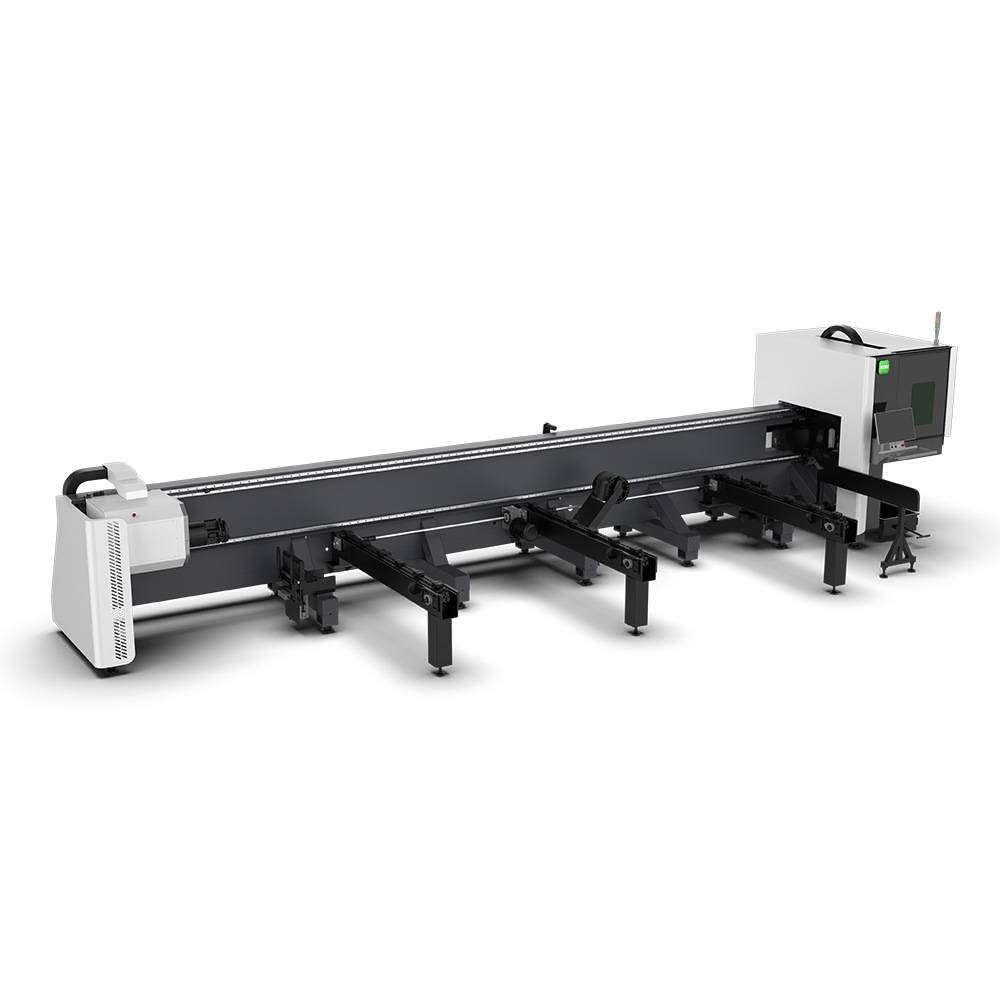
Our CNC Fiber Laser Tube Cutting systems revolutionize metal fabrication by integrating high-precision cutting, punching, and profiling into a single automated workflow. Designed for versatility, this technology handles a wide array of profiles including Round, Square, Rectangular, and Oval tubes, as well as complex L-shaped and U-shaped channels.
- Precision Punching: High-speed hole punching with micron-level accuracy, eliminating the need for mechanical drilling or die-stamping.
- Complex Profiling: Advanced 3D pathing allows for intricate interlocking joints and specialized notch cuts, ideal for structural frames.
- High Material Efficiency: Intelligent nesting software minimizes scrap, reducing raw material costs across large production runs.
- Clean Finish: Delivers oxide-free, burr-free edges that require zero secondary grinding before welding.

Seamlessly processing multiple profiles with consistent precision.
Global Delivery & Logistics



From our high-tech manufacturing facility directly to your global site. PCL WeldCut ensures secure packaging, professional handling, and reliable international logistics to safeguard your equipment throughout the entire journey.