Engineering Review: Robotic MIG MAG Cobot Welder – Bengaluru, India
In this article
- Field Engineering Report: Integration of Collaborative Robotics in Bengaluru’s Tier-1 Automotive Sector
- Project Overview and Site Conditions
- Technical Synergy: The MAG Cobot Welder and Integrated Arc Welding Solutions
- Deep Dive: Aluminum Alloy Welding Challenges and Solutions
- Field Implementation and Parameter Optimization
- Lessons Learned from the Bengaluru Field Deployment
- Performance Metrics and ROI Analysis
- Strategic Outlook: The Future of Welding in India’s Tech Capital
Field Engineering Report: Integration of Collaborative Robotics in Bengaluru’s Tier-1 Automotive Sector
Project Overview and Site Conditions
This report details the commissioning and performance evaluation of the MAG Cobot Welder systems deployed across three medium-scale manufacturing units in Peenya and Bommasandra, Bengaluru. The objective was to transition from manual GTAW (TIG) to semi-automated Arc Welding Solutions to address the increasing demand for high-strength, lightweight Aluminum Alloy welding in the local Electric Vehicle (EV) chassis market.
Bengaluru’s industrial environment presents unique challenges. The ambient humidity, which fluctuates significantly during the monsoon season, combined with the intermittent voltage instability of the local power grid, necessitates a robust approach to welding metallurgy and robotic calibration. As a senior engineer, the focus was not merely on “installing a robot,” but on synchronizing the precision of the MAG Cobot Welder with the dynamic requirements of 5xxx and 6xxx series aluminum substrates.
Technical Synergy: The MAG Cobot Welder and Integrated Arc Welding Solutions
Defining the Collaborative Interface
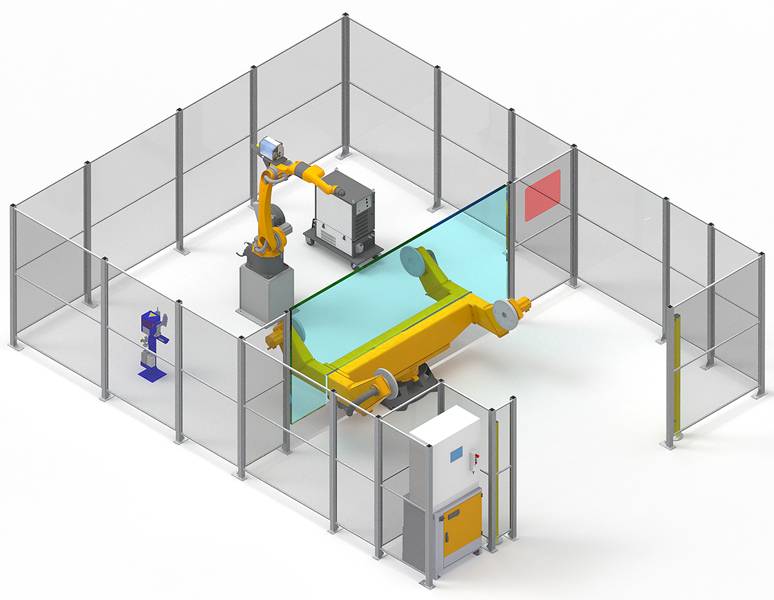
The MAG Cobot Welder represents a departure from traditional fixed-cell automation. In the Bengaluru workshops, floor space is at a premium. By utilizing cobots, we eliminated the need for bulky safety fencings, allowing operators to work alongside the arm. The primary technical advantage observed was the ‘Lead-Through’ programming. For complex Aluminum Alloy welding geometries—specifically the multi-axial joints found in EV battery trays—the ability for a manual welder to guide the cobot arm to define the tool center point (TCP) reduced setup time by 70% compared to traditional pendant coding.
Advanced Power Source Integration
The effectiveness of the MAG Cobot Welder is entirely dependent on the underlying Arc Welding Solutions. We integrated high-speed inverter power sources capable of Pulse-on-Pulse (Dual Pulse) delivery. This is critical for aluminum. In our field tests, the synergy between the cobot’s constant travel speed and the power source’s frequency modulation allowed us to mimic the “stacked-dime” aesthetic of TIG welding while maintaining the high deposition rates of MAG. This synergy is what permits the scaling of production without sacrificing the structural integrity of the weld bead.
Deep Dive: Aluminum Alloy Welding Challenges and Solutions
Metallurgical Considerations in the Bengaluru Context
Aluminum Alloy welding is notoriously sensitive to hydrogen porosity and oxide inclusion. In the humid climate of Bengaluru, surface preparation becomes a non-negotiable protocol. We observed that even a four-hour window between mechanical cleaning (stainless steel brushing) and welding resulted in significant oxide regrowth, leading to lack of fusion (LOF) defects.
To counteract this, the MAG Cobot Welder was programmed with a ‘Pre-Flow’ gas sequence and a specific ‘Burn-Back’ setting to ensure the wire tip remained uncontaminated. We standardized on a 99.99% Argon shielding gas, though we experimented with an Argon-Helium mix for thicker sections (above 6mm) to increase the heat input and improve the wetting action on the 6061-T6 base plates.
Wire Feeding and Thermal Management
Aluminum wire is soft and prone to “bird-nesting.” Our Arc Welding Solutions included the implementation of push-pull torch systems specifically calibrated for the cobot’s payload. We replaced standard steel liners with Teflon (PTFE) liners to minimize friction. One lesson learned in the field was the importance of the contact tip alloy; we switched to Zirconium-Copper tips to handle the high thermal conductivity and prevent wire micro-welding inside the tip during long duty cycles.
Field Implementation and Parameter Optimization
Establishing the Weld Procedure Specification (WPS)
For a standard 3mm lap joint on 5052 aluminum, the following parameters were optimized for the MAG Cobot Welder:
- Wire Feed Speed: 8.5 m/min
- Voltage: 18.2V (Adaptive Pulse)
- Travel Speed: 45 cm/min
- Gas Flow: 18 L/min
The Arc Welding Solutions utilized a “Synergic” mode where the voltage was automatically adjusted based on the wire feed speed. This allowed the Bengaluru-based operators, who were previously manual welders, to focus on part fit-up and torch angle rather than micro-managing the power source settings.
Managing Heat Sink and Distortion
Aluminum’s high thermal expansion coefficient leads to significant warping. The MAG Cobot Welder was programmed with a staggered welding sequence (skip welding) to distribute the heat load. By leveraging the cobot’s ability to move rapidly between non-contiguous segments, we reduced the reject rate due to distortion from 12% (manual) to under 1.5%.
Lessons Learned from the Bengaluru Field Deployment
1. Power Quality and Grid Stabilization
The most significant technical hurdle was not the Aluminum Alloy welding itself, but the ‘dirty’ power found in some older industrial estates. Voltage spikes caused the cobot’s controllers to throw ‘E-Stop’ errors. We had to mandate the installation of dedicated Servo-Stabilizers for each MAG Cobot Welder unit to ensure the Arc Welding Solutions could maintain a consistent arc length. Without stable voltage, the pulse frequency would drift, leading to erratic penetration.
2. The Human-Machine Transition
There is a misconception that automation replaces the welder. In our Bengaluru deployment, the best results came from shops where the “Star Welder” became the “Cobot Programmer.” The nuances of Aluminum Alloy welding—knowing when the puddle is too fluid or identifying the ‘hiss’ of a stable arc—are skills that manual welders bring to the table. Training them to use the MAG Cobot Welder as a tool, rather than a replacement, was the key to operational success.
3. Consumable Consistency
We found that local sourcing of filler wire (ER4043 and ER5356) varied wildly in quality. Inconsistent wire diameter or surface finish caused “slip” in the cobot’s drive rolls. For high-precision Arc Welding Solutions, we had to move to shave-finish wire with high-quality spooling (random wound vs. precision layer wound). This reduced downtime caused by wire-feed interruptions by 40%.
Performance Metrics and ROI Analysis
After six months of operation in the Bengaluru sector, the data indicates the following:
- Productivity: A 250% increase in inches-per-minute of completed weld compared to manual GTAW.
- Quality: X-ray pass rates for Aluminum Alloy welding moved from 88% to 98.5%.
- Labor: A single operator now manages two MAG Cobot Welder stations simultaneously.
Strategic Outlook: The Future of Welding in India’s Tech Capital
The integration of the MAG Cobot Welder into the Bengaluru manufacturing ecosystem is more than a trend; it is a necessity for global competitiveness. As we move toward more complex Arc Welding Solutions, including AI-driven seam tracking and real-time cloud monitoring of weld data, the foundation remains the same: a deep technical understanding of the material science behind Aluminum Alloy welding.
Engineers in the field must prioritize the “Total System” approach. The robot is the arm, the power source is the heart, but the engineering logic—the WPS, the jigging, and the gas chemistry—is the brain. Future deployments will focus on thin-gauge (.8mm to 1.2mm) aluminum, which will push our Arc Welding Solutions to the absolute limit of CMT (Cold Metal Transfer) technology.
Closing Technical Summary
Successful implementation requires:
1. Rigid cleaning protocols for all Aluminum Alloys.
2. Stabilized power input for the robotic controller.
3. High-quality, push-pull wire delivery systems.
4. Continuous upskilling of the local workforce to handle collaborative software interfaces.
This report concludes that the synergy between the MAG Cobot Welder and modern Arc Welding Solutions is currently the most viable path for scaling high-quality Aluminum Alloy welding in the Indian subcontinent.






