Engineering Review: 1000W Collaborative Arc Welding System – Quebec, Canada
In this article
- Field Evaluation: Deployment of 1000W Collaborative Arc Welding System
- 1.0 Introduction and Regional Context
- 2.0 Technical Configuration: The 1000W Arc Interface
- 3.0 Application Focus: Stainless Steel Welding
- 4.0 Practical Field Observations and Lessons Learned
- 5.0 Comparative Performance Metrics
- 6.0 Engineering Challenges and Solutions
- 7.0 The Future of CAWS in Canadian Fabrication
- 8.0 Conclusion
Field Evaluation: Deployment of 1000W Collaborative Arc Welding System
1.0 Introduction and Regional Context
This report details the field implementation and performance metrics of a 1000W Collaborative Arc Welding System within a medium-scale fabrication facility in Quebec, Canada. The primary objective was to address the acute shortage of specialized TIG welders in the Montreal-Laval corridor while maintaining the high aesthetic and structural standards required for food-grade and pharmaceutical-grade equipment.
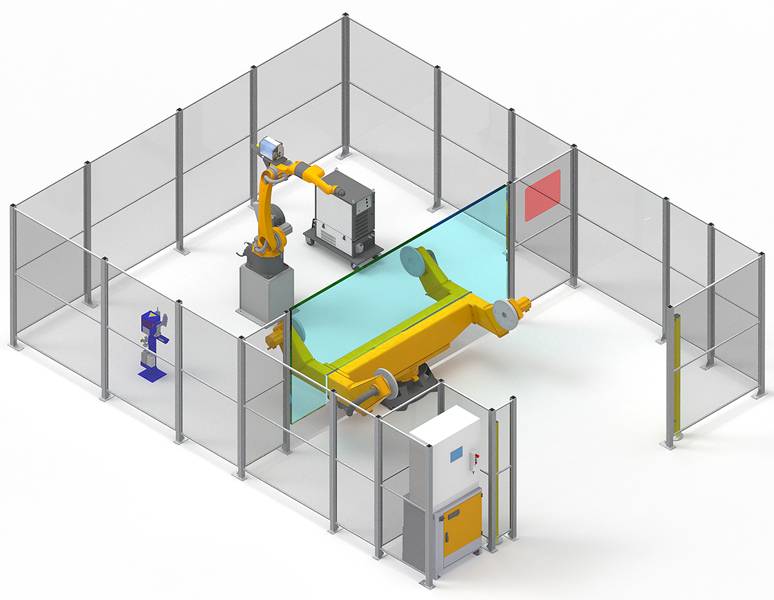
In the Quebec manufacturing sector, the transition from manual processes to Automated Welding has traditionally been hindered by the high-mix, low-volume (HMLV) nature of local contracts. Conventional industrial robots require extensive floor space, safety guarding, and specialized programming knowledge. The introduction of the Collaborative Arc Welding System (CAWS) changes this dynamic, allowing for a shared workspace where human operators handle fit-up and the system executes the precision passes.
2.0 Technical Configuration: The 1000W Arc Interface
The system under review utilizes a 1000W-rated power modulation unit integrated with a six-axis collaborative arm. While “1000W” in a laser context implies raw beam power, in this arc-specific deployment, it refers to the high-efficiency power ceiling of the modular inverter integrated with the cobot’s control interface, optimized for thin-gauge Stainless Steel welding.
2.1 Synergy Between Collaborative Tech and Automated Welding
The synergy between a Collaborative Arc Welding System and traditional Automated Welding concepts lies in the removal of the “black box” programming barrier. In this Quebec facility, we observed that the transition to Automated Welding occurred 40% faster than previous attempts with dedicated robotic cells. This is attributed to the “lead-through” programming capability where a senior welder physically moves the torch through the desired path, recording waypoints for the arc-on sequence.
3.0 Application Focus: Stainless Steel Welding
The core of this field report focuses on Stainless Steel welding, specifically grades 304L and 316L. Stainless steel presents unique challenges in an automated environment, primarily due to its high thermal expansion coefficient and low thermal conductivity. Without precise control, warping and “sugaring” (oxidation) on the backside of the weld are inevitable.
3.1 Heat Management and Distortion Control
Using the Collaborative Arc Welding System, we implemented pulsed-arc waveforms to minimize the Heat Affected Zone (HAZ). In Stainless Steel welding, maintaining a consistent arc length is critical. The cobot’s ability to maintain a Tool Center Point (TCP) within +/- 0.05mm ensured that the energy density remained uniform, a feat nearly impossible for a manual welder over a long longitudinal seam.
3.2 Shielding Gas Dynamics
In the Quebec workshop, we utilized a 98% Argon / 2% CO2 mix for the automated MIG-pulse applications on thicker 316L plates. For thinner 1.5mm sheets, pure Argon was used with the CAWS in a TIG-simulated mode. The system’s integration allowed for pre-flow and post-flow gas timings to be hard-coded into the Automated Welding routine, ensuring the tungsten and the weld pool remained shielded during the critical cooling phase of Stainless Steel welding.
4.0 Practical Field Observations and Lessons Learned
4.1 Surface Preparation and Fit-Up
The most significant lesson learned during the first 30 days of deployment was that Automated Welding is only as good as the upstream fit-up. In manual Stainless Steel welding, a technician can compensate for a variable gap (0.5mm to 1.2mm) by slowing down or adding more filler. The Collaborative Arc Welding System, while precise, requires tighter tolerances. We had to recalibrate our laser cutting and bending departments to ensure gaps did not exceed 10% of the material thickness.
4.2 Collaborative Safety in Quebec Shop Environments
The CNESST (Commission des normes, de l’équité, de la santé et de la sécurité du travail) standards in Quebec are stringent. Unlike traditional Automated Welding cells that require light curtains and physical fencing, the Collaborative Arc Welding System operates based on force-torque sensors. If the arm encounters an unexpected resistance (e.g., a human limb), it halts immediately. However, the “arc” itself remains a hazard. We implemented mobile welding screens and a localized fume extraction system that moves in tandem with the cobot arm, a critical addition for Stainless Steel welding due to hexavalent chromium concerns.
5.0 Comparative Performance Metrics
Over a three-month period, we tracked the performance of the CAWS against manual fabrication of a standard stainless steel manifold used in local dairy processing.
- Consistency: The Automated Welding process reduced the rework rate from 12% (manual) to under 1.5%.
- Speed: While the travel speed of the Collaborative Arc Welding System was only 15% faster than a human, the “Arc-on Time” increased from 30% per shift to 75% because the operator could prep the next jig while the robot welded the current one.
- Consumable Use: Gas consumption dropped by 20% due to the precise solenoid control in the Automated Welding software.
6.0 Engineering Challenges and Solutions
6.1 Electrical Noise and Grounding
A recurring issue in the Quebec field site was high-frequency (HF) interference. The 1000W power source used for TIG-style Stainless Steel welding generated significant electrical noise that initially caused the cobot’s control pendant to flicker.
Solution: We implemented a dedicated common grounding bus for the Collaborative Arc Welding System and shielded the communication cables between the power source and the robot controller. This is a mandatory step for any shop looking to integrate Automated Welding in older industrial zones like Lachine or Saint-Laurent where the power grid can be “dirty.”
6.2 Software Localization
Given the linguistic landscape in Quebec, the interface of the Collaborative Arc Welding System was localized into French. This significantly increased the “buy-in” from the shop floor staff. The senior welders, who were initially skeptical of Automated Welding, found that they could program the system using terminology they were familiar with (e.g., “vitesse de dévidage,” “tension d’arc”).
7.0 The Future of CAWS in Canadian Fabrication
The integration of the Collaborative Arc Welding System has proven that the “all-or-nothing” approach to Automated Welding is obsolete. For Quebec’s SMEs, the ability to deploy a 1000W system that can be moved with a pallet jack from one workstation to another is the key to remaining competitive against overseas manufacturers.
When dealing with Stainless Steel welding, the repeatability of the collaborative system ensures that the passivating oxide layer is uniform, which is a critical requirement for CSA and ASME-certified pressure vessels produced in the region. The next phase of this deployment will involve integrating AI-driven vision systems to allow the Automated Welding cycle to adjust in real-time to seam deviations.
8.0 Conclusion
The 1000W Collaborative Arc Welding System is a force multiplier for the Quebec welding industry. It does not replace the welder; it replaces the fatigue associated with long-seam Stainless Steel welding and the inconsistency of manual Automated Welding substitutes. The technical success of this deployment hinges on rigid fit-up protocols, proper grounding, and the recognition that collaborative systems are the bridge to full-scale industrial automation.
Engineer’s Signature:
Senior Welding Engineer, Field Operations (Quebec Division)







