Field Evaluation: Deployment of Air-Cooled MAG Cobot Welder in Istanbul Fabrication Hubs
This report details the technical implementation and performance validation of a collaborative robotic system at a medium-scale fabrication facility in the İkitelli Industrial Zone, Istanbul. The primary objective was the transition of repetitive Structural Steel welding tasks from manual operations to an automated MAG Cobot Welder platform. As the industry in Turkey shifts toward high-precision exports for the European market, the demand for integrated Arc Welding Solutions that require minimal footprint and high adaptability has reached a critical inflection point.
The site environment presented typical challenges for an Istanbul workshop: fluctuating ambient temperatures, high humidity due to Bosphorus proximity, and a workforce highly skilled in manual techniques but skeptical of robotic intervention. The following sections outline the hardware synergy, the technical hurdles of air-cooled systems, and the practical output of the MAG process on S355 structural grades.
Synergy Between the MAG Cobot Welder and Arc Welding Solutions
The successful deployment of a MAG Cobot Welder is not merely an exercise in mounting a torch to a robotic arm; it is the integration of high-level Arc Welding Solutions that bridge the gap between software-defined pathing and metallurgical reality. In this specific field application, we utilized a 10kg payload cobot integrated with a synergic power source capable of rapid pulsed-MAG configurations.
The “synergy” here refers to the communication loop between the cobot’s motion controller and the welding inverter. In Structural Steel welding, particularly when dealing with the heavy plates (10mm to 20mm) common in Turkish construction sectors, the arc must compensate for variations in part fit-up. The integrated Arc Welding Solutions we deployed allowed for “Touch Sensing” and “Seam Tracking” via through-arc current monitoring. This meant the MAG Cobot Welder could detect the actual position of the fillet joint and adjust its path in real-time, accounting for the slight thermal distortions inherent in S355 steel.
In the Istanbul workshop, this synergy reduced the jigging requirements by 40%. Traditionally, robotic welding requires expensive, high-tolerance fixtures. By leveraging the adaptive capabilities of modern Arc Welding Solutions, we were able to use standard modular clamping tables, making the cobot economically viable for small-batch structural components.
Technical Deep-Dive: Air-Cooled Constraints in Structural Steel Welding
A significant point of contention during the planning phase was the choice of an air-cooled torch over a water-cooled variant. In the context of Structural Steel welding, heat is the enemy of duty cycle. However, for a MAG Cobot Welder, an air-cooled system offers a lighter payload and eliminates the maintenance complexities of water chillers and potential coolant leaks—a common failure point in rugged shop environments.
Duty Cycle and Thermal Management
The air-cooled torch used in this Istanbul field test was rated at 350A at a 60% duty cycle using CO2, and approximately 300A using an Ar/CO2 mix (80/20). During the fabrication of heavy gusset plates, we pushed the MAG Cobot Welder to its thermal limits. We observed that after 15 minutes of continuous welding at 280A (spray transfer mode), the torch neck temperature exceeded 180°C.
The lesson learned here is that while Arc Welding Solutions provide the software to run 24/7, the hardware of an air-cooled system dictates a “pulsed” workflow. To mitigate overheating without switching to water-cooling, we optimized the welding sequence. By programming the cobot to jump between non-adjacent joints, we allowed the torch to air-cool during air-movements. This “thermal-conscious pathing” is a critical skill for any engineer deploying a MAG Cobot Welder in a high-production structural environment.
Gas Coverage and Istanbul’s Micro-Climate
Istanbul’s humidity, which often fluctuates between 60% and 85% near the ports, affects the ionization of the arc. We found that the air-cooled nozzle design was more susceptible to spatter buildup than anticipated. When spatter accumulates in an air-cooled nozzle, it disrupts the laminar flow of the shielding gas, leading to porosity in the Structural Steel welding. We implemented an automated reamer station that the cobot visits every five cycles. This integration into the broader Arc Welding Solutions package ensured that gas coverage remained consistent despite the atmospheric conditions.
Practical Application: Executing Multi-Pass Fillet Welds
The core of the project involved the fabrication of I-beam stiffeners. This required consistent 8mm fillet welds. Traditionally, a manual welder in this shop would execute this in a single, heavy pass using a weaving technique. However, for the MAG Cobot Welder, we opted for a multi-pass strategy (3 passes: 1 root, 2 covers) to manage the heat input and ensure grain refinement in the Heat Affected Zone (HAZ).
Parameter Optimization
For the S355 structural steel, we utilized a 1.2mm G3Si1 (ER70S-6) wire. The Arc Welding Solutions software allowed us to define specific “Job Profiles” for the MAG Cobot Welder:
- Root Pass: 240A, 26V, Travel Speed: 35 cm/min. Short-arc transfer to ensure deep penetration.
- Cover Passes: 210A, 24V, Travel Speed: 45 cm/min with a slight 2Hz oscillation (weave) to ensure sidewall fusion.
The result was a weld profile with zero undercut—a common defect in manual Structural Steel welding when the operator fatigues. The cobot’s ability to maintain a constant torch angle (Work Angle: 45°, Travel Angle: 5° push) over a 2-meter span is where the MAG Cobot Welder truly earns its ROI.
Lessons Learned and Engineering Observations
After three months of operation on the Istanbul floor, several “real-world” insights surfaced that aren’t found in the manufacturer’s manuals. These are vital for any senior engineer overseeing the integration of Arc Welding Solutions.
1. The “Human-Cobot” Interface Friction
The most significant hurdle wasn’t the MAG Cobot Welder itself, but the upstream preparation. Structural Steel welding via automation demands cleaner base material. Manual welders can “burn through” mill scale or light rust; the cobot cannot. We had to implement a mandatory mechanical cleaning step (flap-disc grinding) to ensure the Arc Welding Solutions performed as intended. This added 5 minutes to prep time but saved 30 minutes in rework.
2. Cable Management in Air-Cooled Systems
Air-cooled torches have stiffer power cables because they rely on larger copper cross-sections to carry the current without internal liquid cooling. In Istanbul, where shop space is often tight and cobots are moved frequently, these cables are prone to torsional fatigue. We learned that the cable dress pack must have at least 30% more slack than calculated to prevent the MAG Cobot Welder from triggering “Joint Torque” alarms during complex maneuvers.
3. Consumable Consistency
The local supply chain for 1.2mm wire in Turkey is robust (Gedik, Oerlikon, etc.), but batch-to-batch consistency in wire chemistry can affect the “Synergic” curves of the Arc Welding Solutions. We found that a change in wire manufacturer required a recalibration of the arc voltage trim. Engineers should lock in a single consumable supplier once the MAG Cobot Welder parameters are finalized for a specific Structural Steel welding contract.
Conclusion: The Future of Turkish Steel Fabrication
The deployment of the MAG Cobot Welder in Istanbul demonstrates that Arc Welding Solutions are now mature enough to handle the rigors of Structural Steel welding without the need for high-level robotic programming expertise. The air-cooled approach, while requiring careful thermal management and duty-cycle monitoring, proves more than adequate for the majority of architectural and structural tasks when combined with intelligent sequencing.
As we move forward, the focus must remain on the “synergy” between the operator and the machine. The cobot does not replace the welder; it replaces the torch-holder. The welder’s expertise is redirected toward optimizing the Arc Welding Solutions parameters and ensuring fit-up quality. This field report confirms that for the Turkish industrial landscape, the flexibility of the cobot is the most viable path toward modernizing heavy fabrication.
End of Report
Ref: IST-ENG-2024-089
-


LT240S tube laser cutting machine
-
LT120S tube laser cutting machine
-
Sale

Tank Fillet Welding Machine
Original price was: $1,000.00.$900.00Current price is: $900.00. -
Sale

MAK100 tube laser cutting machine
Original price was: $5,500.00.$5,000.00Current price is: $5,000.00. -

portable plasma air cutting machine
$1,200.00 -

2in1 fiber laser cutting machine
-

Air cooling Laser welding machine
-

HF h beam laser cutting machine
-

LT240 laser cutting machine
-

Laser welding machine
-


Cobot Welding Station
-

Gantry welding robot solution
-

Tracked Wheeled AGV Welding robot
-

LFH6020 Fiber laser cutting machine
-
LFP6020
-

robotic welidng machine
Advanced Fiber Laser Tube Processing Technology
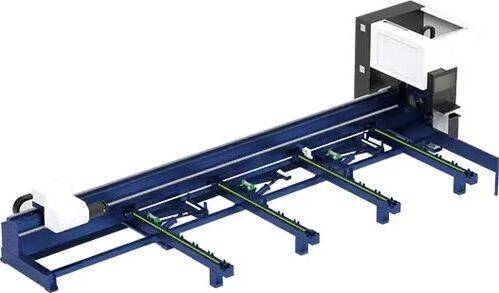
Our CNC Fiber Laser Tube Cutting systems revolutionize metal fabrication by integrating high-precision cutting, punching, and profiling into a single automated workflow. Designed for versatility, this technology handles a wide array of profiles including Round, Square, Rectangular, and Oval tubes, as well as complex L-shaped and U-shaped channels.
- Precision Punching: High-speed hole punching with micron-level accuracy, eliminating the need for mechanical drilling or die-stamping.
- Complex Profiling: Advanced 3D pathing allows for intricate interlocking joints and specialized notch cuts, ideal for structural frames.
- High Material Efficiency: Intelligent nesting software minimizes scrap, reducing raw material costs across large production runs.
- Clean Finish: Delivers oxide-free, burr-free edges that require zero secondary grinding before welding.

Seamlessly processing multiple profiles with consistent precision.
Global Delivery & Logistics



From our high-tech manufacturing facility directly to your global site. PCL WeldCut ensures secure packaging, professional handling, and reliable international logistics to safeguard your equipment throughout the entire journey.