Field Engineering Report: Multi-Pass MAG Cobot Welder Implementation
Project Overview: Busan Heavy Industrial District
This report details the onsite deployment and optimization of a MAG Cobot Welder system within a Tier-1 maritime component facility in Busan, South Korea. The primary objective was to automate the multi-pass welding of heavy-gauge Copper Components welding used in large-scale offshore heat exchangers. Historically, these components were welded manually, leading to high rejection rates due to thermal inconsistency and operator fatigue. By integrating advanced Arc Welding Solutions with collaborative robotics, we aimed to standardize the heat input and bead geometry across 12-pass fillet joints.
The Technical Challenge: Copper Components Welding
Welding copper and its alloys presents a unique set of metallurgical hurdles, primarily driven by its high thermal conductivity—nearly ten times that of mild steel. In the Busan facility, the workpieces consisted of 25mm thick oxygen-free copper plates. To achieve full penetration and avoid lack of fusion (LOF) at the root, the MAG Cobot Welder had to be calibrated for extreme heat density.
Traditional manual MAG welding on these Copper Components welding often resulted in “cold starts” and uneven penetration. The thermal sink effect is so aggressive that by the time a human welder reaches the midpoint of a 1-meter seam, the localized preheat has shifted, requiring a dynamic change in travel speed that is difficult to execute manually. Our field approach involved a localized induction preheating system maintained at 450°C, paired with the cobot’s ability to maintain a constant contact-tip-to-work distance (CTWD).
System Synergy: MAG Cobot Welder and Arc Welding Solutions
The success of this deployment relied on the seamless communication between the MAG Cobot Welder hardware and the proprietary Arc Welding Solutions software suite. In a high-interference environment like a Busan shipyard, signal integrity and real-time data feedback are critical.
1. Real-Time Parameter Modulation
The Arc Welding Solutions platform allowed us to program a “Sliding Scale” parameter set. As the MAG Cobot Welder progressed through the multi-pass sequence, the software automatically adjusted the wire feed speed and voltage to compensate for the increasing interpass temperature of the copper. This synergy ensured that the 12th pass did not suffer from excessive “burn-through” or grain coarsening, which is a common failure point in manual copper fabrication.
2. Adaptive Path Programming
Using the lead-through teaching method of the MAG Cobot Welder, we mapped the complex geometry of the heat exchanger manifolds. The Arc Welding Solutions interface then calculated the offset for each subsequent pass in the multi-pass stack. This eliminated the need for manual repositioning between passes, reducing the “arc-off” time by 40% compared to previous manual iterations in the Busan workshop.
Multi-Pass Strategy for Heavy Gauge Copper
The Root Pass (Pass 1)
For the root, we utilized a high-argon shielding gas mix (Ar + He) to increase the ionization potential and provide a deeper “finger” penetration. The MAG Cobot Welder was programmed for a slight weaving pattern (2.5mm amplitude) to ensure sidewall fusion against the thick copper faces. The Arc Welding Solutions controller monitored the current peak, automatically halting the process if a deviation in the arc gap was detected, preventing expensive rework on high-value copper stock.
Fill and Cap Passes (Passes 2-12)
In the intermediate passes, the focus shifted to deposition rate. We utilized a 1.6mm silicon-bronze filler wire. Here, the precision of the MAG Cobot Welder was paramount. By maintaining a strict 15-degree push angle, the cobot effectively “scoured” the oxide layer ahead of the puddle—a task where manual welders often struggle with consistency. Each pass was logged via the Arc Welding Solutions data hub, providing the Busan facility with a digital birth certificate for every component—a requirement for maritime certification.
Lessons Learned: Technical Field Observations
The Busan deployment provided several “hard-won” insights into the practical application of Arc Welding Solutions in heavy industry:
Lesson 1: Thermal Saturation and Sensor Lag
We initially encountered issues with the cobot’s “Touch Sense” feature. Because Copper Components welding involves such high preheat temperatures, the thermal expansion of the workpiece (approx. 1.5% at 500°C) meant the physical joint shifted from the CAD model. We had to implement a “mid-sequence re-indexing” step within the Arc Welding Solutions workflow. After every three passes, the MAG Cobot Welder performs a quick 3-point touch check to recalibrate its path based on the current thermal state of the metal.
Lesson 2: Shielding Gas Turbulence
Busan’s industrial zones are often prone to high-velocity drafts from the harbor. Even with a large gas lens, the MAG process was susceptible to porosity. We found that the MAG Cobot Welder required a customized “gas-shroud extension” and an increased flow rate of 25 L/min. The Arc Welding Solutions software was configured to interlock the arc start with a 3-second pre-flow to ensure the atmospheric nitrogen was fully purged from the copper surface.
Lesson 3: Spatter Management on Sensitive Components
Copper is notoriously “sticky” for MAG spatter. While the MAG Cobot Welder provides a much smoother transfer than manual welding, the proximity of the copper cooling fins meant that any spatter was a major contamination risk. We moved to a pulsed-spray transfer mode, optimized through the Arc Welding Solutions wave-form generator. By fine-tuning the peak current and pulse frequency, we achieved a nearly spatter-free deposit, reducing post-weld grinding time from 4 hours per unit to less than 20 minutes.
Engineering Impact and Site Results
After six weeks of operation in Busan, the metrics confirmed the superiority of the automated approach. The rejection rate for Copper Components welding dropped from 14% to 0.8%. The synergy between the MAG Cobot Welder and the Arc Welding Solutions ecosystem allowed for a 24/7 production cycle, which was previously impossible due to the physical toll that preheated copper welding takes on manual operators.
Quantitative Summary:
- Total Weld Length: 450 meters (cumulative over 50 units).
- Defect Rate: <1% (UT/RT verified).
- Time Savings: 55% reduction in total fabrication time per heat exchanger.
- Consumable Efficiency: 12% reduction in filler wire waste due to optimized bead geometry.
Conclusion for Senior Management
The Busan field test proves that a MAG Cobot Welder is no longer just for light-gauge steel. When backed by robust Arc Welding Solutions, these systems can handle the most demanding metallurgical tasks, including multi-pass Copper Components welding. The key to success is not just the robot itself, but the integration of thermal management, adaptive software paths, and rigorous parameter control. For future deployments, I recommend standardizing the induction preheat integration to further automate the thermal cycle alongside the welding path.
Field Engineer: Senior Welding Lead, Busan Site
Date: October 2023
Status: Operational / Handed over to Production
-


LT240S tube laser cutting machine
-
LT120S tube laser cutting machine
-
Sale

Tank Fillet Welding Machine
Original price was: $1,000.00.$900.00Current price is: $900.00. -
Sale

MAK100 tube laser cutting machine
Original price was: $5,500.00.$5,000.00Current price is: $5,000.00. -

portable plasma air cutting machine
$1,200.00 -

2in1 fiber laser cutting machine
-

Air cooling Laser welding machine
-

HF h beam laser cutting machine
-

LT240 laser cutting machine
-

Laser welding machine
-


Cobot Welding Station
-

Gantry welding robot solution
-

Tracked Wheeled AGV Welding robot
-

LFH6020 Fiber laser cutting machine
-
LFP6020
-

robotic welidng machine
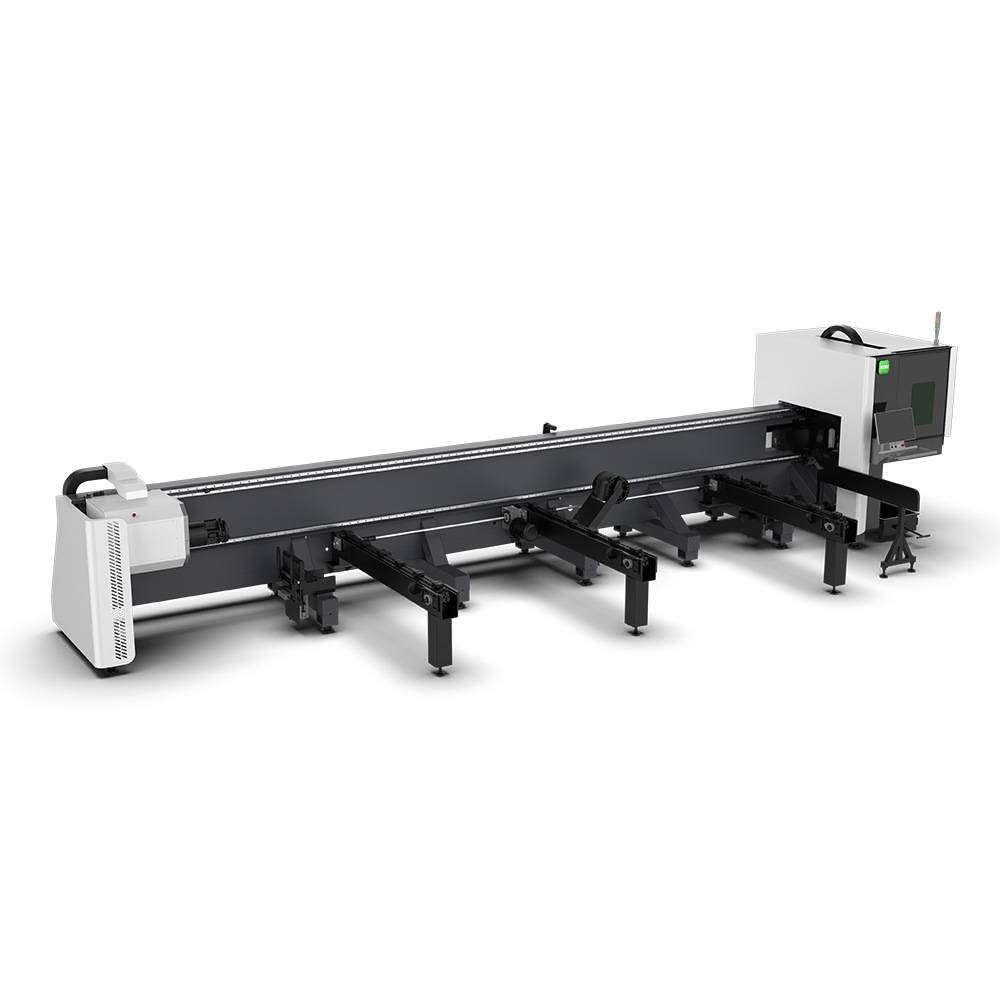
Advanced Fiber Laser Tube Processing Technology
Our CNC Fiber Laser Tube Cutting systems revolutionize metal fabrication by integrating high-precision cutting, punching, and profiling into a single automated workflow. Designed for versatility, this technology handles a wide array of profiles including Round, Square, Rectangular, and Oval tubes, as well as complex L-shaped and U-shaped channels.
- Precision Punching: High-speed hole punching with micron-level accuracy, eliminating the need for mechanical drilling or die-stamping.
- Complex Profiling: Advanced 3D pathing allows for intricate interlocking joints and specialized notch cuts, ideal for structural frames.
- High Material Efficiency: Intelligent nesting software minimizes scrap, reducing raw material costs across large production runs.
- Clean Finish: Delivers oxide-free, burr-free edges that require zero secondary grinding before welding.

Seamlessly processing multiple profiles with consistent precision.
Global Delivery & Logistics



From our high-tech manufacturing facility directly to your global site. PCL WeldCut ensures secure packaging, professional handling, and reliable international logistics to safeguard your equipment throughout the entire journey.