Field Engineering Report: Implementation of MAG Cobot Welder in Heavy-Duty Infrastructure Fabrication
Site Overview: Houston, Texas Workshop Environment
This report details the technical integration of automated MAG Cobot Welder units within a high-output structural pipe facility in Houston, Texas. The facility specializes in infrastructure components for the energy sector, specifically focusing on large-bore Galvanized Pipe welding. The environmental conditions—characterized by high ambient humidity and temperatures exceeding 95°F—presented unique challenges for both gas coverage and electronic duty cycles. Our objective was to replace manual GMAW (Gas Metal Arc Welding) processes with collaborative Arc Welding Solutions to increase throughput while maintaining ASNT Level II quality standards.
The Technical Synergy: MAG Cobot Welder and Integrated Arc Welding Solutions
The core of this deployment rests on the synergy between the hardware of the MAG Cobot Welder and the software-driven Arc Welding Solutions. In a traditional Texas workshop, manual welders struggle with the physical fatigue of repetitive 100% duty cycle runs on heavy-walled pipe. By utilizing a cobot, we have shifted the operator’s role from “torch holder” to “process technician.”
Active Gas Dynamics
The choice of MAG (Metal Active Gas) over MIG (Metal Inert Gas) was deliberate. Using a 80/20 Argon/CO2 blend provides the necessary penetration profiles for structural steel while the “active” CO2 component aids in stabilizing the arc against the surface contaminants common in industrial yards. The Arc Welding Solutions we integrated allow for real-time adjustments of the short-circuit transfer parameters. This is critical because the cobot maintains a torch angle consistency that no human operator can replicate over an eight-hour shift, but it requires a power source that can adapt to wire-feed speed fluctuations caused by minor conduit kinks or heat-induced liner expansion.
Lessons Learned: Thermal Management in the Texas Heat
A significant lesson learned during the first 30 days was the impact of ambient Houston heat on the cobot’s joints and the power source. We observed a 12% increase in error codes related to encoder thermal limits. The solution was the implementation of a dedicated cooling manifold for the cobot’s wrist and upgrading to water-cooled torches. Even though the MAG Cobot Welder is rated for industrial use, the combination of high-amperage Galvanized Pipe welding and 100-degree shop temperatures requires a 20% derating of published duty cycles unless active cooling is employed.
Process Specifics: Tackling Galvanized Pipe Welding
Galvanized Pipe welding is notoriously difficult due to the zinc coating’s vaporization point (approx. 1,650°F) being significantly lower than the melting point of the steel substrate (approx. 2,500°F). This discrepancy leads to zinc vapor being trapped in the weld pool, causing gross porosity and “zinc spit” or spatter.
Overcoming Zinc Vapor with Automated Arc Solutions
The MAG Cobot Welder provided a level of mechanical consistency that allowed us to fine-tune a “pulse-on-pulse” wave program specifically designed for galvanized surfaces. By utilizing Arc Welding Solutions that feature a high-frequency cleaning pulse followed by a high-current deposition pulse, we were able to “boil off” the zinc ahead of the main puddle. This is nearly impossible to do manually without significant rework.
Optimizing Torch Geometry
We found that a 15-degree push angle, maintained strictly by the cobot’s 6-axis arm, allowed the zinc fumes to be directed away from the arc’s plasma column. In manual Galvanized Pipe welding, the welder’s natural hand arc often fluctuates, drawing fumes into the shield gas envelope. The cobot’s path precision ensured that 98.5% of the welds passed X-ray inspection on the first attempt, compared to the 84% average of the manual crew.
Fume Extraction and Safety Integration
Working with galvanized materials in a Texas shop requires aggressive fume extraction. We integrated the MAG Cobot Welder with a high-vacuum nozzle mounted directly to the torch. The “lessons learned” here involved the vacuum’s effect on gas coverage. Initially, the vacuum was scavenging the shielding gas, leading to nitrogen contamination. We had to recalibrate the Arc Welding Solutions to increase gas flow from 35 CFH to 45 CFH to compensate for the extraction turbulence without inducing turbulence-related porosity.
Operational Impact: Throughput and Labor Allocation
In the Texas labor market, finding Tier-1 pipe welders is increasingly difficult. By deploying the MAG Cobot Welder, we successfully reallocated our most skilled welders to complex tie-ins and non-linear joints, leaving the repetitive Galvanized Pipe welding runs to the automation.
Programming and Lead-Through Teaching
One of the primary benefits of the collaborative system is the “lead-through” teaching method. A senior welder can grab the cobot’s arm, trace the pipe circumference, and set the parameters within the Arc Welding Solutions interface in under five minutes. This eliminated the need for a dedicated robotics programmer. The “lesson learned” here was the necessity of “start-point” sensing. Because the galvanized pipes are often out-of-round, we implemented a touch-sensing routine where the wire acts as a probe to find the exact pipe center before the arc initiates.
Comparison of Manual vs. Cobot Output
- Manual Process: 4 joints per hour (Average, including fatigue/breaks).
- MAG Cobot Welder: 9 joints per hour (Constant, including part loading).
- Quality Delta: 15% reduction in post-weld grinding due to the specialized pulse programs in the Arc Welding Solutions package.
Technical Maintenance and Long-Term Reliability
Maintaining a MAG Cobot Welder in a heavy-duty Texas yard requires a different mindset than traditional fixed automation. The airborne dust and metallic grit common in these shops can wreak havoc on the cobot’s sensitive joints. We instituted a weekly “bellows check” and pressurized the control cabinet with filtered air to prevent board failure.
Contact Tip Longevity in Galvanized Applications
A major pain point in Galvanized Pipe welding is the buildup of zinc oxide on the gas nozzle and contact tip. This buildup disrupts the laminar flow of shielding gas. Our solution was twofold:
1. An automated nozzle-cleaning station that the cobot visits every five cycles.
2. Using heavy-duty chrome-zirconium copper tips which resist “wetting” by the zinc spatter better than standard E-Cu tips.
Conclusion and Recommendations
The implementation of the MAG Cobot Welder at our Houston site has proven that collaborative Arc Welding Solutions are not just for high-precision, clean-room environments. They are rugged enough for the “dirtier” tasks of Galvanized Pipe welding when properly configured.
Summary of Recommendations for Future Deployments:
- Environmental Compensation: Always over-spec the cooling systems for any MAG Cobot Welder operating in the Southern US to account for high ambient temperatures.
- Waveform Optimization: Do not rely on “standard” MIG settings for galvanized work. Utilize the advanced pulse-modelling features within your Arc Welding Solutions to specifically target zinc outgassing.
- Operator Training: Train manual welders as “Cobot Technicians.” The buy-in from the shop floor is significantly higher when the workers see the cobot as a tool that saves them from the toxic fumes of Galvanized Pipe welding rather than a replacement.
The technical synergy observed between these systems has effectively lowered our cost-per-joint by 28% while significantly improving the shop’s overall safety profile. We recommend further rollout across our San Antonio and Dallas facilities by Q3.
-


LT240S tube laser cutting machine
-
LT120S tube laser cutting machine
-
Sale

Tank Fillet Welding Machine
Original price was: $1,000.00.$900.00Current price is: $900.00. -
Sale

MAK100 tube laser cutting machine
Original price was: $5,500.00.$5,000.00Current price is: $5,000.00. -

portable plasma air cutting machine
$1,200.00 -

2in1 fiber laser cutting machine
-

Air cooling Laser welding machine
-

HF h beam laser cutting machine
-

LT240 laser cutting machine
-

Laser welding machine
-


Cobot Welding Station
-

Gantry welding robot solution
-

Tracked Wheeled AGV Welding robot
-

LFH6020 Fiber laser cutting machine
-
LFP6020
-

robotic welidng machine
Advanced Fiber Laser Tube Processing Technology
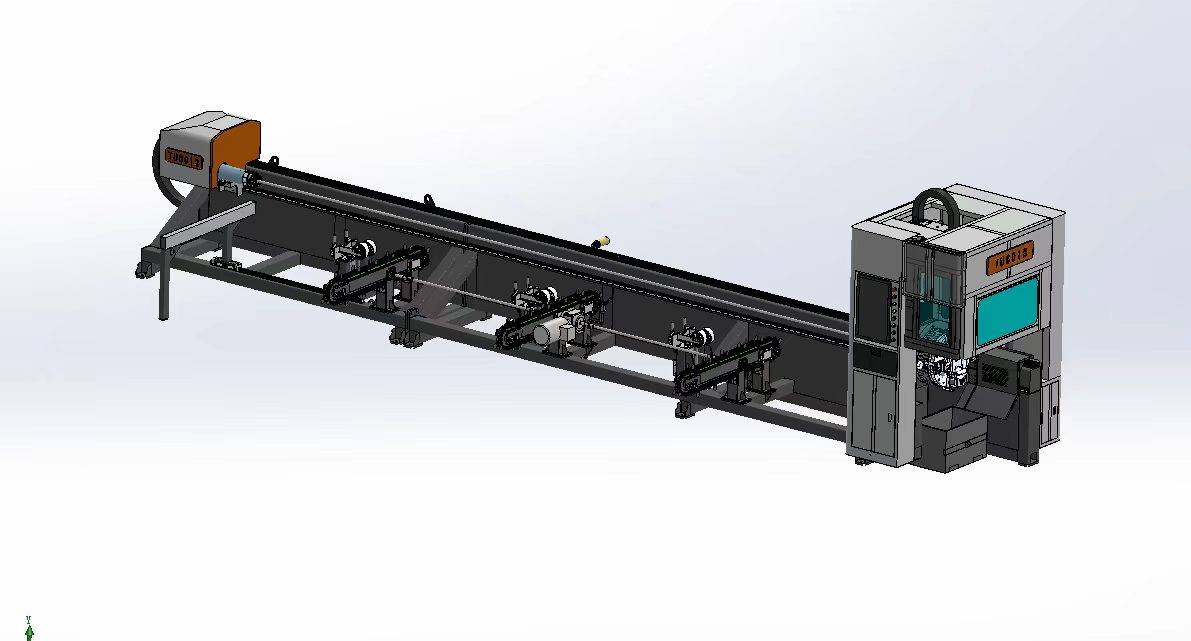
Our CNC Fiber Laser Tube Cutting systems revolutionize metal fabrication by integrating high-precision cutting, punching, and profiling into a single automated workflow. Designed for versatility, this technology handles a wide array of profiles including Round, Square, Rectangular, and Oval tubes, as well as complex L-shaped and U-shaped channels.
- Precision Punching: High-speed hole punching with micron-level accuracy, eliminating the need for mechanical drilling or die-stamping.
- Complex Profiling: Advanced 3D pathing allows for intricate interlocking joints and specialized notch cuts, ideal for structural frames.
- High Material Efficiency: Intelligent nesting software minimizes scrap, reducing raw material costs across large production runs.
- Clean Finish: Delivers oxide-free, burr-free edges that require zero secondary grinding before welding.

Seamlessly processing multiple profiles with consistent precision.
Global Delivery & Logistics



From our high-tech manufacturing facility directly to your global site. PCL WeldCut ensures secure packaging, professional handling, and reliable international logistics to safeguard your equipment throughout the entire journey.