Field Engineering Report: Implementation of Double Pulse Collaborative Arc Welding System
1. Project Overview and Site Conditions
The following report details the technical deployment and performance validation of a Double Pulse Collaborative Arc Welding System at a medium-scale manufacturing facility in Budapest, Hungary. The facility primarily focuses on high-precision sheet metal fabrication welding for the European automotive and HVAC sectors. The objective was to transition from manual GTAW (Gas Tungsten Arc Welding) to a semi-autonomous workflow using Automated Welding solutions to increase throughput while maintaining the aesthetic and structural integrity of thin-gauge materials.
Budapest’s industrial sector currently faces a significant shortage of certified high-frequency welders. This technical gap necessitated a system that could leverage the existing workforce’s metallurgical knowledge while delegating the physical execution to a stabilized mechanical platform. The deployment focused on 1.5mm to 3.0mm AlMg3 aluminum and 1.4301 stainless steel assemblies.
2. Technical Specifications of the Collaborative Arc Welding System
The core of the installation is a 6-axis cobot integrated with a high-speed inverter power source capable of double-pulse waveform modulation. Unlike traditional industrial robots, this collaborative arc welding system operates without the need for extensive safety fencing, utilizing torque sensors in each joint to detect collisions. This is critical in the Budapest workshop, where floor space is optimized and human-machine proximity is high.
Double Pulse Waveform Modulation
In the context of sheet metal fabrication welding, heat management is the primary challenge. The double pulse technology functions by oscillating between two different energy levels at a specific frequency (typically 0.5 to 5 Hz). The “peak” pulse ensures deep penetration and oxide cleaning, while the “base” pulse allows the weld pool to partially solidify, effectively mimicking the “stacked dimes” appearance of a manual TIG weld but at three times the travel speed.
Kinematic Integration
The synergy between the motion controller and the power source allowed us to maintain a constant Tool Center Point (TCP) velocity. During the automated welding cycle, any variation in speed would result in burn-through or lack of fusion. We calibrated the system to sync the pulse frequency with the travel speed, ensuring each pulse occurred at precise millimetric intervals.
3. Real-World Synergy: Automated Welding in a Budapest Workshop
The integration of automated welding within a collaborative framework changed the operational logic of the floor. In traditional automation, the robot is isolated. In this Budapest site, the welder remains the “process owner.”
The collaborative arc welding system allows the operator to manually lead the torch head to the start and end points (lead-through programming). This is essential for sheet metal fabrication welding, where part fit-up can vary by +/- 0.5mm due to prior laser cutting or bending tolerances. A purely “blind” automated system would fail here; however, the collaborative interface allows the operator to make micro-adjustments to the path in real-time before initiating the arc.
4. Analysis of Sheet Metal Fabrication Welding Applications
During the field trial, we focused on three specific assemblies: aluminum electronic enclosures, stainless steel manifold heat shields, and galvanized support brackets. Each required a distinct approach to the collaborative arc welding system parameters.
Aluminum AlMg3 Performance
Aluminum acts as a massive heat sink. Manual welding often results in warping at the end of the seam. By utilizing automated welding, we implemented a programmed “crater fill” routine and a ramp-down of the pulse frequency. The collaborative system handled the 400mm longitudinal seams with zero distortion, a feat previously impossible with manual GMAW (Gas Metal Arc Welding) in this gauge.
Stainless Steel (1.4301) Heat Tint Management
Oxidation is a major rejection factor in the Budapest plant’s HVAC contracts. The double pulse system reduced the average heat input by 22%. By precisely controlling the cooling phase of the pulse, the automated welding process maintained a tight Heat Affected Zone (HAZ), significantly reducing the post-weld pickling and passivation time.
5. Technical Lessons Learned and Engineering Observations
No deployment is without friction. As a senior engineer, the following “lessons from the dirt” are prioritized for future collaborative arc welding system rollouts:
Electromagnetic Interference (EMI) and Grounding
Early in the Budapest trial, we experienced intermittent communication drops between the cobot arm and the power source. We traced this to high-frequency (HF) interference from a neighboring manual TIG station. Lesson: Even though the cobot is automated welding equipment, it requires “clean” power and dedicated grounding separate from the main shop grid to prevent signal noise in the pulse logic.
Wire Feed Consistency
In sheet metal fabrication welding, especially with aluminum, wire shaving and bird-nesting are common. The collaborative arm moves in complex geometries that can kink the liner. We switched to a graphite-impregnated Teflon liner and moved the wire spool to an overhead tension-compensated mount. This ensured that the automated welding torch received a consistent wire velocity, which is critical when pulsing at 4Hz.
Shielding Gas Turbulence
We initially used a standard conical nozzle. However, at the higher travel speeds enabled by the collaborative arc welding system, we noticed porosity at the weld start. The solution was a high-performance gas lens and a pre-flow increase of 0.5 seconds. In automated welding, the timing of the gas envelope is as important as the electricity itself.
6. Quantitative Performance Metrics
After four weeks of operation in the Budapest facility, the following data points were validated against the previous manual baseline:
- Duty Cycle Increase: Manual welding duty cycle was measured at 18% (due to fatigue and positioning). The collaborative arc welding system maintained a 65% duty cycle.
- Consumable Efficiency: 12% reduction in shielding gas consumption due to optimized automated welding trigger times.
- Rework Rate: Rejections due to burn-through in sheet metal fabrication welding dropped from 7% to less than 0.4%.
7. The Budapest Synergy: Human-Machine Interface
The most significant takeaway from this site was the “Human-in-the-loop” synergy. In Budapest, the workforce is highly technical but aging. The collaborative arc welding system acted as a force multiplier. Younger apprentices were able to handle the automated welding programming, while the senior welders focused on jig design and weld procedure specification (WPS) refinement. This collaborative approach mitigated the steep learning curve usually associated with automated welding.
8. Final Recommendations for Future Deployment
For future installations of this nature, I recommend the following:
A. Sensorial Feedback Integration
While the double pulse handles the metallurgy, adding a laser seam tracker would further enhance sheet metal fabrication welding on long runs where thermal expansion causes the joint to shift during the automated welding process.
B. Specialized Tooling
Standard toggle clamps are often insufficient for the precision required by a collaborative arc welding system. Moving to pneumatic or heavy-duty modular 3D welding tables is necessary to ensure the “automated” aspect of the welding doesn’t outpace the “jigging” aspect of the fabrication.
C. Shielding Gas Blends
For the Budapest site, we found that a 98% Argon / 2% CO2 mix provided the best stability for the double pulse arc on stainless steel. Standard 80/20 mixes are too “violent” for thin-gauge automated welding and lead to excessive spatter, which can foul the cobot’s sensors.
9. Conclusion
The deployment in Budapest confirms that a Collaborative Arc Welding System is the most viable path for modernizing sheet metal fabrication welding. By bridging the gap between manual craftsmanship and automated welding, we have established a repeatable, high-quality production line that is resilient to labor market fluctuations. The double pulse technology is the “silver bullet” for thin-gauge heat management, provided the mechanical integration and grounding protocols are strictly followed.
Report End.
Lead Welding Engineer, Field Operations.
-


LT240S tube laser cutting machine
-
LT120S tube laser cutting machine
-
Sale

Tank Fillet Welding Machine
Original price was: $1,000.00.$900.00Current price is: $900.00. -
Sale

MAK100 tube laser cutting machine
Original price was: $5,500.00.$5,000.00Current price is: $5,000.00. -

portable plasma air cutting machine
$1,200.00 -

2in1 fiber laser cutting machine
-

Air cooling Laser welding machine
-

HF h beam laser cutting machine
-

LT240 laser cutting machine
-

Laser welding machine
-


Cobotic Welding Station
-

Gantry welding robot solution
-

Tracked Wheeled AGV Welding robot
-

LFH6020 Fiber laser cutting machine
-
LFP6020
-

robotic welidng machine
Advanced Fiber Laser Tube Processing Technology
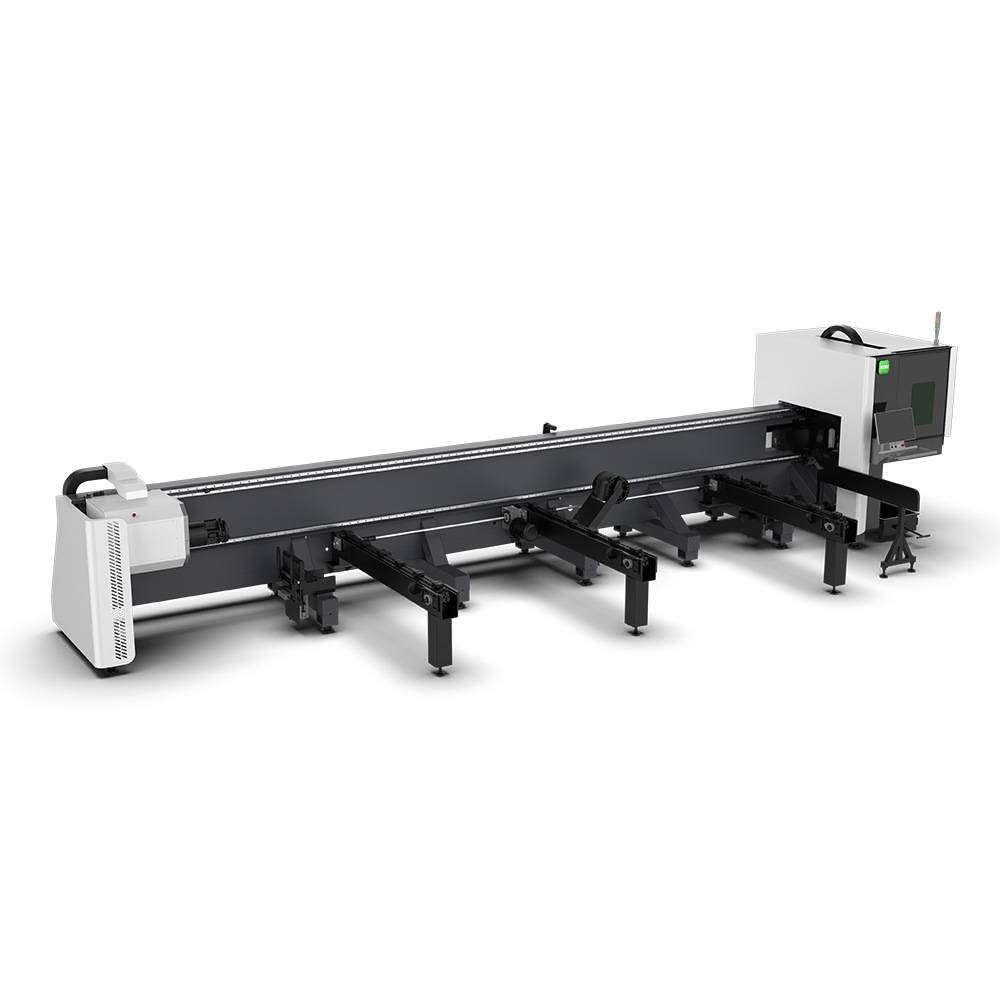
Our CNC Fiber Laser Tube Cutting systems revolutionize metal fabrication by integrating high-precision cutting, punching, and profiling into a single automated workflow. Designed for versatility, this technology handles a wide array of profiles including Round, Square, Rectangular, and Oval tubes, as well as complex L-shaped and U-shaped channels.
- Precision Punching: High-speed hole punching with micron-level accuracy, eliminating the need for mechanical drilling or die-stamping.
- Complex Profiling: Advanced 3D pathing allows for intricate interlocking joints and specialized notch cuts, ideal for structural frames.
- High Material Efficiency: Intelligent nesting software minimizes scrap, reducing raw material costs across large production runs.
- Clean Finish: Delivers oxide-free, burr-free edges that require zero secondary grinding before welding.

Seamlessly processing multiple profiles with consistent precision.
Global Delivery & Logistics



From our high-tech manufacturing facility directly to your global site. PCL WeldCut ensures secure packaging, professional handling, and reliable international logistics to safeguard your equipment throughout the entire journey.
