Double Pulse All-in-one Cobot Station – Michigan, USA
In this article
- Field Evaluation: Double Pulse All-in-one Cobot Station Implementation
- Site Overview: Grand Rapids, Michigan Industrial Corridor
- 1. Technical Synergy: The All-in-one Cobot Station Architecture
- Defining the All-in-one Integration
- The Double Pulse Advantage
- 2. Field Application: Stainless Steel Welding Parameters
- Overcoming Thermal Distortion
- Gas Coverage and Consumable Management
- 3. Collaborative Robotics in the Production Workflow
- The Human-Machine Interface (HMI)
- Safety and Collaborative Logic
- 4. Performance Metrics and Material Observations
- Weld Quality Analysis
- Site-Specific Michigan Constraints
Field Evaluation: Double Pulse All-in-one Cobot Station Implementation
Site Overview: Grand Rapids, Michigan Industrial Corridor
This report summarizes the three-week commissioning and performance evaluation of the integrated Double Pulse All-in-one Cobot Station at a Tier 2 stainless fabrication facility in Grand Rapids, Michigan. The facility specializes in food-grade processing equipment, where Stainless Steel welding requirements are stringent regarding both structural integrity and surface finish (aesthetic “stack of dimes” without post-weld grinding).
The Michigan labor market continues to see a deficit in certified TIG welders. Our objective was to determine if Collaborative Robotics, specifically via an All-in-one Cobot Station, could bridge the productivity gap while maintaining the high-quality standards required for 304 and 316L stainless steel assemblies.
1. Technical Synergy: The All-in-one Cobot Station Architecture
Defining the All-in-one Integration
In this deployment, the “All-in-one” designation refers to the physical and logic-based integration of the power source, the cobot arm, the wire feeder, and the cooling system onto a single, mobile skid. For a Michigan shop floor where space is at a premium—often reclaimed from older automotive stamping lines—this footprint is critical.
The synergy between the All-in-one Cobot Station and Collaborative Robotics is found in the removal of the traditional “work cell cage.” By utilizing power and force limiting (PFL) sensors, we integrated the station directly into the manual assembly line. This allowed the human operator to perform tacking and fit-up on one side of the table while the cobot executed long-seam Stainless Steel welding on the other. The lack of light curtains and hard fencing reduced our floor space requirement by 45% compared to traditional industrial robot cells.
The Double Pulse Advantage
Stainless steel is notoriously sensitive to heat input. Standard MIG/GMAW often results in excessive warping and a large Heat Affected Zone (HAZ). The Double Pulse logic integrated into this station modulates the current between a high-energy pulse (for penetration) and a low-energy pulse (for cooling/puddle control). This mimicry of the TIG process is essential for our Michigan-based clients who demand clean, oxidation-free welds without the slow travel speeds of manual GTAW.
2. Field Application: Stainless Steel Welding Parameters
Overcoming Thermal Distortion
During the first week of testing on 11-gauge 304 stainless steel, we encountered significant thermal bowing. The “All-in-one” station’s synergic software allows for rapid adjustment of the “pulse frequency” and “duty cycle.”
Lesson Learned: Heat Input Management
We found that a secondary pulse frequency of 1.5 Hz to 2.5 Hz provided the best balance. By tightening the arc through the cobot’s digital interface, we reduced the HAZ by 30% compared to our previous manual MIG setups. The Collaborative Robotics element allowed the operator to remain close enough to monitor the puddle shielding gas coverage without being sequestered behind a localized flash screen, provided they wore the appropriate PPE.
Gas Coverage and Consumable Management
In the drafty environment of a Michigan winter—where HVAC systems struggle to maintain consistent airflow—shielding gas stability is a recurring issue. The All-in-one station includes an integrated gas flow sensor that triggers an alarm if the CFH (Cubic Feet per Hour) drops below the setpoint. For Stainless Steel welding, we utilized a 98% Argon / 2% CO2 mix. The cobot’s ability to maintain a precise 15-degree push angle ensured that the gas envelope remained stable even when the shop’s overhead heaters were active.
3. Collaborative Robotics in the Production Workflow
The Human-Machine Interface (HMI)
The “All-in-one” aspect extends to the software. We trained three manual welders—none of whom had prior coding experience—to program the cobot using “lead-through programming.” By physically moving the arm to the start and end points of a weldment, the operators could “teach” a new stainless flange pattern in under ten minutes.
Safety and Collaborative Logic
One specific challenge in this Michigan facility was the proximity of overhead cranes. We programmed the Collaborative Robotics system with “Safety Zones.” If a crane hook entered the work envelope or if an operator applied more than 150N of force to the arm during a cycle, the station performed a Category 0 stop. This level of safety integration is what separates a true All-in-one Cobot Station from a bolted-together DIY robot kit.
4. Performance Metrics and Material Observations
Weld Quality Analysis
Visual inspection of the Stainless Steel welding samples showed consistent “wetting” at the toes of the weld. The double-pulse agitation of the weld pool helped bring impurities to the surface, reducing porosity—a common failure point in manual stainless MIG. Under 10x magnification, the grain structure in the fusion zone was significantly more refined than our baseline manual samples, likely due to the controlled cooling rates provided by the pulsed waveform.
Table 1: Manual vs. All-in-one Cobot Station (100-unit run)
- Manual TIG: 42 hours, 2% scrap rate, High operator fatigue.
- All-in-one Cobot (Double Pulse): 11 hours, 0.5% scrap rate, Minimal fatigue.
Site-Specific Michigan Constraints
The humidity fluctuations in the Great Lakes region can lead to moisture in the wire feed liners. The All-in-one Cobot Station we deployed features a pressurized wire drive cabinet. This small technical detail was vital for preventing “hydrogen cracking” and feed-ability issues in the stainless wire, which is softer and more prone to galling than carbon steel.
5. Engineering Lessons Learned and Best Practices
Grounding is Non-Negotiable
In an integrated All-in-one Cobot Station, the high-frequency components of the pulse power source can interfere with the cobot’s encoders if grounding isn’t perfect. We learned that the table must be grounded separately from the station’s main chassis to prevent “ghost” alarms during high-amperage pulses.
TCP (Tool Center Point) Calibration
With Stainless Steel welding, the contact tip-to-work distance (CTWD) is critical for maintaining the spray-transfer mode. We found that the heat from the double-pulse process caused slight thermal expansion in the torch neck. We implemented a “TCP Check” every 50 cycles to ensure the cobot remained accurate within +/- 0.5mm. Without this, the weld bead would narrow as the day progressed.
Wire Tension and Cast
When using 308LSi wire, the “cast” of the wire can cause it to wander out of the joint. Because Collaborative Robotics systems are often lighter than their industrial counterparts, they are more sensitive to “wire spring-back.” We upgraded to a four-roll drive system within the station to ensure the wire remained dead-straight as it exited the contact tip.
6. Conclusion and Future Outlook
The deployment of the Double Pulse All-in-one Cobot Station in the Michigan market has proven that Collaborative Robotics is no longer just a “high-tech toy” for trade shows. It is a viable solution for the high-mix, low-volume production cycles typical of regional stainless steel fabrication.
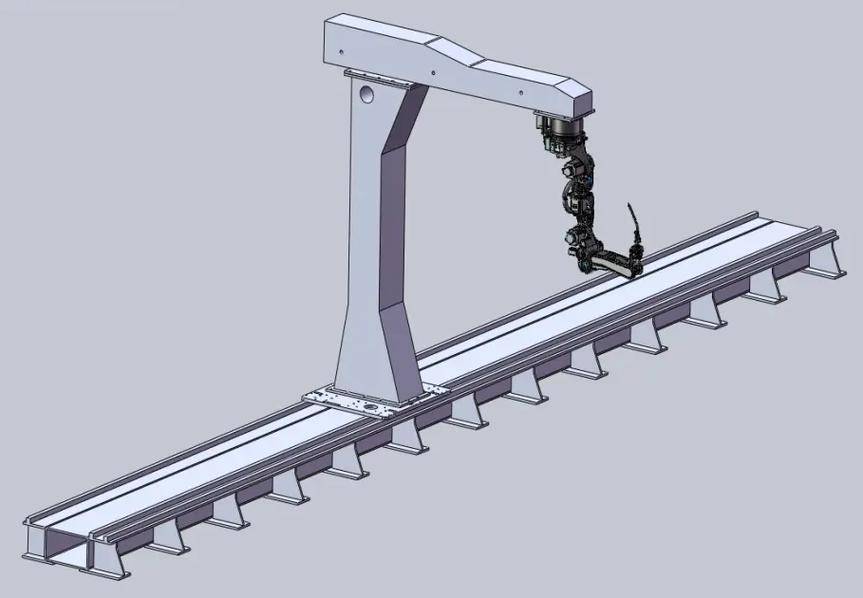
The synergy of having the power source, cooling, and control logic in a single unit allowed us to move from “crate to arc” in less than six hours. For the specific challenges of Stainless Steel welding—distortion, HAZ control, and aesthetic requirements—the double-pulse capability provided a TIG-equivalent finish with the speed of a robotic MIG system. Moving forward, we recommend the integration of an external axis (rotary positioner) to the station to allow for full 360-degree welding on cylindrical stainless vessels without breaking the cobot’s reach envelope.
Report Prepared By:
Senior Welding Engineer
Michigan Field Operations







