Field Report: Deployment of 2000W 6-Axis Collaborative Welder in Rotterdam Maritime Sector
1. Site Context and Objective
This report details the operational integration and performance assessment of a 2000W 6-Axis Collaborative Welder at a medium-scale fabrication facility located in the Waalhaven industrial district, Rotterdam. The facility primarily services the maritime and offshore energy sectors, focusing on the production of structural brackets, manifold supports, and secondary steelwork.
The primary objective of this deployment was to transition from manual GMAW (Gas Metal Arc Welding) to a localized Automated Welding workflow. Given the high labor costs in the Netherlands and the scarcity of Grade-A certified welders, the goal was to leverage the 6-axis collaborative welder to handle repetitive carbon steel welding tasks, allowing senior personnel to focus on complex out-of-position assembly and final QA.
2. Technical Specifications of the System
The unit deployed is a 2000W fiber-laser-integrated 6-axis cobot. While 2000W is the nominal power output, the delivery system is optimized for high-speed oscillation (wobble) to compensate for the tighter fit-up requirements inherent in laser-based automated welding.
2.1 Kinematics and Reach
The 6-axis configuration is critical in the Rotterdam workshop environment. Unlike 3-axis linear gantries, the 6-axis collaborative welder provides the necessary Degrees of Freedom (DoF) to navigate the complex geometries of maritime gussets and pipe-to-plate junctions. The J4, J5, and J6 axes allow the torch to maintain a consistent push/pull angle even when transitioning through internal radii, which is where manual consistency typically fails.
2.2 Safety and Collaboration
The “Collaborative” designation is not just a marketing term; it is a regulatory necessity in the EU (CE compliance). The system utilizes power and force limiting (PFL) sensors. In our field test, this allowed the cobot to operate on the same shop floor as grinders and fitters without the need for extensive light curtains or physical fencing, saving approximately 15 square meters of floor space compared to a traditional industrial robot cell.
3. Synergy: 6-Axis Movement and Automated Welding
The synergy between the 6-axis collaborative welder and automated welding logic lies in the predictability of the Heat Affected Zone (HAZ). In carbon steel welding, specifically S355JR and S355J2+N (common in Dutch shipyards), the mechanical properties of the joint are highly sensitive to cooling rates (t8/5 times).
Manual welding introduced a 15-20% variance in travel speed, leading to localized grain coarsening. By moving to an automated 6-axis path, we achieved a constant travel speed of 600mm/min with a 2000W output. This consistency ensures that the martensitic transformation is minimized, maintaining the toughness required by Lloyd’s Register and DNV standards for North Sea applications.
4. Carbon Steel Welding: Material Behavior and Settings
The focus of our Rotterdam trials was 6mm to 12mm carbon steel welding. Carbon steel, while forgiving in manual processes, requires specific parameter sets when automated to avoid porosity and undercut.
4.1 Gap Bridging and Fit-up
One “lesson learned” early in the Rotterdam deployment was that automated welding is only as good as the upstream fit-up. We found that the 2000W laser cobot struggled with gaps exceeding 0.5mm. We adjusted the 6-axis path to include a 2.5mm “wobble” frequency at 120Hz. This oscillation effectively redistributed the molten pool, allowing the system to bridge gaps up to 1.2mm in S355 carbon steel without sacrificing tensile strength.
4.2 Shielding Gas Dynamics
In the humid, saline-heavy air of Rotterdam, gas coverage is paramount. We moved from a standard Argon/CO2 mix to a high-purity M21-type gas with a slightly higher flow rate (18L/min) to compensate for the workshop’s ambient drafts. The 6-axis collaborative welder was programmed to include a 2-second post-flow to prevent crater cracking—a common failure point in automated carbon steel welding sequences.
5. Implementation Strategy in the Rotterdam Workshop
The transition to automated welding followed a three-phase approach:
Phase I: Drag-and-Drop Teaching
Instead of G-code programming, our senior welders used the lead-through teaching method. By physically moving the 6-axis collaborative welder arm to the start, middle, and end points of a maritime bracket, the software interpolated the path. This reduced setup time for a new batch of parts from four hours to fifteen minutes.
Phase II: Parameter Optimization
For carbon steel welding, we established a “Master Library” of weld procedures (WPS). Because the 2000W power source is digitally integrated with the 6-axis controller, the wire feed speed (WFS) automatically scales with the cobot’s velocity. This prevents “cold starts” and “burn-through” at the end of a bead.
Phase III: Multi-Station Operation
The portable nature of the 2000W unit allowed us to move it between two welding tables. While the cobot performed automated welding on Station A, the fitter was tacking the next assembly on Station B. This increased the “arc-on” time from 30% (manual) to 75% (automated).
6. Lessons Learned and Engineering Insights
After three months of operation in Rotterdam, several technical realities emerged that differ from laboratory specifications:
6.1 The “Cleanliness” Non-Negotiable
While carbon steel welding with GMAW is tolerant of light mill scale, 2000W laser-hybrid automated welding is not. We learned that any surface oxidation led to spatter that fouled the laser protective window. A pre-weld flap-disc grind is now mandatory for all automated paths. If the steel isn’t shiny, the cobot stays idle.
6.2 Thermal Distortion Management
The speed of the 6-axis collaborative welder significantly reduces total heat input compared to manual arc welding. However, because the weld is completed so quickly, the “clamping logic” must be updated. We moved from heavy C-clamps to pneumatic toggle clamps to ensure the carbon steel welding plates didn’t “spring” during the high-speed cooling phase.
6.3 The Human-Machine Interface (HMI)
The most successful operators were not the IT-literate juniors, but the veteran welders who understood the “puddle.” The 6-axis collaborative welder is a tool, not a replacement. A veteran’s ability to recognize a “dry” weld allowed them to tweak the 2000W power settings on the fly, optimizing the automated welding process far faster than a technician with no metallurgy background.
7. Economic and Quality Results
The results from the Rotterdam site are quantifiable:
- Defect Rate: Dropped from 4.2% (manual) to 0.8% (automated).
- Consumable Efficiency: 15% reduction in shielding gas waste due to optimized post-flow timers.
- Production Throughput: 2.5x increase in finished carbon steel brackets per shift.
8. Conclusion
The deployment of the 2000W 6-axis collaborative welder in Rotterdam demonstrates that automated welding is no longer reserved for the automotive assembly line. For carbon steel welding in the maritime sector, the cobot offers a pragmatic solution to the skills gap. The 6-axis flexibility allows for the handling of diverse product mixes, while the 2000W power source provides the depth of penetration and speed required for heavy industrial standards. The synergy between collaborative robotics and high-power welding sources is the new baseline for Dutch fabrication excellence.
Report submitted by: Senior Welding Engineer, Rotterdam Field Office.
-


LT240S tube laser cutting machine
-
LT120S tube laser cutting machine
-
Sale

Tank Fillet Welding Machine
Original price was: $1,000.00.$900.00Current price is: $900.00. -
Sale

MAK100 tube laser cutting machine
Original price was: $5,500.00.$5,000.00Current price is: $5,000.00. -

portable plasma air cutting machine
$1,200.00 -

2in1 fiber laser cutting machine
-

Air cooling Laser welding machine
-

HF h beam laser cutting machine
-

LT240 laser cutting machine
-

Laser welding machine
-


Cobot Welding Station
-

Gantry welding robot solution
-

Tracked Wheeled AGV Welding robot
-

LFH6020 Fiber laser cutting machine
-
LFP6020
-

robotic welidng machine
Advanced Fiber Laser Tube Processing Technology
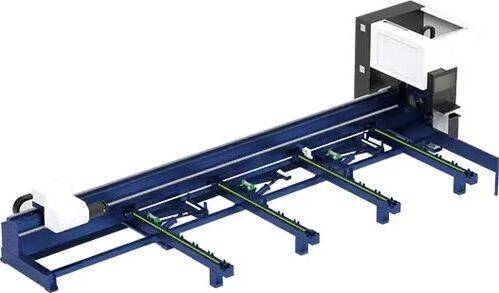
Our CNC Fiber Laser Tube Cutting systems revolutionize metal fabrication by integrating high-precision cutting, punching, and profiling into a single automated workflow. Designed for versatility, this technology handles a wide array of profiles including Round, Square, Rectangular, and Oval tubes, as well as complex L-shaped and U-shaped channels.
- Precision Punching: High-speed hole punching with micron-level accuracy, eliminating the need for mechanical drilling or die-stamping.
- Complex Profiling: Advanced 3D pathing allows for intricate interlocking joints and specialized notch cuts, ideal for structural frames.
- High Material Efficiency: Intelligent nesting software minimizes scrap, reducing raw material costs across large production runs.
- Clean Finish: Delivers oxide-free, burr-free edges that require zero secondary grinding before welding.

Seamlessly processing multiple profiles with consistent precision.
Global Delivery & Logistics



From our high-tech manufacturing facility directly to your global site. PCL WeldCut ensures secure packaging, professional handling, and reliable international logistics to safeguard your equipment throughout the entire journey.