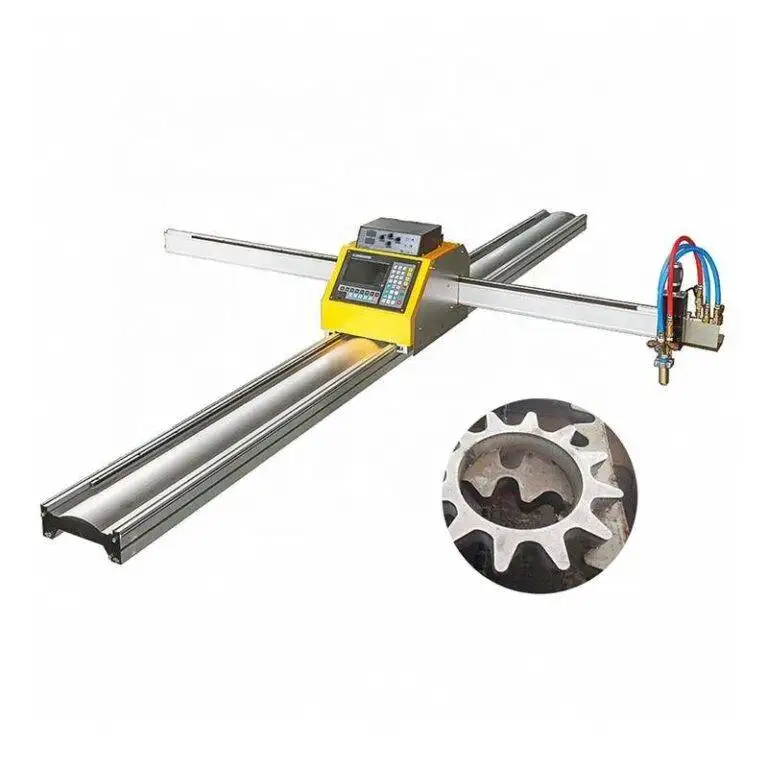
Beam Processing Center with Narrow Gap welding for for Bridge Trusses

In this article
Optimizing Bridge Truss Fabrication through Integrated Beam Processing
In the realm of heavy infrastructure, the structural integrity of Bridge Trusses hinges on the precision of the primary chord and web member connections. The shift toward automated Beam Processing Centers has transitioned from a luxury to a necessity for fabricators aiming to meet stringent AWS D1.5 specifications. Unlike traditional fabrication methods that rely on manual layout and torch cutting, modern centers integrate high-definition plasma units with robotic or multi-axis gantry systems. This integration is vital for the execution of Narrow Gap welding, a process that requires extreme volumetric consistency in the weld preparation phase.
The Engineering Logic of Plasma Cutting in Structural Steel
Plasma Cutting remains the industry standard for H-beam and I-beam processing due to its ability to handle the significant material thicknesses and surface irregularities common in structural steel. In bridge truss applications, where flange and web thicknesses often exceed 25mm, plasma provides the necessary thermal energy to penetrate the material while maintaining a stable arc. The process utilizes a high-velocity jet of ionized gas to melt and expel metal, resulting in a clean, square edge when properly calibrated. This capability is critical when preparing members for narrow gap configurations, where the root opening and groove angle must be held to tight tolerances to prevent weld defects such as lack of side-wall fusion.
Achieving High-Level Intersection Accuracy
One of the most complex challenges in truss fabrication is the precise fit-up of diagonal and vertical web members against the main chords. This requires Intersection accuracy that accounts for the profile of the beam, including the radius of the root of the flange. A beam processing center utilizes sophisticated software to calculate the 3D intersection curves, translating these into multi-axis torch movements.

The accuracy of these cuts directly impacts the volume of weld metal required. In a narrow gap scenario, even a deviation of 1.5mm in the cut profile can significantly increase the pass count or lead to inconsistent penetration. By utilizing arc voltage height control and laser-based profile scanning, the system compensates for “mill tolerance” variations—such as flange out-of-squareness or web centering—ensuring that every intersection is mathematically perfect before the welding phase begins.
Operational Sustainability: H-Beam Low Maintenance Systems
From an industrial engineering perspective, the Total Cost of Ownership (TCO) of a beam processing center is heavily weighted by maintenance requirements. H-beam low maintenance designs in plasma systems are achieved through several key mechanical features. First, the use of robust, pressurized bellows protects linear guides and ball screws from the highly abrasive metallic dust generated during the plasma process.
Furthermore, modern plasma power sources have moved toward “long-wear” consumable designs. The cooling systems for the torch head are engineered to maintain a constant temperature, reducing the frequency of electrode and nozzle replacements. In a high-volume bridge fabrication plant, the ability to operate for multiple shifts with minimal intervention on the cutting head translates to higher machine uptime and more predictable production schedules. Unlike other thermal cutting technologies, plasma systems are resilient against the scale and rust typical of structural steel stored in outdoor yards, requiring less pre-processing cleaning and thus reducing labor costs.
Advanced Beveling for Narrow Gap Preparation
The core of the narrow gap welding strategy is the reduction of the groove angle, typically to between 3 and 10 degrees. Achieving this requires specialized plasma bevel heads capable of tilting up to 45 or 50 degrees with full 360-degree rotation. This multi-axis capability allows for the creation of complex bevel profiles—such as V, Y, X, and K cuts—in a single pass.
In bridge truss fabrication, beveling is not merely about removing material; it is about creating a landing and a groove that supports the narrow gap welding torch’s access. The plasma system’s ability to maintain a consistent bevel angle across the entire length of a heavy-flange beam is paramount. Advanced CNC controllers use real-time feed-rate adjustment to compensate for the increased material thickness encountered when the torch is at an angle, ensuring that the kerf remains narrow and the heat-affected zone (HAZ) is minimized.
Mechanical Synergy: From Cut to Weld
The transition from cutting to welding in a beam processing center is where the efficiency of narrow gap technology is fully realized. Because the plasma-cut edges are so precise, the fit-up time is virtually eliminated. In a traditional workflow, welders would spend hours grinding and adjusting joints to close gaps. With the intersection accuracy provided by integrated plasma systems, the web members can be dropped into place with a “clash-free” fit.
Narrow gap welding, characterized by its high-aspect-ratio weld beads, demands a very specific joint geometry. The plasma system is programmed to leave a precise root face (land) which acts as a heat sink and provides a consistent base for the root pass. This level of preparation is what allows for the significant reduction in filler metal consumption—often up to 40% to 60% compared to traditional wide-angle V-groove welds. The reduction in weld volume not only saves on material costs but also minimizes the total heat input into the bridge truss, reducing residual stresses and transverse distortion.
Technical Specifications and Tolerance Control
Industrial engineers must focus on the data. For a bridge truss chord, the dimensional tolerance for the overall length after processing is often within +/- 1mm. The plasma system achieves this through sophisticated material handling, often utilizing a “measuring carriage” or “gripper” system that tracks the beam’s position via high-resolution encoders. This ensures that the distance between intersections is maintained regardless of the beam’s weight or surface friction.
Moreover, the plasma process is tuned for the specific metallurgy of bridge steels (such as A709 Grade 50W). By controlling the gas chemistry—often using oxygen or nitrogen-water injection—the system ensures that the cut surface is free of dross and nitrides that could compromise the quality of the narrow gap weld. A clean cut surface is essential for achieving X-ray quality welds required for fracture-critical members in bridge construction.
Conclusion: The Future of Bridge Component Manufacturing
The integration of high-definition plasma cutting within a beam processing center represents the pinnacle of structural steel engineering. By focusing on Intersection accuracy and the mechanical requirements of Narrow Gap welding, fabricators can produce Bridge Trusses that are both safer and more cost-effective. The move toward H-beam low maintenance systems ensures that these heavy-duty machines can withstand the rigors of an industrial environment while delivering the precision of a laboratory instrument. As infrastructure demands grow more complex, the synergy between precise thermal cutting and advanced welding preparation will remain the cornerstone of structural steel excellence.