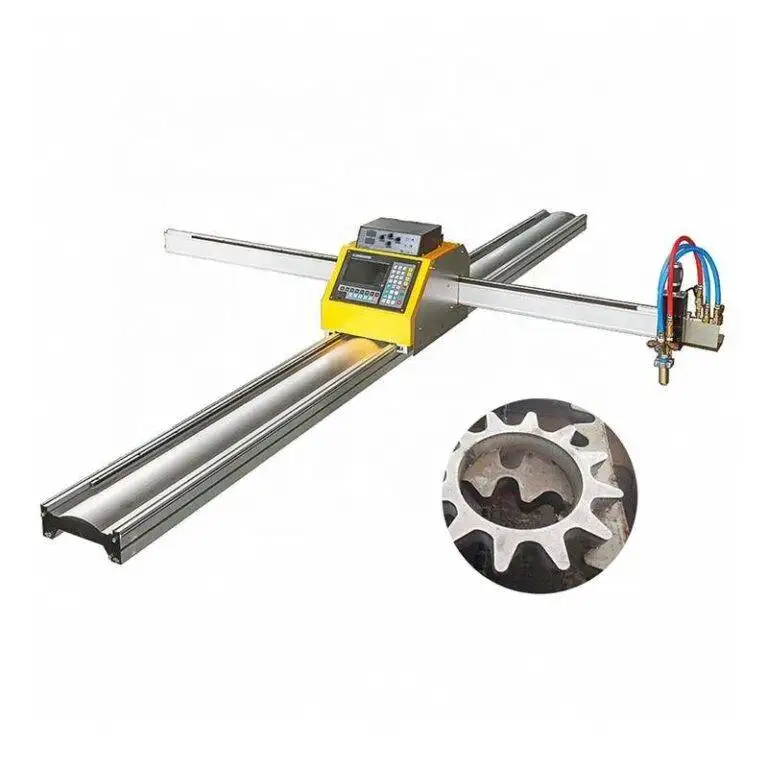
Beam Processing Center with Narrow Gap welding for for Bridge Trusses

In this article
Optimizing Bridge Truss Fabrication through Advanced Beam Processing
In the construction of large-scale infrastructure, bridge trusses represent some of the most demanding structural components due to their exposure to cyclic loading and environmental stressors. The transition toward automated Beam Processing Center technology has fundamentally altered the production workflow, moving away from manual layout and semi-automatic cutting toward fully integrated thermal processing. The primary objective is to achieve a fit-up precision that facilitates Narrow Gap welding, a process that demands rigorous consistency in joint geometry.
Industrial engineering principles dictate that the efficiency of a welding cell is directly proportional to the quality of the upstream preparation. In bridge truss manufacturing, this preparation centers on the Plasma Cutting stage. Unlike traditional methods, a dedicated beam processing center utilizes multi-axis robotic arms or high-precision gantry systems to navigate the complex cross-sections of heavy H-beams and I-beams. The goal is to eliminate secondary grinding and manual rework by producing “weld-ready” edges immediately following the thermal cut.
The Critical Role of Intersection Accuracy in Complex Trusses
Bridge trusses often involve intricate intersections where chord members meet diagonals and verticals at varying angles. Achieving intersection accuracy is the most significant challenge in these geometries. A plasma-based beam processing center utilizes advanced nesting software and 3D modeling to calculate the exact kerf compensation required for these non-linear paths. When a diagonal member must sit flush against the flange and web of a main chord, the cut path must account for the radius of the beam’s inner corners.

Mechanical synchronization between the beam feed system and the plasma torch head is vital. High-resolution encoders and laser-based probing systems measure the actual dimensions of the H-beam—accounting for mill tolerances and slight twists in the steel—before the cut begins. This real-time data allows the control system to adjust the plasma arc’s trajectory, ensuring that the intersection points are accurate within sub-millimeter tolerances. This level of precision is the baseline requirement for Narrow Gap welding, where even minor gaps can lead to excessive burn-through or inadequate root penetration.
Multi-Axis Beveling for Narrow Gap Welding Preparation
Narrow Gap welding is characterized by its high aspect ratio and reduced groove angle, which significantly lowers the volume of filler metal required and reduces the total heat input into the base material. However, this process is unforgiving regarding edge preparation. The plasma cutting system must be capable of complex beveling to create the specific J-prep or steep V-prep geometries required.
A multi-axis plasma head can tilt and rotate dynamically during the cut. This allows for the creation of varying bevel angles along a single cut path. For instance, as the torch moves from the flange of an H-beam toward the web, the angle may need to transition to accommodate the specific stress distribution requirements of the bridge design. By maintaining a constant arc voltage and feed rate, the system ensures a uniform bevel face with minimal dross. This uniformity is essential for the automated welding tractors used in Narrow Gap processes, as it allows for a consistent contact-to-work distance and stable arc characteristics during the multi-pass fill.
H-Beam Processing and Industrial Durability
The environment of a bridge fabrication shop is characterized by heavy material handling and high levels of particulate matter. In this context, the choice of plasma as the primary thermal tool is driven by its robustness and low maintenance requirements. Modern high-definition plasma systems are designed for high duty cycles, often exceeding 80% in a three-shift operational model.
From a maintenance perspective, plasma systems offer a distinct advantage over other thermal processes when dealing with the heavy scales and surface contaminants typically found on structural H-beams. The consumables—nozzles, electrodes, and swirl rings—are engineered for rapid replacement, minimizing downtime. Furthermore, the mechanical components of the plasma gantry are built to withstand the vibrations and thermal radiation inherent in thick-plate processing. By implementing a standardized maintenance schedule focused on gas filtration and lead integrity, a beam processing center can maintain peak intersection accuracy over years of service without the need for frequent recalibration of the motion control systems.
Thermal Management and Structural Integrity
A common concern in structural engineering is the Heat Affected Zone (HAZ) created during thermal cutting. In bridge trusses, excessive heat can alter the metallurgical properties of high-strength steels. Plasma cutting, particularly when utilizing high-speed gas shielding, narrows the HAZ compared to oxy-fuel processes. The speed of the plasma arc minimizes the time the base metal is exposed to critical temperatures, preserving the grain structure of the H-beam.
This controlled heat input is particularly beneficial when preparing for Narrow Gap welding. Since the welding process itself is designed to be low-heat, starting with a base material that has not been thermally compromised during the cutting phase ensures the overall structural integrity of the truss node. The beam processing center’s ability to synchronize torch speed with material thickness prevents “over-burning” at the corners, which is a frequent failure point in manual preparations.
Streamlining Workflow through Digital Integration
The true efficiency of a beam processing center lies in its digital workflow. Engineering data from BIM (Building Information Modeling) software is exported directly to the machine’s control unit. This eliminates the “human-in-the-loop” errors associated with manual marking and template placement. for Bridge Trusses, where hundreds of unique members may be required, the ability to rapidly switch between different beveling profiles and beam sizes is a critical throughput driver.
As the beam moves through the processing center, sensors verify its position and orientation. The plasma system then executes the programmed cuts, including bolt holes, cope cuts, and weld preps, in a single pass. This consolidated approach reduces the footprint of the fabrication shop and minimizes the crane time required to move heavy sections between different workstations. By the time the beam exits the center, it is ready for immediate assembly into the truss jig, perfectly profiled for the Narrow Gap welding torch.
Conclusion: The ROI of Precision Preparation
For industrial engineers overseeing bridge production, the investment in a high-precision plasma beam processing center is justified by the drastic reduction in total man-hours per ton of steel. By focusing on intersection accuracy and specialized edge preparation, these systems solve the most difficult aspects of truss fabrication. The synergy between high-definition plasma cutting and Narrow Gap welding results in stronger, more reliable bridge components produced at a fraction of the traditional cost.
The focus remains on mechanical reliability and the elimination of process variability. As infrastructure projects demand longer spans and higher load capacities, the precision provided by automated plasma systems becomes not just an advantage, but a necessity for modern structural engineering.