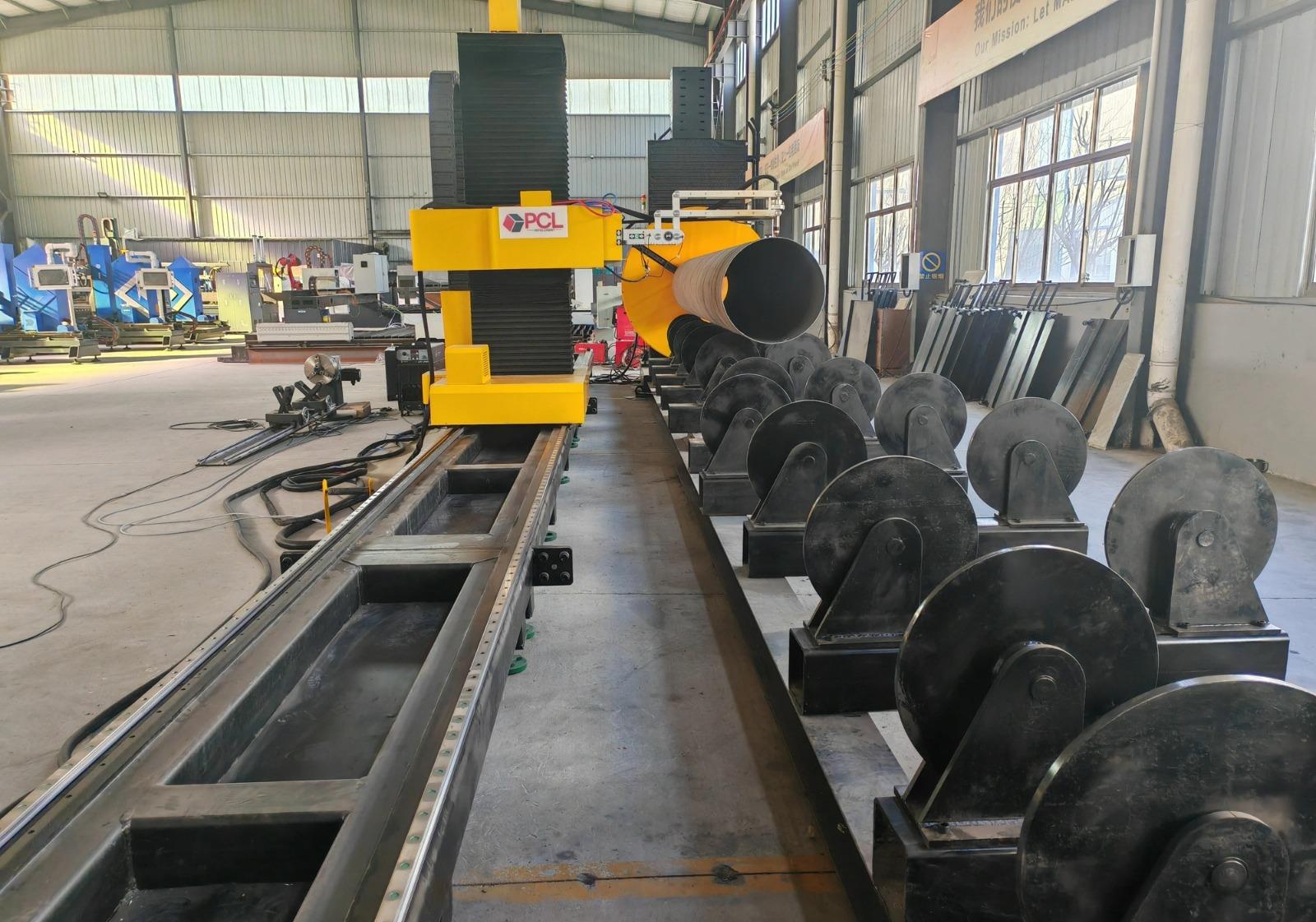
Beam Processing Center with Offline Programming for LNG Projects
In this article
- Optimizing LNG Structural Fabrication via Plasma Beam Processing
- The Role of Offline Programming in Reducing Machine Idle Time
- Intersection Accuracy for Complex Pipe Racks
- Mechanical Advantages and Low Maintenance of Plasma Systems
- Automated Beveling for High-Pressure Structural Connections
- Data Integration and Traceability
- Conclusion: Engineering Efficiency through Automation
Optimizing LNG Structural Fabrication via Plasma Beam Processing
The global expansion of Liquefied Natural Gas (LNG) infrastructure demands structural steel components that meet rigorous safety and durability standards. For industrial engineers managing these projects, the primary challenge lies in the mass production of complex pipe racks, skid modules, and support structures. Traditional manual layout and cutting methods are insufficient to meet the throughput and tolerance requirements of these multi-billion dollar capital projects. The implementation of a dedicated Beam Processing Center utilizing Plasma Cutting technology has emerged as the standard for achieving the necessary volumetric efficiency and repeatable accuracy.
Unlike general fabrication, LNG projects involve heavy-section H-beams and channels that must withstand cryogenic temperatures and extreme structural loads. The beam processing center acts as a multi-axis robotic cell designed to execute complex geometries without relocating the workpiece. By focusing on thermal cutting precision and mechanical reliability, engineers can drastically reduce the cost per ton while ensuring the structural integrity of the facility.
The Role of Offline Programming in Reducing Machine Idle Time
In a high-output environment, the machine should never wait for an operator to input coordinates. Offline programming software (OLP) allows the engineering department to convert 3D BIM models—typically exported from platforms like Tekla Structures or SDS/2—directly into machine code. This workflow bypasses the manual entry stage, eliminating human error and ensuring that the physical cut matches the digital twin exactly.
OLP systems simulate the entire cutting sequence, including the movement of the robotic arm and the material handling conveyors. for LNG Projects, where a single skid may require hundreds of unique beam profiles, OLP allows for nesting strategies that maximize material utilization. By analyzing the beam geometry in a virtual environment, the software optimizes the torch path to minimize rapid travel time and prevent collisions. This proactive approach ensures that the beam processing center maintains a high duty cycle, as the next batch of programs is verified and ready before the current beam leaves the outfeed conveyor.
Intersection Accuracy for Complex Pipe Racks
The structural frames supporting LNG piping must accommodate intricate intersections where multiple secondary beams meet a primary header. Standard tolerances in construction often allow for slight gaps, but in LNG modules, intersection accuracy is paramount to ensure proper load distribution and fit-up. A CNC-controlled plasma system operates with multi-axis freedom, allowing it to cut cope snipes, notches, and bolt holes with sub-millimeter precision.
When a beam is processed, the system measures the actual dimensions of the raw material—accounting for mill tolerances such as flange tilt or web eccentricity—and adjusts the cutting path in real-time. This “measure-and-compensate” logic ensures that when beams are sent to the assembly floor, they fit together seamlessly. This precision eliminates the need for field grinding or re-cutting, which is a significant bottleneck in modular construction. For engineers, this translates to faster assembly cycles and a reduction in the total man-hours required per ton of steel.
Mechanical Advantages and Low Maintenance of Plasma Systems
In the context of H-beam processing, plasma remains the most viable thermal cutting medium due to its robustness and ability to handle the scale of industrial sections. A plasma-based beam center is designed for the harsh environments of a fabrication shop, where dust and temperature fluctuations are common. Compared to other thermal processes, modern high-definition plasma systems require significantly less mechanical calibration and have fewer sensitive components exposed to the cutting zone.
The maintenance profile of a plasma beam center is highly predictable. Consumables—such as nozzles, electrodes, and swirl rings—are the primary wear items and can be replaced in minutes. Because the process is non-contact, there is no mechanical stress on the robotic arm or the gantry system, which extends the lifespan of the drive motors and linear guides. For LNG project managers, this reliability is critical; any unplanned downtime in the primary cutting line can halt the entire downstream assembly and coating process. By selecting a system optimized for heavy H-beam throughput, facilities ensure a stable production cadence over the multi-year duration of a major energy project.
Automated Beveling for High-Pressure Structural Connections
Weld preparation is perhaps the most labor-intensive aspect of structural steel fabrication. In LNG projects, most primary structural connections require full or partial penetration welds. This necessitates precise beveling on the flanges and webs of H-beams. A 3D plasma cutting head integrated into a beam processing center can execute V, Y, X, and K-cuts automatically as part of the primary cutting sequence.
The ability to bevel in a single pass is a significant force multiplier. By utilizing a robotic head with a tilt range of up to 45 or 60 degrees, the system can create the necessary land and bevel angles required for high-quality weld joints. This automation ensures that the bevel angle is consistent along the entire length of the cut, which is nearly impossible to achieve with manual torches. Consistent bevels lead to consistent weld volumes, which reduces the consumption of welding wire and ensures that ultrasonic or radiographic testing of the joints meets the stringent “zero-defect” criteria typical of the oil and gas industry.
Data Integration and Traceability
Traceability is a non-negotiable requirement for LNG infrastructure. Every beam must be accounted for, from the mill certificate to its final position in the rack. Advanced beam processing centers integrate with Enterprise Resource Planning (ERP) systems to track the progress of each member. As the plasma torch completes a part, the system logs the timestamp, the operator, and the specific program used.
Many centers also incorporate automated marking systems—using the same plasma torch at a lower amperage or a separate scribing tool—to etch piece marks, orientation lines, and weld symbols onto the steel. This structural steel fabrication data is vital for quality assurance. It ensures that the assembly team knows exactly how the pieces fit together without referring back to paper drawings, further reducing the margin for error and enhancing the overall safety of the construction process.
Conclusion: Engineering Efficiency through Automation
For the industrial engineer, the decision to implement a beam processing center with Offline Programming is a strategic move toward process stabilization. By focusing on the specific advantages of plasma cutting—specifically its intersection accuracy, low maintenance requirements, and automated beveling capabilities—fabricators can meet the aggressive timelines and rigorous quality standards of the LNG sector. The shift from manual layout to a digital, automated workflow reduces waste, improves safety, and provides the scalability required for the next generation of energy infrastructure. Using a data-driven approach to beam processing ensures that the final structure is not only built to specification but is also produced with the highest possible operational efficiency.