Optimizing Bridge Truss Fabrication via High-Definition Plasma Systems
Structural bridge engineering demands extreme precision in the fabrication of load-bearing components. Bridge trusses, often composed of massive H-beams, I-beams, and heavy plate, require cutting processes that can handle significant material thickness while maintaining geometric tolerances. The implementation of Plasma Cutting Machines equipped with advanced Arc Voltage Control (AVC) has become the industrial standard for achieving these requirements. Unlike traditional mechanical cutting or manual thermal methods, plasma systems provide the necessary throughput and accuracy to meet stringent civil engineering codes, such as those defined by AASHTO and AWS.
The Mechanism of Arc Voltage Control in Heavy-Duty Processing
The core of modern plasma efficiency in bridge truss manufacturing lies in the Arc Voltage Control (AVC) system. In large-scale H-beam processing, material flatness is rarely absolute. Beams often exhibit camber, sweep, or localized distortions from the mill. Without active height regulation, the plasma torch would either collide with the workpiece or move too far away, leading to kerf widening, dross accumulation, or complete arc failure.
AVC functions by monitoring the electrical potential between the plasma torch electrode and the grounded workpiece. As the distance changes, the voltage fluctuates. The CNC controller interprets these voltage variations in real-time, instructing the Z-axis motor to adjust the torch height instantaneously. This maintains a constant standoff distance, ensuring a uniform energy density at the point of impact. for Bridge Trusses, where long-form beams can span 12 meters or more, this automated correction is critical for maintaining a consistent cut profile across the entire length of the component.
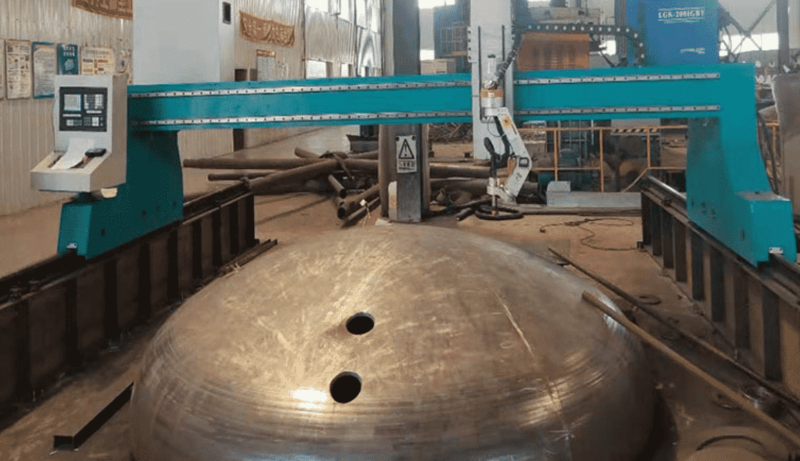
Achieving Intersection Accuracy in Complex Truss Geometries
Bridge trusses rely on complex intersections where chords and web members meet at varying angles. The structural integrity of the bridge is directly proportional to the fit-up accuracy of these joints. Intersection accuracy is the primary metric by which these machines are evaluated. In a high-definition plasma environment, this is achieved through the synchronization of multi-axis motion control and precise kerf compensation algorithms.
Coping and Miter Cuts for Structural Stability
When an H-beam web must be coped to fit against another beam, the plasma system must execute a path that accounts for the inner radii of the flanges. The high-definition plasma arc provides a narrow kerf, allowing for tight-tolerance cuts that minimize the gap between joining members. This precision reduces the volume of filler metal required in subsequent stages and ensures that the load path across the truss remains aligned with the engineering design. The use of AVC prevents the torch from “diving” during these complex maneuvers, particularly when transitioning from the flange to the web, where material thickness and heat dissipation rates change rapidly.
Low Maintenance Profiles for H-Beam Production Lines
Industrial engineers prioritize uptime and Mean Time Between Failure (MTBF). Plasma cutting systems designed for H-beams are engineered for the harsh environments of structural steel shops, where metallic dust and thermal stress are constant. One of the significant advantages of these systems is their low maintenance requirement compared to alternative thermal cutting technologies.
The mechanical components of a plasma H-beam line—specifically the rack-and-pinion drives and linear guides—are typically shielded and hardened against the abrasive byproduct of the cutting process. Because plasma cutting is a non-contact process, there is no tool wear in the traditional sense. The consumables, such as nozzles and electrodes, are the only high-frequency replacement items. Modern systems utilize “Long Life” oxygen plasma technologies that extend consumable cycles by optimizing the ramp-up and ramp-down of gas flows, significantly reducing the cost per foot of cut. This reliability is vital for bridge projects that operate on tight seasonal deadlines where machine downtime can lead to massive liquidated damages.
Advanced Beveling for Weld Preparation
Bridge trusses are subjected to dynamic loading and environmental stressors, requiring full penetration welds at critical junctions. This necessitates complex beveling on the edges of H-beam flanges and webs. A plasma machine equipped with a 5-axis or 6-axis robotic head can execute V, Y, X, and K-cuts in a single pass.
Geometric Versatility in Heavy Plate and Beams
The ability to bevel while cutting the primary profile eliminates the need for secondary grinding or edge preparation. Plasma beveling systems utilize sophisticated software that adjusts the torch angle and compensates for the changed arc characteristics inherent in tilted cutting. When the torch is angled, the effective thickness of the material increases, and the arc tends to lag. The CNC system, bolstered by the AVC, compensates for these physical variables by slowing down the feed rate and adjusting the voltage setpoint to maintain the correct depth of cut. This ensures that the bevel angle remains consistent, providing the welders with a uniform groove that facilitates high-quality structural bonds.
Thermal Management and Heat Affected Zone (HAZ)
While bridge steels are sensitive to heat, the high travel speeds of modern plasma cutting minimize the Heat Affected Zone (HAZ). By concentrating the energy in a highly constricted arc, the plasma system passes through the material quickly, leaving the core metallurgical properties of the H-beam largely unaffected. This is particularly important for high-strength, low-alloy (HSLA) steels commonly used in bridge construction, where excessive heat input could lead to localized embrittlement.
Summary of Operational Efficiency
Integrating plasma technology into a bridge truss production line offers a clear path to lean manufacturing. The combination of intersection accuracy, which ensures perfect fit-ups, and the robust, low maintenance nature of the equipment, creates a high-output environment. Furthermore, the capacity for automated beveling transforms the plasma machine from a simple cutting tool into a comprehensive edge-processing center.
For the industrial engineer, the data is clear: the precision afforded by Arc Voltage Control mitigates the risks associated with material variability, while the speed of the plasma arc ensures that throughput targets are met without compromising the structural standards required for public infrastructure. The result is a more predictable fabrication cycle, reduced labor costs for manual rework, and a superior end product that meets the rigorous demands of bridge engineering.
-


LT240S tube laser cutting machine
-
LT120S tube laser cutting machine
-
Sale

Tank Fillet Welding Machine
Original price was: $1,000.00.$900.00Current price is: $900.00. -
Sale

MAK100 tube laser cutting machine
Original price was: $5,500.00.$5,000.00Current price is: $5,000.00. -

portable plasma air cutting machine
$1,200.00 -

2in1 fiber laser cutting machine
-

Air cooling Laser welding machine
-

HF h beam laser cutting machine
-

LT240 laser cutting machine
-

Laser welding machine
-


Cobot Welding Station
-

Gantry welding robot solution
-

Tracked Wheeled AGV Welding robot
-

LFH6020 Fiber laser cutting machine
-
LFP6020
-

robotic welidng machine
Advanced Fiber Laser Tube Processing Technology
Our CNC Fiber Laser Tube Cutting systems revolutionize metal fabrication by integrating high-precision cutting, punching, and profiling into a single automated workflow. Designed for versatility, this technology handles a wide array of profiles including Round, Square, Rectangular, and Oval tubes, as well as complex L-shaped and U-shaped channels.
- Precision Punching: High-speed hole punching with micron-level accuracy, eliminating the need for mechanical drilling or die-stamping.
- Complex Profiling: Advanced 3D pathing allows for intricate interlocking joints and specialized notch cuts, ideal for structural frames.
- High Material Efficiency: Intelligent nesting software minimizes scrap, reducing raw material costs across large production runs.
- Clean Finish: Delivers oxide-free, burr-free edges that require zero secondary grinding before welding.

Seamlessly processing multiple profiles with consistent precision.
Global Delivery & Logistics



From our high-tech manufacturing facility directly to your global site. PCL WeldCut ensures secure packaging, professional handling, and reliable international logistics to safeguard your equipment throughout the entire journey.