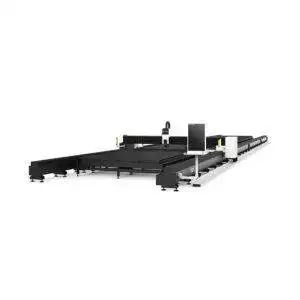
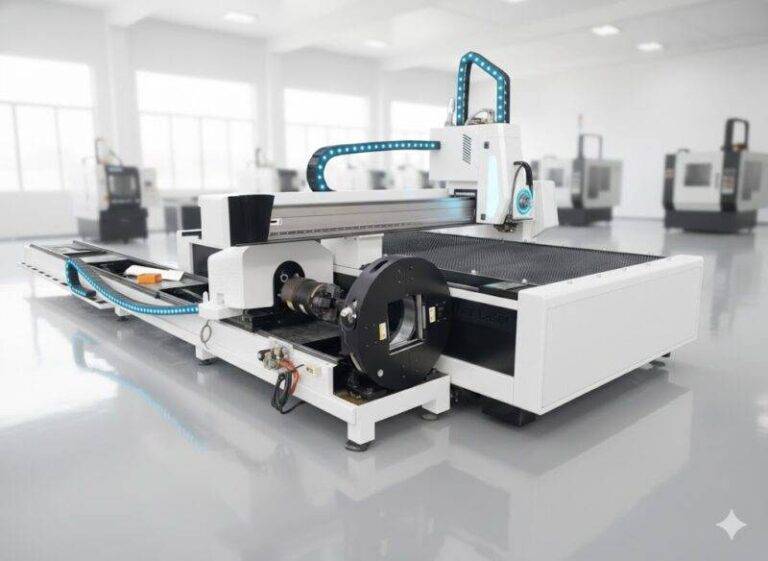
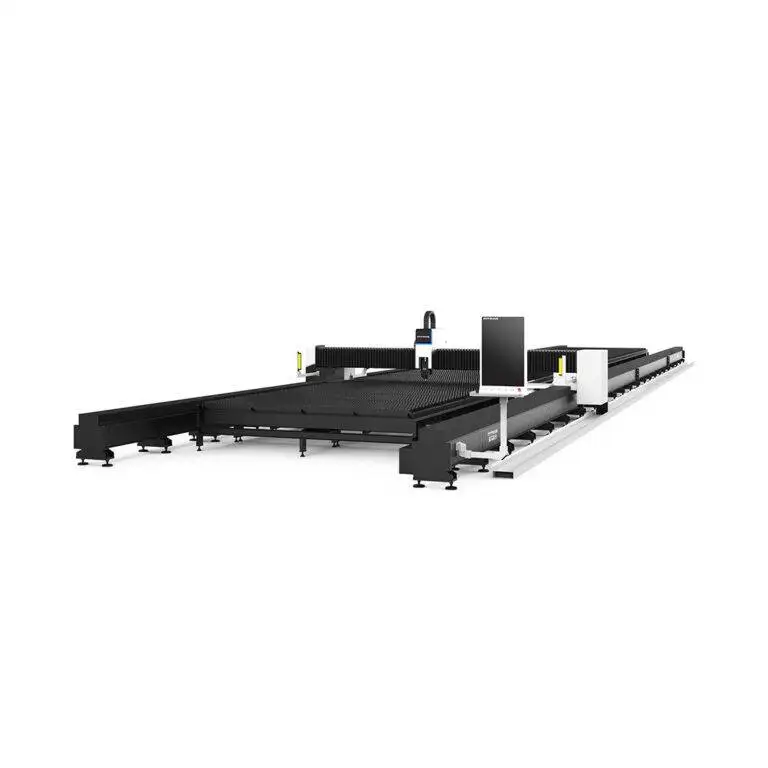
Fiber Laser Cutting Machine with Zero-tailing technology for Construction Machinery
In this article
- Optimizing Heavy Equipment Fabrication via Fiber Laser Precision
- The Mechanics of Zero-Tailing Technology
- Multi-Chuck Synchronous Systems
- Material Utilization and ROI
- Consolidated Workflow: Punch, Mark, and Cut
- Eliminating Secondary Operations: No Grinding Required
- Industrial Integration and Software Optimization
- Conclusion: Technical Superiority in Heavy Fabrication
Optimizing Heavy Equipment Fabrication via Fiber Laser Precision
The construction machinery industry is currently undergoing a structural shift toward leaner manufacturing processes. As components for excavators, cranes, and loaders become more complex, the demand for dimensional accuracy and material conservation has reached a critical threshold. The implementation of a high-power Fiber Laser Cutting Machine serves as the cornerstone for this evolution. Unlike traditional mechanical shearing or legacy thermal processes, fiber lasers utilize a concentrated beam of light, delivered through a flexible fiber optic cable, to achieve micron-level precision on heavy-gauge carbon steel and alloy tubes.
For industrial engineers, the primary objective is the reduction of “Total Cost of Ownership” (TCO) while maximizing “Overall Equipment Effectiveness” (OEE). The integration of fiber laser technology addresses these metrics by providing a non-contact cutting method that eliminates tool wear and reduces the heat-affected zone (HAZ). This ensures that the structural integrity of high-tensile steels used in construction machinery remains uncompromised, facilitating a more predictable fatigue life for critical load-bearing components.
The Mechanics of Zero-Tailing Technology
In standard tube cutting operations, a significant portion of the material—often referred to as the “tailing”—is left clamped in the chuck, unable to reach the cutting head. This leads to a material waste of 200mm to 500mm per pipe. In the context of Construction Machinery production, where large-diameter thick-walled tubes are common, this waste translates to substantial annual financial losses.
Multi-Chuck Synchronous Systems
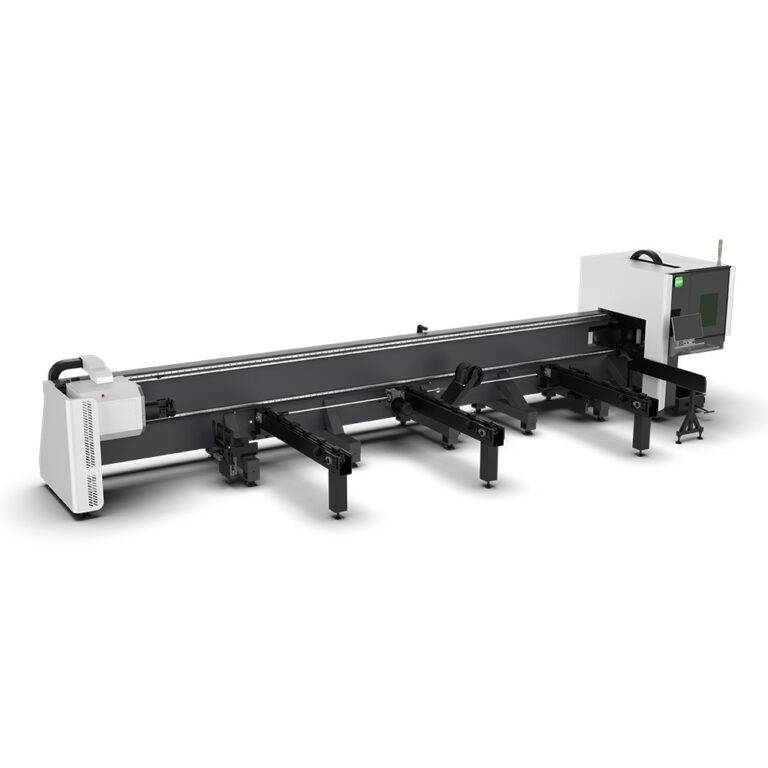
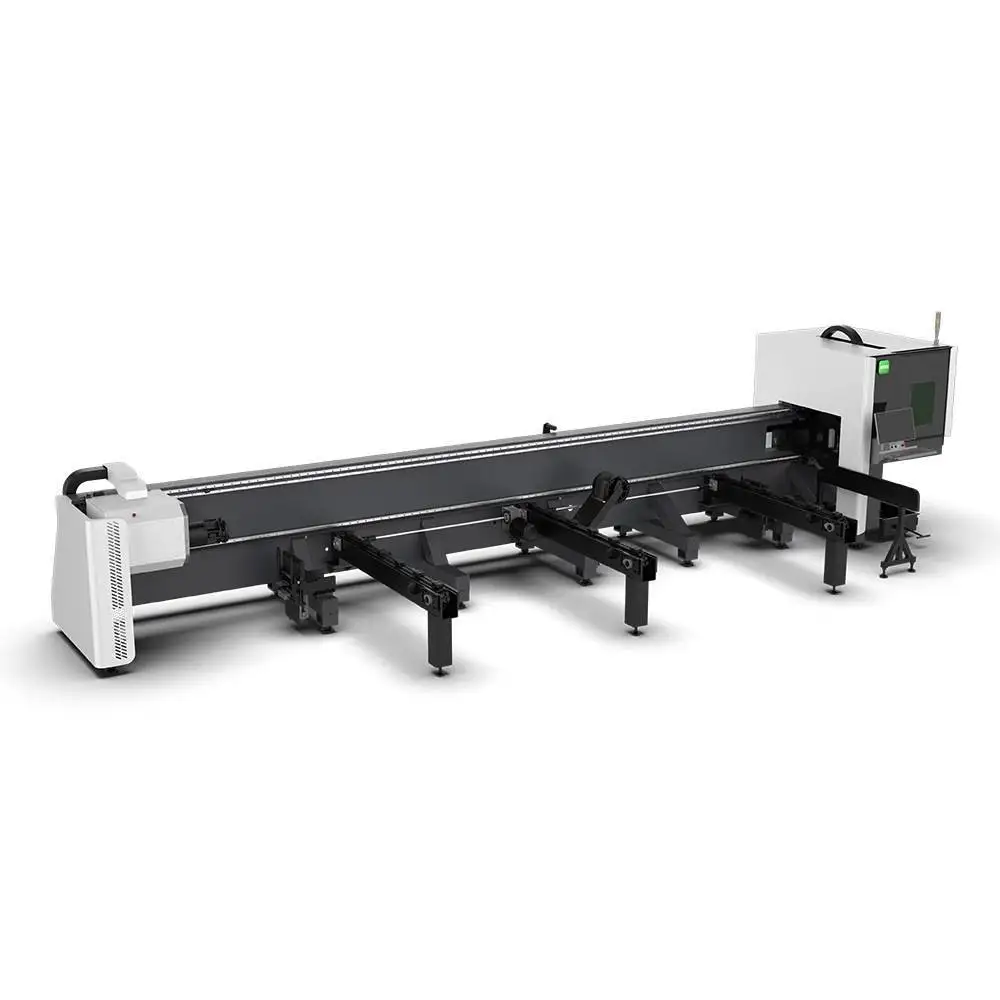
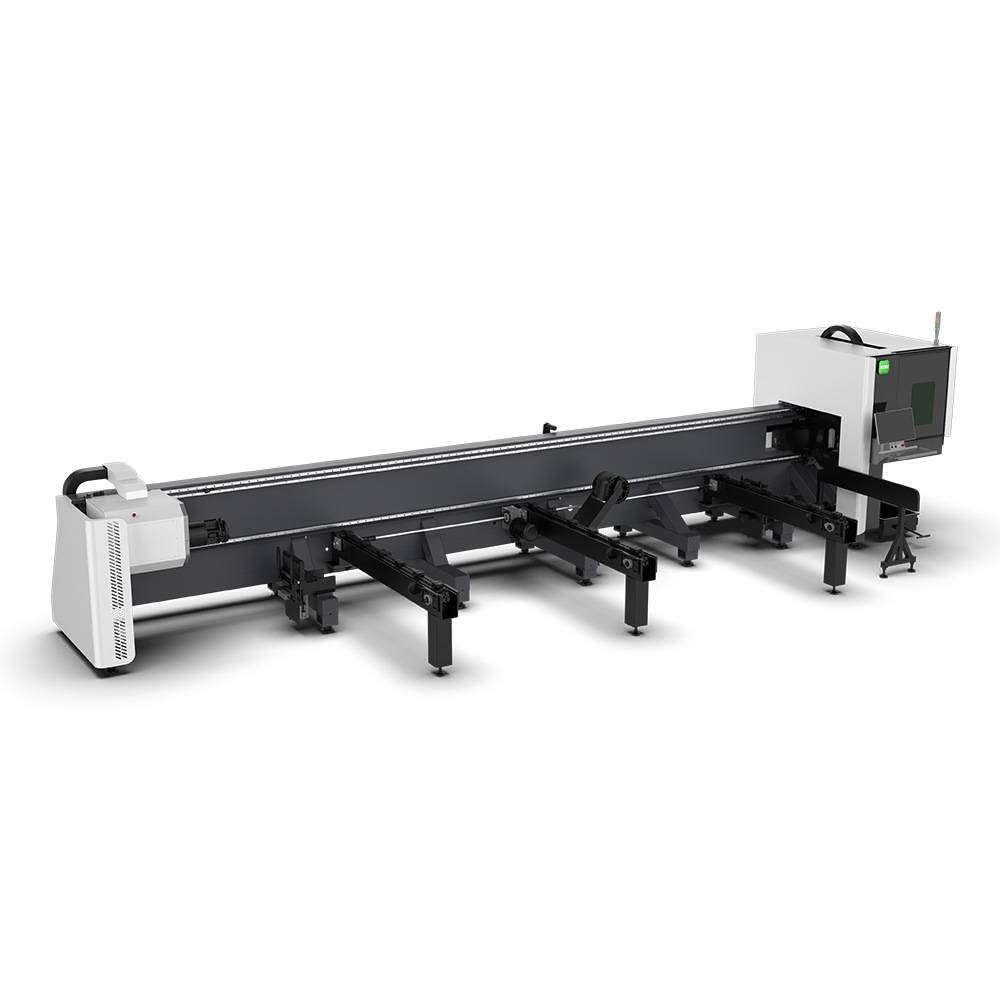
Zero-tailing technology utilizes an advanced configuration of three or four independent chucks. These chucks work in a coordinated “hand-over-hand” sequence. While the primary chuck feeds the material, the secondary and tertiary chucks provide stabilization and rotation. As the cutting process nears the end of the tube, the chucks shift positions, allowing the laser head to cut the final section of the material. This mechanical synchronization effectively reduces the remnant length to nearly zero, or in some configurations, literally zero waste.
Material Utilization and ROI
By achieving a Material Utilization rate of 98% to 100%, manufacturers can realize a rapid return on investment. For heavy-duty square tubes and H-beams used in crane booms, the cost savings per linear meter of material saved are significant. Furthermore, the ability to use the entire length of the raw material simplifies inventory management and nesting logic within the CAD/CAM environment.
Consolidated Workflow: Punch, Mark, and Cut
One of the most significant advantages of fiber laser systems in an industrial setting is the ability to consolidate multiple manufacturing stages into a single workstation. Traditional workflows often involve transporting components between a drill press, a marking station, and a cutting bed.
High-Precision Punching and Perforation
The fiber laser can execute complex hole patterns, slots, and perforations with a tolerance of +/- 0.05mm. This “laser punching” replaces mechanical drilling and punching, eliminating the need for expensive hard tooling and jigs. for Construction Machinery frames that require precise bolt hole alignment, the laser’s ability to maintain circularity and positional accuracy is paramount for rapid assembly.
Integrated Marking and Traceability
Modern Fiber Laser Cutting Machine units are equipped with sophisticated software that allows for part marking during the cutting cycle. Using a low-power setting, the laser etches part numbers, QR codes, or assembly guides directly onto the metal surface. This facilitates downstream logistics and ensures that every structural component is traceable throughout its lifecycle, a requirement that is increasingly mandatory in international construction equipment standards.
Final Precision Cutting
The final cut is performed at high speed with a focus on edge quality. Because the fiber laser produces a very narrow kerf, the geometry of the part is maintained with extreme fidelity. The resulting edge is clean, square, and free of dross, which leads to the next critical advantage for industrial engineers: the elimination of post-process finishing.
Eliminating Secondary Operations: No Grinding Required
In a traditional manufacturing environment, heavy-duty parts often require significant manual labor to remove burrs or rectify edge deviations. This “grinding” phase is a bottleneck that introduces variability and increases labor costs. Fiber laser cutting produces a finished edge that is “weld-ready” immediately after falling from the machine bed.
Edge Quality and Kerf Management
The high energy density of the fiber laser vaporizes the metal instantly. When combined with optimized assist gases (typically Oxygen or Nitrogen), the resulting cut surface exhibits minimal roughness. For the heavy plates and tubes used in construction machinery, this means that components can move directly from the cutting station to the assembly area. The absence of dross and the consistency of the cut angle ensure that fit-up tolerances are met every time, which is essential for automated assembly lines.
Industrial Integration and Software Optimization
To fully leverage zero-tailing technology, the machine must be integrated with robust nesting software. This software calculates the most efficient arrangement of parts on a given length of tube or sheet, accounting for the zero-tailing capabilities of the chucks.
Engineers can program complex 3D intersections—such as saddle cuts or miter joints—which are common in the tubular lattices of mobile cranes. The software compensates for the wall thickness of the material, ensuring that the internal and external geometries are perfectly aligned. This digital-to-physical synchronization reduces human error and ensures that the “as-built” component matches the “as-designed” CAD model with high fidelity.
Conclusion: Technical Superiority in Heavy Fabrication
The adoption of fiber laser cutting machines with Zero-tailing technology is not merely an incremental upgrade; it is a fundamental shift in how construction machinery is fabricated. By focusing on high precision, eliminating material waste through advanced chuck mechanics, and removing the need for secondary grinding, manufacturers can achieve unprecedented levels of efficiency. The ability to punch, mark, and cut in a single pass optimizes the shop floor footprint and accelerates production cycles. For the industrial engineer, these technical advantages represent the most direct path to reducing operational overhead while maintaining the rigorous quality standards required for heavy-duty structural applications.