Engineering Integration of Fiber Laser Technology in LNG Infrastructure
The construction of Liquefied Natural Gas (LNG) terminals and transport vessels demands a level of structural integrity and precision that exceeds standard industrial benchmarks. Within this sector, the fabrication of cryogenic piping systems involves high-value materials such as 9% nickel steel and various grades of stainless steel. Traditional fabrication sequences often involve disparate stages of measurement, mechanical cutting, and manual marking, which introduce cumulative tolerances and significant material waste. The transition to a dedicated Fiber Laser Cutting Machine equipped with Zero-tailing technology represents a fundamental shift toward automated precision and lean manufacturing.
In an industrial engineering context, the fiber laser is not merely a cutting tool but a multi-functional processing center. By utilizing a high-brightness solid-state laser source, the system achieves a focused beam diameter of less than 100 microns. This high power density allows for instantaneous sublimation of the material, resulting in a narrow kerf and a negligible heat-affected zone (HAZ). for LNG Projects, where material fatigue and low-temperature ductility are critical, minimizing thermal input during the fabrication phase is essential for maintaining the metallurgical properties of the alloy.
Mechanics of Zero-Tailing Technology in Pipe Fabrication
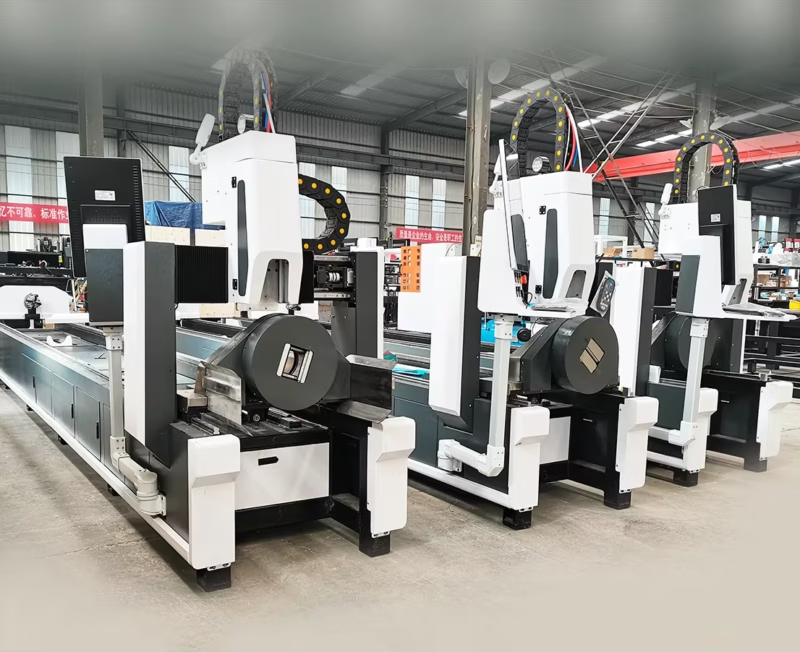
One of the primary cost drivers in LNG piping is material scrap. Standard tube cutting machines typically leave a remnant or “tailing” of 200mm to 500mm due to the physical distance between the chuck and the cutting head. When processing expensive, large-diameter stainless steel tubes, these tailings represent a significant loss in total cost of ownership (TCO). Zero-tailing technology utilizes a multi-chuck synchronization system—usually involving three or four independent pneumatic chucks—that allows the laser head to cut between the chucks or move the material through the final gripping point.
Three-Chuck vs. Four-Chuck Material Utilization
In a three-chuck configuration, the middle chuck provides constant support while the front and rear chucks hand off the material. This ensures that the tube is supported during the final cut of the previous piece and the beginning of the next. For high-stakes LNG projects, the four-chuck system provides even greater stability for heavy-walled pipes, allowing for the complete processing of the raw material with virtually zero waste. This capability directly impacts the nesting efficiency, allowing engineers to plan long production runs with minimal interruptions for scrap removal.
Precision Punching and Marking Capabilities
Traceability is non-negotiable in LNG infrastructure. Every section of pipe must be identified for quality assurance and assembly sequencing. Modern fiber laser systems integrate the “punch, mark, and cut” workflow into a single CNC program. This eliminates the need for secondary operations and reduces the risk of human error in part identification.
Surface Marking and Etching
The laser source can be modulated to perform high-speed surface etching. This is used to apply QR codes, heat numbers, and alignment marks directly onto the pipe surface without penetrating the material or creating stress concentration points. The precision of the high-precision tube processing system ensures that these marks remain legible even after protective coatings are applied.
Punching and Through-Hole Accuracy
For branch connections and instrumentation ports, the fiber laser performs high-speed hole cutting (often referred to as punching in a digital context). Unlike mechanical punching, laser cutting produces no mechanical deformation or burrs. The dimensional tolerance for these holes is typically within +/- 0.05mm, which is critical for ensuring a perfect fit with secondary components. The consistency of the laser-cut hole geometry ensures that the structural integrity of the main header is preserved.
Elimination of Post-Process Grinding
A significant bottleneck in traditional piping fabrication is the requirement for edge preparation and grinding. Fiber laser cutting produces a finished edge that is characterized by low roughness and high perpendicularity. By optimizing the assist gas pressure (typically high-purity nitrogen for stainless steel), the molten metal is cleanly ejected from the kerf, leaving a dross-free edge.
Surface Integrity for LNG Requirements
In LNG applications, any surface irregularity can serve as a point for ice accumulation or localized corrosion. The smoothness of the fiber laser cut eliminates the need for secondary grinding. This results in a dual benefit: a reduction in labor hours and the elimination of abrasive dust in the fabrication environment. From an industrial engineering perspective, removing the grinding stage streamlines the LNG pipe fabrication workflow, allowing parts to move directly from the cutting bed to the assembly area.
Optimizing the LNG Fabrication Workflow
Implementing a zero-tailing fiber laser system requires a re-evaluation of the upstream design process. Using specialized CAD/CAM software, engineers can nest complex geometries—including mitre cuts, saddles, and slots—into a single continuous feed. The software accounts for the zero-tailing chuck movements, ensuring that the most complex cuts are performed when the material is at its most stable position.
Integration with Automated Loading Systems
To maximize the duty cycle of the fiber laser, automated bundle loaders are utilized. These systems measure the length of each raw tube and communicate with the CNC controller to adjust the nesting pattern in real-time. This level of automation is essential for meeting the aggressive timelines often associated with large-scale LNG terminal construction. The result is a highly predictable production rate with a standardized output quality that manual methods cannot replicate.
Economic and Technical Conclusion
The adoption of fiber laser cutting with zero-tailing technology is a strategic requirement for modern LNG projects. By focusing on high-precision output and total material utilization, fabrication facilities can reduce their raw material costs by 10-15% while simultaneously increasing throughput. The “no grinding” output ensures that the structural integrity of cryogenic alloys is maintained, while the integrated marking and punching capabilities satisfy the most stringent traceability standards. As the global demand for LNG infrastructure grows, the shift toward these high-efficiency, zero-waste laser systems will define the standard for industrial piping fabrication.
-


LT240S tube laser cutting machine
-
LT120S tube laser cutting machine
-
Sale

Tank Fillet Welding Machine
Original price was: $1,000.00.$900.00Current price is: $900.00. -
Sale

MAK100 tube laser cutting machine
Original price was: $5,500.00.$5,000.00Current price is: $5,000.00. -

portable plasma air cutting machine
$1,200.00 -

2in1 fiber laser cutting machine
-

Air cooling Laser welding machine
-

HF h beam laser cutting machine
-

LT240 laser cutting machine
-

Laser welding machine
-


Cobot Welding Station
-

Gantry welding robot solution
-

Tracked Wheeled AGV Welding robot
-

LFH6020 Fiber laser cutting machine
-
LFP6020
-

robotic welidng machine
Advanced Fiber Laser Tube Processing Technology
Our CNC Fiber Laser Tube Cutting systems revolutionize metal fabrication by integrating high-precision cutting, punching, and profiling into a single automated workflow. Designed for versatility, this technology handles a wide array of profiles including Round, Square, Rectangular, and Oval tubes, as well as complex L-shaped and U-shaped channels.
- Precision Punching: High-speed hole punching with micron-level accuracy, eliminating the need for mechanical drilling or die-stamping.
- Complex Profiling: Advanced 3D pathing allows for intricate interlocking joints and specialized notch cuts, ideal for structural frames.
- High Material Efficiency: Intelligent nesting software minimizes scrap, reducing raw material costs across large production runs.
- Clean Finish: Delivers oxide-free, burr-free edges that require zero secondary grinding before welding.

Seamlessly processing multiple profiles with consistent precision.
Global Delivery & Logistics



From our high-tech manufacturing facility directly to your global site. PCL WeldCut ensures secure packaging, professional handling, and reliable international logistics to safeguard your equipment throughout the entire journey.