Optimization of Large-Scale Fabrication in Construction Machinery
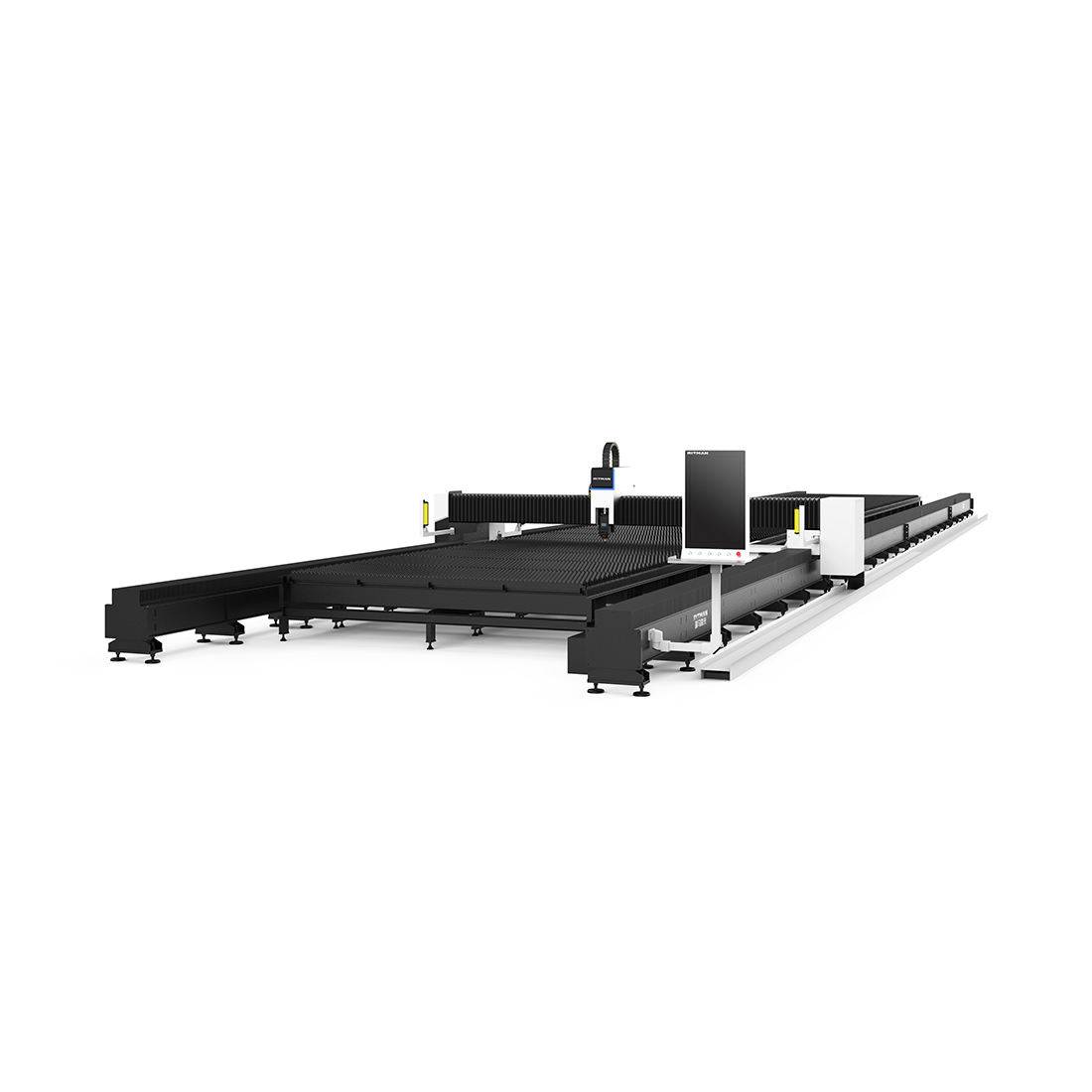
In the manufacturing of construction machinery, the primary challenge lies in the sheer scale of the components. Parts for earth-moving equipment, mobile cranes, and mining machinery often exceed the working envelopes of standard gantry-style laser systems. The shift toward a Fiber Laser Cutting Machine integrated with a magnetic crawler represents a paradigm shift in industrial engineering. This mobile solution moves the tool to the workpiece, rather than moving massive steel plates to a fixed station, effectively decoupling part size from machine dimensions.
From an industrial engineering perspective, the implementation of this technology addresses the critical bottlenecks of material handling and floor space utilization. By utilizing high-flux permanent magnets or electromagnets within the crawler tracks, the cutting system achieves stable adhesion to ferromagnetic surfaces. This allows for precise vertical, horizontal, and even inverted cutting paths on oversized structural plates, ensuring that the high-power fiber laser maintains a constant focal length relative to the workpiece.
Technical Advantages of Fiber Laser Integration
Superior Precision and Beam Quality
The fiber laser source provides a beam with a high BPP (Beam Parameter Product) and a narrow wavelength, typically around 1.06 microns. This small spot size translates to a high energy density, allowing for a significantly reduced Heat Affected Zone (HAZ). In construction machinery, where structural integrity is paramount, minimizing thermal distortion is essential. The high precision of the laser ensures that dimensional tolerances are met within microns, a requirement for the modular assembly of heavy components.
Elimination of Secondary Grinding Processes
One of the most significant cost-saving factors in this technology is that it results in no grinding requirements post-cut. Traditional thermal cutting methods often leave dross or oxidized layers that require manual labor to remove before assembly or painting. Fiber laser cutting, especially when assisted by high-pressure nitrogen or oxygen, produces a clean, dross-free edge. For the industrial engineer, this means the removal of a complete workstation from the production line, reducing labor costs and shortening the manufacturing cycle.
The Triple Functionality: Punch, Mark, and Cut
The magnetic crawler system is not merely a cutting tool; it is a multi-functional CNC platform. By modulating the laser power and pulse frequency, the system executes three distinct operations in a single programmed sequence.
High-Speed Punching and Piercing
The fiber laser facilitates rapid piercing through thick-section high-strength steels. Unlike mechanical punching, which puts stress on the material and requires expensive dies, laser punching is non-contact and programmable. This is particularly useful for creating bolt holes or pilot holes in chassis components where precision is non-negotiable.
Permanent Surface Marking
Lowering the output power allows the machine to function as a marking tool. In the context of construction machinery fabrication, this is used for etching part numbers, assembly guides, or bend lines directly onto the steel plate. This ensures traceability throughout the supply chain and assists downstream assembly workers in locating attachment points without manual measurement.
Precision Profile Cutting
The final phase is the high-speed profile cut. The CNC controller manages the movement of the magnetic crawler along complex paths, including curves and sharp angles. The synergy between the crawler’s motion control and the laser’s power modulation ensures that corners are cut with the same precision as straight lines, maintaining edge perpendicularity across the entire thickness of the plate.
Structural Design and Mobility of the Magnetic Crawler
The engineering of the crawler involves a light-weight yet rigid frame capable of carrying the fiber laser cutting head, gas hoses, and fiber optic cables. The adhesion system must provide sufficient force to counteract the weight of the equipment while maintaining a smooth movement speed. Industrial-grade crawlers utilize dual-drive systems to allow for zero-radius turning, which is vital when cutting internal apertures in large plates.
The fiber optic delivery system is inherently robust compared to CO2 mirror-based systems. Because the laser is delivered through a flexible cable, it is immune to the vibrations and movements inherent in a mobile crawler. This stability is what allows for “on-the-fly” adjustments to the cutting parameters, ensuring consistent quality even on surfaces that may have slight irregularities or rust.
Process Efficiency and Economic Impact
Analyzing the ROI (Return on Investment) of a crawler-based fiber laser reveals gains in both operational expenditure (OPEX) and capital expenditure (CAPEX). From a CAPEX perspective, the machine eliminates the need for massive, expensive gantry structures and specialized foundations. From an OPEX standpoint, the fiber laser boasts electrical efficiency upwards of 30-40%, compared to the 10% seen in older technologies.
Furthermore, the “on-site” cutting capability reduces the logistics of moving heavy steel plates within the factory. Large plates can be laid out on the shop floor, and the crawler can be deployed to process multiple parts from a single sheet in a nested configuration. This nesting efficiency minimizes material waste, a critical factor when dealing with expensive high-tensile alloys common in the construction equipment industry.
Integration with Industry 4.0 Standards
Modern magnetic crawler systems are equipped with IoT connectivity and advanced CNC interfaces. This allows for real-time monitoring of cutting speeds, gas consumption, and laser diode health. For industrial engineers, this data is invaluable for predictive maintenance and OEE (Overall Equipment Effectiveness) calculations. The ability to upload CAD/CAM files directly to a mobile unit means that design changes can be implemented instantly on the shop floor without reconfiguring fixed machinery.
The absence of mechanical force during the laser process also means the crawler experiences less wear and tear than mechanical drills or cutters. This leads to higher uptime and more predictable production schedules. By focusing on high-precision fiber laser technology, manufacturers in the construction machinery sector can achieve a level of finish that simplifies the subsequent assembly stages, ensuring that every bracket, boom, and plate fits perfectly the first time.
Conclusion
The deployment of a fiber laser cutting machine with Magnetic Crawler capabilities offers a sophisticated solution to the unique challenges of heavy machinery manufacturing. By combining high-density energy for clean, precise cuts with the mobility of a magnetic track system, the industry can bypass traditional size constraints. The result is a streamlined production flow that prioritizes precision, eliminates redundant grinding steps, and leverages multi-functional punch/mark/cut workflows to maximize throughput and quality.
-


LT240S tube laser cutting machine
-
LT120S tube laser cutting machine
-
Sale

Tank Fillet Welding Machine
Original price was: $1,000.00.$900.00Current price is: $900.00. -
Sale

MAK100 tube laser cutting machine
Original price was: $5,500.00.$5,000.00Current price is: $5,000.00. -

portable plasma air cutting machine
$1,200.00 -

2in1 fiber laser cutting machine
-

Air cooling Laser welding machine
-

HF h beam laser cutting machine
-

LT240 laser cutting machine
-

Laser welding machine
-


Cobot Welding Station
-

Gantry welding robot solution
-

Tracked Wheeled AGV Welding robot
-

LFH6020 Fiber laser cutting machine
-
LFP6020
-

robotic welidng machine
Advanced Fiber Laser Tube Processing Technology
Our CNC Fiber Laser Tube Cutting systems revolutionize metal fabrication by integrating high-precision cutting, punching, and profiling into a single automated workflow. Designed for versatility, this technology handles a wide array of profiles including Round, Square, Rectangular, and Oval tubes, as well as complex L-shaped and U-shaped channels.
- Precision Punching: High-speed hole punching with micron-level accuracy, eliminating the need for mechanical drilling or die-stamping.
- Complex Profiling: Advanced 3D pathing allows for intricate interlocking joints and specialized notch cuts, ideal for structural frames.
- High Material Efficiency: Intelligent nesting software minimizes scrap, reducing raw material costs across large production runs.
- Clean Finish: Delivers oxide-free, burr-free edges that require zero secondary grinding before welding.

Seamlessly processing multiple profiles with consistent precision.
Global Delivery & Logistics



From our high-tech manufacturing facility directly to your global site. PCL WeldCut ensures secure packaging, professional handling, and reliable international logistics to safeguard your equipment throughout the entire journey.