Optimizing Field-Erected Tank Construction with Automatic Girth Seam Welders
In the field of petrochemical storage infrastructure, the mechanical integrity of circumferential welds is the primary determinant of vessel longevity and safety. The transition from manual shielded metal arc welding (SMAW) to Automatic Girth Seam Welder (AGW) systems represents a critical shift in industrial engineering strategy. These systems, specifically those utilizing zero-tailing technology, address the inherent inefficiencies of traditional field welding by automating the carriage travel and electrode positioning along the tank’s circumference.
Zero-tailing technology refers to the precision-engineered capability of the welding carriage to initiate and terminate the weld bead with minimal overlap or gap, effectively eliminating the need for extensive manual grinding or “tail” removal at the completion of a pass. In large-diameter tanks (exceeding 30 meters), the cumulative time saved by reducing these rework intervals significantly impacts the project’s critical path.
The MAG Process: Technical Advantages in Robotic Integration
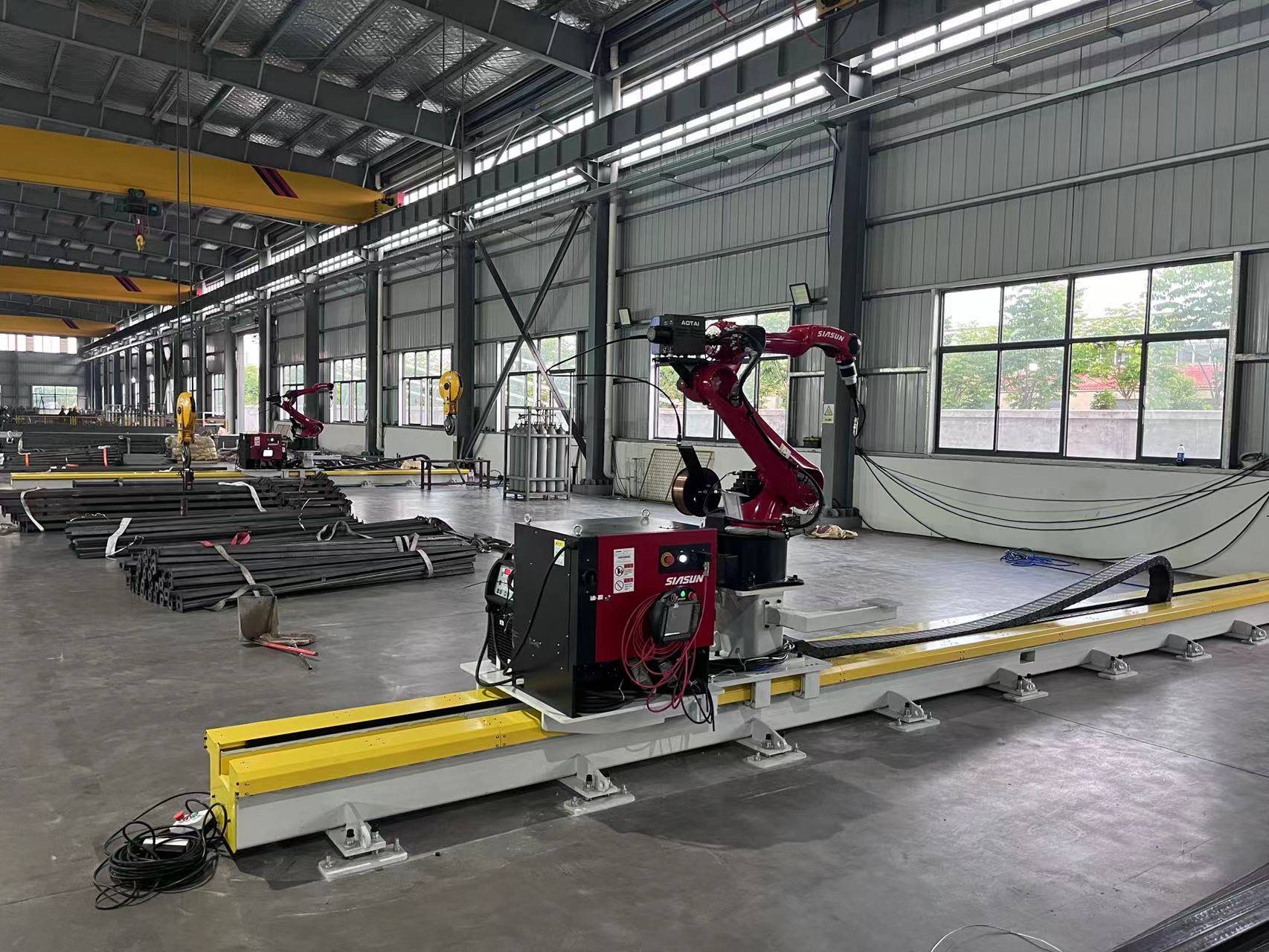
The core of modern AGW units is the Metal Active Gas (MAG) welding process. Unlike flux-cored options, MAG welding provides a cleaner, more controllable weld pool that is highly conducive to robotic automation. The use of a solid wire electrode, combined with an active shielding gas (typically a CO2 and Argon blend), allows for high deposition rates and deeper penetration profiles in thick-walled API 650 tanks.
Deposition Efficiency and Heat Input Control
From an industrial engineering perspective, the MAG process in an automated AGW frame allows for precise control over the Heat Affected Zone (HAZ). By maintaining a constant travel speed and wire feed rate, the system ensures consistent thermal input. This consistency is vital for maintaining the metallurgical properties of the parent steel, particularly in low-temperature storage applications where notch toughness is a non-negotiable requirement. The MAG process also minimizes spatter, which reduces post-weld cleanup and prevents surface defects that could lead to localized corrosion points.
Zero-Tailing Technology: Mechanical Logic and Implementation
Zero-tailing is achieved through a combination of synchronized drive motors and advanced PLC (Programmable Logic Controller) integration. As the AGW carriage approaches the completion of a 360-degree circuit, the sensors detect the weld start point. The software then modulates the current and travel speed to create a seamless tie-in.
Eliminating the Bottleneck of Manual Tie-ins
In traditional girth welding, the “tie-in” is the most common site for volumetric defects such as porosity or lack of fusion. By employing robotic zero-tailing technology, the system executes a programmed ramp-down of the amperage while maintaining the gas shield, ensuring that the crater is filled and the transition is smooth. This mechanical precision reduces the reliance on highly skilled manual welders for the most difficult portion of the weld, allowing for a more standardized quality output across multiple shifts.
Labor ROI: Quantifying the Shift from Manual to Automated Systems
The Return on Investment for AGW systems is primarily driven by the drastic reduction in man-hours per linear meter of weld. A single AGW unit, operated by one technician and one assistant, can achieve deposition rates equivalent to four or five manual welders working simultaneously.
Direct Labor Cost Reduction
When calculating ROI, engineers must consider not only the hourly wage but the “duty cycle” of the welder. A manual welder typically has a duty cycle of 20-30% due to fatigue, electrode changes, and repositioning. An AGW system operates at a duty cycle exceeding 70%. In a standard 50,000-cubic-meter tank project, the reduction in labor hours can reach 40-60%, allowing the capital expenditure of the robotic equipment to be amortized within the first two major projects.
Skill Gap Mitigation
The global shortage of certified pressure vessel welders has increased the cost of specialized labor. AGW systems lower the barrier to entry for operators. While the supervisor must understand welding parameters, the physical execution is handled by the machine. This shift allows firms to deploy their most skilled welders to complex nozzle fit-ups and tie-ins where Robotic Welding is not yet feasible, optimizing the human resource allocation across the entire site.
Maintenance Protocols for High-Throughput AGW Units
To maintain the ROI of an automated system, a rigorous preventative maintenance schedule is mandatory. Unlike manual gear, the AGW is a precision instrument that operates in harsh, dusty, and often humid environments. Reliability is contingent upon the integrity of the drive mechanism and the stability of the electrical conduits.
Mechanical and Electrical Upkeep
Maintenance focuses on three primary areas:
- Wire Feed Systems: The liners must be replaced regularly to prevent friction buildup, which causes “bird-nesting” and inconsistent arc voltage.
- Carriage Alignment: The tracking wheels and drive motors must be inspected for wear. Any deviation in the carriage path will negate the benefits of the zero-tailing logic.
- Shielding Gas Delivery: Gas flow meters and solenoid valves must be calibrated to ensure the MAG process remains stable under varying wind conditions, often necessitating the use of specialized wind shields integrated into the AGW cabin.
Quality Assurance and API 650 Compliance
Standardization is the hallmark of industrial engineering. Automatic girth welders produce a weld profile that is significantly more uniform than manual application. This uniformity simplifies Non-Destructive Testing (NDT) procedures. Radiographic interpretation becomes faster when the “background noise” of weld ripples is minimized, and the likelihood of “repair-and-re-weld” cycles is reduced by up to 80% compared to SMAW methods.
Consistency in Volumetric Integrity
By automating the MAG process, the risk of human error—such as inconsistent travel speed or incorrect torch angle—is removed from the equation. The AGW maintains a constant “stick-out” distance, which stabilizes the current. This results in a consistent penetration depth, ensuring that the girth seam meets the rigorous tension and shear requirements of Oil & Gas storage standards. The robotic welding carriage also ensures that the inter-pass temperature is managed more effectively, as the machine does not require the frequent breaks that human operators do.
Conclusion: The Engineering Case for AGW Adoption
The integration of Automatic Girth Seam Welders with Zero-tailing technology is not merely a mechanical upgrade; it is a fundamental optimization of the tank construction workflow. By focusing on the MAG process, companies can achieve higher throughput, superior metallurgical results, and a much faster ROI through labor savings and reduced rework. As the Oil & Gas industry continues to face pressure for faster commissioning of storage assets, the transition to automated circumferential welding remains the most viable path for increasing structural reliability while controlling operational costs.
-


LT240S tube laser cutting machine
-
LT120S tube laser cutting machine
-
Sale

Tank Fillet Welding Machine
Original price was: $1,000.00.$900.00Current price is: $900.00. -
Sale

MAK100 tube laser cutting machine
Original price was: $5,500.00.$5,000.00Current price is: $5,000.00. -

portable plasma air cutting machine
$1,200.00 -

2in1 fiber laser cutting machine
-

Air cooling Laser welding machine
-

HF h beam laser cutting machine
-

LT240 laser cutting machine
-

Laser welding machine
-


Cobot Welding Station
-

Gantry welding robot solution
-

Tracked Wheeled AGV Welding robot
-

LFH6020 Fiber laser cutting machine
-
LFP6020
-

robotic welidng machine
Advanced Fiber Laser Tube Processing Technology
Our CNC Fiber Laser Tube Cutting systems revolutionize metal fabrication by integrating high-precision cutting, punching, and profiling into a single automated workflow. Designed for versatility, this technology handles a wide array of profiles including Round, Square, Rectangular, and Oval tubes, as well as complex L-shaped and U-shaped channels.
- Precision Punching: High-speed hole punching with micron-level accuracy, eliminating the need for mechanical drilling or die-stamping.
- Complex Profiling: Advanced 3D pathing allows for intricate interlocking joints and specialized notch cuts, ideal for structural frames.
- High Material Efficiency: Intelligent nesting software minimizes scrap, reducing raw material costs across large production runs.
- Clean Finish: Delivers oxide-free, burr-free edges that require zero secondary grinding before welding.

Seamlessly processing multiple profiles with consistent precision.
Global Delivery & Logistics



From our high-tech manufacturing facility directly to your global site. PCL WeldCut ensures secure packaging, professional handling, and reliable international logistics to safeguard your equipment throughout the entire journey.