Optimizing Wind Tower Fabrication via Magnetic Crawler MAG Welding
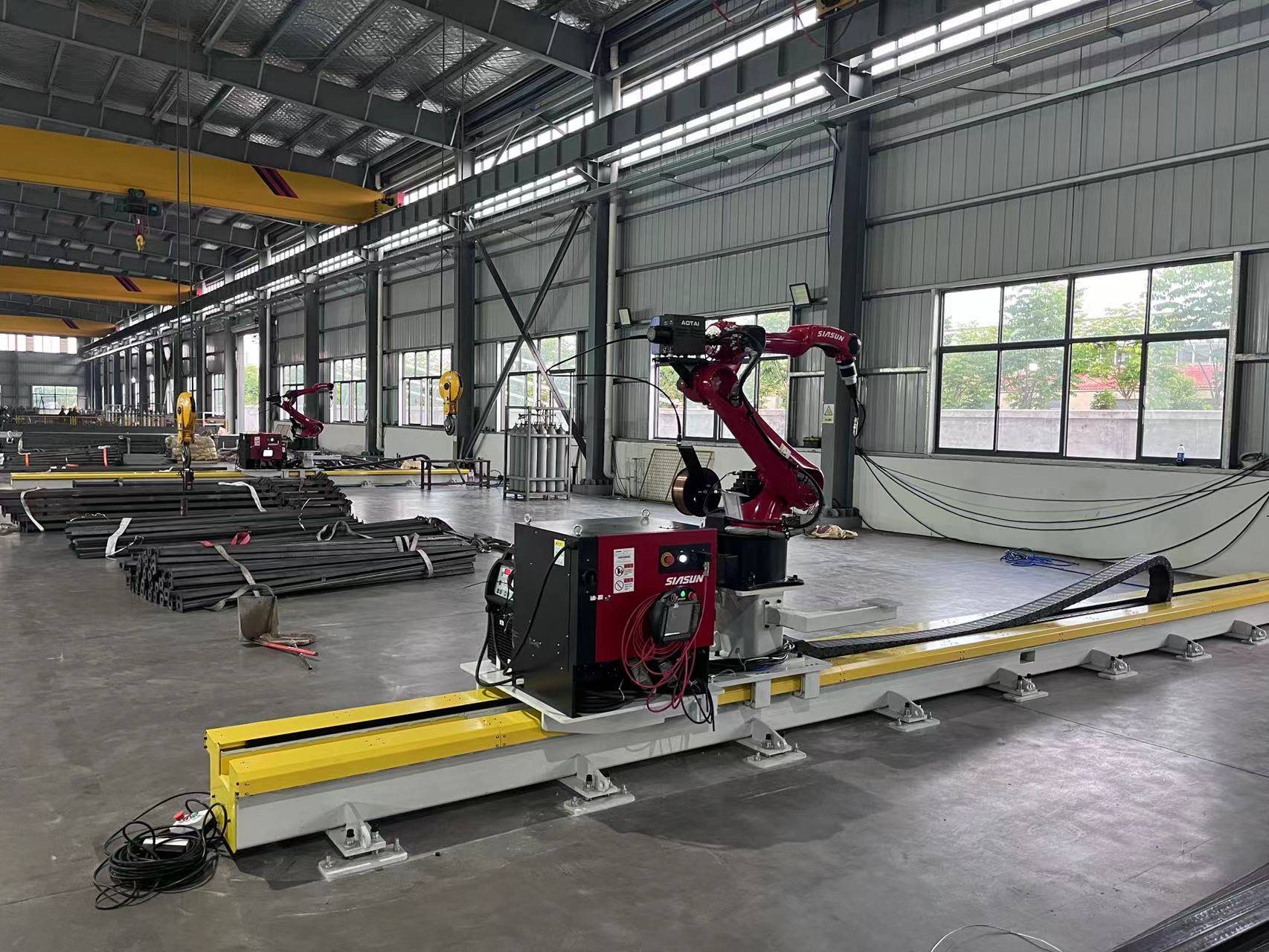
The global push for renewable energy has accelerated the demand for large-scale onshore and offshore wind towers. For industrial engineers, the primary bottleneck in tower production remains the welding of thick-walled cylindrical segments. Traditional methods often rely on stationary gantries or manual operators, both of which present limitations in scalability and consistency. The introduction of the Intelligent Robotic Welder equipped with a magnetic crawler chassis represents a shift toward decentralized, high-mobility fabrication. By utilizing Metal Active Gas (MAG) welding processes, these systems address the critical need for high deposition rates and structural reliability while minimizing the footprint of the assembly line.
Technical Mechanism of Magnetic Crawler Systems
The magnetic crawler is designed to traverse the curved surfaces of wind tower “cans” using high-strength permanent magnets or switchable electro-magnets. Unlike fixed robotic arms, the crawler moves along the workpiece, allowing it to handle longitudinal and circumferential seams regardless of the tower’s diameter. From an engineering perspective, the stability of the crawler is paramount. The traction system must overcome gravitational pull while maintaining a precise standoff distance for the welding torch.
Integrated sensors provide the “intelligence” of the system. Laser-based seam tracking and through-arc sensing allow the robot to compensate for fit-up variations in real-time. In wind tower fabrication, where plate thickness can exceed 50mm, maintaining the correct root gap and bevel alignment is challenging. The intelligent crawler adjusts its travel speed and oscillation parameters dynamically, ensuring that the MAG weld bead profile remains within stringent structural specifications.
MAG Welding Process Optimization
MAG welding is the preferred process for these crawlers due to its versatility and efficiency in multi-pass applications. In the context of wind towers, the Robotic Welding system is optimized for high-current, spray-transfer modes. This allows for deep penetration and reduced risk of lack-of-fusion defects, which are common in manual vertical-up positions.
Industrial engineers must focus on the duty cycle. Manual MAG welding typically yields an arc-on time of 20% to 30% due to operator fatigue, repositioning, and environmental factors. In contrast, a magnetic crawler can achieve arc-on times exceeding 75%. The integration of bulk wire feeding systems and water-cooled torches ensures that the robot can operate continuously over long circumferential distances without thermal degradation of the contact tip or drive rolls.
Managing Heat Input and Metallurgy
Excessive heat input can degrade the Heat Affected Zone (HAZ) of the high-strength steels used in wind towers. The intelligent control unit of the crawler monitors the heat input (kJ/mm) by correlating wire feed speed, voltage, and travel speed. By maintaining a tighter tolerance on these variables than a human welder, the robot ensures uniform grain structure and toughness across the entire length of the seam. This consistency is vital for passing non-destructive testing (NDT) such as ultrasonic or radiographic inspections, which are mandatory for wind energy components.
Maintenance Protocols for Autonomous Crawlers
To maintain the high uptime required in a 24/7 manufacturing environment, a rigorous preventive maintenance schedule is necessary. The crawler’s magnetic drive units must be inspected for metallic dust accumulation, which can interfere with traction and encoder accuracy.
Torch and Consumable Management
The MAG torch is the most frequent point of maintenance. Robotic systems utilize automated nozzle cleaning stations that ream the shroud, spray anti-spatter fluid, and trim the wire to a set stick-out length. From a maintenance ROI perspective, these stations extend the life of contact tips and gas diffusers by up to 400%.
Drive System and Calibration
The mechanical linkages and gearboxes of the crawler require periodic lubrication and backlash checks. Because the crawler relies on precise encoders to track its position relative to the seam, any mechanical play can result in off-center welds. Industrial engineers should implement a monthly calibration cycle using a master gauge to ensure the robot’s spatial awareness remains within a 0.5mm tolerance.
Labor ROI and Economic Impact
The financial justification for adopting magnetic crawler technology is driven by three factors: labor scarcity, throughput, and rework reduction. The welding industry is currently facing a significant shortage of skilled high-thickness plate welders. The intelligent crawler allows one technician to oversee three or four robotic units, effectively tripling or quadrupling the labor output per man-hour.
Calculating the ROI involves comparing the cost of manual labor—including wages, benefits, and insurance for hazardous work—against the capital expenditure (CAPEX) and operating expenses (OPEX) of the robotic system. Typically, a wind tower facility will see a break-even point within 14 to 18 months. This is accelerated by the near-elimination of rework. In manual tower welding, repair rates can reach 5-10% due to porosity or slag inclusions. Intelligent robotic systems typically keep repair rates below 1%, drastically reducing the time and cost associated with carbon-arc gouging and re-welding.
Ergonomics and Safety Benefits
Safety is a core pillar of industrial engineering. Welding large tower segments involves working at heights, in confined spaces, and in proximity to high-heat sources and fumes. By deploying a magnetic crawler, the human operator is removed from the immediate hazard zone. This reduces the risk of long-term respiratory issues and musculoskeletal disorders, lowering the manufacturer’s workers’ compensation liabilities and improving overall employee retention.
Future-Proofing the Assembly Line
As wind towers grow taller and move toward offshore environments, the materials are becoming thicker and the tolerances tighter. The wind tower fabrication process must evolve from static setups to mobile, intelligent solutions. The magnetic crawler is not merely a tool but a data-collection node. Modern systems log every weld parameter for every centimeter of the seam. This data is invaluable for digital twin modeling and long-term structural health monitoring of the tower.
By focusing on the MAG process and the mechanical reliability of crawler systems, industrial engineers can ensure that their facilities remain competitive in a market where efficiency and quality are the primary differentiators. The transition to intelligent robotic welding is no longer an optional upgrade; it is a fundamental requirement for the modern energy infrastructure supply chain.
-


LT240S tube laser cutting machine
-
LT120S tube laser cutting machine
-
Sale

Tank Fillet Welding Machine
Original price was: $1,000.00.$900.00Current price is: $900.00. -
Sale

MAK100 tube laser cutting machine
Original price was: $5,500.00.$5,000.00Current price is: $5,000.00. -

portable plasma air cutting machine
$1,200.00 -

2in1 fiber laser cutting machine
-

Air cooling Laser welding machine
-

HF h beam laser cutting machine
-

LT240 laser cutting machine
-

Laser welding machine
-


Cobotic Welding Station
-

Gantry welding robot solution
-

Tracked Wheeled AGV Welding robot
-

LFH6020 Fiber laser cutting machine
-
LFP6020
-

robotic welidng machine
